

 登录
登录
视频精讲 口语朗读
语篇类型: 新闻报道
难度星级: ★★★★
建议用时: /8 min
参考答案: P45
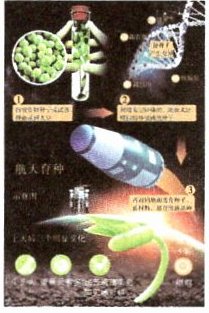
登月草种在地球发芽!
Herders in Xinjiang may soon feed their cows and sheep with special grass grown from seeds that went to the Moon! China's Chang'e-6 lunar probe carried four types of grass seeds from Xinjiang to the far side of the Moon. These seeds returned to Earth in June after experiencing space conditions, which can change their genes and help create stronger plants.
Scientists started planting these “Moon seeds” in March 2025. The seeds, including camel thorn and alfalfa, are tough—they can survive salty soil, cold weather, and dry land. This makes them perfect for Xinjiang, where deserts and salty soil are big problems.
When seeds go to space, radiation and low gravity can make them mutate. Some changes are good, like growing faster, producing more food, or fighting diseases better. In 2022, Xinjiang grass seeds sent to China's space station by the Shenzhou-14 spaceship grew 30% more than normal seeds and were healthier.
Sending seeds to the Moon is like opening a surprise box. Experts will study the Moon seeds, pick the best ones, and grow them for at least three years to create super grass.
Space farming is popular in China. Over 3,000 experiments have created better rice, wheat, and flowers, helping farmers grow more food. In Xinjiang, where deserts are common, strong grass can protect the land and help animals.
Though the work is hard, scientists hope these special seeds will make Xinjiang greener and support herders' lives.
Task 1:太空育种流程图。根据文章内容,将嫦娥六号月球育种的步骤按正确顺序排列。

A. Seeds are exposed to space radiation and low gravity.
B. Chang'e-6 carries Xinjiang grass seeds to the Moon's far side.
C. Scientists select seeds with desirable mutations.
D. Seeds are planted in controlled experiments starting in March.
E. Super grass is planted in Xinjiang's deserts.
Task 2: 科学伦理辩论。文中提到太空育种可能创造“超级草”,选择你认可的观点来表达。
How can space-bred(太空培育) plants benefit Xinjiang? What risks might come from changing plant genes?
语篇类型: 新闻报道
难度星级: ★★★★
建议用时: /8 min
参考答案: P45
登月草种在地球发芽!
Herders in Xinjiang may soon feed their cows and sheep with special grass grown from seeds that went to the Moon! China's Chang'e-6 lunar probe carried four types of grass seeds from Xinjiang to the far side of the Moon. These seeds returned to Earth in June after experiencing space conditions, which can change their genes and help create stronger plants.
Scientists started planting these “Moon seeds” in March 2025. The seeds, including camel thorn and alfalfa, are tough—they can survive salty soil, cold weather, and dry land. This makes them perfect for Xinjiang, where deserts and salty soil are big problems.
When seeds go to space, radiation and low gravity can make them mutate. Some changes are good, like growing faster, producing more food, or fighting diseases better. In 2022, Xinjiang grass seeds sent to China's space station by the Shenzhou-14 spaceship grew 30% more than normal seeds and were healthier.
Sending seeds to the Moon is like opening a surprise box. Experts will study the Moon seeds, pick the best ones, and grow them for at least three years to create super grass.
Space farming is popular in China. Over 3,000 experiments have created better rice, wheat, and flowers, helping farmers grow more food. In Xinjiang, where deserts are common, strong grass can protect the land and help animals.
Though the work is hard, scientists hope these special seeds will make Xinjiang greener and support herders' lives.
Task 1:太空育种流程图。根据文章内容,将嫦娥六号月球育种的步骤按正确顺序排列。
A. Seeds are exposed to space radiation and low gravity.
B. Chang'e-6 carries Xinjiang grass seeds to the Moon's far side.
C. Scientists select seeds with desirable mutations.
D. Seeds are planted in controlled experiments starting in March.
E. Super grass is planted in Xinjiang's deserts.
Task 2: 科学伦理辩论。文中提到太空育种可能创造“超级草”,选择你认可的观点来表达。
How can space-bred(太空培育) plants benefit Xinjiang? What risks might come from changing plant genes?
答案
Task 1:B→A→D→C→E
1. B 嫦娥六号将新疆草籽带到月球背面:这是整个流程的第一步,嫦娥六号将草籽带到月球背面。
2. A 种子暴露于太空辐射和低重力环境:草籽在月球背面经历太空辐射和低重力环境。
3. D 从三月开始,种子在受控实验中种植:科学家们从三月份开始在受控环境中种植这些草籽。
4. C 科学家选择具有理想变异的种子:科学家们研究这些草籽,挑选出具有理想变异的种子。
5. E 超级草在新疆的沙漠中种植:最终,这些经过筛选和培育的超级草将在新疆的沙漠中种植。
Task 2:这是一个开放性问题,言之有理即可。参考答案:
观点 1:Space-bred plants can be really helpful in Xinjiang. They are tougher and can grow better in difficult conditions like salty soil and dry land(能表达到这里也可以). This means more food for animals and better protection for the land. Also, these plants might grow faster and be healthier, which is great for farmers and herders.
观点 2:Changing plant genes can sometimes cause problems. We need to be careful because these changed plants might affect other plants and animals in unexpected ways(能表达到这里也可以). They could also have unknown effects on the environment. So, while space-bred plants can be very useful, we should also be cautious and make sure they are safe for everyone and everything.
1. B 嫦娥六号将新疆草籽带到月球背面:这是整个流程的第一步,嫦娥六号将草籽带到月球背面。
2. A 种子暴露于太空辐射和低重力环境:草籽在月球背面经历太空辐射和低重力环境。
3. D 从三月开始,种子在受控实验中种植:科学家们从三月份开始在受控环境中种植这些草籽。
4. C 科学家选择具有理想变异的种子:科学家们研究这些草籽,挑选出具有理想变异的种子。
5. E 超级草在新疆的沙漠中种植:最终,这些经过筛选和培育的超级草将在新疆的沙漠中种植。
Task 2:这是一个开放性问题,言之有理即可。参考答案:
观点 1:Space-bred plants can be really helpful in Xinjiang. They are tougher and can grow better in difficult conditions like salty soil and dry land(能表达到这里也可以). This means more food for animals and better protection for the land. Also, these plants might grow faster and be healthier, which is great for farmers and herders.
观点 2:Changing plant genes can sometimes cause problems. We need to be careful because these changed plants might affect other plants and animals in unexpected ways(能表达到这里也可以). They could also have unknown effects on the environment. So, while space-bred plants can be very useful, we should also be cautious and make sure they are safe for everyone and everything.
