

 登录
一、语法选择。
Since the ancient times, people have looked up at the stars, the moon and the planets. Today people use modern machines
When did humans first go into space? The story began not very long ago, but the first astronauts were not people—they were
Scientists wanted to make space travel as
Albert Ⅱ was the first monkey to go into space in 1949. Sadly, he died
Scientists wondered if an animal like Ham could do the same things in space as he could do on Earth? The answer came when Ham
(
(
(
(
(
(
(
(
(
(
Since the ancient times, people have looked up at the stars, the moon and the planets. Today people use modern machines
D
1 at the sky. This is very different from the situation D
2 years ago when people could only use their eyes. Perhaps they dreamed of exploring the universe.When did humans first go into space? The story began not very long ago, but the first astronauts were not people—they were
B
3.Scientists wanted to make space travel as
A
4 as possible for humans. So they decided to do experiments with animals and test B
5 in spaceflights. Insects, mice, frogs, monkeys and dogs were some of the animals that first went into space. Many of them A
6, but they helped to make space travel safer for humans. For their great service, we shouldn't forget these animals.Albert Ⅱ was the first monkey to go into space in 1949. Sadly, he died
B
7 his spaceship landed back on Earth.C
8, the result was different for Ham, another monkey. His story ended happily when he returned to Earth A
9 very good health.Scientists wondered if an animal like Ham could do the same things in space as he could do on Earth? The answer came when Ham
C
10 into space in 1961. Yes, he did everything well and lived for another 16 years.(
D
)1. A. see B. to see C. look D. to look(
D
)2. A. thousand B. thousands C. thousand of D. thousands of(
B
)3. A. animal B. animals C. animal's D. animals'(
A
)4. A. safe B. safer C. safest D. safely(
B
)5. A. they B. them C. their D. theirs(
A
)6. A. died B. are dying C. have died D. will die(
B
)7. A. since B. after C. unless D. if(
C
)8. A. Usually B. Unusually C. Luckily D. Unluckily(
A
)9. A. in B. on C. at D. with(
C
)10. A. sends B. was sending C. was sent D. will be sent答案
1. D 2. D 3. B 4. A 5. B 6. A 7. B 8. C 9. A 10. C
解析
【分析】本题为英语语法选择题,解题思路是先通读全文把握语境,再针对每个小题的考点(固定搭配、数词用法、名词单复数、形容词等级、代词、时态、连词、副词、介词、被动语态等)逐一分析选项,结合语法规则和上下文逻辑选出正确答案。
【解析】1. 考查固定搭配。“use sth to do sth”是固定用法,且“look at”为固定短语表示“看”,此处需用不定式,故选D。
2. 考查数词用法。“thousands of”是固定表达,意为“成千上万的”,修饰可数名词复数,故选D。
3. 考查名词单复数。前文提到“the first astronauts were not people”,主语为they,需用名词复数,故选B。
4. 考查形容词原级。“as + 形容词原级 + as possible”是固定结构,意为“尽可能……”,此处make后接形容词作宾补,故选A。
5. 考查代词。test是动词,后接人称代词宾格作宾语,指代前文的animals,故选B。
6. 考查动词时态。全文讲述过去的事件,此处用一般过去时,故选A。
7. 考查连词。根据语境,Albert Ⅱ在飞船返回地球之后去世,after表示“在……之后”,故选B。
8. 考查副词。前文提到Albert Ⅱ不幸去世,此处Ham的结果不同且是好的,Luckily表示“幸运地”,符合语境,故选C。
9. 考查介词。“in good health”是固定短语,意为“身体健康”,故选A。
10. 考查被动语态。Ham是被送入太空,动作发生在过去,用一般过去时的被动语态,故选C。
【答案】1.D 2.D 3.B 4.A 5.B 6.A 7.B 8.C 9.A 10.C
【知识点】固定搭配、动词时态语态、数词用法
【点评】本题考查初中英语核心语法知识,涵盖固定短语、数词、代词、时态、被动语态等基础考点,需结合语境分析,难度适中,适合初中阶段学生练习。
【难度系数】0.6
二、短文填空:用方框中所给单词的适当形式填空,使短文完整正确。(每个单词限用一次,每空限填一个单词。)
three, age, between, name, strong, our, but, successful, win, plan
Luan Enjie is a great space scientist in China. On 16 August 2025, he 1.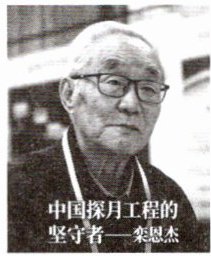
Even at an old 8.
He said, "We must keep exploring because space is 10.
three, age, between, name, strong, our, but, successful, win, plan
Luan Enjie is a great space scientist in China. On 16 August 2025, he 1.
won
the 2024 "Touching China" award for his excellent work in space science. When Luan saw China's Long March 2E rocket fly into the sky 2. successfully
in 1990, he began to imagine sending something to the moon. In 2004, Luan became the top leader of the lunar exploration programme. He made clear 3. plans
: travelling around the moon, landing on it, and bringing samples back. Under his leadership, Chang'e-1 was sent into space in 2007. His team faced lots of challenges. 4. But
their hard work paid off. Thanks to his effort, China made many achievements in space exploration. Then a small planet was 5. named
after Luan Enjie to honour him in 2014. It is 6. between
Mars and Saturn. In 2020, Chang'e-5 brought moon rocks back to Earth. This made China the 7. third
country to get moon samples. Even at an old 8.
age
, Luan works as usual. He always thinks about how to make China much 9. stronger
in space technology. He also visits schools to encourage students to work hard.He said, "We must keep exploring because space is 10.
our
future. And the key to success is keeping trying. Chinese people will surely go farther in space."答案
1. won 2. successfully 3. plans 4. But 5. named 6. between 7. third 8. age 9. stronger 10. our
解析
【分析】首先通读短文,理解短文讲述栾恩杰在探月工程中贡献的内容。再结合每个空格的语境、语法规则,从方框所给单词中选合适的词,根据句子需要变形:1. 句子表达“获奖”,需用win的过去式;2. 修饰动词用副词;3. 对应后文三个计划,用名词复数;4. 前后是转折关系,用转折连词;5. 固定搭配“be named after”;6. 固定搭配“between…and…”;7. 表示“第三个”用序数词;8. 固定短语“at an old age”;9. much修饰比较级,用形容词比较级;10. 修饰名词用形容词性物主代词。
【解析】1. 句意:他因在太空科学的出色工作,赢得了2024年“感动中国”奖。win的过去式为won,故填won。2. 句意:1990年,当栾看到中国长征2E火箭成功飞入太空时,他开始想象送东西到月球。修饰动词fly用副词successfully,故填successfully。3. 句意:他制定了明确的计划:绕月、登月、带回样本。plan是可数名词,此处用复数plans,故填plans。4. 句意:他的团队面临很多挑战,但他们的努力有了回报。前后是转折关系,用But,故填But。5. 句意:2014年,为纪念他,一颗小行星以栾恩杰的名字命名。固定搭配be named after,故填named。6. 句意:它在火星和土星之间。固定搭配between…and…,故填between。7. 句意:这让中国成为第三个获得月球样本的国家。用序数词third,故填third。8. 句意:即使在老年,栾还是像往常一样工作。固定短语at an old age,故填age。9. 句意:他总思考如何让中国在太空技术上更强大。much修饰比较级,strong的比较级是stronger,故填stronger。10. 句意:我们必须继续探索,因为太空是我们的未来。修饰名词future用形容词性物主代词our,故填our。
【答案】1. won 2. successfully 3. plans 4. But 5. named 6. between 7. third 8. age 9. stronger 10. our
【知识点】词汇适当形式填空、固定搭配、序数词用法
【点评】本题考查英语基础词汇的运用能力,需结合语境和语法规则选择并变形单词,是典型的基础词汇运用题型,侧重对核心知识点的掌握。
【难度系数】0.7
