

 登录
登录
九、按实际情况回答问题或根据所给情景用英语提问。
1. What does a starfish look like?
2. What's your favourite animal?
3. 同学们正在讨论可爱的熊猫,Mike来自非洲,从未见过熊猫,他想知道熊猫长什么样子,他可以怎么询问?
4. Where are kangaroos from?
1. What does a starfish look like?
It looks like a star.
2. What's your favourite animal?
I like giraffes best.(答案不唯一)
3. 同学们正在讨论可爱的熊猫,Mike来自非洲,从未见过熊猫,他想知道熊猫长什么样子,他可以怎么询问?
What does a panda look like?
4. Where are kangaroos from?
They are from Australia.
答案
1. It looks like a star.
2. I like giraffes best.(答案不唯一)
3. What does a panda look like?
4. They are from Australia.
2. I like giraffes best.(答案不唯一)
3. What does a panda look like?
4. They are from Australia.
解析
【分析】
本题为英语情景问答类题目,需结合日常常识和英语句型完成各小题:第1题询问海星外形,根据常识海星像星星;第2题问最喜欢的动物,答案合理即可;第3题需用询问外形的特殊疑问句,结合情景(Mike想知道熊猫样子)作答;第4题问袋鼠来源,结合常识袋鼠来自澳大利亚。
【解析】
1. 问句意为“海星长什么样子?”,用句型“It looks like + 名词”回答,海星像星星,故为It looks like a star.;
2. 问句意为“你最喜欢的动物是什么?”,用句型“I like + 动物复数 + best.”回答,示例答案为I like giraffes best.(答案不唯一);
3. 询问某物外形用句型“What does + 单数名词 + look like?”,结合情景得What does a panda look like?;
4. 问句意为“袋鼠来自哪里?”,袋鼠来自澳大利亚,故回答They are from Australia.
【答案】
1. It looks like a star.
2. I like giraffes best.(答案不唯一)
3. What does a panda look like?
4. They are from Australia.
【知识点】
英语日常交际、特殊疑问句、描述外貌句型
【点评】
本题为基础英语情景问答,考察日常用语运用和特殊疑问句的掌握,贴近生活,难度较低,适合基础阶段学生练习。
【难度系数】
0.8
本题为英语情景问答类题目,需结合日常常识和英语句型完成各小题:第1题询问海星外形,根据常识海星像星星;第2题问最喜欢的动物,答案合理即可;第3题需用询问外形的特殊疑问句,结合情景(Mike想知道熊猫样子)作答;第4题问袋鼠来源,结合常识袋鼠来自澳大利亚。
【解析】
1. 问句意为“海星长什么样子?”,用句型“It looks like + 名词”回答,海星像星星,故为It looks like a star.;
2. 问句意为“你最喜欢的动物是什么?”,用句型“I like + 动物复数 + best.”回答,示例答案为I like giraffes best.(答案不唯一);
3. 询问某物外形用句型“What does + 单数名词 + look like?”,结合情景得What does a panda look like?;
4. 问句意为“袋鼠来自哪里?”,袋鼠来自澳大利亚,故回答They are from Australia.
【答案】
1. It looks like a star.
2. I like giraffes best.(答案不唯一)
3. What does a panda look like?
4. They are from Australia.
【知识点】
英语日常交际、特殊疑问句、描述外貌句型
【点评】
本题为基础英语情景问答,考察日常用语运用和特殊疑问句的掌握,贴近生活,难度较低,适合基础阶段学生练习。
【难度系数】
0.8
十、"国宝"熊猫在中国人民的帮助下,已经走出"濒危"的行列。选择合适的句子补全对话。
Peter: What did you do last weekend?
Jenny: 1.
Peter: 2.
Jenny: It's a panda. It's so cute.
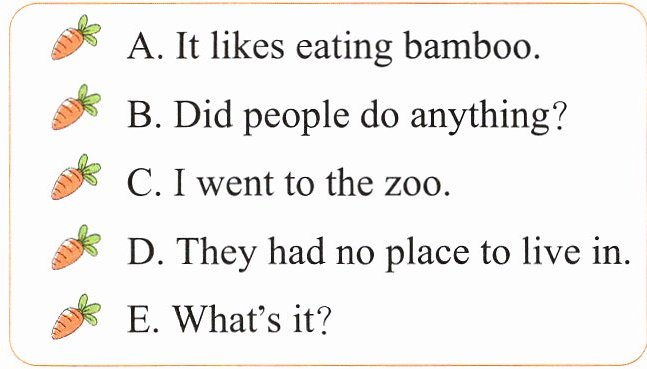
Peter: Can you tell me something about it?
Jenny: Yes. It's black and white. 3.
were in danger before.
Peter: Why?
Jenny: Because people cut down the forests. 4.
Peter: That's bad. 5.
Jenny: Yes. Chinese people do many things to protect pandas. They live a good life now.
能力培优训练
Peter: What did you do last weekend?
Jenny: 1.
C
I saw many animals. There was an animal that I like best.Peter: 2.
E
Jenny: It's a panda. It's so cute.
Peter: Can you tell me something about it?
Jenny: Yes. It's black and white. 3.
A
But pandaswere in danger before.
Peter: Why?
Jenny: Because people cut down the forests. 4.
D
Peter: That's bad. 5.
B
Jenny: Yes. Chinese people do many things to protect pandas. They live a good life now.
能力培优训练
答案
1—5 CEADB
解析
【分析】
补全对话需结合上下文语境和交际逻辑选择合适的句子:
1. 第一空Peter询问上周末的活动,答句需对应活动内容;
2. 第二空Jenny提到最喜欢的动物,Peter需询问该动物是什么;
3. 第三空需介绍熊猫的特征,结合常识匹配对应描述;
4. 第四空需解释熊猫濒危的原因,对应相关语境;
5. 第五空根据答句的肯定表述,需选择合适的一般疑问句。
【解析】
根据对话上下文逻辑逐一选择:
1. 问句“What did you do last weekend?”询问过去的活动,答句需回答活动,故选C(I went to the zoo.);
2. Jenny提到“有最喜欢的动物”,Peter接着询问动物是什么,故选E(What's it?);
3. 介绍熊猫的特征,结合常识(熊猫以竹子为食),故选A(It likes eating bamboo.);
4. 解释熊猫濒危的原因(人类砍森林导致无家可归),故选D(They had no place to live in.);
5. 答句是肯定回答“Chinese people do many things...”,问句应为一般疑问句,询问人们是否采取行动,故选B(Did people do anything?)。
【答案】
CEADB
【知识点】
英语补全对话、日常交际用语
【点评】
本题围绕“熊猫保护”话题,考查英语日常交际用语的运用,需结合上下文语境和逻辑推理选句,难度适中,贴近学生生活实际。
【难度系数】
0.4
补全对话需结合上下文语境和交际逻辑选择合适的句子:
1. 第一空Peter询问上周末的活动,答句需对应活动内容;
2. 第二空Jenny提到最喜欢的动物,Peter需询问该动物是什么;
3. 第三空需介绍熊猫的特征,结合常识匹配对应描述;
4. 第四空需解释熊猫濒危的原因,对应相关语境;
5. 第五空根据答句的肯定表述,需选择合适的一般疑问句。
【解析】
根据对话上下文逻辑逐一选择:
1. 问句“What did you do last weekend?”询问过去的活动,答句需回答活动,故选C(I went to the zoo.);
2. Jenny提到“有最喜欢的动物”,Peter接着询问动物是什么,故选E(What's it?);
3. 介绍熊猫的特征,结合常识(熊猫以竹子为食),故选A(It likes eating bamboo.);
4. 解释熊猫濒危的原因(人类砍森林导致无家可归),故选D(They had no place to live in.);
5. 答句是肯定回答“Chinese people do many things...”,问句应为一般疑问句,询问人们是否采取行动,故选B(Did people do anything?)。
【答案】
CEADB
【知识点】
英语补全对话、日常交际用语
【点评】
本题围绕“熊猫保护”话题,考查英语日常交际用语的运用,需结合上下文语境和逻辑推理选句,难度适中,贴近学生生活实际。
【难度系数】
0.4
十一、动物小百科。你最喜欢什么动物? 你了解哪些物种? 请阅读下面的动物的介绍,完成任务。
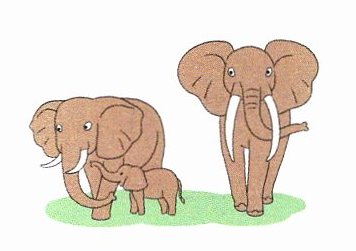
Name: African elephant
Place: Africa
Look like: two big ears, a long nose and four big legs腿
Travel habits: walk along the same way to look for food and water
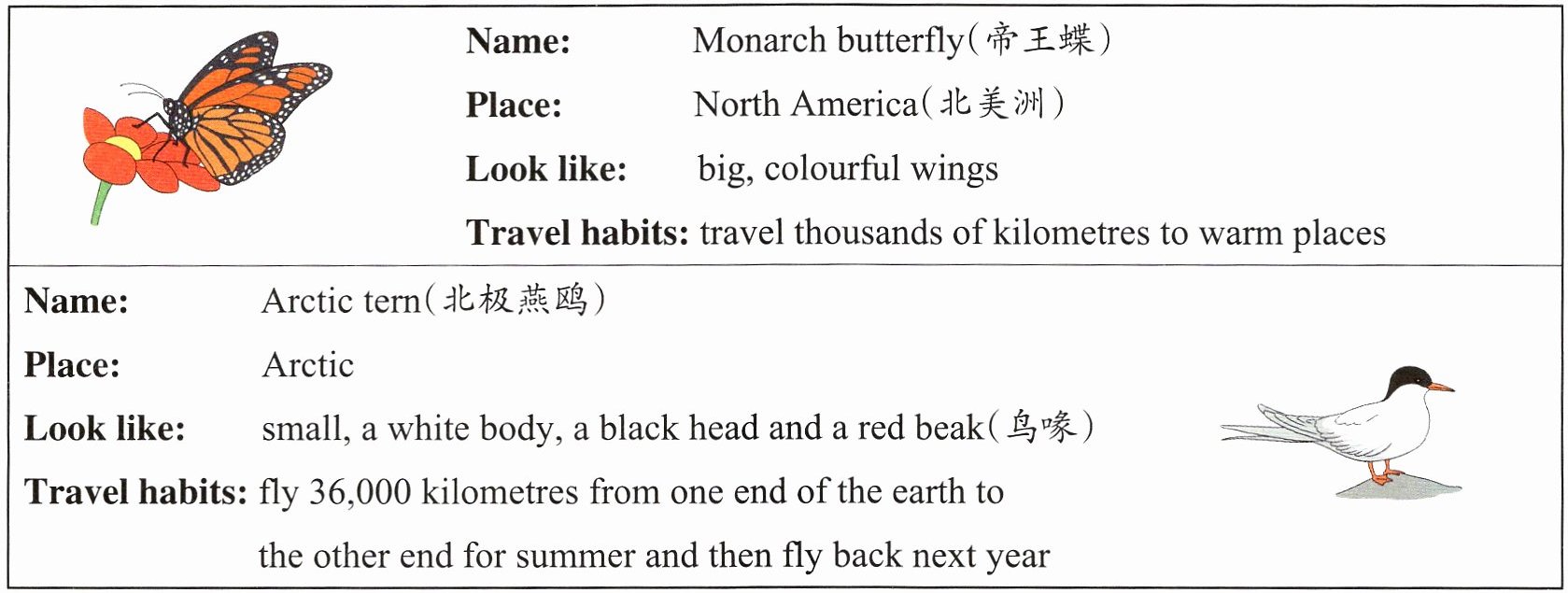
Name: Monarch butterfly帝王蝶
Place: North America北美洲
Look like: big, colourful wings
Travel habits: travel thousands of kilometres to warm places
Name: Arctic tern北极燕鸥
Place: Arctic
Look like: small, a white body, a black head and a red beak鸟喙
Travel habits: fly 36,000 kilometres from one end of the earth to
the other end for summer and then fly back next year
When autumn arrives in North America, the monarch butterflies leave Canada加拿大 and the United States美国 and travel south向南 to Mexico墨西哥. They stay in the warm forests in Mexico. When spring comes and it gets warm in North America, the butterflies fly back. This is an amazing scene景象 in nature—the migration of the monarch butterflies.
任务一:判断句子正误,正确的写"T",否则写"F"。
(
(
(
(
(
任务二:根据上面几则材料内容,选择正确的答案。请选出所有正确选项
A. The monarch butterflies travel further更远 than the Arctic terns.
B. The monarch butterflies fly from the north to the south in spring.
C. In autumn, the monarch butterflies fly to warm places for the coming winter.
D. The monarch butterflies live in Mexico in summer.
E. From the passages, we know animals may travel to look for enough food and warm weather.
6. Which of the sentences are true? They are
Name: African elephant
Place: Africa
Look like: two big ears, a long nose and four big legs腿
Travel habits: walk along the same way to look for food and water
Name: Monarch butterfly帝王蝶
Place: North America北美洲
Look like: big, colourful wings
Travel habits: travel thousands of kilometres to warm places
Name: Arctic tern北极燕鸥
Place: Arctic
Look like: small, a white body, a black head and a red beak鸟喙
Travel habits: fly 36,000 kilometres from one end of the earth to
the other end for summer and then fly back next year
When autumn arrives in North America, the monarch butterflies leave Canada加拿大 and the United States美国 and travel south向南 to Mexico墨西哥. They stay in the warm forests in Mexico. When spring comes and it gets warm in North America, the butterflies fly back. This is an amazing scene景象 in nature—the migration of the monarch butterflies.
任务一:判断句子正误,正确的写"T",否则写"F"。
(
F
) 1. The African elephant travels to look for warm places.(
T
) 2. The monarch butterfly lives in North America.(
F
) 3. Arctic terns like to stay in the same place.(
F
) 4. The Arctic tern is a small bird with a white body and a black and white beak.(
T
) 5. The underlined word "migration" means "迁徙".任务二:根据上面几则材料内容,选择正确的答案。请选出所有正确选项
A. The monarch butterflies travel further更远 than the Arctic terns.
B. The monarch butterflies fly from the north to the south in spring.
C. In autumn, the monarch butterflies fly to warm places for the coming winter.
D. The monarch butterflies live in Mexico in summer.
E. From the passages, we know animals may travel to look for enough food and warm weather.
6. Which of the sentences are true? They are
CE
.答案
任务一:1—5 FTFFT 任务二:6. CE
解析
【分析】
本题为英语阅读理解题,分为判断正误和选择正确选项两部分。解题时需仔细阅读每则动物介绍及相关描述,将题目句子与原文信息逐一核对判断正误;选择部分需对比各选项与原文内容,排除错误选项,选出符合原文的正确答案。
【解析】
任务一:
1. 原文中非洲象的旅行习惯是“walk along the same way to look for food and water”,并非寻找温暖地方,故句子错误,填F。
2. 原文中帝王蝶的地点是“North America”,句子描述正确,填T。
3. 北极燕鸥的旅行习惯是“fly 36,000 kilometres from one end of the earth to the other end”,并非待在同一地方,句子错误,填F。
4. 北极燕鸥的外形描述是“small, a white body, a black head and a red beak”,喙是红色而非黑白,句子错误,填F。
5. 划线词“migration”意为“迁徙”,句子描述正确,填T。
任务二:
A选项:帝王蝶旅行距离是“thousands of kilometres”,北极燕鸥是“36,000 kilometres”,帝王蝶旅行距离更近,A错误;
B选项:春天帝王蝶是从墨西哥飞回北美,并非从北向南飞,B错误;
C选项:秋天帝王蝶飞往墨西哥的温暖森林过冬,符合原文描述,C正确;
D选项:夏天帝王蝶在北美,墨西哥是冬季停留地,D错误;
E选项:原文中非洲象找食物水、帝王蝶去温暖地方,说明动物旅行是为了食物和温暖,E正确。故正确选项为CE。
【答案】
任务一:1.F 2.T 3.F 4.F 5.T;任务二:6.CE
【知识点】
英语阅读理解、细节判断、信息匹配
【点评】
本题考查对英文动物介绍材料的细节理解,需准确提取原文关键信息,区分不同动物的特征与习性,难度适中,适合基础阶段学生练习。
【难度系数】
0.5
本题为英语阅读理解题,分为判断正误和选择正确选项两部分。解题时需仔细阅读每则动物介绍及相关描述,将题目句子与原文信息逐一核对判断正误;选择部分需对比各选项与原文内容,排除错误选项,选出符合原文的正确答案。
【解析】
任务一:
1. 原文中非洲象的旅行习惯是“walk along the same way to look for food and water”,并非寻找温暖地方,故句子错误,填F。
2. 原文中帝王蝶的地点是“North America”,句子描述正确,填T。
3. 北极燕鸥的旅行习惯是“fly 36,000 kilometres from one end of the earth to the other end”,并非待在同一地方,句子错误,填F。
4. 北极燕鸥的外形描述是“small, a white body, a black head and a red beak”,喙是红色而非黑白,句子错误,填F。
5. 划线词“migration”意为“迁徙”,句子描述正确,填T。
任务二:
A选项:帝王蝶旅行距离是“thousands of kilometres”,北极燕鸥是“36,000 kilometres”,帝王蝶旅行距离更近,A错误;
B选项:春天帝王蝶是从墨西哥飞回北美,并非从北向南飞,B错误;
C选项:秋天帝王蝶飞往墨西哥的温暖森林过冬,符合原文描述,C正确;
D选项:夏天帝王蝶在北美,墨西哥是冬季停留地,D错误;
E选项:原文中非洲象找食物水、帝王蝶去温暖地方,说明动物旅行是为了食物和温暖,E正确。故正确选项为CE。
【答案】
任务一:1.F 2.T 3.F 4.F 5.T;任务二:6.CE
【知识点】
英语阅读理解、细节判断、信息匹配
【点评】
本题考查对英文动物介绍材料的细节理解,需准确提取原文关键信息,区分不同动物的特征与习性,难度适中,适合基础阶段学生练习。
【难度系数】
0.5
