

 登录
登录
任务型阅读。
▶ “答案与解析”见 P19
In 1951, a mountaineer called Eric Shipton was climbing with some friends in the Himalayas. 1.
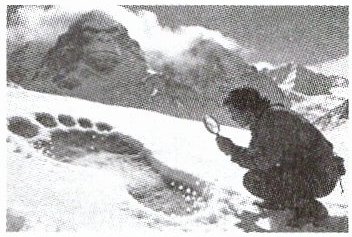
The footprints looked like those of a person. But they were twice as wide! When Eric Shipton looked more closely at the prints in the snow, he was really surprised. The creature was walking barefoot(赤脚地) in the freezing snow! 2.
"No socks or boots(靴子)?" said Eric. "It can't be a person!" Eric knew that he and the other climbers would die without boots in the freezing temperature of the mountains.
In 1970, another mountaineer came close to a snowman. Don Whillans was climbing in the Himalayas with some guides. One of the guides shouted, "Yeti coming!"
3.
The next day, Don walked behind the mountain and saw the creature's footprints in the snow. They were about the same size as his boot prints—not as big as the footprints Eric Shipton saw.
Later that night, Don was sitting quietly in his tent. 4.
Don was surprised and excited, and he wanted to see more. He put out his hand to get his camera. But the creature heard something or saw Don moving. 5.
(素材来源: *Beastly Tales*)
根据短文内容,从方框中选出适当的选项补全短文,有一项是多余的,并回答第6、7小题。
A. Immediately, Don looked up.
B. So he could see each toe clearly.
C. He decided to take photos of the mountain.
D. Immediately, it ran away across the mountain.
E. He was looking out into the bright moonlight.
F. They wanted to study this strange and beautiful place.
6. 拓展迁移 Do you believe there is a yeti? Why or why not?
7. 拓展迁移 What can we learn from the two mountaineers' stories?
▶ “答案与解析”见 P19
In 1951, a mountaineer called Eric Shipton was climbing with some friends in the Himalayas. 1.
F
One day, they were surprised to see a line of big footprints in the snow.The footprints looked like those of a person. But they were twice as wide! When Eric Shipton looked more closely at the prints in the snow, he was really surprised. The creature was walking barefoot(赤脚地) in the freezing snow! 2.
B
"No socks or boots(靴子)?" said Eric. "It can't be a person!" Eric knew that he and the other climbers would die without boots in the freezing temperature of the mountains.
In 1970, another mountaineer came close to a snowman. Don Whillans was climbing in the Himalayas with some guides. One of the guides shouted, "Yeti coming!"
3.
A
He saw a big black creature going behind the mountain.The next day, Don walked behind the mountain and saw the creature's footprints in the snow. They were about the same size as his boot prints—not as big as the footprints Eric Shipton saw.
Later that night, Don was sitting quietly in his tent. 4.
E
Suddenly, he saw the creature again—it was near the tent! The creature went over to some trees and started to pull the branches(树枝).Don was surprised and excited, and he wanted to see more. He put out his hand to get his camera. But the creature heard something or saw Don moving. 5.
D
Soon it was gone again. Don never saw the yeti again.(素材来源: *Beastly Tales*)
根据短文内容,从方框中选出适当的选项补全短文,有一项是多余的,并回答第6、7小题。
A. Immediately, Don looked up.
B. So he could see each toe clearly.
C. He decided to take photos of the mountain.
D. Immediately, it ran away across the mountain.
E. He was looking out into the bright moonlight.
F. They wanted to study this strange and beautiful place.
6. 拓展迁移 Do you believe there is a yeti? Why or why not?
No, I don't. Because there is no clear evidence to prove its existence.(言之有理即可)
7. 拓展迁移 What can we learn from the two mountaineers' stories?
We should keep exploring the unknown and be brave to find the truth.(言之有理即可)
答案
1. F 由“希普顿与一些朋友在喜马拉雅山脉进行攀登”可知,下文表示:他们想要研究这个奇特而美丽的地方。
2. B 上文提及“这个生物在冰冷的雪地里赤脚行走",下文对应表示:能清晰地看到每一个脚趾。
3. A 下文提及“他看到一个巨大的黑色生物正在山后走",上文对应表示:他立刻抬头看去。
4. E 由“那天晚上,唐静静地坐在他的帐篷里"可知,下文表示:他望着外面明亮的月光。
5. D 下文提及“那个生物很快又消失了",上文对应表示:它很快跑到山那边去不见了。
6. 【拓展迁移】No, I don't. Because there is no clear evidence to prove its existence.(言之有理即可)
7. 【拓展迁移】We should keep exploring the unknown and be brave to find the truth.(言之有理即可)
2. B 上文提及“这个生物在冰冷的雪地里赤脚行走",下文对应表示:能清晰地看到每一个脚趾。
3. A 下文提及“他看到一个巨大的黑色生物正在山后走",上文对应表示:他立刻抬头看去。
4. E 由“那天晚上,唐静静地坐在他的帐篷里"可知,下文表示:他望着外面明亮的月光。
5. D 下文提及“那个生物很快又消失了",上文对应表示:它很快跑到山那边去不见了。
6. 【拓展迁移】No, I don't. Because there is no clear evidence to prove its existence.(言之有理即可)
7. 【拓展迁移】We should keep exploring the unknown and be brave to find the truth.(言之有理即可)
解析
【分析】
这是一篇叙事类任务型阅读,解题时首先通读全文,明确文章围绕两次喜马拉雅山目击雪人的经历展开,理清故事的先后逻辑顺序。对于前5道补全句子的题目,逐空定位前后文内容,结合空格前的已有信息、空格后的后续情节,找到动作、场景、指代完全衔接的选项,同时排除多余的干扰项。最后两道开放拓展题,结合文章主旨给出符合逻辑、表述通顺的内容即可,言之有理就能得分。
【解析】
1. 空格前介绍1951年登山家Eric Shipton和友人在喜马拉雅山脉攀登,本空承接说明他们出行的目的,F选项“他们想要研究这个奇特而美丽的地方”完全匹配语境,因此选F。
2. 空格前提到Eric凑近观察雪地里的脚印,发现该生物在极寒的雪地里赤脚行走,B选项“所以他能清晰地看到每一个脚趾”承接观察脚印的细节,逻辑连贯,因此选B。
3. 空格前提到向导大喊“雪人来了”,空格后描述他看到一个巨大的黑色生物走到山后,A选项“Don立刻抬头望去”衔接向导喊话和他目击生物的动作,符合叙事逻辑,因此选A。
4. 空格前交代当晚Don正安静坐在帐篷里,空格后提到他突然再次看到雪人,E选项“他正望着外面明亮的月光”交代了他当时的状态,契合夜晚的场景设定,因此选E。
5. 空格前提到雪人察觉到了动静,空格后说明它很快就消失了,D选项“它立刻跑过山的另一侧”衔接前后动作,符合情节走向,因此选D。
6. 本题为开放题,结合自身观点表述,逻辑通顺、语法正确即可。
7. 本题为开放题,结合登山者探索未知的经历提炼主旨,表述合理即可。
【答案】
1. F
2. B
3. A
4. E
5. D
6. No, I don't. Because there is no clear evidence to prove its existence.(言之有理即可)
7. We should keep exploring the unknown and be brave to find the truth.(言之有理即可)
【知识点】
阅读逻辑匹配、英语情景表达
【点评】
本题属于典型的初中任务型阅读题型,前5道六选五题目侧重考查学生对叙事类文本上下文逻辑衔接的把握能力,所有选项的对应关系都有明确的前后文提示,难度门槛较低;后两道开放题跳出固定答案限制,既锻炼学生的英语语言输出能力,也能引导学生形成对未知事物的理性探索态度。
【难度系数】
0.6
这是一篇叙事类任务型阅读,解题时首先通读全文,明确文章围绕两次喜马拉雅山目击雪人的经历展开,理清故事的先后逻辑顺序。对于前5道补全句子的题目,逐空定位前后文内容,结合空格前的已有信息、空格后的后续情节,找到动作、场景、指代完全衔接的选项,同时排除多余的干扰项。最后两道开放拓展题,结合文章主旨给出符合逻辑、表述通顺的内容即可,言之有理就能得分。
【解析】
1. 空格前介绍1951年登山家Eric Shipton和友人在喜马拉雅山脉攀登,本空承接说明他们出行的目的,F选项“他们想要研究这个奇特而美丽的地方”完全匹配语境,因此选F。
2. 空格前提到Eric凑近观察雪地里的脚印,发现该生物在极寒的雪地里赤脚行走,B选项“所以他能清晰地看到每一个脚趾”承接观察脚印的细节,逻辑连贯,因此选B。
3. 空格前提到向导大喊“雪人来了”,空格后描述他看到一个巨大的黑色生物走到山后,A选项“Don立刻抬头望去”衔接向导喊话和他目击生物的动作,符合叙事逻辑,因此选A。
4. 空格前交代当晚Don正安静坐在帐篷里,空格后提到他突然再次看到雪人,E选项“他正望着外面明亮的月光”交代了他当时的状态,契合夜晚的场景设定,因此选E。
5. 空格前提到雪人察觉到了动静,空格后说明它很快就消失了,D选项“它立刻跑过山的另一侧”衔接前后动作,符合情节走向,因此选D。
6. 本题为开放题,结合自身观点表述,逻辑通顺、语法正确即可。
7. 本题为开放题,结合登山者探索未知的经历提炼主旨,表述合理即可。
【答案】
1. F
2. B
3. A
4. E
5. D
6. No, I don't. Because there is no clear evidence to prove its existence.(言之有理即可)
7. We should keep exploring the unknown and be brave to find the truth.(言之有理即可)
【知识点】
阅读逻辑匹配、英语情景表达
【点评】
本题属于典型的初中任务型阅读题型,前5道六选五题目侧重考查学生对叙事类文本上下文逻辑衔接的把握能力,所有选项的对应关系都有明确的前后文提示,难度门槛较低;后两道开放题跳出固定答案限制,既锻炼学生的英语语言输出能力,也能引导学生形成对未知事物的理性探索态度。
【难度系数】
0.6
