

 登录
登录
四、(2025·南京鼓楼区期末)首字母填空
词数: 292 体裁: 说明文 核心素养: 文化意识
话题: 龙的文化象征 难度: 中 建议用时: 6分钟
请根据短文内容及首字母提示,填写所缺单词。
Have you ever read the novel Journey to the West? The Monkey King got the golden cudgel(金箍棒) from the Dragon King of the Eastern Sea. Also, a son of the Dragon King of the Western Sea turned into Monk Tang's white horse. It seems that the dragon is a great example of the p 1 of super nature in China.
Do you w 2 where it came from? It begins with the Yangshao Culture, which started around 5,500 to 7,000 years ago. That's when people first made d 3 of dragons. Ancient Chinese emperors loved dragons and covered their clothes w 4 pictures of dragons. They are p 5 to call themselves "the descendants (传人) of the dragon". There are also many old Chinese sayings about the dragon. For example, one saying refers to a story about Lord Ye, who liked dragons very much, and had dragon decorations(装饰) all over his house. His love of dragons became so well-known that one day a r 6 dragon paid a visit. At the first sight of the dragon, Lord Ye r 7 away in fear.
While Chinese people r 8 the dragon and see it as a holy (神圣的) animal, people in Western countries think differently about dragons. In Chinese fantasy stories, all the weather c 9 depend on the Dragon King. However, in the West, there is a bad dragon. It doesn't bring rain to help people. Instead, it breathes fire to burn down the country. As a result, there is always a super hero standing out and s 10 the whole world finally.
Anyway, the dragon, as a powerful symbol in cultures, reflects the values, imagination and spiritual beliefs of the people all over the world.
1.
2.
3.
4.
5.
6.
7.
8.
9.
10.
词数: 292 体裁: 说明文 核心素养: 文化意识
话题: 龙的文化象征 难度: 中 建议用时: 6分钟
请根据短文内容及首字母提示,填写所缺单词。
Have you ever read the novel Journey to the West? The Monkey King got the golden cudgel(金箍棒) from the Dragon King of the Eastern Sea. Also, a son of the Dragon King of the Western Sea turned into Monk Tang's white horse. It seems that the dragon is a great example of the p 1 of super nature in China.
Do you w 2 where it came from? It begins with the Yangshao Culture, which started around 5,500 to 7,000 years ago. That's when people first made d 3 of dragons. Ancient Chinese emperors loved dragons and covered their clothes w 4 pictures of dragons. They are p 5 to call themselves "the descendants (传人) of the dragon". There are also many old Chinese sayings about the dragon. For example, one saying refers to a story about Lord Ye, who liked dragons very much, and had dragon decorations(装饰) all over his house. His love of dragons became so well-known that one day a r 6 dragon paid a visit. At the first sight of the dragon, Lord Ye r 7 away in fear.
While Chinese people r 8 the dragon and see it as a holy (神圣的) animal, people in Western countries think differently about dragons. In Chinese fantasy stories, all the weather c 9 depend on the Dragon King. However, in the West, there is a bad dragon. It doesn't bring rain to help people. Instead, it breathes fire to burn down the country. As a result, there is always a super hero standing out and s 10 the whole world finally.
Anyway, the dragon, as a powerful symbol in cultures, reflects the values, imagination and spiritual beliefs of the people all over the world.
1.
2.
3.
4.
5.
6.
7.
8.
9.
10.
答案
四、[文章大意]本文主要介绍了龙在中国和西方文化中的不同象征意义和文化内涵。
1. power 2. wonder 3. drawings 4. with 5. proud
6. real 7. ran 8. respect 9. changes 10. saving
1. power 2. wonder 3. drawings 4. with 5. proud
6. real 7. ran 8. respect 9. changes 10. saving
解析
【分析】
本题为龙文化主题的首字母填空题,需结合上下文语境、固定搭配、时态及文化常识逐一分析:
1. 第1空:前文提及孙悟空的金箍棒来自东海龙王、西海龙王之子化作白马,说明龙是中国超自然“力量”的代表,结合首字母p,填power。
2. 第2空:后文询问龙的起源,结合首字母w及语境“想知道”,填wonder。
3. 第3空:仰韶文化时期人们制作龙的相关图案,结合首字母d,填drawings(绘画,复数表泛指)。
4. 第4空:固定搭配cover...with...(用……覆盖),结合语境皇帝衣服上有龙的图案,填with。
5. 第5空:皇帝自称“龙的传人”,结合首字母p及固定搭配be proud to do sth,填proud。
6. 第6空:叶公好龙中出现的是“真”龙,而非装饰的龙,结合首字母r,填real。
7. 第7空:叶公见真龙“跑开”,时态为一般过去时,结合首字母r,填ran(run的过去式)。
8. 第8空:中国人对龙的态度是“尊重”,与西方的负面看法形成对比,结合首字母r,填respect。
9. 第9空:龙王掌控天气“变化”,结合首字母c及weather的搭配,填changes(复数表各类变化)。
10. 第10空:超级英雄“拯救”世界,与standing并列,用动名词形式,结合首字母s,填saving。
【解析】
1. 第1空:根据语境“龙是中国超自然力量的代表”,首字母p对应名词power,符合语义。
2. 第2空:固定句式“wonder where...”(想知道……来自哪里),首字母w对应动词wonder,符合语境。
3. 第3空:仰韶文化时期人们制作龙的绘画,首字母d对应drawings(复数表泛指),符合文化背景。
4. 第4空:固定搭配cover...with...,表示“用……覆盖”,填介词with。
5. 第5空:固定搭配be proud to do sth(骄傲地做某事),皇帝自称龙的传人,首字母p对应形容词proud。
6. 第6空:叶公好龙中出现的是真实的龙,首字母r对应形容词real,符合典故内容。
7. 第7空:一般过去时,run away(跑开),首字母r对应ran,符合叶公见龙逃跑的情节。
8. 第8空:中国人尊重龙,与西方对龙的负面看法形成对比,首字母r对应动词respect,符合文化态度。
9. 第9空:weather changes(天气变化),首字母c对应名词changes,符合龙王掌控天气的设定。
10. 第10空:与standing并列,用动名词,save the world(拯救世界),首字母s对应saving,符合西方超级英雄的情节。
【答案】
1. power 2. wonder 3. drawings 4. with 5. proud 6. real 7. ran 8. respect 9. changes 10. saving
【知识点】
首字母填空、词汇运用、文化常识
【点评】
本题围绕龙的中西文化象征展开,既考查词汇掌握、固定搭配及时态运用,又渗透文化理解,难度中等,需结合上下文和文化背景解题。
【难度系数】
0.5
本题为龙文化主题的首字母填空题,需结合上下文语境、固定搭配、时态及文化常识逐一分析:
1. 第1空:前文提及孙悟空的金箍棒来自东海龙王、西海龙王之子化作白马,说明龙是中国超自然“力量”的代表,结合首字母p,填power。
2. 第2空:后文询问龙的起源,结合首字母w及语境“想知道”,填wonder。
3. 第3空:仰韶文化时期人们制作龙的相关图案,结合首字母d,填drawings(绘画,复数表泛指)。
4. 第4空:固定搭配cover...with...(用……覆盖),结合语境皇帝衣服上有龙的图案,填with。
5. 第5空:皇帝自称“龙的传人”,结合首字母p及固定搭配be proud to do sth,填proud。
6. 第6空:叶公好龙中出现的是“真”龙,而非装饰的龙,结合首字母r,填real。
7. 第7空:叶公见真龙“跑开”,时态为一般过去时,结合首字母r,填ran(run的过去式)。
8. 第8空:中国人对龙的态度是“尊重”,与西方的负面看法形成对比,结合首字母r,填respect。
9. 第9空:龙王掌控天气“变化”,结合首字母c及weather的搭配,填changes(复数表各类变化)。
10. 第10空:超级英雄“拯救”世界,与standing并列,用动名词形式,结合首字母s,填saving。
【解析】
1. 第1空:根据语境“龙是中国超自然力量的代表”,首字母p对应名词power,符合语义。
2. 第2空:固定句式“wonder where...”(想知道……来自哪里),首字母w对应动词wonder,符合语境。
3. 第3空:仰韶文化时期人们制作龙的绘画,首字母d对应drawings(复数表泛指),符合文化背景。
4. 第4空:固定搭配cover...with...,表示“用……覆盖”,填介词with。
5. 第5空:固定搭配be proud to do sth(骄傲地做某事),皇帝自称龙的传人,首字母p对应形容词proud。
6. 第6空:叶公好龙中出现的是真实的龙,首字母r对应形容词real,符合典故内容。
7. 第7空:一般过去时,run away(跑开),首字母r对应ran,符合叶公见龙逃跑的情节。
8. 第8空:中国人尊重龙,与西方对龙的负面看法形成对比,首字母r对应动词respect,符合文化态度。
9. 第9空:weather changes(天气变化),首字母c对应名词changes,符合龙王掌控天气的设定。
10. 第10空:与standing并列,用动名词,save the world(拯救世界),首字母s对应saving,符合西方超级英雄的情节。
【答案】
1. power 2. wonder 3. drawings 4. with 5. proud 6. real 7. ran 8. respect 9. changes 10. saving
【知识点】
首字母填空、词汇运用、文化常识
【点评】
本题围绕龙的中西文化象征展开,既考查词汇掌握、固定搭配及时态运用,又渗透文化理解,难度中等,需结合上下文和文化背景解题。
【难度系数】
0.5
五、(2025·徐州市区期末)信息匹配
上周日下午作者和约翰一起去钓鱼。我们一起阅读下文了解一下吧。
词数: 120 体裁: 记叙文 核心素养: 语言能力
话题: 钓鱼 难度: 易 建议用时: 3分钟
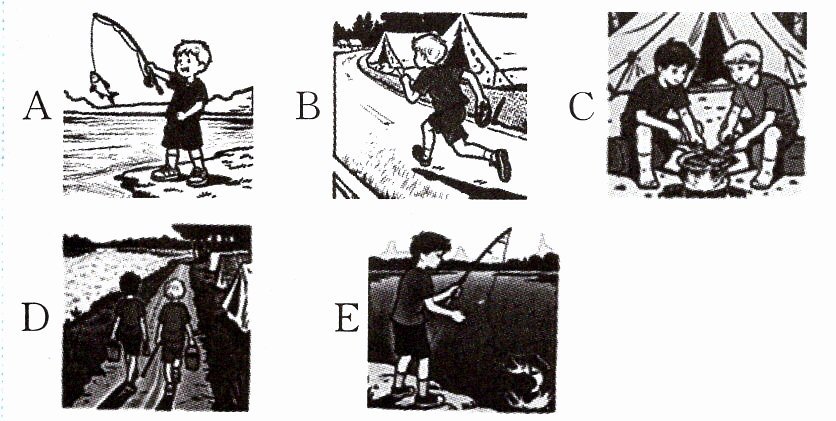
阅读短文,根据其内容将 A、B、C、D、E 五幅图片排序。
Last Sunday afternoon, John and I went fishing near the campsite. We took our fishing tools with us. We walked down a narrow road to the lake. When we arrived, we found we forgot to take the bait(鱼饵) with us! John ran back to the campsite for the bait. Then we put bait on our hooks(钩子) and waited for the fish to bite. I was so happy because I got a bite first. But the fish swam off the hook. Bad luck! John was excited because he caught the first fish. We were happy to catch some more in the afternoon. Back at the campsite, we cleaned the fish together and enjoyed a delicious fish meal.
上周日下午作者和约翰一起去钓鱼。我们一起阅读下文了解一下吧。
词数: 120 体裁: 记叙文 核心素养: 语言能力
话题: 钓鱼 难度: 易 建议用时: 3分钟
阅读短文,根据其内容将 A、B、C、D、E 五幅图片排序。
Last Sunday afternoon, John and I went fishing near the campsite. We took our fishing tools with us. We walked down a narrow road to the lake. When we arrived, we found we forgot to take the bait(鱼饵) with us! John ran back to the campsite for the bait. Then we put bait on our hooks(钩子) and waited for the fish to bite. I was so happy because I got a bite first. But the fish swam off the hook. Bad luck! John was excited because he caught the first fish. We were happy to catch some more in the afternoon. Back at the campsite, we cleaned the fish together and enjoyed a delicious fish meal.
D
→ B
→ E
→ A
→ C
答案
五、[文章大意]本文是一篇记叙文。文章以时间顺序讲述了上周日下午作者和约翰钓鱼及后续相关的活动。
D B E A C [解析]根据“We took our fishing tools with us. We walked down a narrow road to the lake.”可知,两人带上钓鱼工具,沿着窄路走向湖边,图片 D 符合题意,排第一;根据“When we arrived, we found we forgot to take the bait(鱼饵) with us! John ran back to the campsite for the bait.”可知,“我们”没有拿鱼饵,约翰跑回营地,图片 B 符合题意,排第二;根据“I was so happy because I got a bite first. But the fish swam off the hook.”可知,作者非常高兴,因为作者的鱼竿最先有鱼咬钩了,但那条鱼挣脱鱼钩游走了,图片 E 符合题意,排第三;根据“John was excited because he caught the first fish.”可知,约翰很兴奋,因为他钓到了第一条鱼,图片 A 符合题意,排第四;再根据“Back at the campsite, we cleaned the fish together and enjoyed a delicious fish meal.”可知,回到营地后,“我们”把鱼清理干净,享用了一顿美味的鱼肉大餐,图片 C 符合题意,排第五;因此,图片顺序是 D→B→E→A→C。
D B E A C [解析]根据“We took our fishing tools with us. We walked down a narrow road to the lake.”可知,两人带上钓鱼工具,沿着窄路走向湖边,图片 D 符合题意,排第一;根据“When we arrived, we found we forgot to take the bait(鱼饵) with us! John ran back to the campsite for the bait.”可知,“我们”没有拿鱼饵,约翰跑回营地,图片 B 符合题意,排第二;根据“I was so happy because I got a bite first. But the fish swam off the hook.”可知,作者非常高兴,因为作者的鱼竿最先有鱼咬钩了,但那条鱼挣脱鱼钩游走了,图片 E 符合题意,排第三;根据“John was excited because he caught the first fish.”可知,约翰很兴奋,因为他钓到了第一条鱼,图片 A 符合题意,排第四;再根据“Back at the campsite, we cleaned the fish together and enjoyed a delicious fish meal.”可知,回到营地后,“我们”把鱼清理干净,享用了一顿美味的鱼肉大餐,图片 C 符合题意,排第五;因此,图片顺序是 D→B→E→A→C。
解析
【分析】本题要求根据短文内容对五幅图片排序,解题思路为:先通读短文梳理事件发展的时间顺序,再将每幅图片的场景与短文中的对应情节逐一匹配,最终确定图片的正确排序。具体步骤:1. 明确短文的情节脉络:带钓鱼工具去湖边→发现没带鱼饵,约翰回营地取→作者的鱼脱钩→约翰钓到第一条鱼→回营地处理鱼;2. 对应每幅图片的场景:D是带工具沿小路走,B是男孩跑回营地,E是鱼脱钩,A是男孩钓到鱼,C是两人处理鱼;3. 按情节顺序排列图片。
【解析】首先梳理短文的时间顺序,逐一匹配图片:1. 根据短文“We took our fishing tools with us. We walked down a narrow road to the lake.”,两人携带钓鱼工具沿小路走向湖边,对应图片D,排第1位;2. 根据短文“When we arrived, we found we forgot to take the bait. John ran back to the campsite for the bait.”,到达湖边后发现没带鱼饵,约翰跑回营地取鱼饵,对应图片B,排第2位;3. 根据短文“I was so happy because I got a bite first. But the fish swam off the hook.”,作者的鱼竿先有鱼咬钩,但鱼脱钩游走,对应图片E,排第3位;4. 根据短文“John was excited because he caught the first fish.”,约翰钓到第一条鱼,对应图片A,排第4位;5. 根据短文“Back at the campsite, we cleaned the fish together and enjoyed a delicious fish meal.”,回到营地后两人一起处理鱼,对应图片C,排第5位。因此图片顺序为D→B→E→A→C。
【答案】D→B→E→A→C
【知识点】信息匹配、记叙文阅读
【点评】本题是结合记叙文内容的图片排序信息匹配题,难度较低,主要考查学生对短文细节的理解和图文对应能力,学生理清短文时间顺序即可准确匹配图片。
【难度系数】0.8
【解析】首先梳理短文的时间顺序,逐一匹配图片:1. 根据短文“We took our fishing tools with us. We walked down a narrow road to the lake.”,两人携带钓鱼工具沿小路走向湖边,对应图片D,排第1位;2. 根据短文“When we arrived, we found we forgot to take the bait. John ran back to the campsite for the bait.”,到达湖边后发现没带鱼饵,约翰跑回营地取鱼饵,对应图片B,排第2位;3. 根据短文“I was so happy because I got a bite first. But the fish swam off the hook.”,作者的鱼竿先有鱼咬钩,但鱼脱钩游走,对应图片E,排第3位;4. 根据短文“John was excited because he caught the first fish.”,约翰钓到第一条鱼,对应图片A,排第4位;5. 根据短文“Back at the campsite, we cleaned the fish together and enjoyed a delicious fish meal.”,回到营地后两人一起处理鱼,对应图片C,排第5位。因此图片顺序为D→B→E→A→C。
【答案】D→B→E→A→C
【知识点】信息匹配、记叙文阅读
【点评】本题是结合记叙文内容的图片排序信息匹配题,难度较低,主要考查学生对短文细节的理解和图文对应能力,学生理清短文时间顺序即可准确匹配图片。
【难度系数】0.8
