

 登录
登录
一、完形填空。
You are at a restaurant and just ate a lot of food. You 1 like you can't eat any more food until sweet food is in front of you. Why can sweet food open up a 2 in your body?
The famous professor(教授) Len Epstein did a 3 in 2013. In the study, he divided 31 4 into three groups. The first group was given the same cheese and macaroni(通心粉) 5 five days. The professor 6 different kinds of cheese and macaroni to the second group. The 7 group was provided(提供) all kinds of high-calorie 8, such as chicken and cheeseburgers.
9, the children in the third group ate more food than the other two groups.
Len Epstein said, "In people's 10, they hope to eat different kinds of food." The study also showed that people need to 11 nutrients(营养物) from different kinds of food. Meanwhile, 12 food stimulates the brain to release dopamine(多巴胺). And dopamine can 13 us have a good mood(心情). Next time you 14 at a restaurant, you are more likely to get a piece of 15 at the end of the meal.
1. A. look B. feel C. sound
2. A. kitchen B. card C. room
3. A. study B. report C. practice
4. A. scientists B. doctors C. kids
5. A. for B. with C. of
6. A. improved B. served C. tasted
7. A. third B. fourth C. fifth
8. A. meat B. drinks C. foods
9. A. However B. Finally C. Instead
10. A. eyes B. heads C. hearts
11. A. buy B. get C. bring
12. A. hot B. soft C. sweet
13. A. make B. ask C. cause
14. A. play B. eat C. read
15. A. pie B. bread C. pizza
You are at a restaurant and just ate a lot of food. You 1 like you can't eat any more food until sweet food is in front of you. Why can sweet food open up a 2 in your body?
The famous professor(教授) Len Epstein did a 3 in 2013. In the study, he divided 31 4 into three groups. The first group was given the same cheese and macaroni(通心粉) 5 five days. The professor 6 different kinds of cheese and macaroni to the second group. The 7 group was provided(提供) all kinds of high-calorie 8, such as chicken and cheeseburgers.
9, the children in the third group ate more food than the other two groups.
Len Epstein said, "In people's 10, they hope to eat different kinds of food." The study also showed that people need to 11 nutrients(营养物) from different kinds of food. Meanwhile, 12 food stimulates the brain to release dopamine(多巴胺). And dopamine can 13 us have a good mood(心情). Next time you 14 at a restaurant, you are more likely to get a piece of 15 at the end of the meal.
1. A. look B. feel C. sound
2. A. kitchen B. card C. room
3. A. study B. report C. practice
4. A. scientists B. doctors C. kids
5. A. for B. with C. of
6. A. improved B. served C. tasted
7. A. third B. fourth C. fifth
8. A. meat B. drinks C. foods
9. A. However B. Finally C. Instead
10. A. eyes B. heads C. hearts
11. A. buy B. get C. bring
12. A. hot B. soft C. sweet
13. A. make B. ask C. cause
14. A. play B. eat C. read
15. A. pie B. bread C. pizza
答案
1.B 2.C 3.A 4.C 5.A 6.B 7.A 8.C 9.B 10.C 11.B 12.C 13.A 14.B 15.A
解析
【分析】做完形填空需先通读全文把握主旨(本文围绕甜食对食欲的影响及相关研究展开),再结合语境、固定搭配、词义辨析、逻辑关系逐一分析每个空,最后验证答案是否符合文意。
【解析】1. 考查固定搭配,feel like意为“感觉”,句意为“你感觉自己吃不下其他东西,直到甜食摆在面前”,故选B。
2. 考查语境理解,open up a room意为“打开一个空间”,此处指甜食在身体里打开食欲的空间,故选C。
3. 考查名词辨析,后文提到“In the study”,可知教授做了一项研究(study),故选A。
4. 考查名词辨析,后文第9空提到“the children in the third group”,可知研究对象是孩子(kids),故选C。
5. 考查介词,for加时间段表示“持续一段时间”,句意为“第一组连续五天吃相同的奶酪通心粉”,故选A。
6. 考查动词辨析,serve意为“提供”,句意为“教授给第二组提供不同种类的奶酪通心粉”,故选B。
7. 考查数词,前文提到第一、第二组,此处是第三组,故选A。
8. 考查名词辨析,high-calorie foods意为“高热量食物”,后文举例的鸡肉、芝士汉堡都属于食物,故选C。
9. 考查逻辑副词,Finally意为“最后”,句意为“最后,第三组孩子吃的比其他两组多”,故选B。
10. 考查名词辨析,in people's hearts意为“在人们心里”,句意为“人们心里希望吃不同种类的食物”,故选C。
11. 考查动词辨析,get nutrients意为“获取营养”,句意为“人们需要从不同食物中获取营养”,故选B。
12. 考查语境理解,前文围绕甜食的作用展开,此处指甜食(sweet food)刺激大脑释放多巴胺,故选C。
13. 考查固定搭配,make sb do sth意为“让某人做某事”,句意为“多巴胺让我们心情好”,故选A。
14. 考查动词辨析,eat at a restaurant意为“在餐厅吃饭”,符合语境,故选B。
15. 考查名词辨析,pie是甜点,符合前文提到的甜食,故选A。
【答案】1.B 2.C 3.A 4.C 5.A 6.B 7.A 8.C 9.B 10.C 11.B 12.C 13.A 14.B 15.A
【知识点】完形填空解题技巧、固定搭配、词义辨析
【点评】本题是一篇关于饮食与甜食影响的科普类完形填空,考查学生对词汇、语境及逻辑关系的理解,难度适中,需结合上下文线索解题。
【难度系数】0.6
【解析】1. 考查固定搭配,feel like意为“感觉”,句意为“你感觉自己吃不下其他东西,直到甜食摆在面前”,故选B。
2. 考查语境理解,open up a room意为“打开一个空间”,此处指甜食在身体里打开食欲的空间,故选C。
3. 考查名词辨析,后文提到“In the study”,可知教授做了一项研究(study),故选A。
4. 考查名词辨析,后文第9空提到“the children in the third group”,可知研究对象是孩子(kids),故选C。
5. 考查介词,for加时间段表示“持续一段时间”,句意为“第一组连续五天吃相同的奶酪通心粉”,故选A。
6. 考查动词辨析,serve意为“提供”,句意为“教授给第二组提供不同种类的奶酪通心粉”,故选B。
7. 考查数词,前文提到第一、第二组,此处是第三组,故选A。
8. 考查名词辨析,high-calorie foods意为“高热量食物”,后文举例的鸡肉、芝士汉堡都属于食物,故选C。
9. 考查逻辑副词,Finally意为“最后”,句意为“最后,第三组孩子吃的比其他两组多”,故选B。
10. 考查名词辨析,in people's hearts意为“在人们心里”,句意为“人们心里希望吃不同种类的食物”,故选C。
11. 考查动词辨析,get nutrients意为“获取营养”,句意为“人们需要从不同食物中获取营养”,故选B。
12. 考查语境理解,前文围绕甜食的作用展开,此处指甜食(sweet food)刺激大脑释放多巴胺,故选C。
13. 考查固定搭配,make sb do sth意为“让某人做某事”,句意为“多巴胺让我们心情好”,故选A。
14. 考查动词辨析,eat at a restaurant意为“在餐厅吃饭”,符合语境,故选B。
15. 考查名词辨析,pie是甜点,符合前文提到的甜食,故选A。
【答案】1.B 2.C 3.A 4.C 5.A 6.B 7.A 8.C 9.B 10.C 11.B 12.C 13.A 14.B 15.A
【知识点】完形填空解题技巧、固定搭配、词义辨析
【点评】本题是一篇关于饮食与甜食影响的科普类完形填空,考查学生对词汇、语境及逻辑关系的理解,难度适中,需结合上下文线索解题。
【难度系数】0.6
二、阅读理解。 新趋势·多模态语篇
Dangerous Sugar
How much sugar can we have a day?
Man: 9 teaspoons(茶匙) Woman: 6 teaspoons
Child: 3 teaspoons
How much sugar do we have a day?
China: 17.75 teaspoons per person
The UK: 17.1 teaspoons per person
The USA: 18.75 teaspoons per person
▲
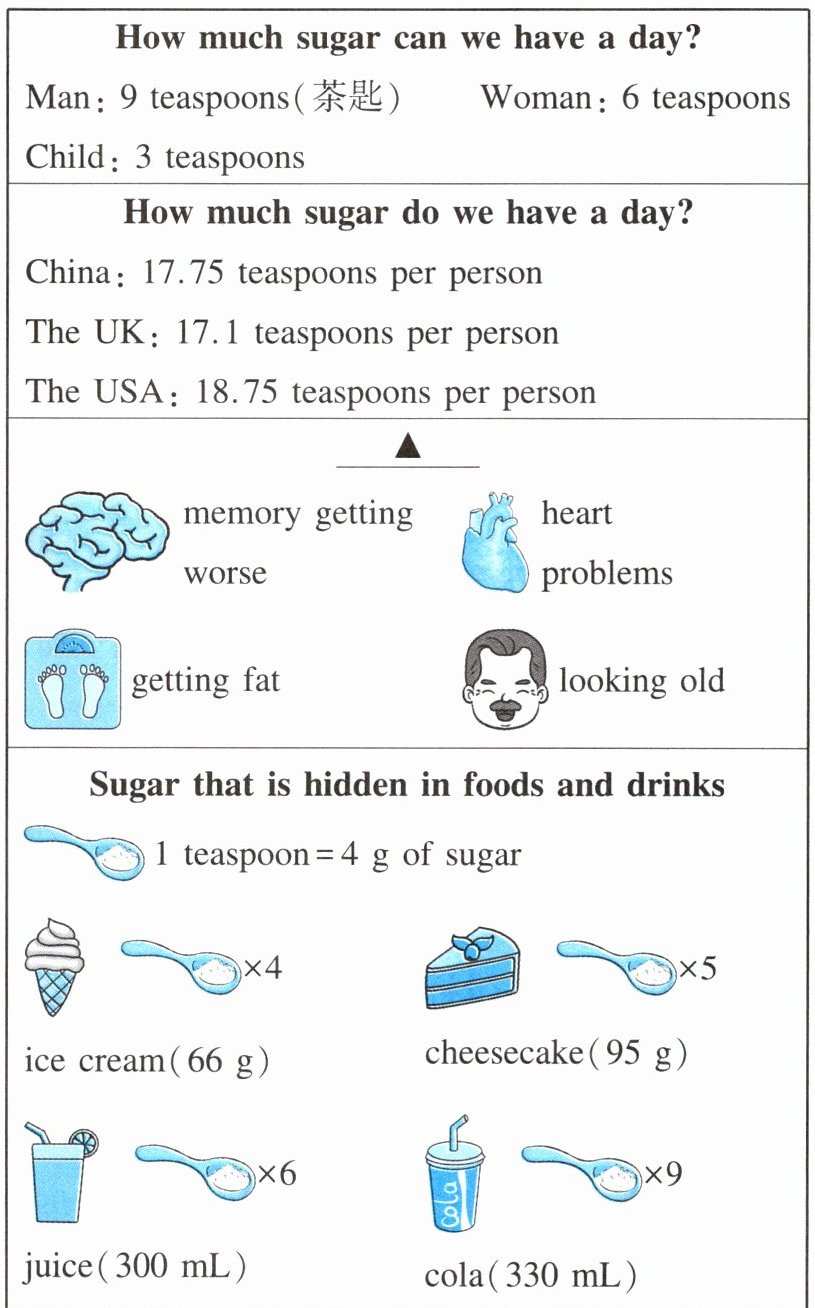
Sugar that is hidden in foods and drinks
1 teaspoon = 4 g of sugar
ice cream(66 g)
cheesecake(95 g)
juice(300 mL)
cola(330 mL)
续表
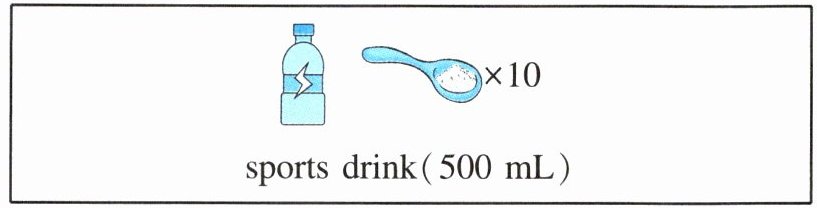
sports drink(500 mL)
1. 新素养·逻辑思维 Which of the following can be put into ▲?
A. Why do we need sugar?
B. When do we take sugar?
C. What does sugar cause?
2. 新趋势·跨学科 How much sugar will you take in if you have a cheesecake with a glass of juice?
A. 11 g.
B. 44 g.
C. 95 g.
3. What can we learn about sugar?
A. Women can have more sugar a day than men.
B. People in the UK have the most daily sugar intake(摄取量).
C. Sugar may cause people to forget things more easily.
4. 新考法·文章出处 Where does the infographic(信息图) probably come from?
A. A magazine.
B. A storybook.
C. A travel guide.
Dangerous Sugar
How much sugar can we have a day?
Man: 9 teaspoons(茶匙) Woman: 6 teaspoons
Child: 3 teaspoons
How much sugar do we have a day?
China: 17.75 teaspoons per person
The UK: 17.1 teaspoons per person
The USA: 18.75 teaspoons per person
▲
Sugar that is hidden in foods and drinks
1 teaspoon = 4 g of sugar
ice cream(66 g)
cheesecake(95 g)
juice(300 mL)
cola(330 mL)
续表
sports drink(500 mL)
1. 新素养·逻辑思维 Which of the following can be put into ▲?
A. Why do we need sugar?
B. When do we take sugar?
C. What does sugar cause?
2. 新趋势·跨学科 How much sugar will you take in if you have a cheesecake with a glass of juice?
A. 11 g.
B. 44 g.
C. 95 g.
3. What can we learn about sugar?
A. Women can have more sugar a day than men.
B. People in the UK have the most daily sugar intake(摄取量).
C. Sugar may cause people to forget things more easily.
4. 新考法·文章出处 Where does the infographic(信息图) probably come from?
A. A magazine.
B. A storybook.
C. A travel guide.
答案
1.C 2.B 3.C 4.A
解析
【分析】
本题为多模态语篇阅读理解题,共4道选择题,需结合信息图内容逐一分析:第1题需梳理上下文逻辑,判断▲处应填内容;第2题需利用糖量换算关系计算;第3题需对比原文细节排除错误选项;第4题需根据语篇内容判断出处。
【解析】
1. 第1题:前文介绍每日建议糖量、各国糖摄取量,后文列举含隐藏糖的食物,▲处应衔接糖的危害相关内容。A选项“为什么需要糖”、B选项“什么时候吃糖”均不符合逻辑,C选项“糖会导致什么”符合上下文逻辑,故选C。
2. 第2题:已知1茶匙=4g糖,cheesecake的糖量对应11茶匙(11×4=44g),结合选项,选B。
3. 第3题:A选项:原文男性每日建议9茶匙,女性6茶匙,女性糖摄入量更少,A错误;B选项:美国每日糖摄取量18.75茶匙,多于英国的17.1茶匙,B错误;C选项为合理推断,符合科普常识,故选C。
4. 第4题:该信息图为关于糖的科普内容,最可能来自杂志;故事书为虚构故事,旅游指南聚焦旅游,均不符合,故选A。
【答案】1.C 2.B 3.C 4.A
【知识点】阅读理解(多模态语篇)、逻辑推理、细节理解
【点评】本题结合多模态信息图考查阅读理解能力,涉及逻辑判断、计算、细节对比等,贴近生活,注重学生的语篇应用能力。
【难度系数】0.6
本题为多模态语篇阅读理解题,共4道选择题,需结合信息图内容逐一分析:第1题需梳理上下文逻辑,判断▲处应填内容;第2题需利用糖量换算关系计算;第3题需对比原文细节排除错误选项;第4题需根据语篇内容判断出处。
【解析】
1. 第1题:前文介绍每日建议糖量、各国糖摄取量,后文列举含隐藏糖的食物,▲处应衔接糖的危害相关内容。A选项“为什么需要糖”、B选项“什么时候吃糖”均不符合逻辑,C选项“糖会导致什么”符合上下文逻辑,故选C。
2. 第2题:已知1茶匙=4g糖,cheesecake的糖量对应11茶匙(11×4=44g),结合选项,选B。
3. 第3题:A选项:原文男性每日建议9茶匙,女性6茶匙,女性糖摄入量更少,A错误;B选项:美国每日糖摄取量18.75茶匙,多于英国的17.1茶匙,B错误;C选项为合理推断,符合科普常识,故选C。
4. 第4题:该信息图为关于糖的科普内容,最可能来自杂志;故事书为虚构故事,旅游指南聚焦旅游,均不符合,故选A。
【答案】1.C 2.B 3.C 4.A
【知识点】阅读理解(多模态语篇)、逻辑推理、细节理解
【点评】本题结合多模态信息图考查阅读理解能力,涉及逻辑判断、计算、细节对比等,贴近生活,注重学生的语篇应用能力。
【难度系数】0.6
