

 登录
登录
三、短文填空
用方框中所给单词的适当形式填空,使短文完整正确。(每个单词限用一次,每空限填一个单词。)
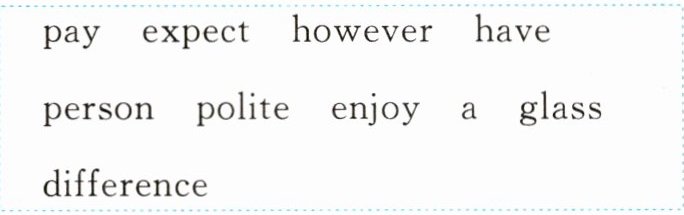
Different countries have different table manners. For example, in China, it is not polite to hit 1 empty bowl with chopsticks. But in some western countries, people hit their 2 to start the dinner.
In many parts of the world, people think it is 3 to eat your food noisily or to make any noise when you drink. But in some countries, this is a good thing. In Japan, for example, people often make noise when they have the noodles. It's a sign that they are 4 their meal. There are also some 5 about how you sit at the dinner table. For example, in Britain, it is bad manners to put your hands on the table.
And people also 6 for the meal in different ways. In France, one person will pay the whole bill. 7, in Germany, the bill is divided according to how much each person 8 eaten.
Then finally there's the problem of whether to leave a tip(小费)for the waiters. In China, people almost never leave tips, while in the USA, they are 9 to leave at least 15% of the total money on the bill.
A 10 table manner always shows his or her respect to the local culture. So before you travel somewhere, make sure you know the local table manners.
1.
2.
3.
4.
5.
6.
7.
8.
9.
10.
用方框中所给单词的适当形式填空,使短文完整正确。(每个单词限用一次,每空限填一个单词。)
Different countries have different table manners. For example, in China, it is not polite to hit 1 empty bowl with chopsticks. But in some western countries, people hit their 2 to start the dinner.
In many parts of the world, people think it is 3 to eat your food noisily or to make any noise when you drink. But in some countries, this is a good thing. In Japan, for example, people often make noise when they have the noodles. It's a sign that they are 4 their meal. There are also some 5 about how you sit at the dinner table. For example, in Britain, it is bad manners to put your hands on the table.
And people also 6 for the meal in different ways. In France, one person will pay the whole bill. 7, in Germany, the bill is divided according to how much each person 8 eaten.
Then finally there's the problem of whether to leave a tip(小费)for the waiters. In China, people almost never leave tips, while in the USA, they are 9 to leave at least 15% of the total money on the bill.
A 10 table manner always shows his or her respect to the local culture. So before you travel somewhere, make sure you know the local table manners.
1.
2.
3.
4.
5.
6.
7.
8.
9.
10.
答案
1. an
2. glasses
3. impolite
4. enjoying
5. differences
6. pay
7. However
8. has
9. expected
10. person's
2. glasses
3. impolite
4. enjoying
5. differences
6. pay
7. However
8. has
9. expected
10. person's
解析
【分析】
首先通读短文,明确短文围绕不同国家餐桌礼仪展开的主题。解题时,需结合每个空的语法结构(如冠词、名词单复数、形容词、动词时态/语态、固定搭配等),从方框内单词中选合适的词,再根据语境和语法规则调整为适当形式,注意每个单词限用一次。
【解析】
1. 空后是元音音素开头的单数名词短语empty bowl,需用不定冠词an修饰,故填an。
2. 空前是形容词性物主代词their,后接可数名词,结合语境“他们的玻璃杯”,方框中glass需用复数形式glasses,故填glasses。
3. 根据后文转折“但在一些国家这是好事”,可知此处表达“吃食物时发出噪音是不礼貌的”,polite的否定形式为impolite,故填impolite。
4. 空前是be动词are,结合语境“正在享受食物”,需用现在进行时,enjoy的现在分词为enjoying,故填enjoying。
5. 空前是some,后接可数名词复数,difference是可数名词,此处表示“差异”,用复数differences,故填differences。
6. 结合固定搭配pay for(为……付款),主语是people,用动词原形pay,故填pay。
7. 前后句是转折关系,位于句首需用转折副词However,首字母大写,故填However。
8. 此处是现在完成时,主语each person是单数,助动词用has,故填has。
9. 结合固定搭配be expected to do sth.(被期待做某事),用expect的过去分词expected,故填expected。
10. 此处表示“一个人的餐桌礼仪”,需用名词所有格person's修饰table manner,故填person's。
【答案】
1. an
2. glasses
3. impolite
4. enjoying
5. differences
6. pay
7. However
8. has
9. expected
10. person's
【知识点】
不定冠词用法;名词形式变化;被动语态;名词所有格
【点评】
本题为短文填空题型,考查学生对词汇在语境中的综合运用能力,涵盖冠词、名词、形容词、动词时态/语态、固定搭配等基础知识点,需结合上下文语境和语法规则解题,是典型的英语基础运用题。
【难度系数】
0.5
首先通读短文,明确短文围绕不同国家餐桌礼仪展开的主题。解题时,需结合每个空的语法结构(如冠词、名词单复数、形容词、动词时态/语态、固定搭配等),从方框内单词中选合适的词,再根据语境和语法规则调整为适当形式,注意每个单词限用一次。
【解析】
1. 空后是元音音素开头的单数名词短语empty bowl,需用不定冠词an修饰,故填an。
2. 空前是形容词性物主代词their,后接可数名词,结合语境“他们的玻璃杯”,方框中glass需用复数形式glasses,故填glasses。
3. 根据后文转折“但在一些国家这是好事”,可知此处表达“吃食物时发出噪音是不礼貌的”,polite的否定形式为impolite,故填impolite。
4. 空前是be动词are,结合语境“正在享受食物”,需用现在进行时,enjoy的现在分词为enjoying,故填enjoying。
5. 空前是some,后接可数名词复数,difference是可数名词,此处表示“差异”,用复数differences,故填differences。
6. 结合固定搭配pay for(为……付款),主语是people,用动词原形pay,故填pay。
7. 前后句是转折关系,位于句首需用转折副词However,首字母大写,故填However。
8. 此处是现在完成时,主语each person是单数,助动词用has,故填has。
9. 结合固定搭配be expected to do sth.(被期待做某事),用expect的过去分词expected,故填expected。
10. 此处表示“一个人的餐桌礼仪”,需用名词所有格person's修饰table manner,故填person's。
【答案】
1. an
2. glasses
3. impolite
4. enjoying
5. differences
6. pay
7. However
8. has
9. expected
10. person's
【知识点】
不定冠词用法;名词形式变化;被动语态;名词所有格
【点评】
本题为短文填空题型,考查学生对词汇在语境中的综合运用能力,涵盖冠词、名词、形容词、动词时态/语态、固定搭配等基础知识点,需结合上下文语境和语法规则解题,是典型的英语基础运用题。
【难度系数】
0.5
