

 登录
Ⅰ. Listen and choose the correct linking sounds you hear.
(
A B C
(
A B C
(
A B C
(
A
)1. They are one of the greatest mysteries in the world.A B C
(
B
)2. We plan to stay for about a week.A B C
(
A
)3. Do you think we can find out the truth about those mysteries one day?A B C
答案
1. A
2. B
3. A
2. B
3. A
Ⅱ. Listen and complete the table.
The Great Pyramid of Giza
Height It is about 1.
History It was built nearly 5,000 years ago.
Material It is made of 2.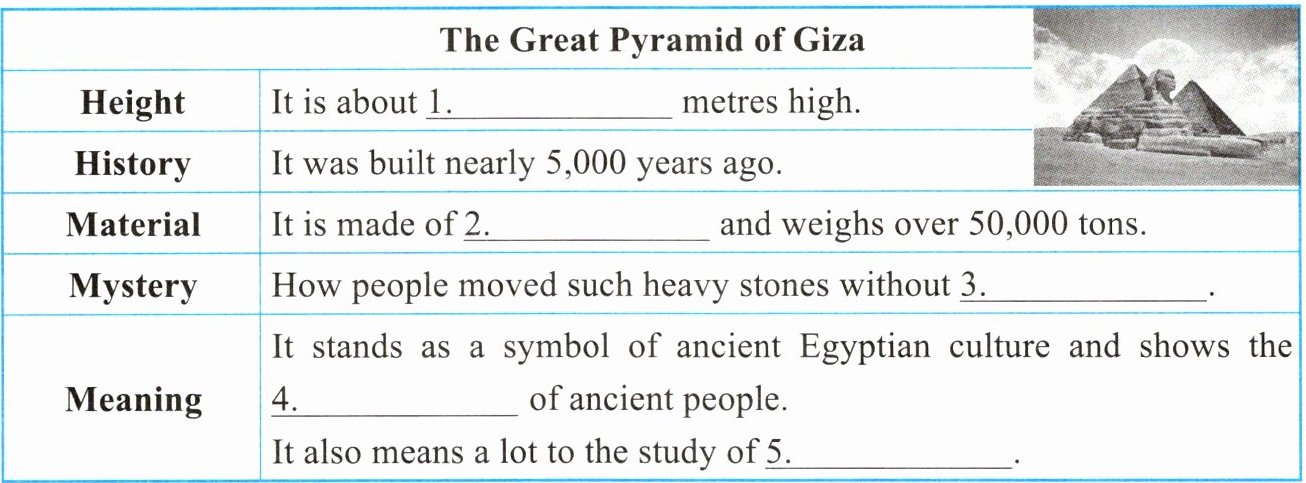 and weighs over 50,000 tons.
Mystery How people moved such heavy stones without 3.
Meaning It stands as a symbol of ancient Egyptian culture and shows the 4.
It also means a lot to the study of 5.
The Great Pyramid of Giza
Height It is about 1.
146
metres high.History It was built nearly 5,000 years ago.
Material It is made of 2.
stone
and weighs over 50,000 tons.Mystery How people moved such heavy stones without 3.
modern machines
.Meaning It stands as a symbol of ancient Egyptian culture and shows the 4.
great wisdom
of ancient people.It also means a lot to the study of 5.
human history
.答案
1. 146
2. stone
3. modern machines
4. great wisdom
5. human history
2. stone
3. modern machines
4. great wisdom
5. human history
Ⅲ. Complete the passage with the proper form of the words in the box.
around arrive visitor exact tool heavy
Easter Island is famous for its moai—large stone statues with big heads and human-like bodies. There are nearly 1,000 statues on the island. The largest one is about 22 metres high, and they weigh 1.
Many people think the first settlers(移居者) 2.
The biggest mystery is how people moved these 4.
around arrive visitor exact tool heavy
Easter Island is famous for its moai—large stone statues with big heads and human-like bodies. There are nearly 1,000 statues on the island. The largest one is about 22 metres high, and they weigh 1.
around
14 tons on average.Many people think the first settlers(移居者) 2.
arrived
here over 1,500 years ago and built these statues. No one knows 3. exactly
why they made the moai, but they might have been for honouring ancestors.The biggest mystery is how people moved these 4.
heavy
stones. They had no modern 5. tools
, yet they managed to place the moai across the island. Today, the moai still stand as an amazing puzzle, drawing 6. visitors
from all over the world.答案
1. around
2. arrived
3. exactly
4. heavy
5. tools
6. visitors
2. arrived
3. exactly
4. heavy
5. tools
6. visitors
解析
【分析】
解题思路:先通读全文理解语境,再结合方框内单词的词义、词性,根据句子的时态、修饰成分(如修饰动词用副词、修饰名词用形容词)、名词单复数等规则,选择并变换单词的适当形式填空。
【解析】
1. 此处表示“大约”14吨,around符合语境,填around;
2. 由时间状语“over 1,500 years ago”可知用一般过去时,arrive的过去式为arrived,填arrived;
3. 此处修饰动词know,需用副词,exact的副词形式是exactly,填exactly;
4. 此处修饰名词stones,需用形容词,heavy为形容词,填heavy;
5. 此处表示“现代工具”,tool是可数名词,表泛指用复数形式tools,填tools;
6. 此处表示“吸引游客”,visitor是可数名词,表泛指用复数形式visitors,填visitors;
【答案】
1. around
2. arrived
3. exactly
4. heavy
5. tools
6. visitors
【知识点】
词汇适当形式运用、副词用法、名词复数变化
【点评】
本题为英语词汇运用题,考查学生对单词词义、词性的掌握,以及在语境中灵活变换单词形式的能力,属于基础题型,需结合句子结构和语法规则解题。
【难度系数】
0.6
Ⅳ. Read and answer the questions.
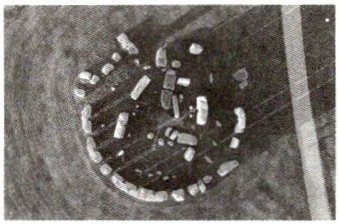
For many years, historians believed the Altar Stone at the centre of Stonehenge came from Wales. But new research shows its trip was much longer.
A study in the magazine Nature says the stone may have come from Scotland, which means builders carried it over 750 kilometres about 5,000 years ago.
The Altar Stone weighs around 13,200 pounds. Joshua Pollard, an archaeologist, says the stone is unusual because it is in the most sacred(神圣的) area of Stonehenge. Scientists studied the stone’s chemicals. They found some sands are 1 to 2 billion years old, and others are about 450 million years old. This special “chemical fingerprint” shows the stone is from Scotland.
No one knows exactly how people moved the stone. Researchers say early humans used rivers to move things. So the stone may have been carried by boat across the sea. Archaeologist Mike Pitts thinks a land trip is also possible. If the stone went by boat, people risked losing it. On land, many groups could see the stone, and it became more special as it moved south. It shows that ancient groups communicated and worked together over very long distances(距离).
(
A. Its shape and size.
B. Its 5,000-year-long history.
C. Its special chemical features.
D. The old photos of Stonehenge.
(
A. All ancient stones were moved by rivers.
B. The boat way was safer than the land trip.
C. Ancient people had long-distance cooperation.
D. People preferred to move heavy stones by boat.
3. What else do you want to know about the Altar Stone? (No more than 20 words)
For many years, historians believed the Altar Stone at the centre of Stonehenge came from Wales. But new research shows its trip was much longer.
A study in the magazine Nature says the stone may have come from Scotland, which means builders carried it over 750 kilometres about 5,000 years ago.
The Altar Stone weighs around 13,200 pounds. Joshua Pollard, an archaeologist, says the stone is unusual because it is in the most sacred(神圣的) area of Stonehenge. Scientists studied the stone’s chemicals. They found some sands are 1 to 2 billion years old, and others are about 450 million years old. This special “chemical fingerprint” shows the stone is from Scotland.
No one knows exactly how people moved the stone. Researchers say early humans used rivers to move things. So the stone may have been carried by boat across the sea. Archaeologist Mike Pitts thinks a land trip is also possible. If the stone went by boat, people risked losing it. On land, many groups could see the stone, and it became more special as it moved south. It shows that ancient groups communicated and worked together over very long distances(距离).
(
C
)1. What helped scientists find where the Altar Stone came from?A. Its shape and size.
B. Its 5,000-year-long history.
C. Its special chemical features.
D. The old photos of Stonehenge.
(
C
)2. What can we learn from the last paragraph?A. All ancient stones were moved by rivers.
B. The boat way was safer than the land trip.
C. Ancient people had long-distance cooperation.
D. People preferred to move heavy stones by boat.
3. What else do you want to know about the Altar Stone? (No more than 20 words)
答案
1. C
2. C
3. How did ancient people move such a heavy stone?
2. C
3. How did ancient people move such a heavy stone?
解析
【分析】
本题为英语阅读理解题,包含细节理解题、推理判断题和开放问答题。第1题需定位文中科学家确定祭坛石来源的依据,找到关于化学特征的描述;第2题需分析最后一段主旨,理解古代人群的合作情况;第3题需结合文本合理提出关于祭坛石的问题,注意字数限制。
【解析】
1. 细节理解题:根据文中第三段“Scientists studied the stone’s chemicals...This special ‘chemical fingerprint’ shows the stone is from Scotland.”可知,特殊的化学特征帮助科学家确定了祭坛石的来源,故选C。
2. 推理判断题:最后一段最后一句“It shows that ancient groups communicated and worked together over very long distances.”说明古代人群有远距离合作,A选项“所有石头都靠河流运输”错误,B选项“水路比陆路安全”与文中“risked losing it”不符,D选项“更喜欢水路”无依据,故选C。
3. 开放问答题:结合文本,可提出如“How did ancient people carry the Altar Stone exactly?”等合理问题,注意不超过20词。
【答案】
1. C
2. C
3. 略
【知识点】
英语阅读理解、细节理解、推理判断
【点评】
本题为科普类阅读理解,考查学生信息查找、文本理解及开放表达能力,贴近课外知识,难度适中。
【难度系数】
0.6
