

 登录
登录
[2026 广东广州调研] ①If you put your history notes under your pillow(枕头)and sleep on them the night before an exam, will you do any better in the exam? Most of us have hoped this may help. However, knowledge can’t go through the pillow into your brain. But that doesn’t mean you can’t learn while you are asleep.
②Scientists aren’t exactly sure how it works, but they have discovered that the brain can learn things during sleeping hours.
③In one experiment, researchers gave German speakers some Dutch words to learn. Then, they divided them into three groups. The researchers played the Dutch words for people in Group 1 while they were asleep, without telling these German speakers what they were doing. The sound was low so it didn’t wake them up, and only the newly introduced words were used.
④Another group listened to the same words while they were awake. The researchers found the people in Group 1 were better able to identify and translate(翻译)the words later. This was true only for the words that were played while they slept. The third group listened to the words when they walked. The walkers didn’t have the same success in remembering the words as the sleeping group.
⑤The researchers later found that people had more slow-wave brain activities all over the night. They said that more slow waves made people have a better memory for the new words.
(
A. Before they went for a walk.
B. Before they went to bed.
C. When they were asleep.
D. When they were having dinner.
(
A. Dutch words.
B. German speakers.
C. Dutch speakers.
D. German words.
(
(
A. Scientists think people can’t learn during sleeping hours.
B. German speakers enjoy learning Dutch words.
C. Slow-wave brain activities can help people have a good sleep.
D. People in Group 3 didn’t remember the words as well as those in Group 1.
(
A. History.
B. Science.
C. News.
D. Literature.

②Scientists aren’t exactly sure how it works, but they have discovered that the brain can learn things during sleeping hours.
③In one experiment, researchers gave German speakers some Dutch words to learn. Then, they divided them into three groups. The researchers played the Dutch words for people in Group 1 while they were asleep, without telling these German speakers what they were doing. The sound was low so it didn’t wake them up, and only the newly introduced words were used.
④Another group listened to the same words while they were awake. The researchers found the people in Group 1 were better able to identify and translate(翻译)the words later. This was true only for the words that were played while they slept. The third group listened to the words when they walked. The walkers didn’t have the same success in remembering the words as the sleeping group.
⑤The researchers later found that people had more slow-wave brain activities all over the night. They said that more slow waves made people have a better memory for the new words.
(
C
)1. When did the researchers play foreign words for people in Group 1 in the experiment?A. Before they went for a walk.
B. Before they went to bed.
C. When they were asleep.
D. When they were having dinner.
(
B
)2. What does the underlined word “them” refer to in Paragraph 3?A. Dutch words.
B. German speakers.
C. Dutch speakers.
D. German words.
(
D
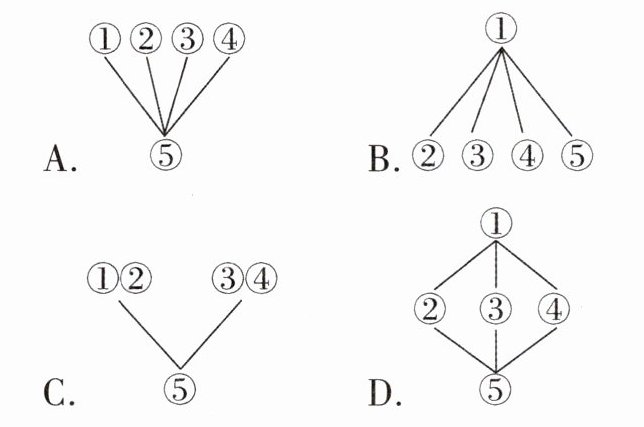
)3. 新考法 篇章结构 What’s the structure of this passage?(
D
)4. What can we learn from the passage?A. Scientists think people can’t learn during sleeping hours.
B. German speakers enjoy learning Dutch words.
C. Slow-wave brain activities can help people have a good sleep.
D. People in Group 3 didn’t remember the words as well as those in Group 1.
(
B
)5. What is the theme of the passage?A. History.
B. Science.
C. News.
D. Literature.
答案
1. C 细节理解题。根据 The researchers played the Dutch words for people in Group 1 while they were asleep 可知,研究人员在第一组人睡着的时候播放荷兰语单词。故选 C 项。
2. B 词义猜测题。根据“… researchers gave German speakers some Dutch words to learn. Then, they divided them into three groups. ”及 people in Group 1 可知,them 指代的是“说德语的人”。故选 B 项。
3. D 推理判断题。通读全文可知,第一段主要提出“大脑在睡眠期间是否能学习”的问题;第二至四段通过实验说明大脑在睡眠期间确实可以学习新事物;第五段说明慢波活动增强有助于提升对新信息的记忆能力。因此本文的结构为①/②③④/⑤。故选 D 项。
4. D 细节理解题。根据“The third group… The walkers didn't have the same success in remembering the words as the sleeping group. ”可知,第三组记单词的效果不如第一组。故选 D 项。
链接狂K
“so that+目的状语从句”的详细讲解见狂K重点 P23。
温馨提示
sharp 作形容词,意为“锋利的;尖锐的;敏锐的;急剧的”;作副词,意为“急剧地;尖锐地;准时地”。
5. B 推理判断题。根据“Scientists aren't exactly sure how it works, but they have discovered that the brain can learn things during sleeping hours. ”及全文内容可知,本文主要探讨了在睡眠中学习的问题,属于科学研究范畴。故选 B 项。
2. B 词义猜测题。根据“… researchers gave German speakers some Dutch words to learn. Then, they divided them into three groups. ”及 people in Group 1 可知,them 指代的是“说德语的人”。故选 B 项。
3. D 推理判断题。通读全文可知,第一段主要提出“大脑在睡眠期间是否能学习”的问题;第二至四段通过实验说明大脑在睡眠期间确实可以学习新事物;第五段说明慢波活动增强有助于提升对新信息的记忆能力。因此本文的结构为①/②③④/⑤。故选 D 项。
4. D 细节理解题。根据“The third group… The walkers didn't have the same success in remembering the words as the sleeping group. ”可知,第三组记单词的效果不如第一组。故选 D 项。
链接狂K
“so that+目的状语从句”的详细讲解见狂K重点 P23。
温馨提示
sharp 作形容词,意为“锋利的;尖锐的;敏锐的;急剧的”;作副词,意为“急剧地;尖锐地;准时地”。
5. B 推理判断题。根据“Scientists aren't exactly sure how it works, but they have discovered that the brain can learn things during sleeping hours. ”及全文内容可知,本文主要探讨了在睡眠中学习的问题,属于科学研究范畴。故选 B 项。
解析
【分析】
本题为英语阅读理解题,涵盖细节理解、词义猜测、篇章结构、主旨大意四类题型。解题思路:1. 细节理解题需根据题干关键词回原文定位,对比选项与原文表述;2. 词义猜测题需结合上下文指代关系,锁定前文对应的复数名词;3. 篇章结构题需梳理各段落核心内容,划分逻辑层次;4. 主旨大意题需把握全文核心话题,判断所属范畴。
【解析】
1. 细节理解题:根据题干关键词“Group 1”,定位到原文第三段“The researchers played the Dutch words for people in Group 1 while they were asleep”,可知研究人员在第一组人睡着时播放单词,故选C。
2. 词义猜测题:前文提到“researchers gave German speakers some Dutch words to learn. Then, they divided them into three groups”,“them”指代前文的“German speakers(说德语的人)”,故选B。
3. 篇章结构题:通读全文,第一段提出“睡眠时能否学习”的问题;第二至四段通过分组实验说明睡眠中可学习;第五段说明慢波活动对记忆的作用,结构为①/②③④/⑤,对应选项D,故选D。
4. 细节理解题:根据题干关键词“Group 3”,定位到原文第四段“The third group... The walkers didn’t have the same success in remembering the words as the sleeping group”,可知第三组记单词效果不如睡眠组(Group1),故选D。
5. 主旨大意题:全文围绕“睡眠中大脑可学习”的科学研究展开,属于科学范畴,故选B。
【答案】
1.C 2.B 3.D 4.D 5.B
【知识点】
英语阅读理解解题技巧、词义猜测、主旨大意
【点评】
本文是关于睡眠学习的科学类英语阅读理解,题型全面,侧重考查学生的原文定位、指代分析、结构梳理及主旨提炼能力,是常见的调研类阅读题型。
【难度系数】
0.6
本题为英语阅读理解题,涵盖细节理解、词义猜测、篇章结构、主旨大意四类题型。解题思路:1. 细节理解题需根据题干关键词回原文定位,对比选项与原文表述;2. 词义猜测题需结合上下文指代关系,锁定前文对应的复数名词;3. 篇章结构题需梳理各段落核心内容,划分逻辑层次;4. 主旨大意题需把握全文核心话题,判断所属范畴。
【解析】
1. 细节理解题:根据题干关键词“Group 1”,定位到原文第三段“The researchers played the Dutch words for people in Group 1 while they were asleep”,可知研究人员在第一组人睡着时播放单词,故选C。
2. 词义猜测题:前文提到“researchers gave German speakers some Dutch words to learn. Then, they divided them into three groups”,“them”指代前文的“German speakers(说德语的人)”,故选B。
3. 篇章结构题:通读全文,第一段提出“睡眠时能否学习”的问题;第二至四段通过分组实验说明睡眠中可学习;第五段说明慢波活动对记忆的作用,结构为①/②③④/⑤,对应选项D,故选D。
4. 细节理解题:根据题干关键词“Group 3”,定位到原文第四段“The third group... The walkers didn’t have the same success in remembering the words as the sleeping group”,可知第三组记单词效果不如睡眠组(Group1),故选D。
5. 主旨大意题:全文围绕“睡眠中大脑可学习”的科学研究展开,属于科学范畴,故选B。
【答案】
1.C 2.B 3.D 4.D 5.B
【知识点】
英语阅读理解解题技巧、词义猜测、主旨大意
【点评】
本文是关于睡眠学习的科学类英语阅读理解,题型全面,侧重考查学生的原文定位、指代分析、结构梳理及主旨提炼能力,是常见的调研类阅读题型。
【难度系数】
0.6
