

 登录
登录
Ⅰ.阅读理解
A
情境 素材 「2025山东滨州中考改编」 救同学缺考事件
What will you do if your classmate suddenly gets into danger on your way to an important exam? Recently, a student from Shandong has shown us a perfect answer with his kind act.
In May, 2025, while the student was rushing into his important exam, his classmate suddenly had a heart problem and fell down next to him. The student used CPR(心肺复苏) skills he learned at school to save his classmate right away. With the driver’s help, he sent his classmate to the hospital in just seven minutes—half the usual time. Thanks to their teamwork, his classmate was out of danger. However, the student was already too late for the exam, and he missed it.
This story quickly spread online and touched millions of people deeply. Many people spoke highly of the student. The education department(部门) also admired him for his courage and allowed him to take a make-up exam(补考). It shows that education is not just about grades but also developing a good character and a sense of responsibility(责任).
The student missed the exam, but he didn’t regret his decision. When he was asked about the exam, he said, “Exams can be retaken, but life cannot.”
This story isn’t just about the student’s kindness. It also tells us the true meaning of education. As one expert said, “Exams test knowledge, while the young man’s choice tested his character, and he scored perfectly.”
1. 特色 考法 事件排序题 Which of the following is the right order of the story?
a.The student saved his classmate.
b.The student was allowed to take a make-up exam.
c.Many people spoke highly of the student for his act.
d.The student’s classmate had a heart problem and fell down.
A.a→c→d→b B.b→c→d→a
C.d→a→c→b D.d→b→a→c
2.What does the underlined sentence in Paragraph 4 imply(暗示)?
A.The student hoped he could save more people’s lives.
B.The student regretted he didn’t take the exam on time.
C.The student hoped he could get high scores in the exam.
D.The student thought life was more valuable than an exam.
3. 特色 考法 人物形象题 Which of the following words could best describe the student?
A.Kind and brave.
B.Lovely and humorous.
C.Honest and clever.
D.Outgoing and hard-working.
A
情境 素材 「2025山东滨州中考改编」 救同学缺考事件
What will you do if your classmate suddenly gets into danger on your way to an important exam? Recently, a student from Shandong has shown us a perfect answer with his kind act.
In May, 2025, while the student was rushing into his important exam, his classmate suddenly had a heart problem and fell down next to him. The student used CPR(心肺复苏) skills he learned at school to save his classmate right away. With the driver’s help, he sent his classmate to the hospital in just seven minutes—half the usual time. Thanks to their teamwork, his classmate was out of danger. However, the student was already too late for the exam, and he missed it.
This story quickly spread online and touched millions of people deeply. Many people spoke highly of the student. The education department(部门) also admired him for his courage and allowed him to take a make-up exam(补考). It shows that education is not just about grades but also developing a good character and a sense of responsibility(责任).
The student missed the exam, but he didn’t regret his decision. When he was asked about the exam, he said, “Exams can be retaken, but life cannot.”
This story isn’t just about the student’s kindness. It also tells us the true meaning of education. As one expert said, “Exams test knowledge, while the young man’s choice tested his character, and he scored perfectly.”
1. 特色 考法 事件排序题 Which of the following is the right order of the story?
a.The student saved his classmate.
b.The student was allowed to take a make-up exam.
c.Many people spoke highly of the student for his act.
d.The student’s classmate had a heart problem and fell down.
A.a→c→d→b B.b→c→d→a
C.d→a→c→b D.d→b→a→c
2.What does the underlined sentence in Paragraph 4 imply(暗示)?
A.The student hoped he could save more people’s lives.
B.The student regretted he didn’t take the exam on time.
C.The student hoped he could get high scores in the exam.
D.The student thought life was more valuable than an exam.
3. 特色 考法 人物形象题 Which of the following words could best describe the student?
A.Kind and brave.
B.Lovely and humorous.
C.Honest and clever.
D.Outgoing and hard-working.
答案
1.C 事件排序题。通读全文可知,事件的顺序为:这位学生的同学因心脏病发作而倒下→这位学生救了他的同学→许多人高度赞扬了这位学生的行为→这位学生被允许参加补考。故选C。
2.D 推理判断题。画线部分意为“考试可以重新参加,但生命无法重来”,结合“The student missed the exam, but he didn’t regret his decision.”可推知,该学生认为生命比考试更重要。故选D。
3.A 人物形象题。该学生在同学有危险时,勇敢地使用心肺复苏技能救了同学,并且不后悔自己错过了考试,认为生命比考试更重要,由此可推知,该学生是善良且勇敢的。故选A。
2.D 推理判断题。画线部分意为“考试可以重新参加,但生命无法重来”,结合“The student missed the exam, but he didn’t regret his decision.”可推知,该学生认为生命比考试更重要。故选D。
3.A 人物形象题。该学生在同学有危险时,勇敢地使用心肺复苏技能救了同学,并且不后悔自己错过了考试,认为生命比考试更重要,由此可推知,该学生是善良且勇敢的。故选A。
解析
【分析】
这是一篇英语阅读理解题,包含事件排序、推理判断、人物形象三类题型。解题思路:1. 事件排序题需通读全文,按事件发生先后顺序定位原文信息,匹配对应选项;2. 推理判断题要结合画线句字面含义与上下文语境,推断深层暗示;3. 人物形象题需提取学生行为,分析其性格特征,匹配选项。
【解析】
1. 事件排序题:通读全文可知,事件顺序为:d.同学突发心脏病倒下→a.学生用CPR救同学→c.人们高度赞扬学生→b.学生被允许补考,对应选项C。
2. 推理判断题:画线句意为“考试可重考,但生命无法重来”,结合上下文“学生错过考试但不后悔”,可知学生认为生命比考试更重要,对应选项D。
3. 人物形象题:学生在同学遇险时勇敢施救,且不后悔错过考试,体现出善良和勇敢的品质,对应选项A。
【答案】
1.C 2.D 3.A
【知识点】
英语阅读理解、事件排序、推理判断
【点评】
本题为中考改编的阅读理解题,结合真实感人的情境,考查不同阅读题型的解题能力,既注重文本细节与逻辑的理解,又引导学生树立生命至上、重视品德的价值观,符合中考命题导向。
【难度系数】
0.7
这是一篇英语阅读理解题,包含事件排序、推理判断、人物形象三类题型。解题思路:1. 事件排序题需通读全文,按事件发生先后顺序定位原文信息,匹配对应选项;2. 推理判断题要结合画线句字面含义与上下文语境,推断深层暗示;3. 人物形象题需提取学生行为,分析其性格特征,匹配选项。
【解析】
1. 事件排序题:通读全文可知,事件顺序为:d.同学突发心脏病倒下→a.学生用CPR救同学→c.人们高度赞扬学生→b.学生被允许补考,对应选项C。
2. 推理判断题:画线句意为“考试可重考,但生命无法重来”,结合上下文“学生错过考试但不后悔”,可知学生认为生命比考试更重要,对应选项D。
3. 人物形象题:学生在同学遇险时勇敢施救,且不后悔错过考试,体现出善良和勇敢的品质,对应选项A。
【答案】
1.C 2.D 3.A
【知识点】
英语阅读理解、事件排序、推理判断
【点评】
本题为中考改编的阅读理解题,结合真实感人的情境,考查不同阅读题型的解题能力,既注重文本细节与逻辑的理解,又引导学生树立生命至上、重视品德的价值观,符合中考命题导向。
【难度系数】
0.7
B
情境 素材 低头族 「2025 湖南长沙中考改编」
One morning, I stopped at my favorite restaurant to get something to eat and got comfortable at a small table. Shortly after, I noticed four young people sitting at a table near me. After simply greeting each other and ordering, they all looked at their phones and continued to do so until their orders arrived. After photographing their food, they ate, continuing to look at their phones. I was wondering why they came here to eat together.
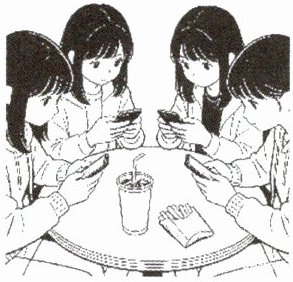
They were phubbing, or phone snubbing(冷落), a very common problem these days.
You may not know the word "phubbing", but this kind of act is not strange to you. In fact, 32% of people report that they are phubbed two or three times a day.
Do you have a conversation on your phone while talking to another person face to face? Do you scroll(上下滑动) through your phone while eating with someone for fear of missing out? If your answer is yes to either of them, you might be a "phubber".
The writer of The Psychology of Phubbing did a survey and found that the influence of phubbing on relationships can be very harmful or destructive. For example, children felt that parents who phubbed them didn't care about them. This led to a feeling of being left out. Also, partners who were phubbed might be less satisfied with the relationship because of jealousy(嫉妒) and worries.
Phubbing is a learned act, so unlearning it is possible. Start by accepting the problem. Set a time limit(限制) for not using your phone. Create areas where phones are off-limits.
Don't let the modern technology which is designed(设计) to bring people together separate you from others.
4. 特色 考法 写作手法题 How does the writer introduce the word "phubber" in Paragraph 3?
A.By raising questions.
B.By listing numbers.
C.By presenting facts.
D.By giving reasons.
5. What does the underlined word "destructive" in Paragraph 4 mean?
A.微乎其微的 B.发人深省的
C.有破坏性的 D.积极正向的
6. 特色 考法 写作目的题 What is the main purpose of the text?
A.To show how phones bring people closer.
B.To present the advantages of modern technology.
C.To tell people about the result of a survey.
D.To warn people against phubbing.
情境 素材 低头族 「2025 湖南长沙中考改编」
One morning, I stopped at my favorite restaurant to get something to eat and got comfortable at a small table. Shortly after, I noticed four young people sitting at a table near me. After simply greeting each other and ordering, they all looked at their phones and continued to do so until their orders arrived. After photographing their food, they ate, continuing to look at their phones. I was wondering why they came here to eat together.
They were phubbing, or phone snubbing(冷落), a very common problem these days.
You may not know the word "phubbing", but this kind of act is not strange to you. In fact, 32% of people report that they are phubbed two or three times a day.
Do you have a conversation on your phone while talking to another person face to face? Do you scroll(上下滑动) through your phone while eating with someone for fear of missing out? If your answer is yes to either of them, you might be a "phubber".
The writer of The Psychology of Phubbing did a survey and found that the influence of phubbing on relationships can be very harmful or destructive. For example, children felt that parents who phubbed them didn't care about them. This led to a feeling of being left out. Also, partners who were phubbed might be less satisfied with the relationship because of jealousy(嫉妒) and worries.
Phubbing is a learned act, so unlearning it is possible. Start by accepting the problem. Set a time limit(限制) for not using your phone. Create areas where phones are off-limits.
Don't let the modern technology which is designed(设计) to bring people together separate you from others.
4. 特色 考法 写作手法题 How does the writer introduce the word "phubber" in Paragraph 3?
A.By raising questions.
B.By listing numbers.
C.By presenting facts.
D.By giving reasons.
5. What does the underlined word "destructive" in Paragraph 4 mean?
A.微乎其微的 B.发人深省的
C.有破坏性的 D.积极正向的
6. 特色 考法 写作目的题 What is the main purpose of the text?
A.To show how phones bring people closer.
B.To present the advantages of modern technology.
C.To tell people about the result of a survey.
D.To warn people against phubbing.
答案
4.A 写作手法题。根据“Do you have a conversation... face to face? Do you scroll...for fear of missing out?”可知,作者在第三段通过提问的方式引出了“phubber”一词。故选A。
5.C 词义猜测题。根据“found that the influence of phubbing on relationships can be very harmful or destructive”可知,画线词destructive与or前的harmful含义相近,即“有破坏性的”。故选C。
6.D 写作目的题。通读全文可知,本文主要介绍了低头族现象以及“phubbing”一词的来源,旨在倡导人们减少使用手机的时间,去做其他更有意义的事。故选D。
5.C 词义猜测题。根据“found that the influence of phubbing on relationships can be very harmful or destructive”可知,画线词destructive与or前的harmful含义相近,即“有破坏性的”。故选C。
6.D 写作目的题。通读全文可知,本文主要介绍了低头族现象以及“phubbing”一词的来源,旨在倡导人们减少使用手机的时间,去做其他更有意义的事。故选D。
解析
【分析】
本题为英语阅读理解题,需结合原文内容分析各题考点:第4题考查写作手法,需定位第三段判断引出“phubber”的方式;第5题考查词义猜测,需结合并列关系推断划线词含义;第6题考查主旨大意,需通读全文把握核心目的。
【解析】
4. 写作手法题:定位第三段,作者通过“Do you have a conversation on your phone while talking to another person face to face? Do you scroll through your phone while eating with someone for fear of missing out?”两个问句引出“phubber”,属于提问方式,故选A。
5. 词义猜测题:划线词所在句“the influence of phubbing on relationships can be very harmful or destructive”中,or连接并列形容词,harmful意为“有害的”,故destructive应与harmful含义相近,即“有破坏性的”,选C。
6. 写作目的题:通读全文,文章先介绍phubbing现象,说明其对人际关系的危害,最后提出改掉该行为的方法,核心目的是提醒人们警惕低头族(phubbing),故选D。
【答案】
4.A 5.C 6.D
【知识点】
英语阅读理解、写作手法、词义猜测
【点评】
本题围绕“低头族”这一贴近生活的社会现象设题,涵盖写作手法、词义猜测、主旨大意三类中考常见考点,考查学生的阅读理解与逻辑分析能力,难度适中。
【难度系数】
0.6
本题为英语阅读理解题,需结合原文内容分析各题考点:第4题考查写作手法,需定位第三段判断引出“phubber”的方式;第5题考查词义猜测,需结合并列关系推断划线词含义;第6题考查主旨大意,需通读全文把握核心目的。
【解析】
4. 写作手法题:定位第三段,作者通过“Do you have a conversation on your phone while talking to another person face to face? Do you scroll through your phone while eating with someone for fear of missing out?”两个问句引出“phubber”,属于提问方式,故选A。
5. 词义猜测题:划线词所在句“the influence of phubbing on relationships can be very harmful or destructive”中,or连接并列形容词,harmful意为“有害的”,故destructive应与harmful含义相近,即“有破坏性的”,选C。
6. 写作目的题:通读全文,文章先介绍phubbing现象,说明其对人际关系的危害,最后提出改掉该行为的方法,核心目的是提醒人们警惕低头族(phubbing),故选D。
【答案】
4.A 5.C 6.D
【知识点】
英语阅读理解、写作手法、词义猜测
【点评】
本题围绕“低头族”这一贴近生活的社会现象设题,涵盖写作手法、词义猜测、主旨大意三类中考常见考点,考查学生的阅读理解与逻辑分析能力,难度适中。
【难度系数】
0.6
