

 登录
登录
二、阅读理解 放下情绪包袱
素养:思维品质 难度:中 用时:8分钟
Are you emotional? Do you often have strong feelings? How do you deal with bad emotions?
We feel angry or unhappy about the things we did not achieve, the things we cannot have, and many other things. It seems that everyone carries their own bad moods. But neither unhappiness nor anger can help us. Over time, they can be a heavy weight on our shoulders.
These bad moods don’t do anything good to us at all. So you might ask yourself—is it possible to put down this heavy burden and give yourself a break? It is quite possible. Start by actually learning about your feelings. How do they get inside of us? Why do we carry them for so long instead of putting them down? Can we live without them?
By thinking about our bad moods, we can find healthy ways to deal with them. Unhealthy behaviors are not the way to do this. They provide no relaxation. Instead, there are better ways to deal with them. One of the best ways is forgiveness. Forgiveness is a powerful tool. We should forgive ourselves first. We shouldn’t keep bad moods inside. We must also forgive others who have made us unhappy or angry. This is not always easy. But when we learn to forgive ourselves, it becomes easier to forgive others as well.
There is nothing good about carrying years of emotional burdens. By forgiving ourselves and others, we can abandon our burdens and feel better about ourselves. When you do this, you will start to feel a lot lighter. Years of heaviness will be magically lifted! You’ll start to feel like you have more energy and you’ll be much happier with your life.
1. 新考法·写作手法题 How does the writer begin the passage?
A. By telling a story.
B. By listing differences.
C. By showing facts.
D. By asking questions.
2. What should you do first to deal with the bad moods?
A. Ask others questions.
B. Study the moods.
C. Try to live without them.
D. Keep them in your mind.
3. What is the right way to deal with bad emotions according to the passage?
A. Forgiving ourselves and others.
B. Keeping bad moods inside.
C. Sharing bad moods with others.
D. Finding good emotions to replace them.
4. What can we learn from the passage?
A. Unhappiness can sometimes encourage people to make progress.
B. It’s necessary to keep the feelings to yourself when you are busy.
C. Forgive others first and then you can be full of energy and power.
D. Bad emotions are normal but need to be dealt with in a proper way.
5. What is the best title for the passage?
A. How to Forgive Others
B. How to Deal with Bad Emotions
C. How to Forgive Our Own Mistakes
D. How to Become an Energetic Person
素养:思维品质 难度:中 用时:8分钟
Are you emotional? Do you often have strong feelings? How do you deal with bad emotions?
We feel angry or unhappy about the things we did not achieve, the things we cannot have, and many other things. It seems that everyone carries their own bad moods. But neither unhappiness nor anger can help us. Over time, they can be a heavy weight on our shoulders.
These bad moods don’t do anything good to us at all. So you might ask yourself—is it possible to put down this heavy burden and give yourself a break? It is quite possible. Start by actually learning about your feelings. How do they get inside of us? Why do we carry them for so long instead of putting them down? Can we live without them?
By thinking about our bad moods, we can find healthy ways to deal with them. Unhealthy behaviors are not the way to do this. They provide no relaxation. Instead, there are better ways to deal with them. One of the best ways is forgiveness. Forgiveness is a powerful tool. We should forgive ourselves first. We shouldn’t keep bad moods inside. We must also forgive others who have made us unhappy or angry. This is not always easy. But when we learn to forgive ourselves, it becomes easier to forgive others as well.
There is nothing good about carrying years of emotional burdens. By forgiving ourselves and others, we can abandon our burdens and feel better about ourselves. When you do this, you will start to feel a lot lighter. Years of heaviness will be magically lifted! You’ll start to feel like you have more energy and you’ll be much happier with your life.
1. 新考法·写作手法题 How does the writer begin the passage?
A. By telling a story.
B. By listing differences.
C. By showing facts.
D. By asking questions.
2. What should you do first to deal with the bad moods?
A. Ask others questions.
B. Study the moods.
C. Try to live without them.
D. Keep them in your mind.
3. What is the right way to deal with bad emotions according to the passage?
A. Forgiving ourselves and others.
B. Keeping bad moods inside.
C. Sharing bad moods with others.
D. Finding good emotions to replace them.
4. What can we learn from the passage?
A. Unhappiness can sometimes encourage people to make progress.
B. It’s necessary to keep the feelings to yourself when you are busy.
C. Forgive others first and then you can be full of energy and power.
D. Bad emotions are normal but need to be dealt with in a proper way.
5. What is the best title for the passage?
A. How to Forgive Others
B. How to Deal with Bad Emotions
C. How to Forgive Our Own Mistakes
D. How to Become an Energetic Person
答案
语篇研读
主题和内容
本文探讨了负面情绪的影响,并说明宽恕是放下情绪包袱的关键,引导学生学会自我和解与释怀。
意义和价值
本文为深受负面情绪困扰的人提供了切实可行的方法。它打破了人们对负面情绪“只能硬扛”的固有认知,引导人们正视情绪、主动化解,有助于减少内耗。
方式和方法
语篇类型:本文属于议论文,通过层层递进的逻辑阐述观点。
篇章发展脉络:本文以“提出问题—分析问题—解决问题—展望结果”的结构展开。第一段以设问引发读者对自身情绪的关注。第二至三段探讨负面情绪的无用性。第四段引出解决方法“宽恕”,分别从宽恕自己和宽恕他人两个维度展开论述。最后一段描绘放下情绪负担后的积极状态。
亮点表达:开篇以三连问切入,迅速拉近与读者的距离;文章将负面情绪比作“a heavy weight on our shoulders”,结尾用“Years of heaviness will be magically lifted!”呼应前文。
1. D 写作手法题。根据第一段的“Are you emotional? Do you often have strong feelings? How do you deal with bad emotions?”可知,作者通过提问的方式展开文章,引入话题。
[图2]
阅读理解中常见的几种开篇方式
(1)提问法(asking questions)。
(2)举例法(giving examples)。
(3)比较与对比法(comparison and contrast)。
(4)列举事实法(listing facts)。
(5)提出观点法(showing opinions)
2. B 细节理解题。根据第三段中的“Start by actually learning about your feelings”可知,第一步是研究情绪。
3. A 细节理解题。根据第四段中的“One of the best ways is forgiveness”“We should forgive ourselves first”和“We must also forgive others”可知,一种正确处理负面情绪的方式是原谅自己和他人。
4. D 推理判断题。根据第二段中的“It seems that everyone carries their own bad moods. But neither unhappiness nor anger can help us. Over time, they can be a heavy weight on our shoulders”可推知,负面情绪虽常见,但应合理应对。D项最贴合文意。
5. B 标题归纳题。通读文章可知,本文主要探讨了如何处理负面情绪,所以B项最适合作本文标题。
主题和内容
本文探讨了负面情绪的影响,并说明宽恕是放下情绪包袱的关键,引导学生学会自我和解与释怀。
意义和价值
本文为深受负面情绪困扰的人提供了切实可行的方法。它打破了人们对负面情绪“只能硬扛”的固有认知,引导人们正视情绪、主动化解,有助于减少内耗。
方式和方法
语篇类型:本文属于议论文,通过层层递进的逻辑阐述观点。
篇章发展脉络:本文以“提出问题—分析问题—解决问题—展望结果”的结构展开。第一段以设问引发读者对自身情绪的关注。第二至三段探讨负面情绪的无用性。第四段引出解决方法“宽恕”,分别从宽恕自己和宽恕他人两个维度展开论述。最后一段描绘放下情绪负担后的积极状态。
亮点表达:开篇以三连问切入,迅速拉近与读者的距离;文章将负面情绪比作“a heavy weight on our shoulders”,结尾用“Years of heaviness will be magically lifted!”呼应前文。
1. D 写作手法题。根据第一段的“Are you emotional? Do you often have strong feelings? How do you deal with bad emotions?”可知,作者通过提问的方式展开文章,引入话题。
[图2]
阅读理解中常见的几种开篇方式
(1)提问法(asking questions)。
(2)举例法(giving examples)。
(3)比较与对比法(comparison and contrast)。
(4)列举事实法(listing facts)。
(5)提出观点法(showing opinions)
2. B 细节理解题。根据第三段中的“Start by actually learning about your feelings”可知,第一步是研究情绪。
3. A 细节理解题。根据第四段中的“One of the best ways is forgiveness”“We should forgive ourselves first”和“We must also forgive others”可知,一种正确处理负面情绪的方式是原谅自己和他人。
4. D 推理判断题。根据第二段中的“It seems that everyone carries their own bad moods. But neither unhappiness nor anger can help us. Over time, they can be a heavy weight on our shoulders”可推知,负面情绪虽常见,但应合理应对。D项最贴合文意。
5. B 标题归纳题。通读文章可知,本文主要探讨了如何处理负面情绪,所以B项最适合作本文标题。
解析
【分析】本题为英语阅读理解题,共5道小题,涵盖写作手法、细节理解、推理判断、标题归纳四类题型。解题思路为:先通读全文把握主旨,再针对每道题的题型,定位原文对应内容,逐一分析选项,排除错误答案,得出正确结论。
【解析】1. 写作手法题:根据第一段的三个问句(Are you emotional? Do you often have strong feelings? How do you deal with bad emotions?)可知,作者通过提问的方式开篇引入话题,故选D。
2. 细节理解题:根据第三段“Start by actually learning about your feelings”可知,处理坏情绪的第一步是研究情绪,故选B。
3. 细节理解题:根据第四段“One of the best ways is forgiveness. We should forgive ourselves first... We must also forgive others”可知,正确处理负面情绪的方式是原谅自己和他人,故选A。
4. 推理判断题:根据第二段“everyone carries their own bad moods. But neither unhappiness nor anger can help us... a heavy weight on our shoulders”可推知,负面情绪虽常见,但需要合理应对,故选D。
5. 标题归纳题:全文围绕“如何处理负面情绪”展开,故最佳标题为How to Deal with Bad Emotions,选B。
【答案】1.D 2.B 3.A 4.D 5.B
【知识点】英语阅读理解、写作手法、细节理解
【点评】本文是一篇关于处理负面情绪的英语议论文,题型全面,考察学生的信息定位、主旨理解及推理判断能力,难度适中,有助于学生掌握阅读理解的解题方法。
【难度系数】0.6
【解析】1. 写作手法题:根据第一段的三个问句(Are you emotional? Do you often have strong feelings? How do you deal with bad emotions?)可知,作者通过提问的方式开篇引入话题,故选D。
2. 细节理解题:根据第三段“Start by actually learning about your feelings”可知,处理坏情绪的第一步是研究情绪,故选B。
3. 细节理解题:根据第四段“One of the best ways is forgiveness. We should forgive ourselves first... We must also forgive others”可知,正确处理负面情绪的方式是原谅自己和他人,故选A。
4. 推理判断题:根据第二段“everyone carries their own bad moods. But neither unhappiness nor anger can help us... a heavy weight on our shoulders”可推知,负面情绪虽常见,但需要合理应对,故选D。
5. 标题归纳题:全文围绕“如何处理负面情绪”展开,故最佳标题为How to Deal with Bad Emotions,选B。
【答案】1.D 2.B 3.A 4.D 5.B
【知识点】英语阅读理解、写作手法、细节理解
【点评】本文是一篇关于处理负面情绪的英语议论文,题型全面,考察学生的信息定位、主旨理解及推理判断能力,难度适中,有助于学生掌握阅读理解的解题方法。
【难度系数】0.6
【语篇解构】 阅读文章,补充下面的结构图(每空一词)
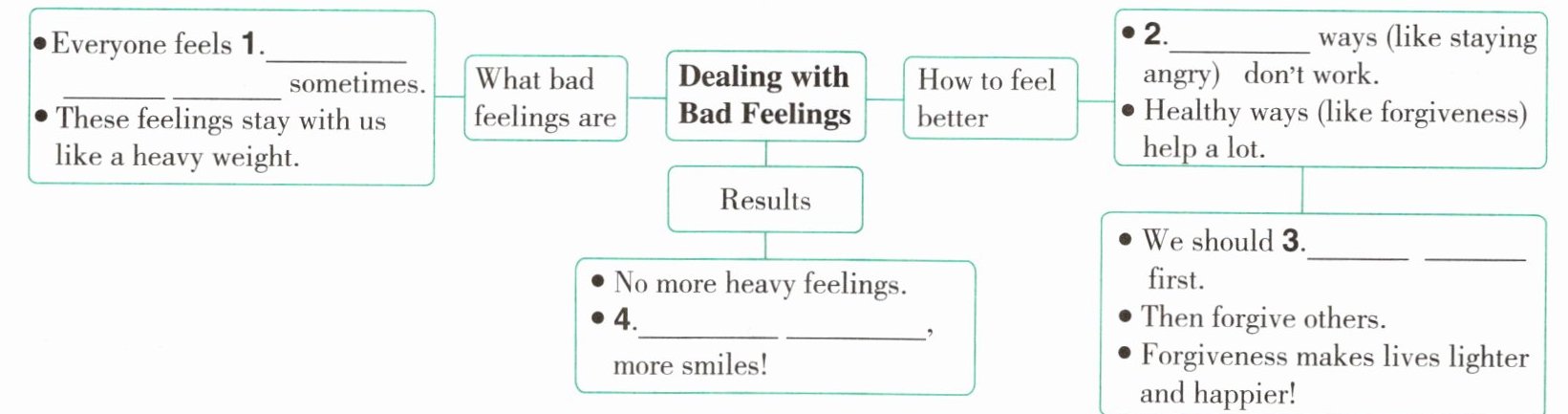
注:阐述观点类议论文语篇研读见答案 P08
注:阐述观点类议论文语篇研读见答案 P08
答案
1. angry or unhappy 2. Unhealthy 3. forgive ourselves 4. More energy
解析
【分析】
本题为语篇解构补全题,需结合结构图各部分的逻辑关系及上下文语境填空。第1空对应负面情绪的描述,第2空需与后文“Healthy ways”对应,第3空根据后文“then forgive others”的顺承逻辑推导,第4空结合结果部分的并列信息补充。
【解析】
1. 第1空:根据结构图右侧举例“staying angry”及前文“These feelings stay with us like a heavy weight”,可知此处指负面情绪,填angry or unhappy;
2. 第2空:由后文“Healthy ways (like forgiveness) help a lot”可知,此处是与健康方式相反的,即不健康的方式,填Unhealthy;
3. 第3空:根据后文“Then forgive others”的顺承关系,此处应是先原谅自己,填forgive ourselves;
4. 第4空:结合结果部分“No more heavy feelings”和“more smiles”,可知结果还有更多精力,填More energy。
【答案】
1. angry or unhappy 2. Unhealthy 3. forgive ourselves 4. More energy
【知识点】
语篇结构分析、词汇运用
【点评】
本题考查语篇结构理解与词汇搭配,需理清各部分对应关系,难度适中,适合基础阶段学生练习。
【难度系数】
0.6
本题为语篇解构补全题,需结合结构图各部分的逻辑关系及上下文语境填空。第1空对应负面情绪的描述,第2空需与后文“Healthy ways”对应,第3空根据后文“then forgive others”的顺承逻辑推导,第4空结合结果部分的并列信息补充。
【解析】
1. 第1空:根据结构图右侧举例“staying angry”及前文“These feelings stay with us like a heavy weight”,可知此处指负面情绪,填angry or unhappy;
2. 第2空:由后文“Healthy ways (like forgiveness) help a lot”可知,此处是与健康方式相反的,即不健康的方式,填Unhealthy;
3. 第3空:根据后文“Then forgive others”的顺承关系,此处应是先原谅自己,填forgive ourselves;
4. 第4空:结合结果部分“No more heavy feelings”和“more smiles”,可知结果还有更多精力,填More energy。
【答案】
1. angry or unhappy 2. Unhealthy 3. forgive ourselves 4. More energy
【知识点】
语篇结构分析、词汇运用
【点评】
本题考查语篇结构理解与词汇搭配,需理清各部分对应关系,难度适中,适合基础阶段学生练习。
【难度系数】
0.6
