

 登录
登录
跨学科
A 跨学科 仿生学(2025·重庆中考)
你见过像真鱼一样的仿生鱼吗?让我们一起来了解一下仿生学吧!
"Wow! Look at that! Isn't it a real fish?" The bionic(仿生) fish, named "Jinlin", was swimming lively like a real one. It was developed by researchers at Shanghai Ocean University. This invention isn't just for fun—it shows how humans copy nature to solve problems. That is a science called bionics.
Over millions of years, animals and plants have developed smart ways to survive. For example, kingfishers are experts at moving fast between air and water with very little noise. Through their study, scientists discovered that the birds' long beaks(喙) enabled this ability. Then they used the knowledge to change the front of the high-speed train. This change cut down noise level, increased speed by 10% and greatly saved energy. This combination(结合) of biology and engineering is the key to success in bionics. And it has set the stage for the rise of other new technologies.
Driven by robotics and AI, bionics has grown rapidly. The AI-powered bionic fish "Jinlin" can be used for environmental protection and deep sea exploration. In medicine, bionic arms can work similarly to real arms. Sensors allow the user to "feel" touch and pressure. Motors help the bionic arms make movements, like human muscles(肌肉). With AI, the bionic arms are able to "learn" new tasks and become smarter over time. These inventions are examples to show how bionics bridges biology and new technologies(技术) to solve humans' problems.
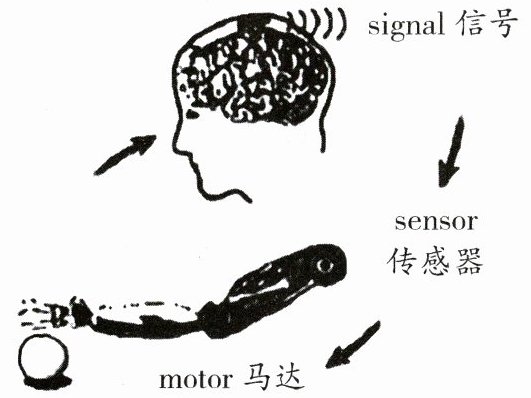
Although so much progress has been made, bionics faces challenges. Nature's designs are hard to copy perfectly. As for bionic arms, one key area of development is Brain-Computer Interface(脑机接口). More work on direct communication between the brain and bionic arms is required to control movements as naturally as real arms. Researchers are also working on creating new materials and structures which can sense and repair themselves.
While there's still a long way to go, the future of bionics is full of possibilities(可能性). Stay hungry. Stay foolish. Maybe you'll be the next one to change the world!
( )1. Why does the writer mention "Jinlin" at the beginning of the passage?
A. To suggest some new ideas.
B. To lead into the topic of bionics.
C. To explain the habits of fish.
D. To show the importance of bionics.
()2. What can we learn from Paragraph 3?
A. Robotics and AI have developed fast because of bionics.
B. The bionic fish "Jinlin" is used for medical purposes.
C. Motors allow the bionic arms to make movements.
D. Sensors help bionic arms learn new tasks over time.

()3. 中考新考法 细节多选 According to Paragraph 4, how would scientists make bionic arms more like real ones?
① By connecting motors with smart phones.
② By developing new materials and structures.
③ By improving Brain-Computer Interface.
④ By changing the shape and look of bionic arms.
A. ①② B. ②③ C. ①④ D. ③④
()4. Which of the following shows the use of bionics?
A. Drawing a picture of birds by watching real birds.
B. Building a house with natural materials like wood.
C. Designing a camera by copying some insects' eyes.
D. Learning to dance by studying monkeys' movements.

A 跨学科 仿生学(2025·重庆中考)
你见过像真鱼一样的仿生鱼吗?让我们一起来了解一下仿生学吧!
"Wow! Look at that! Isn't it a real fish?" The bionic(仿生) fish, named "Jinlin", was swimming lively like a real one. It was developed by researchers at Shanghai Ocean University. This invention isn't just for fun—it shows how humans copy nature to solve problems. That is a science called bionics.
Over millions of years, animals and plants have developed smart ways to survive. For example, kingfishers are experts at moving fast between air and water with very little noise. Through their study, scientists discovered that the birds' long beaks(喙) enabled this ability. Then they used the knowledge to change the front of the high-speed train. This change cut down noise level, increased speed by 10% and greatly saved energy. This combination(结合) of biology and engineering is the key to success in bionics. And it has set the stage for the rise of other new technologies.
Driven by robotics and AI, bionics has grown rapidly. The AI-powered bionic fish "Jinlin" can be used for environmental protection and deep sea exploration. In medicine, bionic arms can work similarly to real arms. Sensors allow the user to "feel" touch and pressure. Motors help the bionic arms make movements, like human muscles(肌肉). With AI, the bionic arms are able to "learn" new tasks and become smarter over time. These inventions are examples to show how bionics bridges biology and new technologies(技术) to solve humans' problems.
Although so much progress has been made, bionics faces challenges. Nature's designs are hard to copy perfectly. As for bionic arms, one key area of development is Brain-Computer Interface(脑机接口). More work on direct communication between the brain and bionic arms is required to control movements as naturally as real arms. Researchers are also working on creating new materials and structures which can sense and repair themselves.
While there's still a long way to go, the future of bionics is full of possibilities(可能性). Stay hungry. Stay foolish. Maybe you'll be the next one to change the world!
( )1. Why does the writer mention "Jinlin" at the beginning of the passage?
A. To suggest some new ideas.
B. To lead into the topic of bionics.
C. To explain the habits of fish.
D. To show the importance of bionics.
()2. What can we learn from Paragraph 3?
A. Robotics and AI have developed fast because of bionics.
B. The bionic fish "Jinlin" is used for medical purposes.
C. Motors allow the bionic arms to make movements.
D. Sensors help bionic arms learn new tasks over time.
()3. 中考新考法 细节多选 According to Paragraph 4, how would scientists make bionic arms more like real ones?
① By connecting motors with smart phones.
② By developing new materials and structures.
③ By improving Brain-Computer Interface.
④ By changing the shape and look of bionic arms.
A. ①② B. ②③ C. ①④ D. ③④
()4. Which of the following shows the use of bionics?
A. Drawing a picture of birds by watching real birds.
B. Building a house with natural materials like wood.
C. Designing a camera by copying some insects' eyes.
D. Learning to dance by studying monkeys' movements.
答案
A 【文章大意】本文介绍了仿生学的概念、发展及应用,也指出了其面临的挑战和改进方向。
1.B [解析]推理判断题。根据“This invention isn't just for fun—it shows how humans copy nature to solve problems. That is a science called bionics.”可推知,文章开头提到“金鳞”是为了引出仿生学这一话题。故选B。
2.C [解析]细节理解题。根据“Motors help the bionic arms make movements”可知,马达帮助仿生手臂进行运动。故选C。
3.B [解析]细节多选题。根据“As for bionic arms, one key area of development is Brain-Computer Interface(脑机接口)... Researchers are also working on creating new materials and structures which can sense and repair themselves.”可知,科学家们通过开发新的材料和结构以及改进脑机接口来使仿生手臂更接近真实手臂。故选B。
4.C [解析]推理判断题。根据“it shows how humans copy nature to solve problems. That is a science called bionics”可知,仿生学是指人类通过模仿自然来解决问题。由此可推知,选项C“通过模仿一些昆虫的眼睛设计照相机”是典型的仿生学应用。故选C。
1.B [解析]推理判断题。根据“This invention isn't just for fun—it shows how humans copy nature to solve problems. That is a science called bionics.”可推知,文章开头提到“金鳞”是为了引出仿生学这一话题。故选B。
2.C [解析]细节理解题。根据“Motors help the bionic arms make movements”可知,马达帮助仿生手臂进行运动。故选C。
3.B [解析]细节多选题。根据“As for bionic arms, one key area of development is Brain-Computer Interface(脑机接口)... Researchers are also working on creating new materials and structures which can sense and repair themselves.”可知,科学家们通过开发新的材料和结构以及改进脑机接口来使仿生手臂更接近真实手臂。故选B。
4.C [解析]推理判断题。根据“it shows how humans copy nature to solve problems. That is a science called bionics”可知,仿生学是指人类通过模仿自然来解决问题。由此可推知,选项C“通过模仿一些昆虫的眼睛设计照相机”是典型的仿生学应用。故选C。
解析
【分析】
这是一篇关于仿生学的英语阅读理解题,包含推理判断、细节理解、细节多选等题型。解题时需先通读全文把握主旨,再针对每道题的题干关键词,定位到原文对应段落,仔细比对原文与选项,排除干扰项得出答案。
【解析】
1. 推理判断题:根据第一段“This invention isn't just for fun—it shows how humans copy nature to solve problems. That is a science called bionics.”可知,文章开头提到“Jinlin”是为了引出仿生学这一话题,故选B。
2. 细节理解题:根据第三段“Motors help the bionic arms make movements, like human muscles.”可知,马达帮助仿生手臂进行运动,故选C。
3. 细节多选题:根据第四段“As for bionic arms, one key area of development is Brain-Computer Interface... Researchers are also working on creating new materials and structures which can sense and repair themselves.”可知,科学家通过开发新材料和结构、改进脑机接口让仿生手臂更接近真实手臂,即②③正确,故选B。
4. 推理判断题:根据仿生学定义“humans copy nature to solve problems”,选项C“通过模仿昆虫的眼睛设计照相机”是典型的仿生学应用,故选C。
【答案】
1.B 2.C 3.B 4.C
【知识点】
英语阅读理解、推理判断、细节理解
【点评】
本文为跨学科的仿生学主题阅读,结合中考新考法的细节多选题型,考查学生快速定位原文、准确理解细节及推理判断的能力,需仔细比对原文与选项,规避干扰项误导。
【难度系数】
0.6
这是一篇关于仿生学的英语阅读理解题,包含推理判断、细节理解、细节多选等题型。解题时需先通读全文把握主旨,再针对每道题的题干关键词,定位到原文对应段落,仔细比对原文与选项,排除干扰项得出答案。
【解析】
1. 推理判断题:根据第一段“This invention isn't just for fun—it shows how humans copy nature to solve problems. That is a science called bionics.”可知,文章开头提到“Jinlin”是为了引出仿生学这一话题,故选B。
2. 细节理解题:根据第三段“Motors help the bionic arms make movements, like human muscles.”可知,马达帮助仿生手臂进行运动,故选C。
3. 细节多选题:根据第四段“As for bionic arms, one key area of development is Brain-Computer Interface... Researchers are also working on creating new materials and structures which can sense and repair themselves.”可知,科学家通过开发新材料和结构、改进脑机接口让仿生手臂更接近真实手臂,即②③正确,故选B。
4. 推理判断题:根据仿生学定义“humans copy nature to solve problems”,选项C“通过模仿昆虫的眼睛设计照相机”是典型的仿生学应用,故选C。
【答案】
1.B 2.C 3.B 4.C
【知识点】
英语阅读理解、推理判断、细节理解
【点评】
本文为跨学科的仿生学主题阅读,结合中考新考法的细节多选题型,考查学生快速定位原文、准确理解细节及推理判断的能力,需仔细比对原文与选项,规避干扰项误导。
【难度系数】
0.6
