

 登录
登录
高山流水遇知音
Yu Boya is good at 1 the guqin. People all praise him, but Yu isn't 2. He thinks, "Nobody can understand my music."
One night, Yu plays the guqin and 3 a clap. He raises his head and sees a man named Zhong Ziqi. When Yu plays a piece about mountains, Zhong says, " I feel like Mount Tai is in front 4 me." When Yu plays a piece about 5. Zhong says, "Amazing! I see the running river."
Yu gets excited and says, "You know me so 6!" They become friends and have a great 7 together for many years. Later, Zhong Ziqi dies unluckily. Yu says sadly, "No one will know my music like Zhong Ziqi." Yu breaks his guqin and 8 plays it again.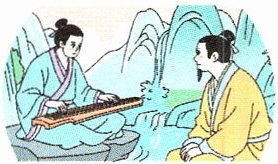
(
(
(
(
(
(
(
(
Yu Boya is good at 1 the guqin. People all praise him, but Yu isn't 2. He thinks, "Nobody can understand my music."
One night, Yu plays the guqin and 3 a clap. He raises his head and sees a man named Zhong Ziqi. When Yu plays a piece about mountains, Zhong says, " I feel like Mount Tai is in front 4 me." When Yu plays a piece about 5. Zhong says, "Amazing! I see the running river."
Yu gets excited and says, "You know me so 6!" They become friends and have a great 7 together for many years. Later, Zhong Ziqi dies unluckily. Yu says sadly, "No one will know my music like Zhong Ziqi." Yu breaks his guqin and 8 plays it again.
(
B
)1. A. play B. playing C. plays D. played(
A
)2. A. happy B. sad C. tired D. angry(
A
)3. A. hears B. listens C. makes D. takes(
A
)4. A. of B. on C. with D. in(
C
)5. A. trees B. flowers C. water D. birds(
B
)6. A. good B. well C. bad D. much(
A
)7. A. time B. times C. fun D. day(
D
)8. A. always B. usually C. often D. never答案
1. B be good at doing sth. 是固定搭配,at 是介词,介词后接动词时,必须使用动名词(-ing 形式)。A. play(动词原形)、C. plays(第三人称单数)、D. played(过去式)均不符合语法要求。B. playing(动名词)符合。故选 B。
2. A 前文提到“所有人都称赞他”,后文转折 but 表示语义相反,且俞伯牙的想法是“没人能听懂我的音乐”,说明他并不开心。A. happy(开心的):符合语境,isn't happy 表示“不开心”。B. sad(悲伤的)、C. tired(疲惫的)、D. angry(生气的)均不符合上下文逻辑。故选 A。
3. A 句意为“俞伯牙弹琴时听到了掌声”,A. hears(听到):强调听的结果,符合语境。B. listens(听):强调听的动作,后常接 to,不符合。C. makes(制作)、D. takes(拿):语义不通。故选 A。
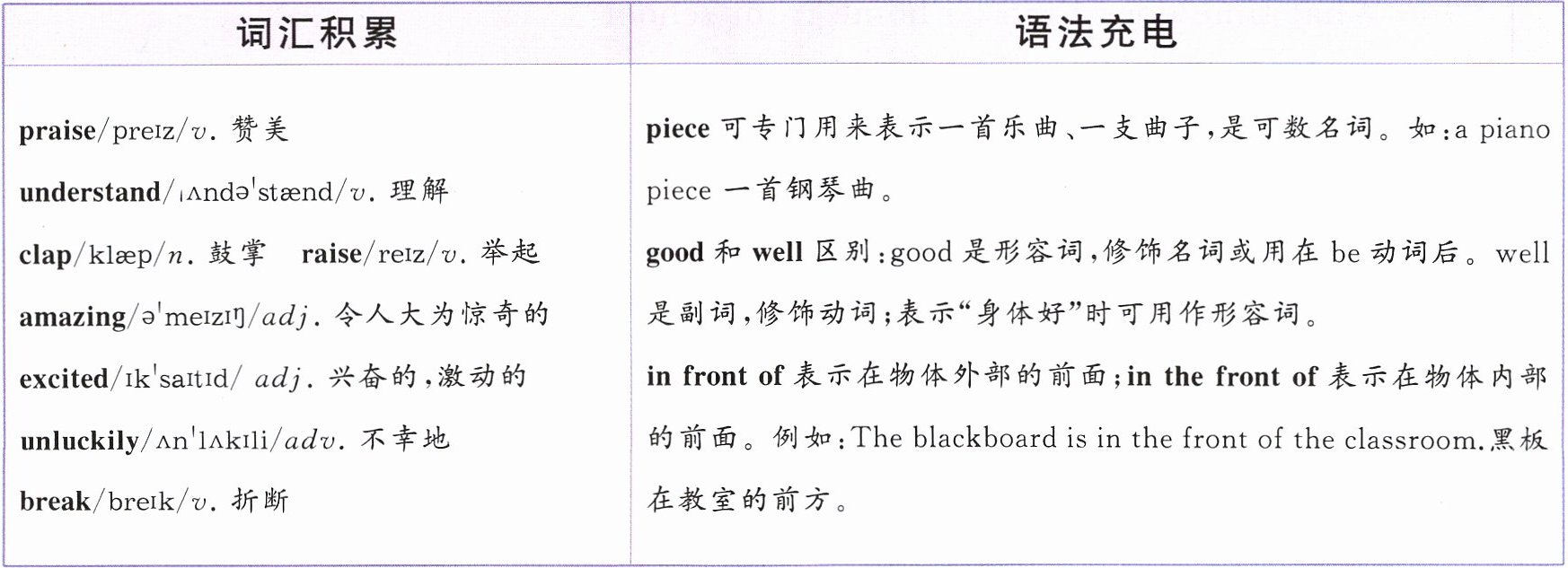
4. A 句意为“我感觉泰山出现在我眼前”,in front of 是固定搭配,表示“在……(外部的)前面”。故选 A。
5. C 前文提到了“关于高山的曲子”,后文钟子期说“我看到了奔腾的江河”,说明此处弹奏的是关于“水”的曲子。trees(树)、flowers(花)、birds(鸟)均与后文“running river”无关。故选 C。
6. B 句意为“你太懂我了!”,know 是动词,需要用副词来修饰。故选 B。
7. A have a great/good time 是固定短语,表示“度过一段美好的时光”。故选 A。
8. D 前文提到钟子期去世后,俞伯牙认为再也没人懂他的音乐,于是摔碎了琴,因此是“再也不弹琴了”。A. always(总是)、B. usually(通常)、C. often(经常):均表示“经常弹”,与语境相反。D. never(从不)符合 。故选 D。
⚠ 易错警示 固定搭配需牢记
第7小题中,固定短语 have a great/good time 意为“玩得开心、度过一段美好的时光”,其中 time 为可数名词,表示“一段时光”,需加不定冠词 a;需区分同义短语 have fun,fun 是不可数名词,前面不需要加 a。
此外,本题易错选 D 选项(day),部分学生只看字面“great day(好日子)”,完全忽略句尾 for many years 的时间限制,day 是单数,无法对应“多年”的时长。
2. A 前文提到“所有人都称赞他”,后文转折 but 表示语义相反,且俞伯牙的想法是“没人能听懂我的音乐”,说明他并不开心。A. happy(开心的):符合语境,isn't happy 表示“不开心”。B. sad(悲伤的)、C. tired(疲惫的)、D. angry(生气的)均不符合上下文逻辑。故选 A。
3. A 句意为“俞伯牙弹琴时听到了掌声”,A. hears(听到):强调听的结果,符合语境。B. listens(听):强调听的动作,后常接 to,不符合。C. makes(制作)、D. takes(拿):语义不通。故选 A。
4. A 句意为“我感觉泰山出现在我眼前”,in front of 是固定搭配,表示“在……(外部的)前面”。故选 A。
5. C 前文提到了“关于高山的曲子”,后文钟子期说“我看到了奔腾的江河”,说明此处弹奏的是关于“水”的曲子。trees(树)、flowers(花)、birds(鸟)均与后文“running river”无关。故选 C。
6. B 句意为“你太懂我了!”,know 是动词,需要用副词来修饰。故选 B。
7. A have a great/good time 是固定短语,表示“度过一段美好的时光”。故选 A。
8. D 前文提到钟子期去世后,俞伯牙认为再也没人懂他的音乐,于是摔碎了琴,因此是“再也不弹琴了”。A. always(总是)、B. usually(通常)、C. often(经常):均表示“经常弹”,与语境相反。D. never(从不)符合 。故选 D。
⚠ 易错警示 固定搭配需牢记
第7小题中,固定短语 have a great/good time 意为“玩得开心、度过一段美好的时光”,其中 time 为可数名词,表示“一段时光”,需加不定冠词 a;需区分同义短语 have fun,fun 是不可数名词,前面不需要加 a。
此外,本题易错选 D 选项(day),部分学生只看字面“great day(好日子)”,完全忽略句尾 for many years 的时间限制,day 是单数,无法对应“多年”的时长。
