

 登录
登录
<提素养 实践创新>宜兴紫砂壶是中国特有的手工制造陶土工艺品。阅读短文,完成下列任务。
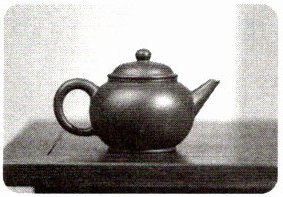
Yixing is a beautiful city in Jiangsu. It is famous for zisha teapots. People all over the world love them.
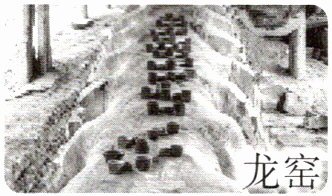
Long ago, workers made all teapots by hand. They used simple tools like small knives(刀) and wooden hammers(锤子). They also used old dragon kilns(龙窑) to fire the teapots. The kilns were very long and looked like dragons. It took many days to finish one teapot. They could not make many teapots in a short time. The style they produced was an old style. Each teapot was special. People could buy them in shops.
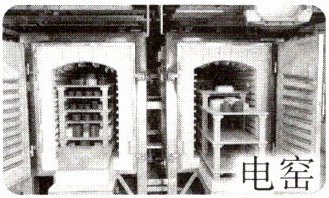
Now things change a lot. Many workers use modern machines and electric kilns. They can make many teapots easily at a time. They can work quickly. Big factories can make thousands of teapots every month. But some workers still use traditional skills. They make beautiful teapots by hand. They want to keep the old craft(工艺) alive. At the same time, some young artists try to make new styles. They add animal shapes or bright colours to the teapots. They use both new technology and traditional skills.
Nowadays, people can buy Yixing zisha teapots in shops or online. The old craft develops well today. It passes on our great culture and our culture becomes better and better.
任务一:根据短文内容,补全表格,每空一词。
| | Then | Now |
| --- | --- | --- |
| Things workers use | simple tools and 1.
| Speed | very slow | very fast |
| Production(产量) | could not make many teapots in a short time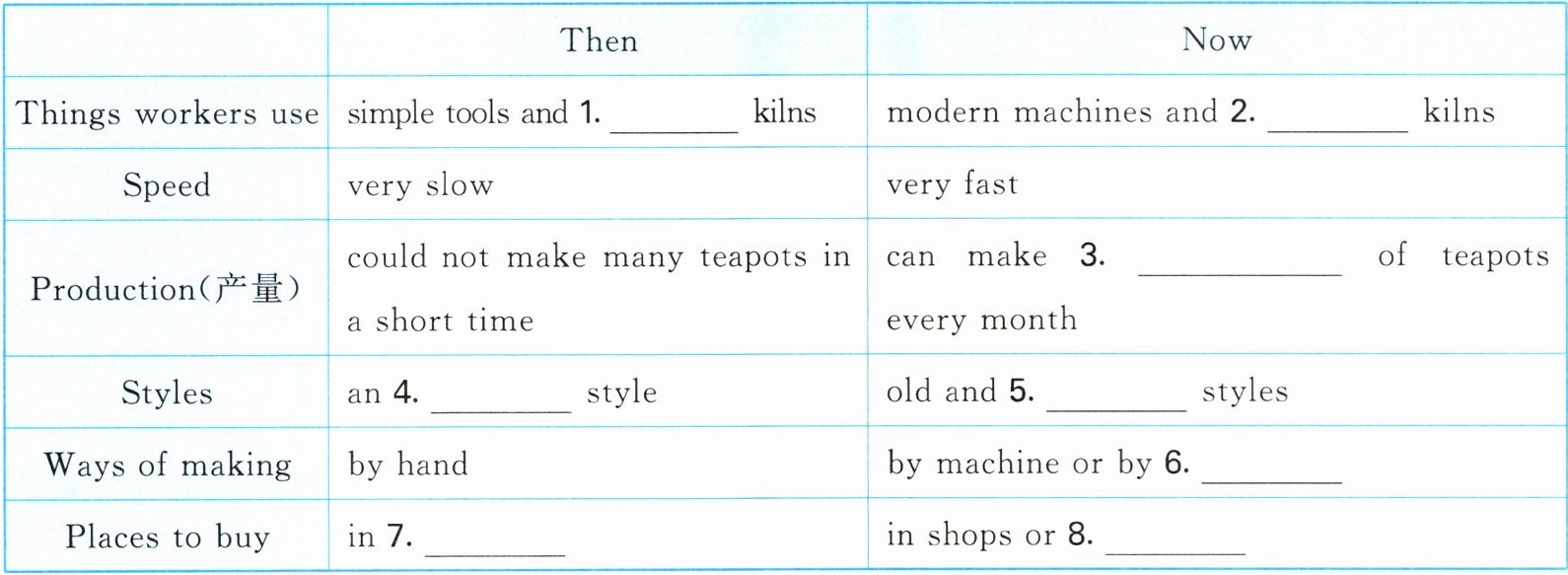 | can make 3.
| Styles | an 4.
| Ways of making | by hand | by machine or by 6.
| Places to buy | in 7.
任务二:根据短文内容或结合生活实际,回答问题。
1. How do some workers keep the old craft alive now?
2. What can we learn from the change of Yixing zisha craft?
Yixing is a beautiful city in Jiangsu. It is famous for zisha teapots. People all over the world love them.
Long ago, workers made all teapots by hand. They used simple tools like small knives(刀) and wooden hammers(锤子). They also used old dragon kilns(龙窑) to fire the teapots. The kilns were very long and looked like dragons. It took many days to finish one teapot. They could not make many teapots in a short time. The style they produced was an old style. Each teapot was special. People could buy them in shops.
Now things change a lot. Many workers use modern machines and electric kilns. They can make many teapots easily at a time. They can work quickly. Big factories can make thousands of teapots every month. But some workers still use traditional skills. They make beautiful teapots by hand. They want to keep the old craft(工艺) alive. At the same time, some young artists try to make new styles. They add animal shapes or bright colours to the teapots. They use both new technology and traditional skills.
Nowadays, people can buy Yixing zisha teapots in shops or online. The old craft develops well today. It passes on our great culture and our culture becomes better and better.
任务一:根据短文内容,补全表格,每空一词。
| | Then | Now |
| --- | --- | --- |
| Things workers use | simple tools and 1.
dragon
kilns | modern machines and 2. electric
kilns || Speed | very slow | very fast |
| Production(产量) | could not make many teapots in a short time
| can make 3. thousands
of teapots every month || Styles | an 4.
old
style | old and 5. new
styles || Ways of making | by hand | by machine or by 6.
hand
|| Places to buy | in 7.
shops
| in shops or 8. online
|任务二:根据短文内容或结合生活实际,回答问题。
1. How do some workers keep the old craft alive now?
They use traditional skills and make beautiful teapots by hand.
2. What can we learn from the change of Yixing zisha craft?
We can learn that changes can be good. The craft develops well with new machines.
答案
任务一:
1. dragon
2. electric
3. thousands
4. old
5. new
6. hand
7. shops
8. online
任务二:
1. They use traditional skills and make beautiful teapots by hand.
2. 示例: We can learn that changes can be good. The craft develops well with new machines.
1. dragon
2. electric
3. thousands
4. old
5. new
6. hand
7. shops
8. online
任务二:
1. They use traditional skills and make beautiful teapots by hand.
2. 示例: We can learn that changes can be good. The craft develops well with new machines.
解析
【分析】
本题分为任务一(根据短文补全表格,每空一词)和任务二(根据短文回答问题)。解题思路:任务一需分别定位表格中“Then(过去)”和“Now(现在)”对应的短文段落,找到与表格列(工具、速度、产量、风格、制作方式、购买地)相关的原文关键词,每空需填原文出现的单词;任务二第1题定位“传承传统工艺”的相关语句,第2题结合短文关于工艺发展的内容,组织符合要求的答案。
【解析】
任务一:
1. 定位短文“Long ago”段落:“They also used old dragon kilns to fire the teapots”,对应表格“Then”的窑炉,故填dragon;
2. 定位短文“Now”段落:“Many workers use modern machines and electric kilns”,对应表格“Now”的窑炉,故填electric;
3. 定位短文“Now”段落:“Big factories can make thousands of teapots every month”,对应表格“Now”的产量,故填thousands;
4. 定位短文“Long ago”段落:“The style they produced was an old style”,对应表格“Then”的风格,故填old;
5. 定位短文“Now”段落:“some young artists try to make new styles”,对应表格“Now”的风格,故填new;
6. 定位短文“Now”段落:“They make beautiful teapots by hand”,对应表格制作方式,故填hand;
7. 定位短文“Long ago”段落:“People could buy them in shops”,对应表格“Then”的购买地,故填shops;
8. 定位短文“Now”段落:“Nowadays, people can buy Yixing zisha teapots in shops or online”,对应表格“Now”的购买地,故填online;
任务二:
1. 定位短文“Now”段落:“But some workers still use traditional skills. They make beautiful teapots by hand. They want to keep the old craft alive”,整理为答案;
2. 结合短文“old craft develops well today. It passes on our great culture and our culture becomes better and better”,组织合理的示例答案。
【答案】
任务一:
1. dragon
2. electric
3. thousands
4. old
5. new
6. hand
7. shops
8. online
任务二:
1. They use traditional skills and make beautiful teapots by hand.
2. 示例: We can learn that changes can be good. The craft develops well with new machines.
【知识点】
英语阅读理解、任务型阅读、信息提取
【点评】
本题以宜兴紫砂壶的古今发展为素材,融合文化背景,考查学生从短文中定位、提取信息的能力,分为细节填空和开放问答,既夯实基础信息获取,又引导学生思考传统工艺的传承与创新,符合实践创新的素养要求,贴近生活实际。
【难度系数】
0.3
本题分为任务一(根据短文补全表格,每空一词)和任务二(根据短文回答问题)。解题思路:任务一需分别定位表格中“Then(过去)”和“Now(现在)”对应的短文段落,找到与表格列(工具、速度、产量、风格、制作方式、购买地)相关的原文关键词,每空需填原文出现的单词;任务二第1题定位“传承传统工艺”的相关语句,第2题结合短文关于工艺发展的内容,组织符合要求的答案。
【解析】
任务一:
1. 定位短文“Long ago”段落:“They also used old dragon kilns to fire the teapots”,对应表格“Then”的窑炉,故填dragon;
2. 定位短文“Now”段落:“Many workers use modern machines and electric kilns”,对应表格“Now”的窑炉,故填electric;
3. 定位短文“Now”段落:“Big factories can make thousands of teapots every month”,对应表格“Now”的产量,故填thousands;
4. 定位短文“Long ago”段落:“The style they produced was an old style”,对应表格“Then”的风格,故填old;
5. 定位短文“Now”段落:“some young artists try to make new styles”,对应表格“Now”的风格,故填new;
6. 定位短文“Now”段落:“They make beautiful teapots by hand”,对应表格制作方式,故填hand;
7. 定位短文“Long ago”段落:“People could buy them in shops”,对应表格“Then”的购买地,故填shops;
8. 定位短文“Now”段落:“Nowadays, people can buy Yixing zisha teapots in shops or online”,对应表格“Now”的购买地,故填online;
任务二:
1. 定位短文“Now”段落:“But some workers still use traditional skills. They make beautiful teapots by hand. They want to keep the old craft alive”,整理为答案;
2. 结合短文“old craft develops well today. It passes on our great culture and our culture becomes better and better”,组织合理的示例答案。
【答案】
任务一:
1. dragon
2. electric
3. thousands
4. old
5. new
6. hand
7. shops
8. online
任务二:
1. They use traditional skills and make beautiful teapots by hand.
2. 示例: We can learn that changes can be good. The craft develops well with new machines.
【知识点】
英语阅读理解、任务型阅读、信息提取
【点评】
本题以宜兴紫砂壶的古今发展为素材,融合文化背景,考查学生从短文中定位、提取信息的能力,分为细节填空和开放问答,既夯实基础信息获取,又引导学生思考传统工艺的传承与创新,符合实践创新的素养要求,贴近生活实际。
【难度系数】
0.3
