

 登录
登录
二、阅读理解(本题有15小题,每小题2分,共计30分)
阅读下面的材料,从各题所给的四个选项中选出一个最佳答案。
A(真题·宁波镇海)
First Aid
How to Treat a Deep Cut Which Is Bleeding
 If someone has a deep cut, your most important job is to stop blood coming out—not to clean the cut!
 Calmly sit the person down. Put on gloves if possible.
 Look at the cut to see if there is anything stuck in it. If there is, do not take it out, but be very careful not to push it in any further.
 Find a bandage or something clean, such as a T-shirt. And press hard with it on the cut to stop the bleeding.
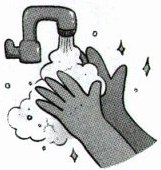 Wash your hands and tell an adult what has happened.
(
A. Call 120.
B. Clean the cut.
C. Stop the blood.
D. Go to the hospital.
(
A. We can use anything to stop the bleeding.
B. Wash your hands after treating the cut.
C. There is no need to wear gloves when we offer help.
D. If there's something stuck in the wound, take it out.
(
A. Kids.
B. Parents.
C. Doctors.
D. Teachers.
阅读下面的材料,从各题所给的四个选项中选出一个最佳答案。
A(真题·宁波镇海)
First Aid
How to Treat a Deep Cut Which Is Bleeding
If someone has a deep cut, your most important job is to stop blood coming out—not to clean the cut! Calmly sit the person down. Put on gloves if possible. Look at the cut to see if there is anything stuck in it. If there is, do not take it out, but be very careful not to push it in any further. Find a bandage or something clean, such as a T-shirt. And press hard with it on the cut to stop the bleeding. Wash your hands and tell an adult what has happened.(
C
)16. When someone has a deep cut and is bleeding heavily, what is the most important thing?A. Call 120.
B. Clean the cut.
C. Stop the blood.
D. Go to the hospital.
(
B
)17. According to the poster, what is the right thing to do?A. We can use anything to stop the bleeding.
B. Wash your hands after treating the cut.
C. There is no need to wear gloves when we offer help.
D. If there's something stuck in the wound, take it out.
(
A
)18. Who is the poster probably for?A. Kids.
B. Parents.
C. Doctors.
D. Teachers.
答案
16.C 17.B 18.A
解析
【分析】
本题为英语阅读理解的细节理解与推理判断题,需结合原文内容逐一分析各小题。第16题需定位原文中关于深伤口流血时最重要事项的表述;第17题要逐一核对选项与原文内容是否一致;第18题需根据海报内容的受众特点进行推断。
【解析】
16题:根据原文插图1“If someone has a deep cut, your most important job is to stop blood coming out”,可知深伤口流血时最重要的是止血,对应选项C。
17题:A选项错误,原文插图6提到需用干净物品(如T恤)按压止血,并非任何物品;B选项正确,原文插图8明确要求处理伤口后洗手;C选项错误,原文插图2建议提供帮助时尽量戴手套;D选项错误,原文插图4说明伤口有异物时不能取出,故选B。
18题:海报内容为基础急救知识,语言通俗易懂,适合儿童学习,对应选项A。
【答案】
16.C 17.B 18.A
【知识点】
阅读理解细节题、阅读理解推断题
【点评】
本题为英语阅读理解基础题,考查学生快速定位原文细节及简单推理的能力,内容贴近生活,难度较低,适合学生巩固阅读技巧。
【难度系数】
0.8
本题为英语阅读理解的细节理解与推理判断题,需结合原文内容逐一分析各小题。第16题需定位原文中关于深伤口流血时最重要事项的表述;第17题要逐一核对选项与原文内容是否一致;第18题需根据海报内容的受众特点进行推断。
【解析】
16题:根据原文插图1“If someone has a deep cut, your most important job is to stop blood coming out”,可知深伤口流血时最重要的是止血,对应选项C。
17题:A选项错误,原文插图6提到需用干净物品(如T恤)按压止血,并非任何物品;B选项正确,原文插图8明确要求处理伤口后洗手;C选项错误,原文插图2建议提供帮助时尽量戴手套;D选项错误,原文插图4说明伤口有异物时不能取出,故选B。
18题:海报内容为基础急救知识,语言通俗易懂,适合儿童学习,对应选项A。
【答案】
16.C 17.B 18.A
【知识点】
阅读理解细节题、阅读理解推断题
【点评】
本题为英语阅读理解基础题,考查学生快速定位原文细节及简单推理的能力,内容贴近生活,难度较低,适合学生巩固阅读技巧。
【难度系数】
0.8
B(真题·绍兴越城)
New research coming out of Tohoku University says that wasabi(芥末) is good for the ability to remember. Wasabi, a spicy green paste, is widely used in Japanese dishes.
A recent study tested people between the ages of sixty and eighty. Some of the test members took a certain amount of wasabi every night before going to bed. The others were given a placebo(无效对照剂). After three months, the people who took the wasabi had much better results in memory tests. The placebo-takers did not show any improvement.
Wasabi was already known to have an antioxidant and anti-inflammatory called 6-MSITC that is rare(稀少) in other plants. Scientists believe a chemical called 6-MSITC might change how the brain's "memory centre—hippocampus(海马体)" works. They will continue researching with the hope that wasabi can help people that are experiencing dementia(痴呆症).
This new research seems to be good news for sushi-eaters. However, ▲. Instead, it is white horseradish(辣根酱) that has been coloured green. Real wasabi is difficult to grow and, as a result, is very expensive. It also needs to be made and served fresh at once before being eaten.
()19. According to Paragraph 2, who can have better memory?
A. Early sleepers.
B. Placebo takers.
C. People between 60 and 80.
D. People who keep eating wasabi for 3 months.
()20. What in wasabi has something to do with memory improvement?
A. Dishes.
B. 6-MSITC.
C. Placebo.
D. Hippocampus.
()21. Which can be the best to fill in the blank "▲"?
A. wasabi is not a popular paste around the world
B. most people in Japan don't think the research is true
C. most wasabi that is served in Japan is not real wasabi
D. fresh wasabi is so expensive that people can't eat it very often
()22. What's the main purpose of the passage?
A. To discuss the health risks of eating spicy food.
B. To explain the way of making sushi with wasabi.
C. To compare real wasabi with green-coloured horseradish.
D. To introduce a new study on wasabi from a Japanese university.
New research coming out of Tohoku University says that wasabi(芥末) is good for the ability to remember. Wasabi, a spicy green paste, is widely used in Japanese dishes.
A recent study tested people between the ages of sixty and eighty. Some of the test members took a certain amount of wasabi every night before going to bed. The others were given a placebo(无效对照剂). After three months, the people who took the wasabi had much better results in memory tests. The placebo-takers did not show any improvement.
Wasabi was already known to have an antioxidant and anti-inflammatory called 6-MSITC that is rare(稀少) in other plants. Scientists believe a chemical called 6-MSITC might change how the brain's "memory centre—hippocampus(海马体)" works. They will continue researching with the hope that wasabi can help people that are experiencing dementia(痴呆症).
This new research seems to be good news for sushi-eaters. However, ▲. Instead, it is white horseradish(辣根酱) that has been coloured green. Real wasabi is difficult to grow and, as a result, is very expensive. It also needs to be made and served fresh at once before being eaten.
()19. According to Paragraph 2, who can have better memory?
A. Early sleepers.
B. Placebo takers.
C. People between 60 and 80.
D. People who keep eating wasabi for 3 months.
()20. What in wasabi has something to do with memory improvement?
A. Dishes.
B. 6-MSITC.
C. Placebo.
D. Hippocampus.
()21. Which can be the best to fill in the blank "▲"?
A. wasabi is not a popular paste around the world
B. most people in Japan don't think the research is true
C. most wasabi that is served in Japan is not real wasabi
D. fresh wasabi is so expensive that people can't eat it very often
()22. What's the main purpose of the passage?
A. To discuss the health risks of eating spicy food.
B. To explain the way of making sushi with wasabi.
C. To compare real wasabi with green-coloured horseradish.
D. To introduce a new study on wasabi from a Japanese university.
答案
19.D 20.B 21.C 22.D
解析
【分析】
这是一篇关于日本东北大学芥末与记忆关系研究的科普类阅读理解题,包含细节理解、句子还原、主旨大意三类题型。解题思路为:1. 通读全文,把握文章核心内容(芥末的记忆相关研究、真假芥末的区别);2. 针对每个题目,定位题干对应的原文段落,提取关键信息;3. 对比选项,排除干扰项,选出正确答案。
【解析】
19. 细节理解题:根据第二段内容,“Some of the test members took a certain amount of wasabi every night...After three months, the people who took the wasabi had much better results in memory tests.” 可知,坚持吃了三个月芥末的人记忆力更好,故选D。A选项“早睡的人”、B选项“服用安慰剂的人”、C选项“60-80岁的人”均不符合原文描述。
20. 细节理解题:根据第三段内容,“Wasabi was already known to have an antioxidant and anti-inflammatory called 6-MSITC...Scientists believe a chemical called 6-MSITC might change how the brain's 'memory centre—hippocampus' works.” 可知,6-MSITC与记忆改善有关,故选B。A选项“菜肴”、C选项“安慰剂”、D选项“海马体”均不符合题意。
21. 句子还原题:根据空格后“Instead, it is white horseradish that has been coloured green. Real wasabi is difficult to grow and, as a result, is very expensive.” 可知,此处转折说明实际提供的芥末不是真的,对应选项C“most wasabi that is served in Japan is not real wasabi”,故选C。A选项“芥末在全球不流行”、B选项“日本人不认为研究真实”、D选项“新鲜芥末太贵不能常吃”均不符合上下文逻辑。
22. 主旨大意题:全文围绕日本东北大学关于芥末对记忆影响的新研究展开,介绍了研究过程、成分作用及真假芥末的区别,核心是介绍这项新研究,故选D。A选项“讨论吃辣的健康风险”、B选项“解释用芥末做寿司的方法”、C选项“比较真芥末和辣根”均偏离主旨。
【答案】
19.D 20.B 21.C 22.D
【知识点】
英语阅读理解(细节理解)、英语阅读理解(句子还原)、英语阅读理解(主旨大意)
【点评】
本题是科普类阅读理解,考查学生快速定位信息、理解细节及把握主旨的能力,题型常规,难度适中,适合初中阶段学生练习。
【难度系数】
0.6
这是一篇关于日本东北大学芥末与记忆关系研究的科普类阅读理解题,包含细节理解、句子还原、主旨大意三类题型。解题思路为:1. 通读全文,把握文章核心内容(芥末的记忆相关研究、真假芥末的区别);2. 针对每个题目,定位题干对应的原文段落,提取关键信息;3. 对比选项,排除干扰项,选出正确答案。
【解析】
19. 细节理解题:根据第二段内容,“Some of the test members took a certain amount of wasabi every night...After three months, the people who took the wasabi had much better results in memory tests.” 可知,坚持吃了三个月芥末的人记忆力更好,故选D。A选项“早睡的人”、B选项“服用安慰剂的人”、C选项“60-80岁的人”均不符合原文描述。
20. 细节理解题:根据第三段内容,“Wasabi was already known to have an antioxidant and anti-inflammatory called 6-MSITC...Scientists believe a chemical called 6-MSITC might change how the brain's 'memory centre—hippocampus' works.” 可知,6-MSITC与记忆改善有关,故选B。A选项“菜肴”、C选项“安慰剂”、D选项“海马体”均不符合题意。
21. 句子还原题:根据空格后“Instead, it is white horseradish that has been coloured green. Real wasabi is difficult to grow and, as a result, is very expensive.” 可知,此处转折说明实际提供的芥末不是真的,对应选项C“most wasabi that is served in Japan is not real wasabi”,故选C。A选项“芥末在全球不流行”、B选项“日本人不认为研究真实”、D选项“新鲜芥末太贵不能常吃”均不符合上下文逻辑。
22. 主旨大意题:全文围绕日本东北大学关于芥末对记忆影响的新研究展开,介绍了研究过程、成分作用及真假芥末的区别,核心是介绍这项新研究,故选D。A选项“讨论吃辣的健康风险”、B选项“解释用芥末做寿司的方法”、C选项“比较真芥末和辣根”均偏离主旨。
【答案】
19.D 20.B 21.C 22.D
【知识点】
英语阅读理解(细节理解)、英语阅读理解(句子还原)、英语阅读理解(主旨大意)
【点评】
本题是科普类阅读理解,考查学生快速定位信息、理解细节及把握主旨的能力,题型常规,难度适中,适合初中阶段学生练习。
【难度系数】
0.6
