

 登录
登录
一、阅读理解
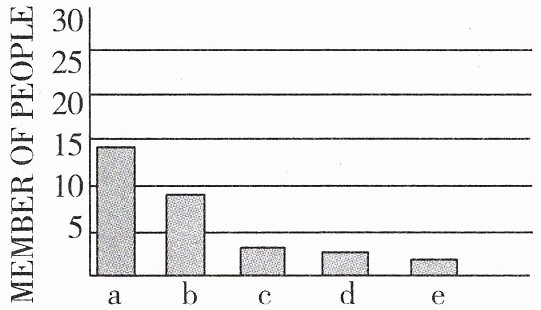
We asked thirty young people between 14 and 18 several questions. All the children had computers at home. The average time spent on a computer in a week was about 12 hours, with the highest about 32 hours, and the lowest only 5 hours. Most children said they usually used computers to play games. Fourteen children told us they did some word-processing(文字处理)at times. Eight people told us they kept addresses and phone numbers on their computers or used them as diaries. Only three people said they were learning to write computer programs and nobody used databases(数据库). Only two of them said computers helped with their lessons. The diagram(表格)gives all the results one by one.
The results show that computer use is quite common among 14—18-year-old children. They also show quite clearly that computers are seen by most young people as little more than game machines. It means to us that, though computers are common in the home of young people, they have not yet become popular in everyday life.
根据材料内容选择最佳答案。
(
A. It shows three people between 14 and 18.
B. It shows only 2 of the thirty children.
C. It shows that two of them use computers to help them with their lessons.
D. It shows that three of them use computers to help them write computer programs.
(
A. 5 B. 12 C. 20 D. 32
(
A. The number of “c” should be lower.
B. The number of “d” should be higher.
C. The number of “a” is too high.
D. There should be no number about “e”.
(
A. Almost the same as. B. Far more than.
C. Different from. D. Much more than.
(
A. children must learn to play all kinds of games
B. we should learn many other uses of computers
C. young people should spend more time on computers
D. computers will become much cheaper
We asked thirty young people between 14 and 18 several questions. All the children had computers at home. The average time spent on a computer in a week was about 12 hours, with the highest about 32 hours, and the lowest only 5 hours. Most children said they usually used computers to play games. Fourteen children told us they did some word-processing(文字处理)at times. Eight people told us they kept addresses and phone numbers on their computers or used them as diaries. Only three people said they were learning to write computer programs and nobody used databases(数据库). Only two of them said computers helped with their lessons. The diagram(表格)gives all the results one by one.
The results show that computer use is quite common among 14—18-year-old children. They also show quite clearly that computers are seen by most young people as little more than game machines. It means to us that, though computers are common in the home of young people, they have not yet become popular in everyday life.
根据材料内容选择最佳答案。
(
D
)1. In the diagram,what does the letter “c” show?A. It shows three people between 14 and 18.
B. It shows only 2 of the thirty children.
C. It shows that two of them use computers to help them with their lessons.
D. It shows that three of them use computers to help them write computer programs.
(
B
)2. Most of the 30 children spent about hours on computers in a week.A. 5 B. 12 C. 20 D. 32
(
D
)3. There is one mistake in the diagram. What is it?A. The number of “c” should be lower.
B. The number of “d” should be higher.
C. The number of “a” is too high.
D. There should be no number about “e”.
(
A
)4. What does “little more than” in the last paragraph mean?A. Almost the same as. B. Far more than.
C. Different from. D. Much more than.
(
B
)5. The writer thinks .A. children must learn to play all kinds of games
B. we should learn many other uses of computers
C. young people should spend more time on computers
D. computers will become much cheaper
答案
1.D 2.B 3.D 4.A 5.B
解析
【分析】
本题为英语阅读理解题,需结合原文信息和图表内容解答。解题思路:1. 定位原文对应细节,匹配图表信息解答细节类题目;2. 结合上下文语境猜测短语含义;3. 梳理作者的观点,把握文章主旨。具体到每道题:第1题查找原文中与电脑编程相关的人数,对应图表信息;第2题直接定位原文关于每周使用电脑的平均时间;第3题核对原文各项用途的人数,判断图表中不合理的部分;第4题结合语境猜测短语“little more than”的含义;第5题根据原文作者的结论判断其观点。
【解析】
1. 细节理解题:原文提到“Only three people said they were learning to write computer programs”,对应图表中字母“c”的数值为3,故选D。
2. 细节理解题:原文明确说明“The average time spent on a computer in a week was about 12 hours”,故选B。
3. 细节理解题:原文提到“nobody used databases”,即没有孩子使用数据库,图表中字母“e”对应的是数据库相关人数,不应有数字,故选D。
4. 词义猜测题:结合语境“computers are seen by most young people as little more than game machines”,意为大多数年轻人几乎只把电脑当作游戏机,“little more than”表示“几乎和……一样(只不过是)”,对应A选项。
5. 主旨大意题:原文指出“though computers are common in the home of young people, they have not yet become popular in everyday life”,说明作者认为应拓展电脑的其他用途,故选B。
【答案】
1.D 2.B 3.D 4.A 5.B
【知识点】
英语阅读理解、细节理解、词义猜测
【点评】
本题围绕青少年电脑使用情况展开,综合考查英语阅读的细节查找、词义推断与主旨把握能力,需结合原文与图表信息分析,是典型的初中英语阅读题型,难度适中。
【难度系数】
0.6
本题为英语阅读理解题,需结合原文信息和图表内容解答。解题思路:1. 定位原文对应细节,匹配图表信息解答细节类题目;2. 结合上下文语境猜测短语含义;3. 梳理作者的观点,把握文章主旨。具体到每道题:第1题查找原文中与电脑编程相关的人数,对应图表信息;第2题直接定位原文关于每周使用电脑的平均时间;第3题核对原文各项用途的人数,判断图表中不合理的部分;第4题结合语境猜测短语“little more than”的含义;第5题根据原文作者的结论判断其观点。
【解析】
1. 细节理解题:原文提到“Only three people said they were learning to write computer programs”,对应图表中字母“c”的数值为3,故选D。
2. 细节理解题:原文明确说明“The average time spent on a computer in a week was about 12 hours”,故选B。
3. 细节理解题:原文提到“nobody used databases”,即没有孩子使用数据库,图表中字母“e”对应的是数据库相关人数,不应有数字,故选D。
4. 词义猜测题:结合语境“computers are seen by most young people as little more than game machines”,意为大多数年轻人几乎只把电脑当作游戏机,“little more than”表示“几乎和……一样(只不过是)”,对应A选项。
5. 主旨大意题:原文指出“though computers are common in the home of young people, they have not yet become popular in everyday life”,说明作者认为应拓展电脑的其他用途,故选B。
【答案】
1.D 2.B 3.D 4.A 5.B
【知识点】
英语阅读理解、细节理解、词义猜测
【点评】
本题围绕青少年电脑使用情况展开,综合考查英语阅读的细节查找、词义推断与主旨把握能力,需结合原文与图表信息分析,是典型的初中英语阅读题型,难度适中。
【难度系数】
0.6
