登录
登录
一、根据短文内容及图片,结合你的生活常识判断下列句子正(T)误(F)。
(
(
(
(
(
(
T
)1. There are twelve months in a year.(
F
)2. There are four months with(有) thirty-one days in a year.(
F
)3. In a leap year, February has twenty-eight days.(
T
)4. April has thirty days.(
T
)5. July and August both have thirty-one days.答案
一、1. T 句意:一年有十二个月。根据常识可知一年有十二个月,故答案为 T。
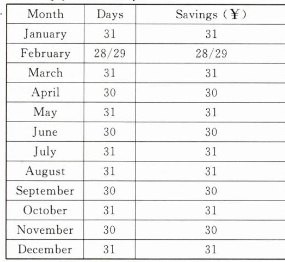
2. F 句意:一年有4个月是三十一天。根据图片提示可知一年有7个月是三十一天,故答案为 F。
3. F 句意:在闰年,二月有二十八天。根据文中句子“But February has twenty-nine days in a leap year.”可知闰年二月有二十九天,故答案为 F。
4. T 句意:四月有三十天。根据文中句子“April, June, September and November have thirty days.”可知四月有三十天,故答案为 T。
5. T 句意:七月和八月都有三十一天。根据图片提示可知七月和八月都有三十一天,故答案为 T。
2. F 句意:一年有4个月是三十一天。根据图片提示可知一年有7个月是三十一天,故答案为 F。
3. F 句意:在闰年,二月有二十八天。根据文中句子“But February has twenty-nine days in a leap year.”可知闰年二月有二十九天,故答案为 F。
4. T 句意:四月有三十天。根据文中句子“April, June, September and November have thirty days.”可知四月有三十天,故答案为 T。
5. T 句意:七月和八月都有三十一天。根据图片提示可知七月和八月都有三十一天,故答案为 T。
二、 新考法 学科融合 结合短文内容,完成下列任务。
1. Calculate(计算) the total number of days in a common year and in a leap year.
Common year:
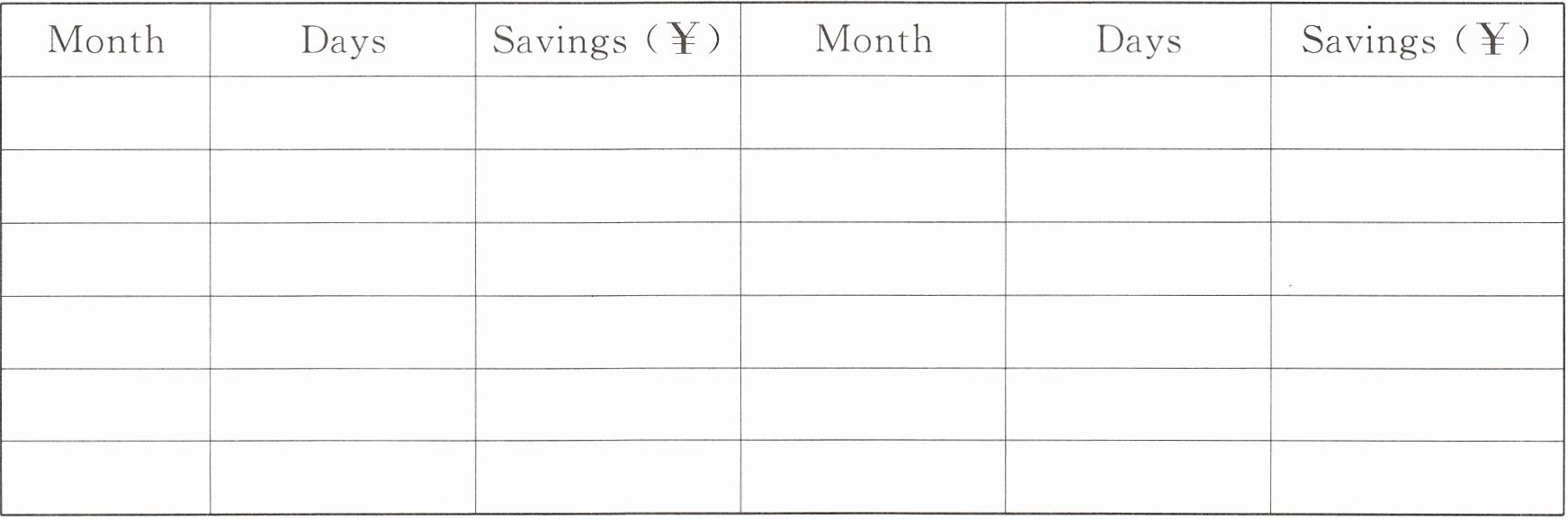
2. If you save ¥1 each day, how much money will you have at the end of each month?
Make a chart(图表) showing the savings for each month.
词汇积累
usually /'juːʒuəli/ adv. 通常
rest /rest/ n. 剩余部分
leap year 闰年
语法充电
主谓一致:文章体现了主谓一致的原则。例如:“February usually has twenty-eight d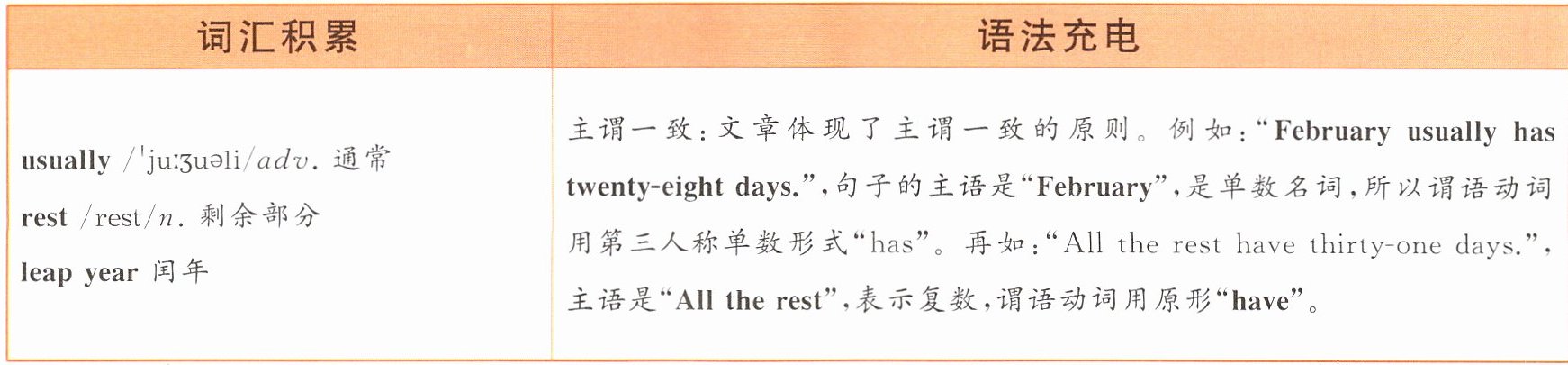 ,句子的主语是“February”,是单数名词,所以谓语动词用第三人称单数形式“has”。再如:“All the rest have thirty-one days.”,主语是“All the rest”,表示复数,谓语动词用原形“have”。
1. Calculate(计算) the total number of days in a common year and in a leap year.
Common year:
365
days; Leap year: 366
days.2. If you save ¥1 each day, how much money will you have at the end of each month?
Make a chart(图表) showing the savings for each month.
词汇积累
usually /'juːʒuəli/ adv. 通常
rest /rest/ n. 剩余部分
leap year 闰年
语法充电
主谓一致:文章体现了主谓一致的原则。例如:“February usually has twenty-eight d
,句子的主语是“February”,是单数名词,所以谓语动词用第三人称单数形式“has”。再如:“All the rest have thirty-one days.”,主语是“All the rest”,表示复数,谓语动词用原形“have”。答案
二、1. Common year: 365 days
Leap year: 366 days
2.