

 登录
登录
Passage 3
新素养 创新意识 In a room at Stanford University, scientists are studying a small animal called a gecko. It's an amazing animal because it can m 1 very quickly up and down a tree and even upside down on ceilings. The scientists are especially interested in the gecko's feet. They want to use the same design on a metal robot that looks very s 2 to the gecko. It has four feet and can walk up walls made of glass or plastic, but it still has trouble walking upside down.
Animals and plants can teach h 3 a lot about design and engineering. As a result, many engineers, scientists, and designers spend time studying them. When they have a problem, n 4 often has the answer. This science is called biomimetics. "Bio" means "living things" and "mimetics" means "copying".
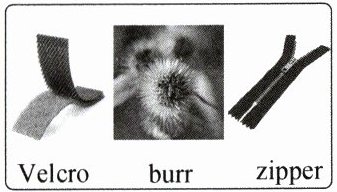
Velcro is p 5 the most famous example of biomimetics. Most people have some Velcro on clothes and shoes. It was i 6 by the Swiss engineer George in 1948. He was walking in the countryside when he pulled a burr o 7 his trousers. He noticed how well the burr stuck to his clothes so he studied its design. The result was Velcro, which became an alternative(替代品) to the traditional zipper.
In 1982, Wilhelm Bartlott got a great i 8 when studying the leaf of a lotus(莲花) plant. He noticed that water always ran off the leaf. When he had a closer look, he d 9 how it worked. Bartlott copied the leaf's special surface and now you can find it in specialized paint products that don't allow water and dirt to stick to them.
In conclusion, biomimetics not only has helped to design our world b 10 shows many more possibilities. And yet, they might take a long time to develop. This isn't really surprising: it took nature millions of years to design its animals and plants.
1.
6.
新素养 创新意识 In a room at Stanford University, scientists are studying a small animal called a gecko. It's an amazing animal because it can m 1 very quickly up and down a tree and even upside down on ceilings. The scientists are especially interested in the gecko's feet. They want to use the same design on a metal robot that looks very s 2 to the gecko. It has four feet and can walk up walls made of glass or plastic, but it still has trouble walking upside down.
Animals and plants can teach h 3 a lot about design and engineering. As a result, many engineers, scientists, and designers spend time studying them. When they have a problem, n 4 often has the answer. This science is called biomimetics. "Bio" means "living things" and "mimetics" means "copying".
Velcro is p 5 the most famous example of biomimetics. Most people have some Velcro on clothes and shoes. It was i 6 by the Swiss engineer George in 1948. He was walking in the countryside when he pulled a burr o 7 his trousers. He noticed how well the burr stuck to his clothes so he studied its design. The result was Velcro, which became an alternative(替代品) to the traditional zipper.
In 1982, Wilhelm Bartlott got a great i 8 when studying the leaf of a lotus(莲花) plant. He noticed that water always ran off the leaf. When he had a closer look, he d 9 how it worked. Bartlott copied the leaf's special surface and now you can find it in specialized paint products that don't allow water and dirt to stick to them.
In conclusion, biomimetics not only has helped to design our world b 10 shows many more possibilities. And yet, they might take a long time to develop. This isn't really surprising: it took nature millions of years to design its animals and plants.
1.
move
2. similar
3. humans
4. nature
5. probably
6.
invented
7. off
8. idea
9. discovered
10. but
答案
1. move 2. similar 3. humans 4. nature
5. probably 6. invented 7. off 8. idea
9. discovered 10. but
5. probably 6. invented 7. off 8. idea
9. discovered 10. but
解析
【分析】
本题是一篇关于仿生学的英语完形填空,需结合上下文语境、首字母提示、语法规则及固定搭配来填写单词。解题时先通读全文把握主旨(仿生学是从动植物中获取设计灵感的学科),再逐个分析空格所在句子,结合语境和首字母推导合适的单词,注意词性、时态等细节。
【解析】
1. 第一空:句意为“壁虎能快速在树上上下移动”,情态动词can后接动词原形,首字母为m,故填move。
2. 第二空:固定搭配be similar to表示“与……相似”,句意为“机器人看起来和壁虎很像”,首字母s,故填similar。
3. 第三空:句意为“动植物能教人类很多关于设计和工程的知识”,首字母h,故填humans。
4. 第四空:结合后文“仿生学是复制生物”,句意为“当有问题时,自然有答案”,首字母n,故填nature。
5. 第五空:句意为“维可牢可能是最著名的仿生学例子”,副词probably修饰be动词,首字母p,故填probably。
6. 第六空:被动语态be invented by表示“由……发明”,句意为“它由瑞士工程师George在1948年发明”,首字母i,故填invented。
7. 第七空:固定搭配pull...off...表示“把……从……扯下”,句意为“他把苍耳从裤子上扯下来”,首字母o,故填off。
8. 第八空:句意为“得到一个好主意”,首字母i,故填idea。
9. 第九空:句意为“仔细看后发现它的工作原理”,时态为一般过去时,首字母d,故填discovered。
10. 第十空:固定搭配not only...but also...表示“不仅……而且……”,此处省略also,首字母b,故填but。
【答案】
1. move 2. similar 3. humans 4. nature 5. probably 6. invented 7. off 8. idea 9. discovered 10. but
【知识点】
完形填空、固定搭配、被动语态
【点评】
本文围绕仿生学展开,结合维可牢、莲花叶等实例,既考查英语词汇运用,又渗透科学知识,难度适中,需结合上下文和首字母提示解题。
【难度系数】
0.6
本题是一篇关于仿生学的英语完形填空,需结合上下文语境、首字母提示、语法规则及固定搭配来填写单词。解题时先通读全文把握主旨(仿生学是从动植物中获取设计灵感的学科),再逐个分析空格所在句子,结合语境和首字母推导合适的单词,注意词性、时态等细节。
【解析】
1. 第一空:句意为“壁虎能快速在树上上下移动”,情态动词can后接动词原形,首字母为m,故填move。
2. 第二空:固定搭配be similar to表示“与……相似”,句意为“机器人看起来和壁虎很像”,首字母s,故填similar。
3. 第三空:句意为“动植物能教人类很多关于设计和工程的知识”,首字母h,故填humans。
4. 第四空:结合后文“仿生学是复制生物”,句意为“当有问题时,自然有答案”,首字母n,故填nature。
5. 第五空:句意为“维可牢可能是最著名的仿生学例子”,副词probably修饰be动词,首字母p,故填probably。
6. 第六空:被动语态be invented by表示“由……发明”,句意为“它由瑞士工程师George在1948年发明”,首字母i,故填invented。
7. 第七空:固定搭配pull...off...表示“把……从……扯下”,句意为“他把苍耳从裤子上扯下来”,首字母o,故填off。
8. 第八空:句意为“得到一个好主意”,首字母i,故填idea。
9. 第九空:句意为“仔细看后发现它的工作原理”,时态为一般过去时,首字母d,故填discovered。
10. 第十空:固定搭配not only...but also...表示“不仅……而且……”,此处省略also,首字母b,故填but。
【答案】
1. move 2. similar 3. humans 4. nature 5. probably 6. invented 7. off 8. idea 9. discovered 10. but
【知识点】
完形填空、固定搭配、被动语态
【点评】
本文围绕仿生学展开,结合维可牢、莲花叶等实例,既考查英语词汇运用,又渗透科学知识,难度适中,需结合上下文和首字母提示解题。
【难度系数】
0.6
Passage 4(2025·南京市玄武区期末)
Chinese people started to build gardens more than 2,000 years ago. Chinese gardens are a special f 1 of traditional Chinese culture and art.
At the entrance to a Chinese garden, there is u 2 a huge stone or wall to screen your view. This is to give you a pressed-in feeling in order to later produce unexpected joy w 3 you turn around the hall to see the amazing rock formations(假山) and a big lake. The best e 4 is the Summer Palace.
Rock formations play an important role in the design of a Chinese-style garden. Without them, a garden could not be c 5 a Chinese-style one. They are as i 6 to a Chinese-style garden as sculptures are to a European-style garden. Geyuan Garden in Yangzhou is famous for its Four Seasons Rockeries.
Gardens in the south are mostly small in size. Chinese garden designers have used the m 7 of "borrowing scenery with a mirror" to create a sense of space. A mirror is hung opposite a window to take in the o 8 scenery. A fine example of this is Pian Shi Shan Fang, a rockery in Ho Family Garden, Yangzhou. A big mirror is built into the wall of its west corridor(走廊). The whole garden will be s 9 in the mirror wherever the visitors are. A pool or a lake in a garden also serves this purpose. A pool runs from south to north t 10 the garden of Pian Shi Shan Fang. East of the rockery, a man-made moon is reflected(倒映) in the pool.
Whatever methods used, every effort is made to achieve the purpose of giving visitors a sense of space in the garden.
1.
6.
Chinese people started to build gardens more than 2,000 years ago. Chinese gardens are a special f 1 of traditional Chinese culture and art.
At the entrance to a Chinese garden, there is u 2 a huge stone or wall to screen your view. This is to give you a pressed-in feeling in order to later produce unexpected joy w 3 you turn around the hall to see the amazing rock formations(假山) and a big lake. The best e 4 is the Summer Palace.
Rock formations play an important role in the design of a Chinese-style garden. Without them, a garden could not be c 5 a Chinese-style one. They are as i 6 to a Chinese-style garden as sculptures are to a European-style garden. Geyuan Garden in Yangzhou is famous for its Four Seasons Rockeries.
Gardens in the south are mostly small in size. Chinese garden designers have used the m 7 of "borrowing scenery with a mirror" to create a sense of space. A mirror is hung opposite a window to take in the o 8 scenery. A fine example of this is Pian Shi Shan Fang, a rockery in Ho Family Garden, Yangzhou. A big mirror is built into the wall of its west corridor(走廊). The whole garden will be s 9 in the mirror wherever the visitors are. A pool or a lake in a garden also serves this purpose. A pool runs from south to north t 10 the garden of Pian Shi Shan Fang. East of the rockery, a man-made moon is reflected(倒映) in the pool.
Whatever methods used, every effort is made to achieve the purpose of giving visitors a sense of space in the garden.
1.
form
2. usually
3. when
4. example
5. considered
6.
important
7. method
8. outside
9. seen
10. through
答案
1. form 2. usually 3. when 4. example
5. considered 6. important 7. method
8. outside 9. seen 10. through
5. considered 6. important 7. method
8. outside 9. seen 10. through
解析
【分析】首先通读全文,明确文章主旨为介绍中国园林的特点与设计手法;再结合每个空的上下文语境、语法结构、固定搭配逐一推断单词:1. 空格前是形容词special,需填名词,结合“中国园林是中国传统文化和艺术的特殊形式”的语境确定form;2. 空格在be动词后修饰句子,需填副词,结合“通常有巨石或墙遮挡视线”的语境确定usually;3. 空格后是时间状语从句,需填引导词when表“当…时”;4. 空格前是形容词最高级best,需填名词,结合“最好的例子是颐和园”的语境确定example;5. 空格前是could not be,被动语态结构,需填过去分词,结合“没有假山园林不能被认为是中式的”的语境确定considered;6. 空格后是as…as结构,需填形容词原级,结合“假山对中式园林和雕塑对欧式园林一样重要”的语境确定important;7. 空格前是定冠词the,需填名词,结合“借镜取景的设计方法”的语境确定method;8. 空格修饰scenery,结合“镜子照外面景色”的语境确定outside;9. 空格前是will be,被动语态结构,需填过去分词,结合“园林在镜中被看到”的语境确定seen;10. 空格后是the garden,结合“水池穿过园林”的语境确定through。
【解析】1. 考查名词:special后接名词,form(形式)符合语境;2. 考查副词:修饰句子,usually(通常)符合语境;3. 考查连词:when引导时间状语从句,表“当…时”;4. 考查名词:best后接example(例子),符合语境;5. 考查被动语态:be considered(被认为)是固定结构;6. 考查形容词:as important as(和…一样重要)是固定结构;7. 考查名词:method(方法)符合设计手法的语境;8. 考查形容词:outside(外面的)修饰scenery,符合镜子照外景的逻辑;9. 考查被动语态:be seen(被看到)符合镜中成像的语境;10. 考查介词:through(穿过)符合水池贯穿园林的描述。
【答案】1. form 2. usually 3. when 4. example 5. considered 6. important 7. method 8. outside 9. seen 10. through
【知识点】英语首字母填空、词汇运用
【点评】本题为英语短文首字母填空题,围绕中国园林主题展开,考查学生对词汇、语法及语境的综合运用能力,难度适中。
【难度系数】0.6
【解析】1. 考查名词:special后接名词,form(形式)符合语境;2. 考查副词:修饰句子,usually(通常)符合语境;3. 考查连词:when引导时间状语从句,表“当…时”;4. 考查名词:best后接example(例子),符合语境;5. 考查被动语态:be considered(被认为)是固定结构;6. 考查形容词:as important as(和…一样重要)是固定结构;7. 考查名词:method(方法)符合设计手法的语境;8. 考查形容词:outside(外面的)修饰scenery,符合镜子照外景的逻辑;9. 考查被动语态:be seen(被看到)符合镜中成像的语境;10. 考查介词:through(穿过)符合水池贯穿园林的描述。
【答案】1. form 2. usually 3. when 4. example 5. considered 6. important 7. method 8. outside 9. seen 10. through
【知识点】英语首字母填空、词汇运用
【点评】本题为英语短文首字母填空题,围绕中国园林主题展开,考查学生对词汇、语法及语境的综合运用能力,难度适中。
【难度系数】0.6
