

 登录
登录
四、按要求完成下列各题。
1. I'd like some dumplings.(对画线部分提问)
What
2. I can play the pipa.(改为一般疑问句并作肯定回答)
—
—
3. Does your mother work on Saturdays?(根据实际情况作答)
4. he at is football good (?)(连词成句)
5. heavy will tomorrow there be rain (.)(连词成句)
1. I'd like some dumplings.(对画线部分提问)
What
would
you like to
eat
?2. I can play the pipa.(改为一般疑问句并作肯定回答)
—
Can
you
play the pipa?—
Yes
, I can
.3. Does your mother work on Saturdays?(根据实际情况作答)
Yes, she does./No, she doesn't.
4. he at is football good (?)(连词成句)
Is he good at football?
5. heavy will tomorrow there be rain (.)(连词成句)
There will be heavy rain tomorrow.
答案
1. would; to eat
2. Can you; Yes; can
3. Yes, she does./No, she doesn't.
4. Is he good at football?
5. There will be heavy rain tomorrow.
2. Can you; Yes; can
3. Yes, she does./No, she doesn't.
4. Is he good at football?
5. There will be heavy rain tomorrow.
解析
【分析】
1. 第一题:原句中I'd like是I would like的缩写,画线部分是想要的食物,对物提问用What,结合like的用法,此处询问想要吃什么,需补充to eat,因此填would、to eat。
2. 第二题:原句含情态动词can,改一般疑问句时将can提前,第一人称I变为第二人称you;一般疑问句的肯定回答结构为Yes, 主语+情态动词,因此填Can you、Yes、can。
3. 第三题:针对Does引导的一般疑问句,主语your mother用代词she代替,回答需与助动词does保持一致,可作肯定或否定回答。
4. 第四题:连词成句需先确定核心结构,有be动词is,结合固定搭配good at,组成一般疑问句,顺序为Is he good at football?
5. 第五题:there be句型的将来时结构为There will be + 名词 + 时间状语,将各单词按此结构组合,得到句子There will be heavy rain tomorrow.
【解析】
1. 对画线部分提问:原句I'd like = I would like,询问想要的食物,用What引导特殊疑问句,固定搭配would like to eat表示想要吃,故答案为would; to eat。
2. 改为一般疑问句并作肯定回答:含有情态动词can的陈述句改一般疑问句,将can提至句首,主语I变为you;肯定回答遵循“Yes, 主语+can”的结构,故答案为Can you; Yes; can。
3. 根据实际情况作答:Does引导的一般疑问句,主语your mother用she指代,回答需对应助动词does,即Yes, she does.或No, she doesn't.。
4. 连词成句:将所给单词按“be动词+主语+固定搭配+宾语”的一般疑问句结构排列,得到Is he good at football?。
5. 连词成句:there be句型的将来时结构为There will be + 名词 + 时间状语,组合后为There will be heavy rain tomorrow.。
【答案】
1. would; to eat
2. Can you; Yes; can
3. Yes, she does./No, she doesn't.
4. Is he good at football?
5. There will be heavy rain tomorrow.
【知识点】
句型转换、一般疑问句、连词成句
【点评】
本题考查小学英语基础句型的运用,涵盖特殊疑问句、一般疑问句、there be将来时及固定搭配等核心知识点,是英语学习的重点基础内容,难度适中,适合巩固基础。
【难度系数】
0.6
1. 第一题:原句中I'd like是I would like的缩写,画线部分是想要的食物,对物提问用What,结合like的用法,此处询问想要吃什么,需补充to eat,因此填would、to eat。
2. 第二题:原句含情态动词can,改一般疑问句时将can提前,第一人称I变为第二人称you;一般疑问句的肯定回答结构为Yes, 主语+情态动词,因此填Can you、Yes、can。
3. 第三题:针对Does引导的一般疑问句,主语your mother用代词she代替,回答需与助动词does保持一致,可作肯定或否定回答。
4. 第四题:连词成句需先确定核心结构,有be动词is,结合固定搭配good at,组成一般疑问句,顺序为Is he good at football?
5. 第五题:there be句型的将来时结构为There will be + 名词 + 时间状语,将各单词按此结构组合,得到句子There will be heavy rain tomorrow.
【解析】
1. 对画线部分提问:原句I'd like = I would like,询问想要的食物,用What引导特殊疑问句,固定搭配would like to eat表示想要吃,故答案为would; to eat。
2. 改为一般疑问句并作肯定回答:含有情态动词can的陈述句改一般疑问句,将can提至句首,主语I变为you;肯定回答遵循“Yes, 主语+can”的结构,故答案为Can you; Yes; can。
3. 根据实际情况作答:Does引导的一般疑问句,主语your mother用she指代,回答需对应助动词does,即Yes, she does.或No, she doesn't.。
4. 连词成句:将所给单词按“be动词+主语+固定搭配+宾语”的一般疑问句结构排列,得到Is he good at football?。
5. 连词成句:there be句型的将来时结构为There will be + 名词 + 时间状语,组合后为There will be heavy rain tomorrow.。
【答案】
1. would; to eat
2. Can you; Yes; can
3. Yes, she does./No, she doesn't.
4. Is he good at football?
5. There will be heavy rain tomorrow.
【知识点】
句型转换、一般疑问句、连词成句
【点评】
本题考查小学英语基础句型的运用,涵盖特殊疑问句、一般疑问句、there be将来时及固定搭配等核心知识点,是英语学习的重点基础内容,难度适中,适合巩固基础。
【难度系数】
0.6
五、根据图片提示,补全下列对话。
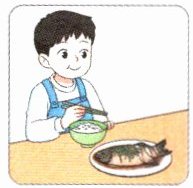
1. —How can I stay healthy?
—
2. —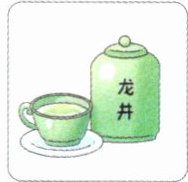
—It comes from Hangzhou.
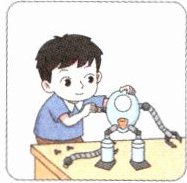
3. —What do you usually do at the weekend?
—
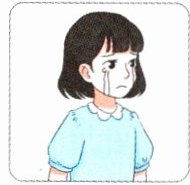
4. —How does she feel?
—
5. —What should the girl do?
—She should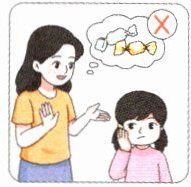
1. —How can I stay healthy?
—
You should eat healthy food.
2. —
Where
does
Longjing Tea come
from
?—It comes from Hangzhou.
3. —What do you usually do at the weekend?
—
I usually make robots/a robot.
4. —How does she feel?
—
She's sad./She feels sad.
5. —What should the girl do?
—She should
eat
less
candy
.答案
1. You should eat healthy food.
2. Where does; come from
3. I usually make robots/a robot.
4. She's sad./She feels sad. 5. eat less candy
2. Where does; come from
3. I usually make robots/a robot.
4. She's sad./She feels sad. 5. eat less candy
解析
【分析】
本题是根据图片提示补全英语对话的题目,需结合问句语境、图片信息及英语句型结构作答:第1题询问保持健康的方法,对应健康建议类表达;第2题答句说明物品来源,需用询问来源的特殊疑问句;第3题询问周末常规活动,结合图片内容作答;第4题询问情绪,对应情绪表达;第5题询问应做的事,用情态动词should的结构作答。
【解析】
1. 问句“How can I stay healthy?”意为“我如何保持健康?”,结合健康建议的常用表达,答语为“You should eat healthy food.”;
2. 答句“It comes from Hangzhou.”说明物品来源,故问句用特殊疑问词Where引导,结构为“Where does + 主语 + come from?”,因此填Where does; come from;
3. 问句“What do you usually do at the weekend?”询问周末常规活动,结合图片(制作机器人),答语为“I usually make robots/a robot.”;
4. 问句“How does she feel?”询问情绪,答语为“She's sad./She feels sad.”;
5. 问句“What should the girl do?”询问应做的事,结合健康相关建议,答语为“She should eat less candy.”。
【答案】
1. You should eat healthy food.
2. Where does; come from
3. I usually make robots/a robot.
4. She's sad./She feels sad.
5. eat less candy
【知识点】
英语日常交际用语、特殊疑问句、情态动词should的用法
【点评】
本题为基础补全对话题型,考查学生对日常交际话题(健康、物品来源、周末活动、情绪、建议)的掌握,需结合语境和图片信息运用正确句型作答,难度适中。
【难度系数】
0.7
本题是根据图片提示补全英语对话的题目,需结合问句语境、图片信息及英语句型结构作答:第1题询问保持健康的方法,对应健康建议类表达;第2题答句说明物品来源,需用询问来源的特殊疑问句;第3题询问周末常规活动,结合图片内容作答;第4题询问情绪,对应情绪表达;第5题询问应做的事,用情态动词should的结构作答。
【解析】
1. 问句“How can I stay healthy?”意为“我如何保持健康?”,结合健康建议的常用表达,答语为“You should eat healthy food.”;
2. 答句“It comes from Hangzhou.”说明物品来源,故问句用特殊疑问词Where引导,结构为“Where does + 主语 + come from?”,因此填Where does; come from;
3. 问句“What do you usually do at the weekend?”询问周末常规活动,结合图片(制作机器人),答语为“I usually make robots/a robot.”;
4. 问句“How does she feel?”询问情绪,答语为“She's sad./She feels sad.”;
5. 问句“What should the girl do?”询问应做的事,结合健康相关建议,答语为“She should eat less candy.”。
【答案】
1. You should eat healthy food.
2. Where does; come from
3. I usually make robots/a robot.
4. She's sad./She feels sad.
5. eat less candy
【知识点】
英语日常交际用语、特殊疑问句、情态动词should的用法
【点评】
本题为基础补全对话题型,考查学生对日常交际话题(健康、物品来源、周末活动、情绪、建议)的掌握,需结合语境和图片信息运用正确句型作答,难度适中。
【难度系数】
0.7
六、从方框中选择正确的选项补全对话。
Caicai: Hello, Lulu! 1.
Lulu: Thursday.
Caicai: 2.
Lulu: I have English, Chinese, music and PE.
Caicai: 3.
Lulu: Yes. I really like my music teacher.
Caicai: 4.
Lulu: She's funny and kind.
Caicai: Great! Do you have lessons at weekends?
Lulu: Yes, I often have piano lessons on Sunday mornings.
Caicai: There will be an art festival next Tuesday. 5.
Lulu: Sure.
A. What's she like?
B. What's your favourite day at school?
C. Is music your favourite subject?
D. Can you play the piano then?
E. What do you have on Thursdays?
Caicai: Hello, Lulu! 1.
B
Lulu: Thursday.
Caicai: 2.
E
Lulu: I have English, Chinese, music and PE.
Caicai: 3.
C
Lulu: Yes. I really like my music teacher.
Caicai: 4.
A
Lulu: She's funny and kind.
Caicai: Great! Do you have lessons at weekends?
Lulu: Yes, I often have piano lessons on Sunday mornings.
Caicai: There will be an art festival next Tuesday. 5.
D
Lulu: Sure.
A. What's she like?
B. What's your favourite day at school?
C. Is music your favourite subject?
D. Can you play the piano then?
E. What do you have on Thursdays?
答案
1. B 2. E 3. C 4. A 5. D
解析
【分析】先通读对话和选项,梳理上下文语境的逻辑关系:1. 答语为“Thursday”,对应询问最喜欢的上学日;2. 答语是课程内容,对应询问周四的课程;3. 答语是“Yes”且提到音乐老师,对应一般疑问句,询问是否最喜欢音乐;4. 答语描述性格,对应询问人物的性格特点;5. 前文提到艺术节,结合钢琴课内容,对应询问能否在艺术节弹钢琴,据此匹配选项。
【解析】1. 根据Lulu的回答“Thursday”,可知Caicai询问的是最喜欢的上学日,对应选项B;2. 根据Lulu的回答“I have English, Chinese, music and PE.”,可知Caicai询问的是周四的课程,对应选项E;3. 根据Lulu的回答“Yes. I really like my music teacher.”,可知Caicai的问句是一般疑问句,询问是否最喜欢音乐,对应选项C;4. 根据Lulu的回答“She's funny and kind.”,可知Caicai询问的是音乐老师的性格特点,对应选项A;5. 根据前文“There will be an art festival next Tuesday.”和Lulu提到的钢琴课,可知Caicai询问的是能否在艺术节弹钢琴,对应选项D。
【答案】1.B 2.E 3.C 4.A 5.D
【知识点】补全对话;情景交际
【点评】本题为情景补全对话题,考查日常交际用语的运用,需结合上下文语境匹配合适的句子,属于基础题型,难度较低。
【难度系数】0.8
【解析】1. 根据Lulu的回答“Thursday”,可知Caicai询问的是最喜欢的上学日,对应选项B;2. 根据Lulu的回答“I have English, Chinese, music and PE.”,可知Caicai询问的是周四的课程,对应选项E;3. 根据Lulu的回答“Yes. I really like my music teacher.”,可知Caicai的问句是一般疑问句,询问是否最喜欢音乐,对应选项C;4. 根据Lulu的回答“She's funny and kind.”,可知Caicai询问的是音乐老师的性格特点,对应选项A;5. 根据前文“There will be an art festival next Tuesday.”和Lulu提到的钢琴课,可知Caicai询问的是能否在艺术节弹钢琴,对应选项D。
【答案】1.B 2.E 3.C 4.A 5.D
【知识点】补全对话;情景交际
【点评】本题为情景补全对话题,考查日常交际用语的运用,需结合上下文语境匹配合适的句子,属于基础题型,难度较低。
【难度系数】0.8
