

 登录
登录
三、根据句意及常识,圈出正确的内容补全句子。
1. I can (hear / see) the beautiful flowers with my eyes.
2. Close your eyes and (smell / touch) this. It smells so good.
3. Be quiet! I can (see / hear) someone singing.
4. Don't (smell/touch) the hot (热的) cup with your hands. It's dangerous (危险的).
5. I use my (nose/ears) to smell the nice food.
1. I can (hear / see) the beautiful flowers with my eyes.
2. Close your eyes and (smell / touch) this. It smells so good.
3. Be quiet! I can (see / hear) someone singing.
4. Don't (smell/touch) the hot (热的) cup with your hands. It's dangerous (危险的).
5. I use my (nose/ears) to smell the nice food.
答案
1. see
2. smell
3. hear
4. touch
5. nose
2. smell
3. hear
4. touch
5. nose
解析
【分析】
本题需结合句子语境和常识,选择合适的感官动词或身体部位补全句子。解题时,先提取每个句子的关键信息(如使用的器官、动作的结果),再匹配对应的感官功能:眼睛对应“看”,鼻子对应“闻”,耳朵对应“听”,手对应“触摸”,据此判断正确选项。
【解析】
1. 句中出现“with my eyes”(用眼睛),眼睛的功能是“看”,故选see;
2. 后半句提到“It smells so good”(闻起来很香),说明动作是“闻”,故选smell;
3. 前半句“Be quiet!”(安静),结合“someone singing”(有人唱歌),可知是“听到”,故选hear;
4. 句中“with your hands”(用手),结合“hot cup”(热杯子)和“dangerous”(危险),可知是“触摸”,故选touch;
5. 句中“to smell the nice food”(闻美味的食物),“闻”用鼻子,故选nose。
【答案】
1. see
2. smell
3. hear
4. touch
5. nose
【知识点】
感官动词、身体部位名词
【点评】
本题考查基础感官类词汇的运用,结合句意和常识即可解答,属于英语基础词汇的巩固类题目。
【难度系数】
0.9
本题需结合句子语境和常识,选择合适的感官动词或身体部位补全句子。解题时,先提取每个句子的关键信息(如使用的器官、动作的结果),再匹配对应的感官功能:眼睛对应“看”,鼻子对应“闻”,耳朵对应“听”,手对应“触摸”,据此判断正确选项。
【解析】
1. 句中出现“with my eyes”(用眼睛),眼睛的功能是“看”,故选see;
2. 后半句提到“It smells so good”(闻起来很香),说明动作是“闻”,故选smell;
3. 前半句“Be quiet!”(安静),结合“someone singing”(有人唱歌),可知是“听到”,故选hear;
4. 句中“with your hands”(用手),结合“hot cup”(热杯子)和“dangerous”(危险),可知是“触摸”,故选touch;
5. 句中“to smell the nice food”(闻美味的食物),“闻”用鼻子,故选nose。
【答案】
1. see
2. smell
3. hear
4. touch
5. nose
【知识点】
感官动词、身体部位名词
【点评】
本题考查基础感官类词汇的运用,结合句意和常识即可解答,属于英语基础词汇的巩固类题目。
【难度系数】
0.9
四、根据课本故事内容,给下列句子选择相符的图片。
(
(
(
(
(
(
C
) 1. We learn from Mum and Dad. A. (
B
) 2. Ants can use smell to learn. B.(
E
) 3. Bees can dance to make a map. C. (
A
) 4. Frogs get food with their tongues. D. (
D
) 5. We can use tools to see more! E. 答案
1. C 2. B 3. E 4. A 5. D
解析
【分析】先明确每个句子的核心含义,再逐一对应各插图的内容,找到语义匹配的选项,完成图文匹配类的选择。
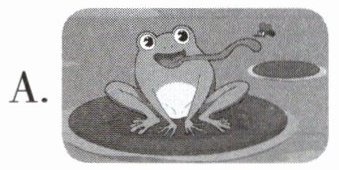
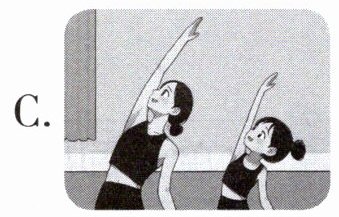
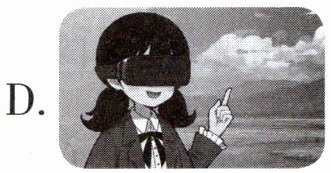
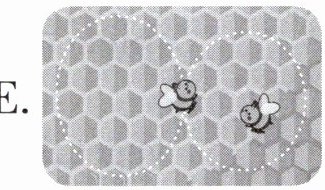
【解析】1. 句子“We learn from Mum and Dad.”意为“我们向爸爸妈妈学习”,对应插图C;2. “Ants can use smell to learn.”意为“蚂蚁能用气味学习”,对应插图B;3. “Bees can dance to make a map.”意为“蜜蜂能跳舞来绘制地图”,对应插图E;4. “Frogs get food with their tongues.”意为“青蛙用舌头获取食物”,对应插图A;5. “We can use tools to see more!”意为“我们能用工具看得更多”,对应插图D。
【答案】1.C 2.B 3.E 4.A 5.D
【知识点】图文匹配、句子理解
【点评】本题考查对句子含义的理解及图文对应能力,需结合句子语义匹配相关插图内容。
【难度系数】0.6
【解析】1. 句子“We learn from Mum and Dad.”意为“我们向爸爸妈妈学习”,对应插图C;2. “Ants can use smell to learn.”意为“蚂蚁能用气味学习”,对应插图B;3. “Bees can dance to make a map.”意为“蜜蜂能跳舞来绘制地图”,对应插图E;4. “Frogs get food with their tongues.”意为“青蛙用舌头获取食物”,对应插图A;5. “We can use tools to see more!”意为“我们能用工具看得更多”,对应插图D。
【答案】1.C 2.B 3.E 4.A 5.D
【知识点】图文匹配、句子理解
【点评】本题考查对句子含义的理解及图文对应能力,需结合句子语义匹配相关插图内容。
【难度系数】0.6
