

 登录
登录
新素材 素材来源:Tes
[2026 原创]History is filled with stories of terrible natural disasters that have caused great damage and the loss of many lives. These events, from floods and diseases to earthquakes, show the powerful forces of nature. Here are a few of the most serious disasters ever recorded.
Sometimes, disasters are caused by weather. For example, one of the deadliest was the Yangtze River flood in China in 1931. After very heavy rain, the river overflowed and created huge floods that were believed to have killed millions of people. A different kind of weather disaster was the 2003 European heat wave. This extremely hot weather was unusual for the area and caused serious health problems and destroyed many crops.
Diseases can also be caused by natural disasters. The Black Death was a terrible plague(瘟疫)that spread across Europe from 1347 to 1351. It was so contagious(传染性的)and deadly that it killed a huge part of Europe’s population—some experts say more than one third of all people there. Centuries later, the Spanish Flu of 1918 became another global disaster, a contagious illness that killed tens of millions of people worldwide.
Sometimes, the danger comes from the earth itself. In 2001, a powerful earthquake hit the state of Gujarat in India. The shaking lasted for over two minutes. It killed about 20,000 people, injured many more, and destroyed around 400,000 homes, leaving families with nowhere to live.
These events from history remind us of the power of nature. They show why it is so important for countries to be prepared and for people to help each other during a crisis.
(
A. They both happened in Asia.
B. They were both caused by bad weather.
C. They both happened in the 20th century.
D. They both killed huge numbers of people.
(
A. The Spanish Flu.
B. The Black Death.
C. The Gujarat earthquake.
D. The Yangtze River flood.
(
A. It is impossible to prepare for a crisis.
B. Natural disasters no longer happen today.
C. Helping others is the only way to survive.
D. We can learn important lessons from past events.
(
[2026 原创]History is filled with stories of terrible natural disasters that have caused great damage and the loss of many lives. These events, from floods and diseases to earthquakes, show the powerful forces of nature. Here are a few of the most serious disasters ever recorded.
Sometimes, disasters are caused by weather. For example, one of the deadliest was the Yangtze River flood in China in 1931. After very heavy rain, the river overflowed and created huge floods that were believed to have killed millions of people. A different kind of weather disaster was the 2003 European heat wave. This extremely hot weather was unusual for the area and caused serious health problems and destroyed many crops.
Diseases can also be caused by natural disasters. The Black Death was a terrible plague(瘟疫)that spread across Europe from 1347 to 1351. It was so contagious(传染性的)and deadly that it killed a huge part of Europe’s population—some experts say more than one third of all people there. Centuries later, the Spanish Flu of 1918 became another global disaster, a contagious illness that killed tens of millions of people worldwide.
Sometimes, the danger comes from the earth itself. In 2001, a powerful earthquake hit the state of Gujarat in India. The shaking lasted for over two minutes. It killed about 20,000 people, injured many more, and destroyed around 400,000 homes, leaving families with nowhere to live.
These events from history remind us of the power of nature. They show why it is so important for countries to be prepared and for people to help each other during a crisis.
(
D
)1. What do the Black Death and the Spanish Flu have in common?A. They both happened in Asia.
B. They were both caused by bad weather.
C. They both happened in the 20th century.
D. They both killed huge numbers of people.
(
A
)2. Which disaster mentioned in the text affected the largest area?A. The Spanish Flu.
B. The Black Death.
C. The Gujarat earthquake.
D. The Yangtze River flood.
(
D
)3. What can be inferred from the last paragraph?A. It is impossible to prepare for a crisis.
B. Natural disasters no longer happen today.
C. Helping others is the only way to survive.
D. We can learn important lessons from past events.
(
A
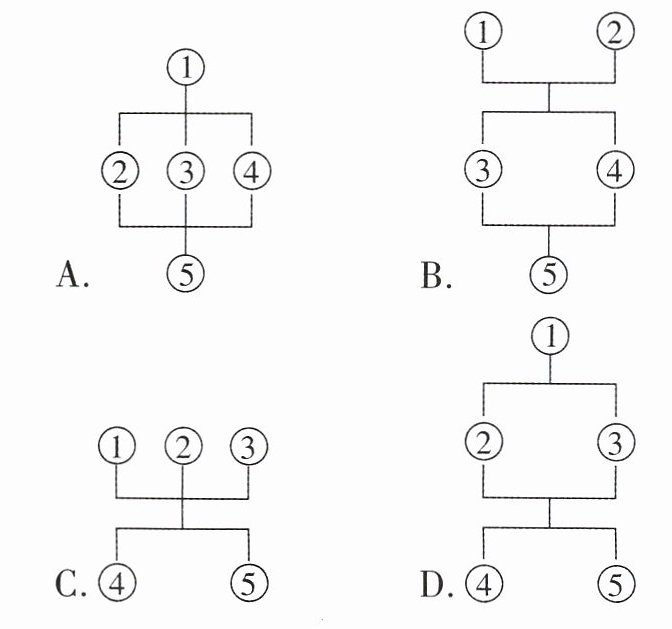
)4. 新考法 篇章结构 Which of the following best shows the structure of the passage? (①= Paragraph 1...)答案
1—4 D A D A
1. D 细节理解题。根据 it killed a huge part of Europe's population 和 killed tens of millions of people worldwide 可知,两者共同的特点是都造成了巨大的人口死亡。故选 D 项。
2. A 细节理解题。根据 the Spanish Flu of 1918 became another global disaster 可知西班牙大流感的影响范围最大。故选 A 项。
3. D 推理判断题。根据最后一段可知,回顾历史灾难是为了从中吸取教训,即认识到自然的力量,并懂得为未来做好准备、互相帮助。故选 D 项。
4. A 推理判断题。第一段引出历史上的自然灾害这一主题,第二、三、四段分别介绍了不同的灾害,第五段总结学到的经验。故选 A 项。
1. D 细节理解题。根据 it killed a huge part of Europe's population 和 killed tens of millions of people worldwide 可知,两者共同的特点是都造成了巨大的人口死亡。故选 D 项。
2. A 细节理解题。根据 the Spanish Flu of 1918 became another global disaster 可知西班牙大流感的影响范围最大。故选 A 项。
3. D 推理判断题。根据最后一段可知,回顾历史灾难是为了从中吸取教训,即认识到自然的力量,并懂得为未来做好准备、互相帮助。故选 D 项。
4. A 推理判断题。第一段引出历史上的自然灾害这一主题,第二、三、四段分别介绍了不同的灾害,第五段总结学到的经验。故选 A 项。
