

 登录
登录
六、[核心素养·传统文化]阅读理解。
人与社会——历史、社会与文化
掌拳礼
The fist-and-palm salute(掌拳礼) has a history of more than 3,000 years. It started during the Western Zhou Dynasty as a way to greet people. Back then, if people met a stranger, they would be ready to fight and their hands would be close to their weapons(武器). But when they put their fists and palms together, it was a way to say "I don't want to fight you". Later on, people kept using it when they met others or wanted to show thanks to somebody.
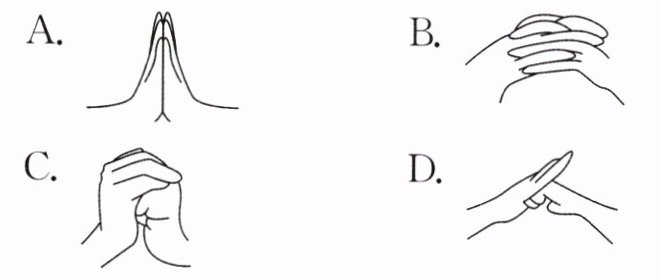
The hold-fist salute is also called baoquanli in Chinese. It is usually used in Chinese kung fu. You can do it by holding the right fist closed and covering it with the left hand open, holding both arms in front of the chest. But be careful! Don't point the left thumb(拇指) at yourself. It's not polite.
1. 创新考法·还原信息 Which of the following can be put into "▲" in Paragraph 2?
A. Is the fist-and-palm salute different today?
B. How do people do the fist-and-palm salute right?
C. What does the fist-and-palm salute mean?
D. When do people do the fist-and-palm salute?
2. 创新考法·图片理解 Which picture shows the hold-fist salute?
3. What's the best title for the passage?
A. Salutes in China
B. The history of Chinese salutes
C. The meaning of the fist-and-palm salute
D. The right way of doing the hold-fist salute
人与社会——历史、社会与文化
掌拳礼
The fist-and-palm salute(掌拳礼) has a history of more than 3,000 years. It started during the Western Zhou Dynasty as a way to greet people. Back then, if people met a stranger, they would be ready to fight and their hands would be close to their weapons(武器). But when they put their fists and palms together, it was a way to say "I don't want to fight you". Later on, people kept using it when they met others or wanted to show thanks to somebody.
B
▲ If you're a man, make a half fist with your right hand, then hold the right hand with your left hand in front of your chest(胸膛). Look at the person, raise both hands to the eyebrow, bow and shake hands gently three times. At the same time, you can say some lucky greeting words. If you're a woman, you should put your right hand on top and hold both arms out in front of your chest.The hold-fist salute is also called baoquanli in Chinese. It is usually used in Chinese kung fu. You can do it by holding the right fist closed and covering it with the left hand open, holding both arms in front of the chest. But be careful! Don't point the left thumb(拇指) at yourself. It's not polite.
1. 创新考法·还原信息 Which of the following can be put into "▲" in Paragraph 2?
A. Is the fist-and-palm salute different today?
B. How do people do the fist-and-palm salute right?
C. What does the fist-and-palm salute mean?
D. When do people do the fist-and-palm salute?
2. 创新考法·图片理解 Which picture shows the hold-fist salute?
3. What's the best title for the passage?
A. Salutes in China
B. The history of Chinese salutes
C. The meaning of the fist-and-palm salute
D. The right way of doing the hold-fist salute
答案
1. B 推理判断题。第二段详细描述了男女行拳掌礼的具体步骤,核心是“如何正确行礼”,因此选项B符合语境。
2. D 推理判断题。根据第三段中“holding the right fist
closed and covering it with the left hand open, holding both
arms in front of the chest”可知,抱拳礼的动作是右手握拳,左手张开捂住右拳,双臂置于胸前,选项D符合题意。
3. A 标题概括题。本文主要介绍了中国传统的拳掌礼,包括其起源、历史演变、男女不同的行礼方式以及与武术相关的抱拳礼的注意事项,选项A适合作为文章的标题。
2. D 推理判断题。根据第三段中“holding the right fist
closed and covering it with the left hand open, holding both
arms in front of the chest”可知,抱拳礼的动作是右手握拳,左手张开捂住右拳,双臂置于胸前,选项D符合题意。
3. A 标题概括题。本文主要介绍了中国传统的拳掌礼,包括其起源、历史演变、男女不同的行礼方式以及与武术相关的抱拳礼的注意事项,选项A适合作为文章的标题。
解析
【分析】
本题围绕中国传统掌拳礼(抱拳礼)设置三道题目,需结合上下文语境、文本细节及文章主旨逐一分析:
1. 第1题是还原信息题,空格位于第二段开头,第二段详细描述了男女行拳掌礼的具体操作步骤,因此空格处需引出与“行拳掌礼的方式”相关的内容,排除不符合语境的选项。
2. 第2题是图片理解题,需根据第三段对抱拳礼动作的文字描述,匹配对应的图片,明确动作要求后对比四个选项的图片即可得出答案。
3. 第3题是标题概括题,需梳理全文内容,判断哪个选项能全面涵盖文章主旨,排除片面的选项。
【解析】
1. 第1题:空格后第二段详细说明男女行拳掌礼的具体步骤,核心是“如何正确行礼”。A选项询问拳掌礼是否与过去不同,C选项询问拳掌礼的含义,D选项询问行拳掌礼的时间,均与后文内容不符,只有B选项“如何正确行拳掌礼”能引出下文内容,故选B。
2. 第2题:根据第三段“holding the right fist closed and covering it with the left hand open, holding both arms in front of the chest”,即右手握拳,左手张开覆盖右拳,双臂置于胸前。对比四幅图片,A为指尖相对、B为手指叠放、C为双手握拳,均不符合动作要求;D图符合抱拳礼的动作描述,故选D。
3. 第3题:全文介绍了中国传统掌拳礼的起源、演变、行礼方式、注意事项等内容。B选项仅涉及拳掌礼的历史、C选项仅涉及拳掌礼的含义、D选项仅涉及正确行礼方式,均片面;A选项“Salutes in China”(中国的敬礼)全面涵盖文章内容,故选A。
【答案】1.B 2.D 3.A
【知识点】阅读理解,细节理解,主旨大意
【点评】本题以中国传统文化掌拳礼为素材,考查阅读理解的还原信息、图片理解、标题概括等题型,引导学生了解传统文化,符合核心素养要求,题目难度适中。
【难度系数】0.5
本题围绕中国传统掌拳礼(抱拳礼)设置三道题目,需结合上下文语境、文本细节及文章主旨逐一分析:
1. 第1题是还原信息题,空格位于第二段开头,第二段详细描述了男女行拳掌礼的具体操作步骤,因此空格处需引出与“行拳掌礼的方式”相关的内容,排除不符合语境的选项。
2. 第2题是图片理解题,需根据第三段对抱拳礼动作的文字描述,匹配对应的图片,明确动作要求后对比四个选项的图片即可得出答案。
3. 第3题是标题概括题,需梳理全文内容,判断哪个选项能全面涵盖文章主旨,排除片面的选项。
【解析】
1. 第1题:空格后第二段详细说明男女行拳掌礼的具体步骤,核心是“如何正确行礼”。A选项询问拳掌礼是否与过去不同,C选项询问拳掌礼的含义,D选项询问行拳掌礼的时间,均与后文内容不符,只有B选项“如何正确行拳掌礼”能引出下文内容,故选B。
2. 第2题:根据第三段“holding the right fist closed and covering it with the left hand open, holding both arms in front of the chest”,即右手握拳,左手张开覆盖右拳,双臂置于胸前。对比四幅图片,A为指尖相对、B为手指叠放、C为双手握拳,均不符合动作要求;D图符合抱拳礼的动作描述,故选D。
3. 第3题:全文介绍了中国传统掌拳礼的起源、演变、行礼方式、注意事项等内容。B选项仅涉及拳掌礼的历史、C选项仅涉及拳掌礼的含义、D选项仅涉及正确行礼方式,均片面;A选项“Salutes in China”(中国的敬礼)全面涵盖文章内容,故选A。
【答案】1.B 2.D 3.A
【知识点】阅读理解,细节理解,主旨大意
【点评】本题以中国传统文化掌拳礼为素材,考查阅读理解的还原信息、图片理解、标题概括等题型,引导学生了解传统文化,符合核心素养要求,题目难度适中。
【难度系数】0.5
