

 登录
登录
二、完形填空(共15小题;每小题1分,满分15分)
阅读短文,从短文后各题所给的A、B、C、D四个选项中,选择最佳选项。
One day, a young man took a long train trip. After hours of sitting, he felt 11. He opened the map and counted the stops along the way. Over 60 stops! He became 12. At the next station, he rushed to a steward(乘务员) and 13, "Why are there so many stops? When will 14 reach the next station?"
The kind old steward invited him 15 his office. "This train stops to 16 passengers," he explained. "But I never count the stops. I only 17 the start and the end."
"But isn't it tiring?" the young man argued. "Don't you want to finish the journey 18?"
The steward smiled, "I've worked here for 30 years. 19 I feel upset at every stop, I'd go crazy! I focus on my job, and believe we'll arrive on time."
Hearing this, the young man sat quietly. He watched out of the 20: Farmers were working in 21, children were waving at the train and clouds were moving like lazy sheep. Slowly, his impatience went away.
Later, he realized: Life is like this 22. We face countless "stops"—exams, working challenges, delays(延期) and so on. But if we focus too much on each one, we'll miss the 23 things around us. Instead, focus on your goal and enjoy the ride.
When the train finally reached its destination the young man 24 the steward. From then on, whenever he felt stressed, he would recall the train ride and 25 himself: Keep moving forward. The end would come.
(
B. surprised
C. excited
D. bored
(
B. happy
C. careless
D. special
(
B. accepted
C. explained
D. heard
(
B. he
C. we
D. they
(
B. into
C. on
D. down
(
B. cut down
C. look after
D. pick up
(
B. knock
C. imagine
D. remember
(
B. quickly
C. safely
D. widely
(
B. If
C. When
D. Unless
(
B. book
C. window
D. seat
(
B. schools
C. parks
D. shops
(
B. game
C. journey
D. race
(
B. worrying
C. unpleasant
D. wonderful
(
B. thanked
C. helped
D. followed
(
B. ask
C. refuse
D. remind
阅读短文,从短文后各题所给的A、B、C、D四个选项中,选择最佳选项。
One day, a young man took a long train trip. After hours of sitting, he felt 11. He opened the map and counted the stops along the way. Over 60 stops! He became 12. At the next station, he rushed to a steward(乘务员) and 13, "Why are there so many stops? When will 14 reach the next station?"
The kind old steward invited him 15 his office. "This train stops to 16 passengers," he explained. "But I never count the stops. I only 17 the start and the end."
"But isn't it tiring?" the young man argued. "Don't you want to finish the journey 18?"
The steward smiled, "I've worked here for 30 years. 19 I feel upset at every stop, I'd go crazy! I focus on my job, and believe we'll arrive on time."
Hearing this, the young man sat quietly. He watched out of the 20: Farmers were working in 21, children were waving at the train and clouds were moving like lazy sheep. Slowly, his impatience went away.
Later, he realized: Life is like this 22. We face countless "stops"—exams, working challenges, delays(延期) and so on. But if we focus too much on each one, we'll miss the 23 things around us. Instead, focus on your goal and enjoy the ride.
When the train finally reached its destination the young man 24 the steward. From then on, whenever he felt stressed, he would recall the train ride and 25 himself: Keep moving forward. The end would come.
(
D
)11. A. fantasticB. surprised
C. excited
D. bored
(
A
)12. A. upsetB. happy
C. careless
D. special
(
A
)13. A. complainedB. accepted
C. explained
D. heard
(
C
)14. A. sheB. he
C. we
D. they
(
B
)15. A. withB. into
C. on
D. down
(
D
)16. A. fill withB. cut down
C. look after
D. pick up
(
D
)17. A. forgetB. knock
C. imagine
D. remember
(
B
)18. A. quietlyB. quickly
C. safely
D. widely
(
B
)19. A. BecauseB. If
C. When
D. Unless
(
C
)20. A. dishB. book
C. window
D. seat
(
A
)21. A. fieldsB. schools
C. parks
D. shops
(
C
)22. A. movieB. game
C. journey
D. race
(
D
)23. A. peacefulB. worrying
C. unpleasant
D. wonderful
(
B
)24. A. noticedB. thanked
C. helped
D. followed
(
D
)25. A. teachB. ask
C. refuse
D. remind
答案
文章大意:本文主要讲述了一个年轻人在漫长的旅途中和一位老乘务员之间发生的故事,告诉我们人生旅途中的小站虽然繁多,但也无需忧心,只需牢记目标,不断前行。
11. D 解析:句意:坐了几个小时后,他感到很无聊。fantastic“极好的”;surprised“吃惊的”;excited“兴奋的”;bored“无聊的”。根据“After hours of sitting...”可知,年轻人一直长时间坐着,所以容易感到无聊。故选 D。
12. A 解析:句意:他变得心烦。upset“心烦的”;happy“开心的”;careless“粗心的”;special“特别的”。根据“Over 60 stops!”可知,沿途有 60 多个站点,站点之多让年轻人很心烦。故选 A。
13. A 解析:句意:在下一站,他冲到一名乘务员那里并抱怨道:“为什么有这么多站点? 我们什么时候能到达下一站?”complained“抱怨”;accepted“接受”;explained“解释”;heard“听见”。根据“Over 60 stops!”可知,年轻人对站点多不满意,所以向乘务员抱怨。故选 A。
14. C 解析:句意:在下一站,他冲到一名乘务员那里并抱怨道:“为什么有这么多站点? 我们什么时候能到达下一站?”she“她”;he“他”;we“我们”;they“他们”。年轻人把自己和同车乘客看作整体,所以此处用“我们”指代全车乘客。故选 C。
15. B 解析:句意:善良的老乘务员邀请他进入他的办公室。with“和”;into“进入”;on“在……上面”;down“向下”。invite sb. into...“邀请某人进入……”,是固定搭配。故选 B。
16. D 解析:句意:“这列火车停靠是为了搭载乘客,”他解释道。fill with“用……装满”;cut down“削减”;look after“照顾”;pick up“搭载”。根据“This train stops to...passengers...”可知,这列火车停靠是为了搭载乘客。故选 D。
17. D 解析:句意:我只记得起点和终点。forget“忘记”;knock“敲”;imagine“想象”;remember“记得”。根据“But I never count the stops. I only...the start and the end.”可知,老乘务员从未数过沿途的站点,而是只记得此次旅途的起点和终点。故选 D。
18. B 解析:句意:你不想快点结束这段旅程吗? quietly“安静地”;quickly“快速地”;safely“安全地”;widely“广泛地”。根据“But isn’t it tiring?”可知,年轻人觉得乘务员工作累,所以才会推测乘务员想快点结束旅程。故选 B。
19. B 解析:句意:如果我在每一站都感到心烦,我会发疯的! Because“因为”;If“如果”;When“当……的时候”;Unless“除非”。根据“...I feel upset at every stop, I’d go crazy!”可知,这里是乘务员假设每一站都心烦的话,那么自己的心情会很糟糕,此处用 if 引导该条件状语从句。故选 B。
20. C 解析:句意:他向窗户外望:农民们在田地劳作,孩子们在向火车挥手,云朵像慵懒的绵羊一样飘动。dish“盘子”;book“书”;window“窗户”;seat“座位”。根据后文描述“Farmers were working...”农民劳作等景象可知,此处是望向窗户外面。故选 C。
21. A 解析:句意:他望着窗户外面:农民们在田地劳作,孩子们在向火车挥手,云朵像慵懒的绵羊一样飘动。fields“田地”;schools“学校”;parks“公园”;shops“商店”。根据常识可知,农民劳作的地方通常是田地。故选 A。
22. C 解析:句意:后来,他意识到:生活就像这个旅程。movie“电影”;game“游戏”;journey“旅程”;race“比赛”。根据“We face countless ‘stops’—exams, working challenges...”可知,这里把生活比作旅程,“停靠站”就像生活旅途中的站点。故选 C。
23. D 解析:句意:但是如果我们过于关注每一个(停靠站),我们就会错过周围美好的事情。peaceful“平静的”;worrying“令人担忧的”;unpleasant“不愉快的”;wonderful“美好的”。结合上文“Farmers were working... children were waving... clouds were moving like lazy sheep.”可知,劳作的农民、挥手的孩童、飘动的白云,这些都是年轻人差点错过的沿途美景,以此告诉我们,不要过于关注每个停靠站,否则会错过沿途美好的事物。故选 D。
24. B 解析:句意:当火车最终到达目的地时,这个年轻人感谢了乘务员。noticed“注意”;thanked“感谢”;helped“帮助”;followed“跟随”。根据上文内容可知,乘务员的话让年轻人有了感悟,因此到达目的地后年轻人感谢了他。故选 B。
25. D 解析:句意:从那时起,每当他感到有压力时,他就会回忆起那次火车之旅,并且提醒自己:继续前进。终点会到来。teach“教”;ask“问”;refuse“拒绝”;remind“提醒”。根据“he would recall the train ride”可知,这里回忆火车之旅是为了提醒自己要继续前进。故选 D。
11. D 解析:句意:坐了几个小时后,他感到很无聊。fantastic“极好的”;surprised“吃惊的”;excited“兴奋的”;bored“无聊的”。根据“After hours of sitting...”可知,年轻人一直长时间坐着,所以容易感到无聊。故选 D。
12. A 解析:句意:他变得心烦。upset“心烦的”;happy“开心的”;careless“粗心的”;special“特别的”。根据“Over 60 stops!”可知,沿途有 60 多个站点,站点之多让年轻人很心烦。故选 A。
13. A 解析:句意:在下一站,他冲到一名乘务员那里并抱怨道:“为什么有这么多站点? 我们什么时候能到达下一站?”complained“抱怨”;accepted“接受”;explained“解释”;heard“听见”。根据“Over 60 stops!”可知,年轻人对站点多不满意,所以向乘务员抱怨。故选 A。
14. C 解析:句意:在下一站,他冲到一名乘务员那里并抱怨道:“为什么有这么多站点? 我们什么时候能到达下一站?”she“她”;he“他”;we“我们”;they“他们”。年轻人把自己和同车乘客看作整体,所以此处用“我们”指代全车乘客。故选 C。
15. B 解析:句意:善良的老乘务员邀请他进入他的办公室。with“和”;into“进入”;on“在……上面”;down“向下”。invite sb. into...“邀请某人进入……”,是固定搭配。故选 B。
16. D 解析:句意:“这列火车停靠是为了搭载乘客,”他解释道。fill with“用……装满”;cut down“削减”;look after“照顾”;pick up“搭载”。根据“This train stops to...passengers...”可知,这列火车停靠是为了搭载乘客。故选 D。
17. D 解析:句意:我只记得起点和终点。forget“忘记”;knock“敲”;imagine“想象”;remember“记得”。根据“But I never count the stops. I only...the start and the end.”可知,老乘务员从未数过沿途的站点,而是只记得此次旅途的起点和终点。故选 D。
18. B 解析:句意:你不想快点结束这段旅程吗? quietly“安静地”;quickly“快速地”;safely“安全地”;widely“广泛地”。根据“But isn’t it tiring?”可知,年轻人觉得乘务员工作累,所以才会推测乘务员想快点结束旅程。故选 B。
19. B 解析:句意:如果我在每一站都感到心烦,我会发疯的! Because“因为”;If“如果”;When“当……的时候”;Unless“除非”。根据“...I feel upset at every stop, I’d go crazy!”可知,这里是乘务员假设每一站都心烦的话,那么自己的心情会很糟糕,此处用 if 引导该条件状语从句。故选 B。
20. C 解析:句意:他向窗户外望:农民们在田地劳作,孩子们在向火车挥手,云朵像慵懒的绵羊一样飘动。dish“盘子”;book“书”;window“窗户”;seat“座位”。根据后文描述“Farmers were working...”农民劳作等景象可知,此处是望向窗户外面。故选 C。
21. A 解析:句意:他望着窗户外面:农民们在田地劳作,孩子们在向火车挥手,云朵像慵懒的绵羊一样飘动。fields“田地”;schools“学校”;parks“公园”;shops“商店”。根据常识可知,农民劳作的地方通常是田地。故选 A。
22. C 解析:句意:后来,他意识到:生活就像这个旅程。movie“电影”;game“游戏”;journey“旅程”;race“比赛”。根据“We face countless ‘stops’—exams, working challenges...”可知,这里把生活比作旅程,“停靠站”就像生活旅途中的站点。故选 C。
23. D 解析:句意:但是如果我们过于关注每一个(停靠站),我们就会错过周围美好的事情。peaceful“平静的”;worrying“令人担忧的”;unpleasant“不愉快的”;wonderful“美好的”。结合上文“Farmers were working... children were waving... clouds were moving like lazy sheep.”可知,劳作的农民、挥手的孩童、飘动的白云,这些都是年轻人差点错过的沿途美景,以此告诉我们,不要过于关注每个停靠站,否则会错过沿途美好的事物。故选 D。
24. B 解析:句意:当火车最终到达目的地时,这个年轻人感谢了乘务员。noticed“注意”;thanked“感谢”;helped“帮助”;followed“跟随”。根据上文内容可知,乘务员的话让年轻人有了感悟,因此到达目的地后年轻人感谢了他。故选 B。
25. D 解析:句意:从那时起,每当他感到有压力时,他就会回忆起那次火车之旅,并且提醒自己:继续前进。终点会到来。teach“教”;ask“问”;refuse“拒绝”;remind“提醒”。根据“he would recall the train ride”可知,这里回忆火车之旅是为了提醒自己要继续前进。故选 D。
三、阅读理解(共20小题;每小题2分,满分40分)
A)阅读下列四篇短文,从短文后各题所给的A、B、C、D四个选项中,选择最佳选项。
A
There are lots of places that are well worth visiting in China Here are recommended places.
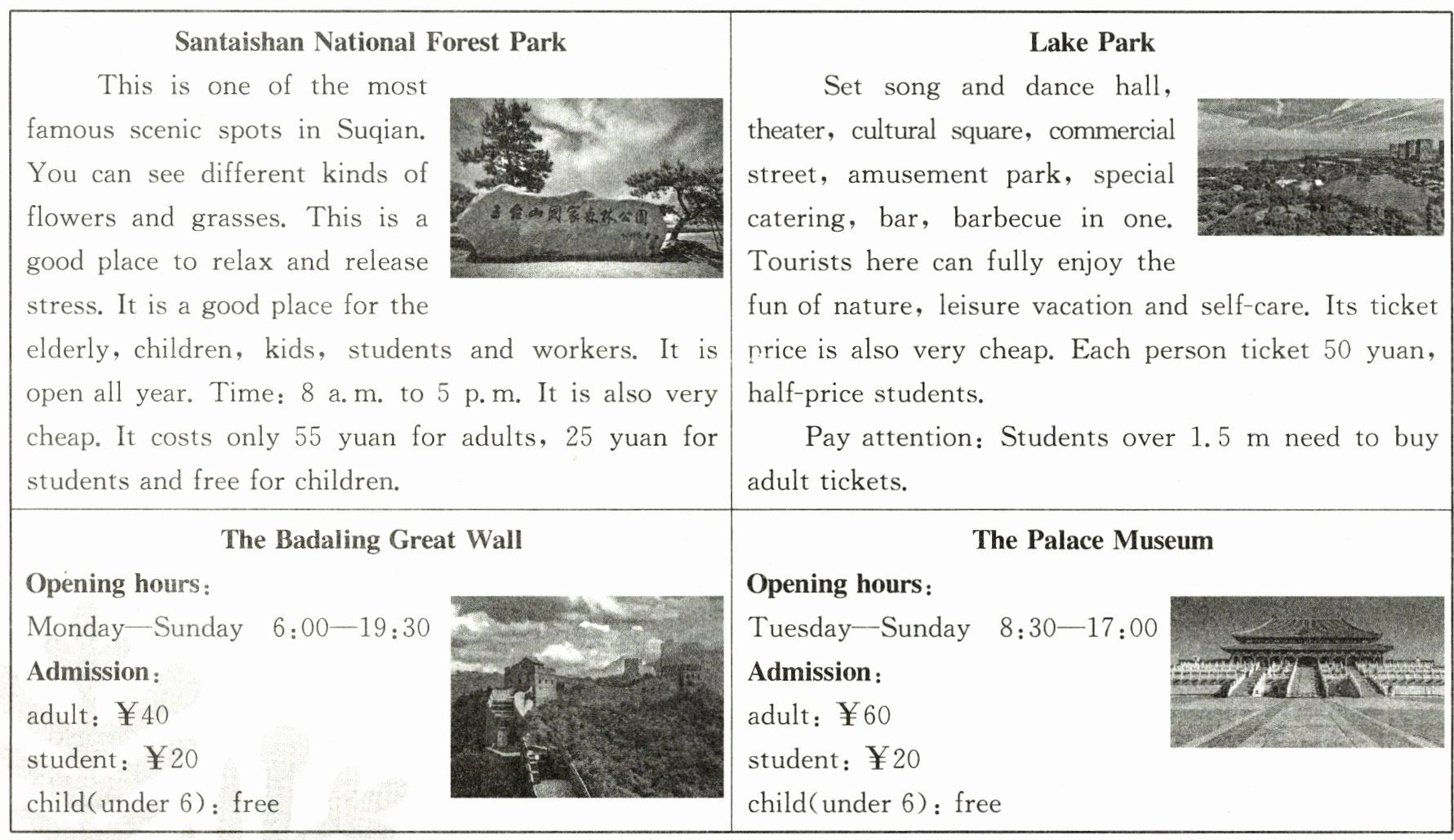
Admission: adult: ¥40
student: ¥20
Admission: adult: ¥60
student: ¥20
(
A. Monday
B. Tuesday
C. Saturday
D. Sunday
(
A. Santai mountain.
B. Lake Park.
C. The Great Wall.
D. The Place Museum.
(
A. ¥150.
B. ¥200.
C. ¥210.
D. ¥265.
A)阅读下列四篇短文,从短文后各题所给的A、B、C、D四个选项中,选择最佳选项。
A
There are lots of places that are well worth visiting in China Here are recommended places.
Admission: adult: ¥40
student: ¥20
Admission: adult: ¥60
student: ¥20
(
A
)26. Tony and his parents can't go to visit the Palace Museum on .A. Monday
B. Tuesday
C. Saturday
D. Sunday
(
C
)27. Which scenic spot is the cheapest for adults?A. Santai mountain.
B. Lake Park.
C. The Great Wall.
D. The Place Museum.
(
D
)28. How much will Tony(1.4 m) and his parents pay if they visit the Lake Park and the Place Museum?A. ¥150.
B. ¥200.
C. ¥210.
D. ¥265.
答案
A)
A
文章大意:本文介绍了四个中国著名景点。
26. A 解析:细节理解题。根据表格右下方“Opening hours: Tuesday—Sunday 8:30—17:00”可知,故宫营业时间是周二到周日,即周一不开门。故选 A。
27. C 解析:细节理解题。根据表格左下方“Admission: adult: ¥40”和其他三个介绍可知,长城的成人票票价最便宜。故选 C。
28. D 解析:推理判断题。根据湖滨公园的票价“Its ticket price is also very cheap. Each person ticket 50 yuan, half-price students.”和故宫的票价“Admission: adult: ¥60 student : ¥20”可知,湖滨公园三人门票是 50 + 50 + 25 = 125 元,故宫三人门票是 60 + 60 + 20 = 140 元,总计 265 元。故选 D。
A
文章大意:本文介绍了四个中国著名景点。
26. A 解析:细节理解题。根据表格右下方“Opening hours: Tuesday—Sunday 8:30—17:00”可知,故宫营业时间是周二到周日,即周一不开门。故选 A。
27. C 解析:细节理解题。根据表格左下方“Admission: adult: ¥40”和其他三个介绍可知,长城的成人票票价最便宜。故选 C。
28. D 解析:推理判断题。根据湖滨公园的票价“Its ticket price is also very cheap. Each person ticket 50 yuan, half-price students.”和故宫的票价“Admission: adult: ¥60 student : ¥20”可知,湖滨公园三人门票是 50 + 50 + 25 = 125 元,故宫三人门票是 60 + 60 + 20 = 140 元,总计 265 元。故选 D。
