

 登录
登录
一、用括号内所给单词的适当形式填空。
1. In China, red is a popular colour,
2. Everyone
3. He enjoyed
4. 写作好句 Life is like a story. You'd better improve yourself all the time
5. I think spending an afternoon fishing by the lake is a
对比题 I feel
6. 魅力湖北 When I visited Wuhan, I tried some Hubei
1. In China, red is a popular colour,
especially
(especial) during some festivals.2. Everyone
is
(be) here now. Let's start the meeting.3. He enjoyed
playing
(play) basketball with his friends in the past.4. 写作好句 Life is like a story. You'd better improve yourself all the time
to make
(make) your story wonderful.5. I think spending an afternoon fishing by the lake is a
relaxing
(relax) way for many people.对比题 I feel
relaxed
(relax) when I listen to soft music after finishing my work every day.6. 魅力湖北 When I visited Wuhan, I tried some Hubei
dishes
(dish) like hot-dry noodles. It was really delicious!答案
1. especially 2. is 3. playing 4. to make 5. relaxing 对比题 relaxed 6. dishes
解析
【分析】本题为英语词汇适当形式填空题,需结合句子结构、语境及词汇用法变形。解题思路:1. 分析空格在句中修饰的成分,确定所需词性;2. 明确主语、时态等语法规则;3. 牢记常用固定搭配;4. 区分形容词修饰人/物的形式;5. 注意可数名词的复数变化规则。
【解析】1. 空格修饰介词短语during some festivals,需用形容词especial的副词形式especially;2. 主语everyone为不定代词,一般现在时谓语动词用单数,故填is;3. 固定搭配enjoy doing sth,因此play变为动名词playing;4. 此处表目的,需用不定式作目的状语,故make变为to make;5. 第一空修饰事物way,用relax的-ing形式relaxing;对比题中主语是人I,用-ed形式relaxed;6. dish是可数名词,some后接复数形式,故变为dishes。
【答案】1. especially 2. is 3. playing 4. to make 5. relaxing 对比题 relaxed 6. dishes
【知识点】固定搭配、形容词辨析、名词复数
【点评】本题考查初中英语核心基础知识点,题型常规,侧重词汇变形与基础语法,能有效检测学生对基础内容的掌握情况。
【难度系数】0.7
【解析】1. 空格修饰介词短语during some festivals,需用形容词especial的副词形式especially;2. 主语everyone为不定代词,一般现在时谓语动词用单数,故填is;3. 固定搭配enjoy doing sth,因此play变为动名词playing;4. 此处表目的,需用不定式作目的状语,故make变为to make;5. 第一空修饰事物way,用relax的-ing形式relaxing;对比题中主语是人I,用-ed形式relaxed;6. dish是可数名词,some后接复数形式,故变为dishes。
【答案】1. especially 2. is 3. playing 4. to make 5. relaxing 对比题 relaxed 6. dishes
【知识点】固定搭配、形容词辨析、名词复数
【点评】本题考查初中英语核心基础知识点,题型常规,侧重词汇变形与基础语法,能有效检测学生对基础内容的掌握情况。
【难度系数】0.7
二、用方框中所给单词的适当形式填空。
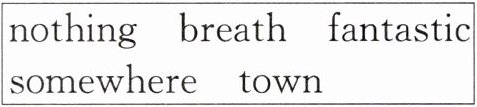
7. When you feel angry, take a deep
8. 大美中国 There are many ancient
9. —Where is Tommy? I can't find him
—He is playing with Dave on the sports field.
10. 写作好句 As the old saying goes,“Anyone who makes no mistakes makes
11. 魅力湖北 The East Lake, a beautiful place in Hubei, is famous for its
7. When you feel angry, take a deep
breath
and count to ten.8. 大美中国 There are many ancient
towns
(town) in China, such as Zhouzhuang Ancient Town and Wuzhen Ancient Town.9. —Where is Tommy? I can't find him
anywhere
.—He is playing with Dave on the sports field.
10. 写作好句 As the old saying goes,“Anyone who makes no mistakes makes
nothing
.”11. 魅力湖北 The East Lake, a beautiful place in Hubei, is famous for its
fantastic
landscape.答案
7. breath 8. towns 9. anywhere 10. nothing 11. fantastic
解析
【分析】
本题为选词填空题,需结合句子语境、语法规则及固定搭配,从方框所给单词中选择合适的词并调整形式填空。解题时,先分析每个空所需的词性,再匹配方框内单词,注意名词复数、不定代词在否定句中的转换等细节。
【解析】
7. 固定搭配“take a deep breath”意为“深呼吸”,此处需名词,方框中“breath”为名词,符合要求,故填breath。
8. “many”后接可数名词复数,“town”的复数形式为“towns”,故填towns。
9. 本句为否定句,表达“任何地方”时,否定句中需用“anywhere”,对应方框内的“somewhere”,故填anywhere。
10. 谚语“Anyone who makes no mistakes makes nothing”意为“不犯错的人一事无成”,此处填“nothing”符合句意。
11. 此处修饰名词“landscape”需形容词,方框中“fantastic”为形容词,符合语境,故填fantastic。
【答案】
7. breath 8. towns 9. anywhere 10. nothing 11. fantastic
【知识点】
固定搭配、名词的数、不定代词用法
【点评】
本题考查基础词汇的运用,涉及固定搭配、名词复数、不定代词转换等知识点,难度适中,侧重基础语法和词汇的掌握。
【难度系数】
0.3
本题为选词填空题,需结合句子语境、语法规则及固定搭配,从方框所给单词中选择合适的词并调整形式填空。解题时,先分析每个空所需的词性,再匹配方框内单词,注意名词复数、不定代词在否定句中的转换等细节。
【解析】
7. 固定搭配“take a deep breath”意为“深呼吸”,此处需名词,方框中“breath”为名词,符合要求,故填breath。
8. “many”后接可数名词复数,“town”的复数形式为“towns”,故填towns。
9. 本句为否定句,表达“任何地方”时,否定句中需用“anywhere”,对应方框内的“somewhere”,故填anywhere。
10. 谚语“Anyone who makes no mistakes makes nothing”意为“不犯错的人一事无成”,此处填“nothing”符合句意。
11. 此处修饰名词“landscape”需形容词,方框中“fantastic”为形容词,符合语境,故填fantastic。
【答案】
7. breath 8. towns 9. anywhere 10. nothing 11. fantastic
【知识点】
固定搭配、名词的数、不定代词用法
【点评】
本题考查基础词汇的运用,涉及固定搭配、名词复数、不定代词转换等知识点,难度适中,侧重基础语法和词汇的掌握。
【难度系数】
0.3
三、用方框中所给短语的适当形式填空。
take many photos steamed chicken soup
something special what about
take one's breath away
12. Her beautiful voice
13. —Did you do
—Yes, I made a card for my father to express my love.
14. We had
15.
16. Last summer vacation, we
take many photos steamed chicken soup
something special what about
take one's breath away
12. Her beautiful voice
took my breath away
when I heard her singing.13. —Did you do
anything special
on Father's Day?—Yes, I made a card for my father to express my love.
14. We had
steamed chicken soup
for dinner last night. How delicious!15.
What about
going to the beach this weekend if it's sunny?16. Last summer vacation, we
took many photos
when we had a trip to Dalian答案
12. took my breath away 13. anything special 14. steamed chicken soup 15. What about 16. took many photos
解析
【分析】
解题思路:先通读每个句子理解句意,从方框所给短语中选匹配语境的短语,再根据句子时态、句式类型调整短语适当形式。步骤:1. 分析每小题语境确定所需短语含义;2. 判断句子时态(如一般过去时)调整动词短语形式;3. 注意特殊规则(如疑问句不定代词变化、提建议固定表达)。
【解析】
12. 句意:当我听到她唱歌时,她美妙的声音让我惊叹。从句“heard”为过去式,主句用一般过去时,短语“take one's breath away”表“使某人惊叹”,过去式为“took my breath away”,符合语境。
13. 句意:父亲节你做了什么特别的事吗?一般疑问句中不定代词“something”改“anything”,形容词修饰不定代词需后置,故填“anything special”。
14. 句意:昨晚晚餐我们喝了鸡汤,太美味了。方框中“steamed chicken soup”是晚餐食物,直接使用。
15. 句意:如果周末天晴,去海滩怎么样?提建议固定句式为“What about doing sth.”,首字母大写,故填“What about”。
16. 句意:去年暑假,我们去大连旅行时拍了很多照片。“Last summer vacation”是过去时间标志,短语“take many photos”表“拍很多照片”,过去式为“took many photos”,符合语境。
【答案】
12. took my breath away 13. anything special 14. steamed chicken soup 15. What about 16. took many photos
【知识点】
动词短语的时态变化、不定代词的用法、固定句式
【点评】
本题为短语适当形式填空的基础题型,考查短语在语境(时态、句式)中的正确运用,需掌握短语含义及形式变化规则,适合巩固基础。
【难度系数】
0.6
解题思路:先通读每个句子理解句意,从方框所给短语中选匹配语境的短语,再根据句子时态、句式类型调整短语适当形式。步骤:1. 分析每小题语境确定所需短语含义;2. 判断句子时态(如一般过去时)调整动词短语形式;3. 注意特殊规则(如疑问句不定代词变化、提建议固定表达)。
【解析】
12. 句意:当我听到她唱歌时,她美妙的声音让我惊叹。从句“heard”为过去式,主句用一般过去时,短语“take one's breath away”表“使某人惊叹”,过去式为“took my breath away”,符合语境。
13. 句意:父亲节你做了什么特别的事吗?一般疑问句中不定代词“something”改“anything”,形容词修饰不定代词需后置,故填“anything special”。
14. 句意:昨晚晚餐我们喝了鸡汤,太美味了。方框中“steamed chicken soup”是晚餐食物,直接使用。
15. 句意:如果周末天晴,去海滩怎么样?提建议固定句式为“What about doing sth.”,首字母大写,故填“What about”。
16. 句意:去年暑假,我们去大连旅行时拍了很多照片。“Last summer vacation”是过去时间标志,短语“take many photos”表“拍很多照片”,过去式为“took many photos”,符合语境。
【答案】
12. took my breath away 13. anything special 14. steamed chicken soup 15. What about 16. took many photos
【知识点】
动词短语的时态变化、不定代词的用法、固定句式
【点评】
本题为短语适当形式填空的基础题型,考查短语在语境(时态、句式)中的正确运用,需掌握短语含义及形式变化规则,适合巩固基础。
【难度系数】
0.6
四、阅读理解。
阅读短文,从每小题所给的四个选项中,选出一个与短文内容相符的最佳选项。
A 北师大附属实验校本经典题 ①Did you ever hear of the Silk Road before? Do you know what an important part it plays in the world? Did you visit any famous places along the road? The Silk Road went through Asia, the Middle East, North Africa and Europe. It was more than 7,000 km from Xi'an to Rome.
②My dad loves the Silk Road very much and he told me many things about it. Last summer, my family went on holiday and went to some places along the road.
③We started at Lanzhou and went on to Wuwei. Wuwei was a very important city on the Silk Road. It connected(连接) three main cities in the area in ancient times, and was very important. It's now a modern city but you can still get the feeling of history when you visit it.
④The next stop was Jiayuguan. It was also an important place along the Silk Road. It was a busy city with a lot of people coming and going. Even today, many people travel through the city. An important part of the Great Wall is also here.
⑤After that, we went on to Yumenguan. I first found out about Yumenguan in the famous poem written by Wang Zhihuan. It was in the Gobi Desert(戈壁沙漠) and connected Central Asia and China. I want to know how people ever made it through the hot desert so long ago.
⑥This trip wasn't just for fun. It helped me understand the history of the area and see how people from different places influenced(影响) each other in many ways.
(
A. By telling a story.
B. By listing numbers.
C. By giving examples.
D. By asking questions.
(
A.《登鹳雀楼》 B.《凉州词》
C.《送别》 D.《九日送别》
(
A. Jiayuguan is a busy city both in the ancient and modern times.
B. The writer's family visited five famous places along the Silk Road.
C. The writer's mum taught the writer many things about the Silk Road.
D. The writer thought ancient people couldn't go through the desert.
(
A. To describe the modern cities along the Silk Road.
B. To encourage us to learn the history of the Silk Road.
C. To share the writer's travel experience and what he learnt from it.
D. To compare the differences between the ancient and modern Silk Road.
(
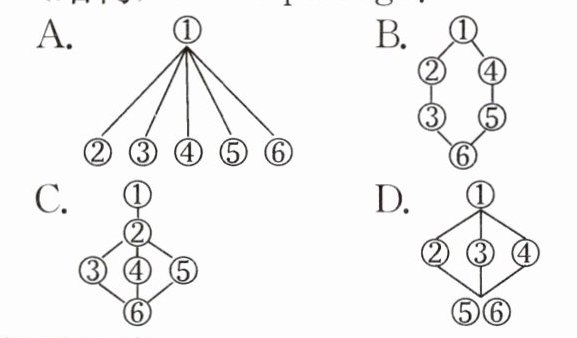
A. ①连接②③④⑤⑥的图
B. ①连接②④,②连③,④连⑤,③连⑥,⑤连⑥的图
C. ①连②,②连③④⑤,③④⑤连⑥的图
D. ①连②③④,②③④连⑤⑥的图
阅读短文,从每小题所给的四个选项中,选出一个与短文内容相符的最佳选项。
A 北师大附属实验校本经典题
①Did you ever hear of the Silk Road before? Do you know what an important part it plays in the world? Did you visit any famous places along the road? The Silk Road went through Asia, the Middle East, North Africa and Europe. It was more than 7,000 km from Xi'an to Rome.②My dad loves the Silk Road very much and he told me many things about it. Last summer, my family went on holiday and went to some places along the road.
③We started at Lanzhou and went on to Wuwei. Wuwei was a very important city on the Silk Road. It connected(连接) three main cities in the area in ancient times, and was very important. It's now a modern city but you can still get the feeling of history when you visit it.
④The next stop was Jiayuguan. It was also an important place along the Silk Road. It was a busy city with a lot of people coming and going. Even today, many people travel through the city. An important part of the Great Wall is also here.
⑤After that, we went on to Yumenguan. I first found out about Yumenguan in the famous poem written by Wang Zhihuan. It was in the Gobi Desert(戈壁沙漠) and connected Central Asia and China. I want to know how people ever made it through the hot desert so long ago.
⑥This trip wasn't just for fun. It helped me understand the history of the area and see how people from different places influenced(影响) each other in many ways.
(
D
)17. 新考向 开篇方式 How does the writer start the passage?A. By telling a story.
B. By listing numbers.
C. By giving examples.
D. By asking questions.
(
B
)18. 跨学科 语文 What's the name of the poem by Wang Zhihuan in this passage?A.《登鹳雀楼》 B.《凉州词》
C.《送别》 D.《九日送别》
(
A
)19. What can we learn from the passage?A. Jiayuguan is a busy city both in the ancient and modern times.
B. The writer's family visited five famous places along the Silk Road.
C. The writer's mum taught the writer many things about the Silk Road.
D. The writer thought ancient people couldn't go through the desert.
(
C
)20. 新考向 写作意图 What is the purpose of the passage?A. To describe the modern cities along the Silk Road.
B. To encourage us to learn the history of the Silk Road.
C. To share the writer's travel experience and what he learnt from it.
D. To compare the differences between the ancient and modern Silk Road.
(
C
)21. 新考向 篇章结构 What's the structure(结构) of the passage?A. ①连接②③④⑤⑥的图
B. ①连接②④,②连③,④连⑤,③连⑥,⑤连⑥的图
C. ①连②,②连③④⑤,③④⑤连⑥的图
D. ①连②③④,②③④连⑤⑥的图
答案
17.D 18.B 19.A 20.C 21.C
解析
【分析】
17题:题目问作者的开篇方式,回到原文第①段,发现作者连续使用三个疑问句引出话题,据此判断开篇方式。18题:跨学科考语文,需结合原文第⑤段提到的王之涣的诗,回忆王之涣涉及玉门关的诗作。19题:细节理解题,需逐一核对选项与原文对应内容,排除错误选项。20题:写作意图题,梳理全文内容,明确作者先引入话题、再讲旅行经历、最后谈收获的逻辑,判断核心目的。21题:篇章结构题,划分段落功能,明确各段的作用及关联,匹配选项结构。
【解析】
17题:根据短文第①段,作者以三个疑问句(Did you ever hear of...? Do you know what...? Did you visit...?)开篇,属于提问式开篇,故答案为D。
18题:根据短文第⑤段,作者提到从王之涣的诗中了解玉门关,王之涣描写玉门关的经典诗作是《凉州词》,《登鹳雀楼》未涉及玉门关,《送别》《九日送别》不符,故答案为B。
19题:逐一核对选项:A项对应第④段“ It was a busy city with a lot of people coming and going. Even today, many people travel through the city”,说明嘉峪关古今都是繁忙城市,正确;B项作者一家参观的是兰州、武威、嘉峪关、玉门关共4个地方,并非5个,错误;C项是作者爸爸告知丝绸之路的相关内容,不是妈妈,错误;D项作者只是好奇古人如何穿越沙漠,并非认为古人不能穿越,错误。故答案为A。
20题:短文先引入丝绸之路话题,接着讲述全家的丝绸之路旅行经历,最后点明旅行的收获(理解区域历史、不同地区的相互影响),核心是分享旅行经历及所学,故答案为C。
21题:短文结构为:第①段引入丝绸之路话题;第②段说明全家开启丝绸之路旅行;第③④⑤段具体介绍旅行的地点;第⑥段总结旅行的收获。对应结构为①连②,②连③④⑤,③④⑤连⑥,故答案为C。
【答案】
17.D 18.B 19.A 20.C 21.C
【知识点】
英语阅读理解、跨学科知识应用、篇章结构分析
【点评】
本题为英语阅读理解题,涵盖开篇方式、跨学科(语文)、细节理解、写作意图、篇章结构等考点,需学生精准定位原文信息,结合跨学科知识作答,考查基础阅读能力,整体难度适中。
【难度系数】
0.6
17题:题目问作者的开篇方式,回到原文第①段,发现作者连续使用三个疑问句引出话题,据此判断开篇方式。18题:跨学科考语文,需结合原文第⑤段提到的王之涣的诗,回忆王之涣涉及玉门关的诗作。19题:细节理解题,需逐一核对选项与原文对应内容,排除错误选项。20题:写作意图题,梳理全文内容,明确作者先引入话题、再讲旅行经历、最后谈收获的逻辑,判断核心目的。21题:篇章结构题,划分段落功能,明确各段的作用及关联,匹配选项结构。
【解析】
17题:根据短文第①段,作者以三个疑问句(Did you ever hear of...? Do you know what...? Did you visit...?)开篇,属于提问式开篇,故答案为D。
18题:根据短文第⑤段,作者提到从王之涣的诗中了解玉门关,王之涣描写玉门关的经典诗作是《凉州词》,《登鹳雀楼》未涉及玉门关,《送别》《九日送别》不符,故答案为B。
19题:逐一核对选项:A项对应第④段“ It was a busy city with a lot of people coming and going. Even today, many people travel through the city”,说明嘉峪关古今都是繁忙城市,正确;B项作者一家参观的是兰州、武威、嘉峪关、玉门关共4个地方,并非5个,错误;C项是作者爸爸告知丝绸之路的相关内容,不是妈妈,错误;D项作者只是好奇古人如何穿越沙漠,并非认为古人不能穿越,错误。故答案为A。
20题:短文先引入丝绸之路话题,接着讲述全家的丝绸之路旅行经历,最后点明旅行的收获(理解区域历史、不同地区的相互影响),核心是分享旅行经历及所学,故答案为C。
21题:短文结构为:第①段引入丝绸之路话题;第②段说明全家开启丝绸之路旅行;第③④⑤段具体介绍旅行的地点;第⑥段总结旅行的收获。对应结构为①连②,②连③④⑤,③④⑤连⑥,故答案为C。
【答案】
17.D 18.B 19.A 20.C 21.C
【知识点】
英语阅读理解、跨学科知识应用、篇章结构分析
【点评】
本题为英语阅读理解题,涵盖开篇方式、跨学科(语文)、细节理解、写作意图、篇章结构等考点,需学生精准定位原文信息,结合跨学科知识作答,考查基础阅读能力,整体难度适中。
【难度系数】
0.6
