

 登录
一、综合填空。
新素材 传统文化 Face-
changing is a famous stage art from Sichuan Opera, one of China's major traditional operas. It is best 1 (know) for the amazing moment when actors change their painted masks in a second—right in front of the audience!
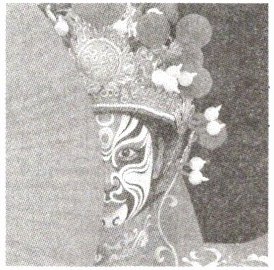
This special skill 2 (call) "Bian Lian" in Chinese. It started over 300 years ago during the Qing Dynasty and has been passed down through generations. No wonder the artists take great 3 (proud) in this traditional treasure.
In a performance, the actor wears many-layered(层叠的)masks or uses special face powder. With a quick wave, a turn or a dramatic move, the old face disappears and a new one appears. Each mask shows a certain emotion, such as happiness, anger, fear or surprise. A character may change faces several times to 4 (exact) match the story.
To catch the audience's attention at once, the 5 (one) change usually happens very early. Sometimes, the actor also performs fire-spitting—blowing a sudden flame from the mouth. This exciting trick often comes right after a face change, 6 (add) more surprise to the show.
Though it looks like magic, the skills take years of practice. Movements must be fast, smooth and well-hidden. Face-changing helps tell the story in Sichuan Opera, showing characters' inner feelings 7 (quick) and directly than words can express.
The colourful masks carry traditional Chinese 8 (mean).
- Red means loyalty
- Black shows strength
- White can mean trickery
Today, face-changing and fire-spitting are performed in opera theatres, festivals, cultural events, and international shows. Over the past few decades, this traditional art 9 (win) the hearts of people around the world. Whether on a big stage or in a street show, face-changing brings surprise, joy, and culture to every audience.
Sichuan Opera is listed as China's National Intangible Cultural Heritage, and it will continue to show 10 (it) artistic charm to the world in the years ahead.
新素材 传统文化 Face-
changing is a famous stage art from Sichuan Opera, one of China's major traditional operas. It is best 1 (know) for the amazing moment when actors change their painted masks in a second—right in front of the audience!
This special skill 2 (call) "Bian Lian" in Chinese. It started over 300 years ago during the Qing Dynasty and has been passed down through generations. No wonder the artists take great 3 (proud) in this traditional treasure.
In a performance, the actor wears many-layered(层叠的)masks or uses special face powder. With a quick wave, a turn or a dramatic move, the old face disappears and a new one appears. Each mask shows a certain emotion, such as happiness, anger, fear or surprise. A character may change faces several times to 4 (exact) match the story.
To catch the audience's attention at once, the 5 (one) change usually happens very early. Sometimes, the actor also performs fire-spitting—blowing a sudden flame from the mouth. This exciting trick often comes right after a face change, 6 (add) more surprise to the show.
Though it looks like magic, the skills take years of practice. Movements must be fast, smooth and well-hidden. Face-changing helps tell the story in Sichuan Opera, showing characters' inner feelings 7 (quick) and directly than words can express.
The colourful masks carry traditional Chinese 8 (mean).
- Red means loyalty
- Black shows strength
- White can mean trickery
Today, face-changing and fire-spitting are performed in opera theatres, festivals, cultural events, and international shows. Over the past few decades, this traditional art 9 (win) the hearts of people around the world. Whether on a big stage or in a street show, face-changing brings surprise, joy, and culture to every audience.
Sichuan Opera is listed as China's National Intangible Cultural Heritage, and it will continue to show 10 (it) artistic charm to the world in the years ahead.
答案
1. known 2. is called 3. pride 4. exactly
5. first 6. adding 7. more quickly
8. meanings 9. has won 10. its
5. first 6. adding 7. more quickly
8. meanings 9. has won 10. its
二、(2026·南京市科利华中学限时作业)完形填空。
People who speak or perform before the public sometimes may suffer from "Stage Fright(怯场$)". Stage fright makes a person \underline{1}. In that case it can make one's mind go back and forget \underline{2} one should say or how one should act. Actors, dancers, lawyers, even radio show hosts suffered from stage fright at one time or \underline{3}.$
$Diana Nichols is an expert in helping people free from stage fright at a medical centre in New York City. She helps actors learn to \underline{4} themselves. Miss Nichols says some people have always been afraid to perform before the audience. Others, she says, develop stage fright after a sad \underline{5}.$
$She offers them ways to control the fear. One way is to smile before going onto the stage. Taking two deep breaths \underline{6} helps. Deep breathing helps you get control of your body.$
$Miss Nichols advises her patients to tell themselves that their speech or performance does not have to be perfect. It's \underline{7} to make a mistake. She tells them they should not be too nervous while they are performing. It is important that they should continue to perform while she is helping them. After each performance, they discuss what happened and \underline{8} what helped and what did not. \underline{9} they perform more and more, they will fear less and less as much as 50%.$
$Miss Nichols says the aim is only to \underline{10} stage fright, not to smooth it away completely. This is because a little stage fright makes a person more careful, and improves the performance.$
1. A. joyful
B. proud
C. nervous
D. hopeless
2. A. when
B. what
C. how
D. whether
3. A. others
B. other
C. another
D. the other
4. A. cure
B. control
C. hold
D. protect
5. A. experience
B. activity
C. process
D. event
6. A. usually
B. too
C. also
D. sometimes
7. A. sure
B. terrible
C. necessary
D. natural
8. A. put out
B. find out
C. look for
D. search for
9. A. As
B. While
C. Before
D. Until
10. A. change
B. produce
C. improve
D. reduce
答案
1. C 【解析】根据常识以及下文中出现的“afraid”“fear”和“nervous”等词可知,此处表示“怯场让人紧张”。
2. B 【解析】分析句子结构可知,空处引导宾语从句,且在从句中做动词“say”的宾语,应用what。
3. C 【解析】句意:演员、舞者、律师,甚至电台节目主持人都曾有过怯场的时候。at one time or another是固定短语,意为“曾经,在某个时候”。
4. B 【解析】下文中提到“control the fear”和“get control of your body”,此处表示“她帮助演员学会控制自己”,空处应填control。
5. A 【解析】根据语境可知,另一些人是在伤心的经历(experience)之后变得怯场的。
6. C 【解析】前句已经介绍一种方法,这里补充第二种方法,表示“也”,且位于句中,应填also。
7. D
8. B 【解析】句意:每次表演结束后,他们会讨论发生了什么,并找出哪些方法有用、哪些没用。这里指经过讨论总结出有效方法,强调结果,应填find out。
9. A
10. D 【解析】根据空后的“not to smooth it away completely”可知,此处指的是“减少”而非彻底消除怯场。
