

 登录
登录
任务二:读一读,判断下列行为是(T)否(F)被允许。(5分)
(
(
(
(
(
(
F
)1. Run in the living room.(
F
)2. Touch hot things in the kitchen.(
T
)3. Read books in the study.(
F
)4. Make a mess in the study.(
T
)5. Keep the bedroom clean.答案
任务二:1-5. FFTFT
解析
【分析】本题要求结合日常行为规范,判断每个英文描述的行为是否被允许,允许填T,不允许填F。需逐个分析每个行为的合理性:1.在客厅奔跑存在安全隐患,不被允许;2.触碰厨房的热物品易受伤,不被允许;3.在书房读书是合理行为,被允许;4.在书房弄乱不符合整洁要求,不被允许;5.保持卧室干净是良好习惯,被允许。
【解析】1.“Run in the living room”(在客厅跑)不符合安全规范,不被允许,填F;2.“Touch hot things in the kitchen”(碰厨房热东西)有安全风险,不被允许,填F;3.“Read books in the study”(在书房读书)是合理行为,被允许,填T;4.“Make a mess in the study”(在书房弄乱)不符合要求,不被允许,填F;5.“Keep the bedroom clean”(保持卧室干净)是良好习惯,被允许,填T。
【答案】FFTFT
【知识点】日常行为常识、英语判断应用
【点评】本题结合生活实际考查英语判断能力,题目贴近日常,难度较小,掌握基本生活常识即可正确作答。
【难度系数】0.2
【解析】1.“Run in the living room”(在客厅跑)不符合安全规范,不被允许,填F;2.“Touch hot things in the kitchen”(碰厨房热东西)有安全风险,不被允许,填F;3.“Read books in the study”(在书房读书)是合理行为,被允许,填T;4.“Make a mess in the study”(在书房弄乱)不符合要求,不被允许,填F;5.“Keep the bedroom clean”(保持卧室干净)是良好习惯,被允许,填T。
【答案】FFTFT
【知识点】日常行为常识、英语判断应用
【点评】本题结合生活实际考查英语判断能力,题目贴近日常,难度较小,掌握基本生活常识即可正确作答。
【难度系数】0.2
十一、看图片,写句子。(10 分)
请根据图片提示,写出一条相应的家庭规则。
1. My brother is watching TV in the living room.
2. He is running on the wet floor.
3. They are arguing(吵架).
4. My cousin is eating in the bed.
5. The bedroom is untidy.
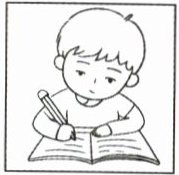
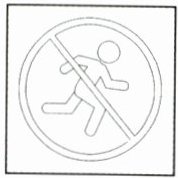
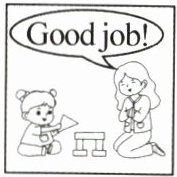
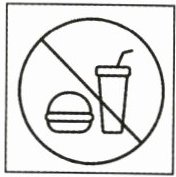
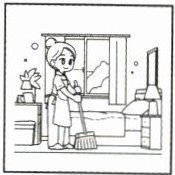
请根据图片提示,写出一条相应的家庭规则。
1. My brother is watching TV in the living room.
Do your homework first.
2. He is running on the wet floor.
Don't run in the living room.
3. They are arguing(吵架).
Use kind words.
4. My cousin is eating in the bed.
Don't eat in the bed.
5. The bedroom is untidy.
Tidy your bedroom.
答案
1. Do your homework first.
2. Don't run in the living room.
3. Use kind words.
4. Don't eat in the bed.
5. Tidy your bedroom.
2. Don't run in the living room.
3. Use kind words.
4. Don't eat in the bed.
5. Tidy your bedroom.
解析
【分析】首先需理解每个小题给出的场景描述,明确场景对应的家庭规范要求,再用英语祈使句(家庭规则常用祈使句形式)写出对应规则。具体步骤:1. 分析第1题“弟弟在客厅看电视”的场景,对应先完成作业的家庭规则;2. 分析第2题“在湿地板跑”的危险场景,对应禁止在客厅奔跑的规则;3. 分析第3题“吵架”的场景,对应友善沟通的规则;4. 分析第4题“在床上吃东西”的不卫生场景,对应禁止的规则;5. 分析第5题“卧室不整洁”的场景,对应整理卧室的规则。
【解析】1. 场景为弟弟在客厅看电视,家庭中通常要求先完成作业再娱乐,因此规则为:Do your homework first. 2. 场景是在湿地板奔跑,存在安全隐患,家庭规则禁止此类行为,故写:Don't run in the living room. 3. 场景是吵架,家庭倡导友善沟通,规则为:Use kind words. 4. 场景是在床上吃东西,不卫生,家庭规则禁止,故写:Don't eat in the bed. 5. 场景是卧室不整洁,家庭规则要求整理,因此写:Tidy your bedroom.
【答案】1. Do your homework first. 2. Don't run in the living room. 3. Use kind words. 4. Don't eat in the bed. 5. Tidy your bedroom.
【知识点】英语祈使句、家庭规则表达
【点评】本题结合生活实际场景,考查学生对英语祈使句的运用能力,贴近日常生活,易于理解作答,属于基础英语练习题。
【难度系数】0.4
【解析】1. 场景为弟弟在客厅看电视,家庭中通常要求先完成作业再娱乐,因此规则为:Do your homework first. 2. 场景是在湿地板奔跑,存在安全隐患,家庭规则禁止此类行为,故写:Don't run in the living room. 3. 场景是吵架,家庭倡导友善沟通,规则为:Use kind words. 4. 场景是在床上吃东西,不卫生,家庭规则禁止,故写:Don't eat in the bed. 5. 场景是卧室不整洁,家庭规则要求整理,因此写:Tidy your bedroom.
【答案】1. Do your homework first. 2. Don't run in the living room. 3. Use kind words. 4. Don't eat in the bed. 5. Tidy your bedroom.
【知识点】英语祈使句、家庭规则表达
【点评】本题结合生活实际场景,考查学生对英语祈使句的运用能力,贴近日常生活,易于理解作答,属于基础英语练习题。
【难度系数】0.4
