

 登录
登录
一、听问句,选择正确的答语。
(
(
(
(
(
(
B
)1. A. Yes, I do. B. Yes, I am. C. Yes, I did.(
A
)2. A. This Sunday. B. Last Sunday. C. Just then.(
B
)3. A. No, he doesn't. B. No, he isn't. C. No, he didn't.(
C
)4. A. He is going to swim. B. She is going to swim. C. They're going to swim.(
C
)5. A. At six in the evening. B. In the park. C. My friends.答案
1. B 2. A 3. B 4. C 5. C
二、听短文,选择与下列人物相对应的图片。
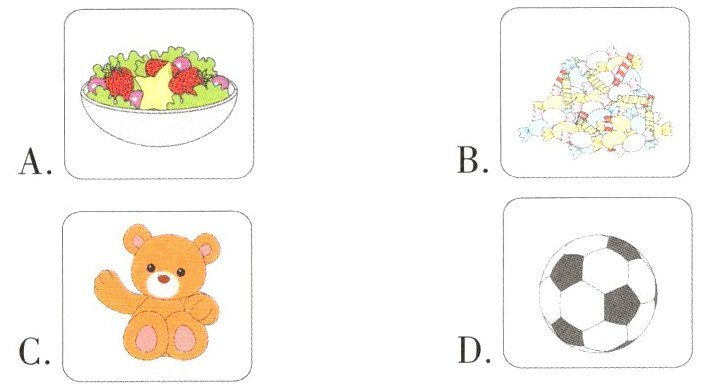
(
(
C
)1. Yan Yan (D
)2. Li Ming (A
)3. An Ping (B
)4. Ma Wen答案
1. C 2. D 3. A 4. B
三、选择每组单词中属于不同类的一项。
(
(
(
(
(
(
A
)1. A. snack B. hamburger C. pie(
C
)2. A. juice B. milk C. drink(
A
)3. A. Wednesday B. where C. what(
B
)4. A. banana B. fruit C. apple(
C
)5. A. bike B. bus C. toy答案
1. A 2. C 3. A 4. B 5. C
解析
【分析】
这类题要求选出每组中类别不同的单词,解题思路为:先明确每组每个单词的词义及所属类别,再归纳每组单词的共同类别特征,最终找出不符合共性的那一项。具体步骤为:逐一分析每组单词的类别→对比共性→确定不同类项。
【解析】
1. 选项A“snack”是零食的统称,选项B“hamburger”(汉堡)、C“pie”(派)均为具体食物,因此不同类的是A。
2. 选项A“juice”(果汁)、B“milk”(牛奶)均为具体饮品,选项C“drink”是饮品的统称,因此不同类的是C。
3. 选项A“Wednesday”(星期三)是表示星期的名词,选项B“where”(哪里)、C“what”(什么)均为疑问词,因此不同类的是A。
4. 选项A“banana”(香蕉)、C“apple”(苹果)均为具体水果,选项B“fruit”是水果的统称,因此不同类的是B。
5. 选项A“bike”(自行车)、B“bus”(公交车)均为交通工具,选项C“toy”(玩具)不属于交通工具,因此不同类的是C。
【答案】
1. A 2. C 3. A 4. B 5. C
【知识点】
英语词汇分类、名词类别辨析、疑问词识别
【点评】
本题是小学英语基础词汇分类题,考查学生对常见单词词义及类别的掌握,难度较低,能帮助学生区分具体名词与统称名词、不同类别的单词,夯实词汇基础。
【难度系数】
0.8
这类题要求选出每组中类别不同的单词,解题思路为:先明确每组每个单词的词义及所属类别,再归纳每组单词的共同类别特征,最终找出不符合共性的那一项。具体步骤为:逐一分析每组单词的类别→对比共性→确定不同类项。
【解析】
1. 选项A“snack”是零食的统称,选项B“hamburger”(汉堡)、C“pie”(派)均为具体食物,因此不同类的是A。
2. 选项A“juice”(果汁)、B“milk”(牛奶)均为具体饮品,选项C“drink”是饮品的统称,因此不同类的是C。
3. 选项A“Wednesday”(星期三)是表示星期的名词,选项B“where”(哪里)、C“what”(什么)均为疑问词,因此不同类的是A。
4. 选项A“banana”(香蕉)、C“apple”(苹果)均为具体水果,选项B“fruit”是水果的统称,因此不同类的是B。
5. 选项A“bike”(自行车)、B“bus”(公交车)均为交通工具,选项C“toy”(玩具)不属于交通工具,因此不同类的是C。
【答案】
1. A 2. C 3. A 4. B 5. C
【知识点】
英语词汇分类、名词类别辨析、疑问词识别
【点评】
本题是小学英语基础词汇分类题,考查学生对常见单词词义及类别的掌握,难度较低,能帮助学生区分具体名词与统称名词、不同类别的单词,夯实词汇基础。
【难度系数】
0.8
四、用所给词的适当形式填空。
1. The Sunshine School
2. My father
3. There
4. Do you often have
5. Let's have some fun
1. The Sunshine School
is going to have/will have
(have) a sports meeting next week.2. My father
bought
(buy) some balloons for me yesterday.3. There
is going to be/will be
(be) a football game the day after tomorrow.4. Do you often have
parties
(party) at school?5. Let's have some fun
first
(one) tomorrow.答案
1. is going to have/will have 2. bought
3. is going to be/will be 4. parties
5. first
3. is going to be/will be 4. parties
5. first
解析
【分析】
本题为英语用所给词的适当形式填空题型,需结合句中时间状语判断动词时态,同时依据名词的数、词形变化规则解题。具体思路:1. 根据时间状语next week(下周)确定用一般将来时;2. 根据时间状语yesterday(昨天)确定用一般过去时;3. 根据时间状语the day after tomorrow(后天)确定there be句型的一般将来时;4. 可数名词表泛指时需用复数形式;5. 此处需用序数词表达“首先”的含义。
【解析】
1. 句中时间状语为next week,表一般将来时,主语The Sunshine School是单数,故填is going to have或will have;
2. 时间状语yesterday提示用一般过去时,buy的过去式为bought,故填bought;
3. 时间状语the day after tomorrow提示用there be句型的一般将来时,主语a football game是单数,故填is going to be或will be;
4. party是可数名词,此处表泛指“聚会”,需用复数形式parties,故填parties;
5. 句意表“首先”,需用one对应的序数词first,故填first。
【答案】
1. is going to have/will have 2. bought 3. is going to be/will be 4. parties 5. first
【知识点】
一般将来时、一般过去时、名词复数
【点评】
本题考查初中英语核心基础语法,涵盖时态判断、名词数的变化,需学生准确识别时间状语对应的时态规则,掌握常见词形变化,是巩固基础的典型题型,难度适中。
【难度系数】
0.6
本题为英语用所给词的适当形式填空题型,需结合句中时间状语判断动词时态,同时依据名词的数、词形变化规则解题。具体思路:1. 根据时间状语next week(下周)确定用一般将来时;2. 根据时间状语yesterday(昨天)确定用一般过去时;3. 根据时间状语the day after tomorrow(后天)确定there be句型的一般将来时;4. 可数名词表泛指时需用复数形式;5. 此处需用序数词表达“首先”的含义。
【解析】
1. 句中时间状语为next week,表一般将来时,主语The Sunshine School是单数,故填is going to have或will have;
2. 时间状语yesterday提示用一般过去时,buy的过去式为bought,故填bought;
3. 时间状语the day after tomorrow提示用there be句型的一般将来时,主语a football game是单数,故填is going to be或will be;
4. party是可数名词,此处表泛指“聚会”,需用复数形式parties,故填parties;
5. 句意表“首先”,需用one对应的序数词first,故填first。
【答案】
1. is going to have/will have 2. bought 3. is going to be/will be 4. parties 5. first
【知识点】
一般将来时、一般过去时、名词复数
【点评】
本题考查初中英语核心基础语法,涵盖时态判断、名词数的变化,需学生准确识别时间状语对应的时态规则,掌握常见词形变化,是巩固基础的典型题型,难度适中。
【难度系数】
0.6
五、按要求改写句子。
1. He's playing football now. (用 tomorrow 改写句子)
2. I'm going to draw pictures this afternoon. (改为一般疑问句,并作否定回答) —
3. Liu Tao had fun at the party. (改为同义句) Liu Tao
4. She's going to sing and dance at the party. (改为否定句)
5. My brother gave some toys to Mike. (改为否定句)
1. He's playing football now. (用 tomorrow 改写句子)
He is going to/will play football
tomorrow.2. I'm going to draw pictures this afternoon. (改为一般疑问句,并作否定回答) —
Are you going to draw pictures this afternoon
? —No, I'm not
.3. Liu Tao had fun at the party. (改为同义句) Liu Tao
had
a good/great
time
at the party.4. She's going to sing and dance at the party. (改为否定句)
She is not/isn't going to sing or dance at the party.
5. My brother gave some toys to Mike. (改为否定句)
My brother didn't give any toys to Mike.
答案
1. He is going to/will play football
2. Are you going to draw pictures this afternoon; No, I'm not
3. had; good/great time
4. She is not/isn't going to sing or dance at the party.
5. My brother didn't give any toys to Mike.
2. Are you going to draw pictures this afternoon; No, I'm not
3. had; good/great time
4. She is not/isn't going to sing or dance at the party.
5. My brother didn't give any toys to Mike.
解析
【分析】
1. 第1题要求用tomorrow改写,需将原句现在进行时转换为一般将来时,常用结构为“be going to + 动词原形”或“will + 动词原形”,结合主语确定be动词形式即可;
2. 第2题是将be going to结构的陈述句改为一般疑问句,需提前be动词,第一人称改第二人称,否定回答遵循固定结构;
3. 第3题需替换“have fun”的同义短语,结合原句时态(一般过去时)确定动词形式;
4. 第4题是be going to结构的否定句,需在be动词后加not,否定句中并列连词and改or;
5. 第5题是一般过去时的否定句,需借助didn't,动词还原,some改any。
【解析】
1. 原句为现在进行时,时间状语tomorrow表将来,故用一般将来时结构,主语He对应be动词is,因此改写为He is going to play football 或 He will play football;
2. 将be going to结构的陈述句改为一般疑问句,把be动词are提前,I改为you;否定回答用“No, I'm not”;
3. “have fun”的同义短语是“have a good/great time”,原句为一般过去时,have的过去式是had,故填入对应内容;
4. be going to结构的否定句,在is后加not,and改为or,其余部分不变;
5. 一般过去时的否定句,借助didn't,gave还原为give,some改为any,其余部分保留。
【答案】
1. He is going to/will play football
2. Are you going to draw pictures this afternoon; No, I'm not
3. had; good/great time
4. She is not/isn't going to sing or dance at the party.
5. My brother didn't give any toys to Mike.
【知识点】
一般将来时、同义句转换、否定句构成
【点评】
本题为英语基础句子改写题,考察初中英语核心语法(一般将来时、否定句、疑问句)及同义表达,是基础阶段常见题型,难度适中,能有效巩固学生的语法运用能力。
【难度系数】
0.6
1. 第1题要求用tomorrow改写,需将原句现在进行时转换为一般将来时,常用结构为“be going to + 动词原形”或“will + 动词原形”,结合主语确定be动词形式即可;
2. 第2题是将be going to结构的陈述句改为一般疑问句,需提前be动词,第一人称改第二人称,否定回答遵循固定结构;
3. 第3题需替换“have fun”的同义短语,结合原句时态(一般过去时)确定动词形式;
4. 第4题是be going to结构的否定句,需在be动词后加not,否定句中并列连词and改or;
5. 第5题是一般过去时的否定句,需借助didn't,动词还原,some改any。
【解析】
1. 原句为现在进行时,时间状语tomorrow表将来,故用一般将来时结构,主语He对应be动词is,因此改写为He is going to play football 或 He will play football;
2. 将be going to结构的陈述句改为一般疑问句,把be动词are提前,I改为you;否定回答用“No, I'm not”;
3. “have fun”的同义短语是“have a good/great time”,原句为一般过去时,have的过去式是had,故填入对应内容;
4. be going to结构的否定句,在is后加not,and改为or,其余部分不变;
5. 一般过去时的否定句,借助didn't,gave还原为give,some改为any,其余部分保留。
【答案】
1. He is going to/will play football
2. Are you going to draw pictures this afternoon; No, I'm not
3. had; good/great time
4. She is not/isn't going to sing or dance at the party.
5. My brother didn't give any toys to Mike.
【知识点】
一般将来时、同义句转换、否定句构成
【点评】
本题为英语基础句子改写题,考察初中英语核心语法(一般将来时、否定句、疑问句)及同义表达,是基础阶段常见题型,难度适中,能有效巩固学生的语法运用能力。
【难度系数】
0.6
六、给下列问句选择合适的答语。
A. Liu Tao does. B. In the park. C. I'm shopping. D. Yes, I do. E. Yes, I am.
(
(
(
(
(
A. Liu Tao does. B. In the park. C. I'm shopping. D. Yes, I do. E. Yes, I am.
(
C
)1. What are you doing?(
A
)2. Who wants to be the king?(
B
)3. Where are we going to have the party?(
D
)4. Do you like stories?(
E
)5. Are you going to make a robot?答案
1. C 2. A 3. B 4. D 5. E
解析
【分析】
先明确每个问句的类型,结合答语的内容和句式匹配:第1题询问正在做的事,需选对应现在进行时的答语;第2题询问人物,需选人物相关的答语;第3题询问地点,需选地点相关的答语;第4题是Do开头的一般疑问句,答语用Yes/No+I do/don't;第5题是Are开头的一般疑问句,答语用Yes/No+I am/isn't,据此逐一对应。
【解析】
1. 问句“What are you doing?”询问正在进行的动作,对应答语C“I'm shopping.”;
2. 问句“Who wants to be the king?”询问人物,对应答语A“Liu Tao does.”;
3. 问句“Where are we going to have the party?”询问地点,对应答语B“In the park.”;
4. 问句“Do you like stories?”是Do开头的一般疑问句,答语用“Yes, I do.”,对应D;
5. 问句“Are you going to make a robot?”是Are开头的一般疑问句,答语用“Yes, I am.”,对应E。
【答案】
1. C 2. A 3. B 4. D 5. E
【知识点】
情景交际、特殊疑问句、一般疑问句
【点评】
本题考查日常情景对话的匹配,需掌握不同疑问词引导的问句及一般疑问句的答语形式,属于基础题型,难度较低。
【难度系数】
0.8
先明确每个问句的类型,结合答语的内容和句式匹配:第1题询问正在做的事,需选对应现在进行时的答语;第2题询问人物,需选人物相关的答语;第3题询问地点,需选地点相关的答语;第4题是Do开头的一般疑问句,答语用Yes/No+I do/don't;第5题是Are开头的一般疑问句,答语用Yes/No+I am/isn't,据此逐一对应。
【解析】
1. 问句“What are you doing?”询问正在进行的动作,对应答语C“I'm shopping.”;
2. 问句“Who wants to be the king?”询问人物,对应答语A“Liu Tao does.”;
3. 问句“Where are we going to have the party?”询问地点,对应答语B“In the park.”;
4. 问句“Do you like stories?”是Do开头的一般疑问句,答语用“Yes, I do.”,对应D;
5. 问句“Are you going to make a robot?”是Are开头的一般疑问句,答语用“Yes, I am.”,对应E。
【答案】
1. C 2. A 3. B 4. D 5. E
【知识点】
情景交际、特殊疑问句、一般疑问句
【点评】
本题考查日常情景对话的匹配,需掌握不同疑问词引导的问句及一般疑问句的答语形式,属于基础题型,难度较低。
【难度系数】
0.8
