

 登录
登录
B
The kitchen was warm and filled with the pleasant smell of fresh dough(面团). That weekend, standing next to my grandma, I learned something important about mistakes.
I thought it would be fun and easy to make jiaozi at the very beginning, but soon it came to me that it wasn't as simple as it looked. I didn't pay attention to the sharp knife while cutting vegetables. My finger got cut because of my carelessness. Luckily, it wasn't serious. Grandma was nervous, and quickly helped me clean the cut. "My poor little girl! Be careful next time!" said Grandma softly. Through the painful lesson, I learned the hard way that safety should always come first.
After that accident, I continued working with Grandma. We made the dough, mixed the filling, and started shaping the dumplings. However, I kept making mistakes. Some of my dumplings were too thick, others were not properly closed, and some even had too much filling, making them difficult to close. It was so discouraging, but Grandma kept encouraging me.
Until noon, we had a plate full of dumplings—some are good-looking, while others are a bit messy. Dad ate my ugliest dumpling first. "Tastes better than it looks!" he laughed. Mom encouraged me, "They're the most delicious dumplings I have ever had. I am so proud of you!"
Now I understand that making jiaozi isn't just about the final product; it is about learning patience, having fun with my family, and improving through mistakes. Mistakes aren't signs of weakness. Instead, they should be viewed as stepping stones to achievements(成就).
(
A. By having fun.
B. By making jiaozi.
C. By visiting Grandma.
D. By taking things seriously.
(
①
②
③
④
A. ②①④③
B. ①②④③
C. ②④①③
D. ①④②③
(
A. What's the matter?
B. So proud of you!
C. Just try again!
D. I'm here to listen!
(
A. Not clean.
B. Not tidy.
C. Not perfect.
D. Not pleasant.
(
A.
B.
C.
D.
The kitchen was warm and filled with the pleasant smell of fresh dough(面团). That weekend, standing next to my grandma, I learned something important about mistakes.
I thought it would be fun and easy to make jiaozi at the very beginning, but soon it came to me that it wasn't as simple as it looked. I didn't pay attention to the sharp knife while cutting vegetables. My finger got cut because of my carelessness. Luckily, it wasn't serious. Grandma was nervous, and quickly helped me clean the cut. "My poor little girl! Be careful next time!" said Grandma softly. Through the painful lesson, I learned the hard way that safety should always come first.
After that accident, I continued working with Grandma. We made the dough, mixed the filling, and started shaping the dumplings. However, I kept making mistakes. Some of my dumplings were too thick, others were not properly closed, and some even had too much filling, making them difficult to close. It was so discouraging, but Grandma kept encouraging me.
Until noon, we had a plate full of dumplings—some are good-looking, while others are a bit messy. Dad ate my ugliest dumpling first. "Tastes better than it looks!" he laughed. Mom encouraged me, "They're the most delicious dumplings I have ever had. I am so proud of you!"
Now I understand that making jiaozi isn't just about the final product; it is about learning patience, having fun with my family, and improving through mistakes. Mistakes aren't signs of weakness. Instead, they should be viewed as stepping stones to achievements(成就).
(
B
)56. How did the writer learn something important about mistakes?A. By having fun.
B. By making jiaozi.
C. By visiting Grandma.
D. By taking things seriously.
(
A
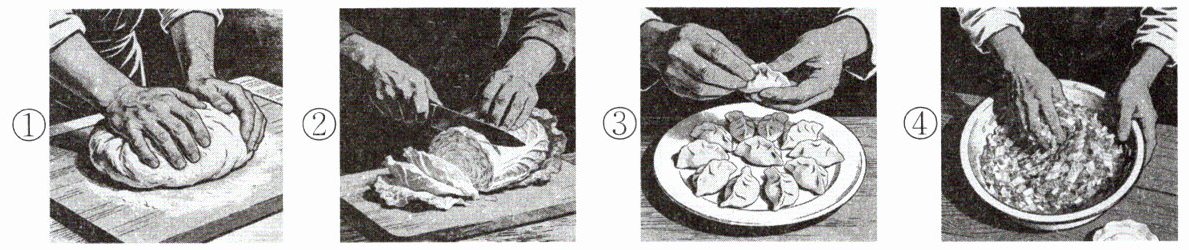
)57. What is the correct order of steps to make jiaozi according to the passage?①
②
③
④
A. ②①④③
B. ①②④③
C. ②④①③
D. ①④②③
(
C
)58. What would Grandma say when the writer found it difficult to close jiaozi?A. What's the matter?
B. So proud of you!
C. Just try again!
D. I'm here to listen!
(
C
)59. What does the underlined word "messy" mean in Paragraph 4?A. Not clean.
B. Not tidy.
C. Not perfect.
D. Not pleasant.
(
B
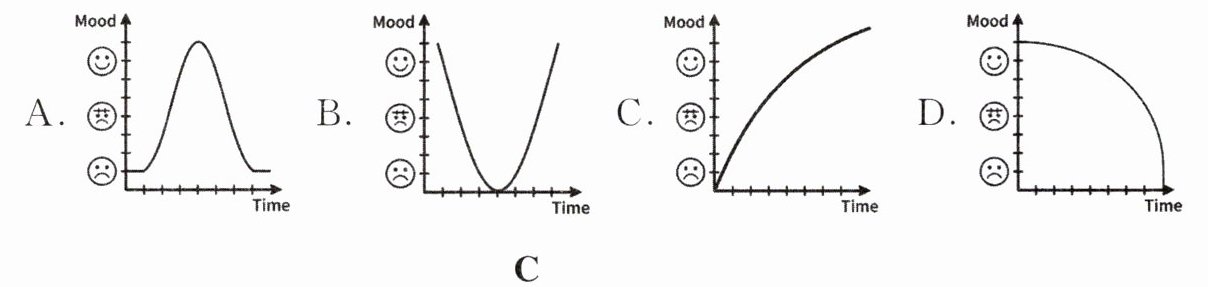
)60. Which of the following best shows the changes in writer's feeling?A.
B.
C.
D.
答案
56.B 57.A 58.C 59.C 60.B
解析
【分析】
这是一篇记叙文,讲述作者和奶奶一起包饺子的经历,从犯错中学会了关于错误的重要道理。我们可以通过定位原文细节来解答每一道题:
1. 第56题:题目问作者如何学到关于错误的重要事情,需找到原文中作者学习的场景。文章开头明确提到在和奶奶一起包饺子的过程中学到了关于错误的重要内容,所以要锁定包饺子这个事件。
2. 第57题:需梳理文中包饺子的步骤。根据原文第三段“We made the dough, mixed the filling, and started shaping the dumplings”,结合生活常识,包饺子的步骤是先做面团,再拌馅料,接着包饺子,最后完成,对应选项中的顺序。
3. 第58题:根据文中“it was so discouraging, but Grandma kept encouraging me”,奶奶一直在鼓励作者,所以要选符合鼓励语气的话语。
4. 第59题:根据前文“some are good-looking, while others are a bit messy”的对比关系,messy是good-looking的反义词,指饺子样子不完美。
5. 第60题:梳理作者的情绪变化:最初觉得包饺子有趣简单(积极)→切到手受伤(痛苦)→包饺子多次出错感到沮丧(低落)→家人鼓励后理解错误的意义(重拾信心/积极),对应符合这个变化的选项。
【解析】
56. 细节理解题。根据第一段“That weekend, standing next to my grandma, I learned something important about mistakes.”以及全文围绕包饺子的经历展开,可知作者是通过包饺子学到关于错误的重要道理,故选B。
57. 细节排序题。根据第三段“We made the dough, mixed the filling, and started shaping the dumplings.”,结合包饺子的常规流程:先制作面团(②),再调配馅料(①),接着包成饺子(④),最后完成(③),正确顺序为②①④③,故选A。
58. 推理判断题。根据第三段“It was so discouraging, but Grandma kept encouraging me.”可知奶奶一直在鼓励作者,选项C“Just try again!”(再试一次!)符合鼓励的语境,故选C。
59. 词义猜测题。根据第四段“some are good-looking, while others are a bit messy”中while表示转折,messy与good-looking(好看的)相对,指饺子样子不完美,故选C。
60. 情感变化题。作者的情感变化:起初认为包饺子有趣简单(愉悦)→切到手受伤(痛苦)→包饺子多次出错感到沮丧(低落)→家人鼓励后领悟到错误的价值(释然/积极),对应选项B的情感变化曲线,故选B。
【答案】
56.B 57.A 58.C 59.C 60.B
【知识点】
细节理解题、词义猜测题、推理判断题
【点评】
本文通过包饺子的日常小事传递深刻道理,题目侧重对原文细节、逻辑推理和词义猜测的考查,解题时需紧密结合原文内容,梳理事件流程和情感变化,同时利用语境和对比关系推测词义,难度适中,适合锻炼学生的阅读理解综合能力。
【难度系数】
0.6
这是一篇记叙文,讲述作者和奶奶一起包饺子的经历,从犯错中学会了关于错误的重要道理。我们可以通过定位原文细节来解答每一道题:
1. 第56题:题目问作者如何学到关于错误的重要事情,需找到原文中作者学习的场景。文章开头明确提到在和奶奶一起包饺子的过程中学到了关于错误的重要内容,所以要锁定包饺子这个事件。
2. 第57题:需梳理文中包饺子的步骤。根据原文第三段“We made the dough, mixed the filling, and started shaping the dumplings”,结合生活常识,包饺子的步骤是先做面团,再拌馅料,接着包饺子,最后完成,对应选项中的顺序。
3. 第58题:根据文中“it was so discouraging, but Grandma kept encouraging me”,奶奶一直在鼓励作者,所以要选符合鼓励语气的话语。
4. 第59题:根据前文“some are good-looking, while others are a bit messy”的对比关系,messy是good-looking的反义词,指饺子样子不完美。
5. 第60题:梳理作者的情绪变化:最初觉得包饺子有趣简单(积极)→切到手受伤(痛苦)→包饺子多次出错感到沮丧(低落)→家人鼓励后理解错误的意义(重拾信心/积极),对应符合这个变化的选项。
【解析】
56. 细节理解题。根据第一段“That weekend, standing next to my grandma, I learned something important about mistakes.”以及全文围绕包饺子的经历展开,可知作者是通过包饺子学到关于错误的重要道理,故选B。
57. 细节排序题。根据第三段“We made the dough, mixed the filling, and started shaping the dumplings.”,结合包饺子的常规流程:先制作面团(②),再调配馅料(①),接着包成饺子(④),最后完成(③),正确顺序为②①④③,故选A。
58. 推理判断题。根据第三段“It was so discouraging, but Grandma kept encouraging me.”可知奶奶一直在鼓励作者,选项C“Just try again!”(再试一次!)符合鼓励的语境,故选C。
59. 词义猜测题。根据第四段“some are good-looking, while others are a bit messy”中while表示转折,messy与good-looking(好看的)相对,指饺子样子不完美,故选C。
60. 情感变化题。作者的情感变化:起初认为包饺子有趣简单(愉悦)→切到手受伤(痛苦)→包饺子多次出错感到沮丧(低落)→家人鼓励后领悟到错误的价值(释然/积极),对应选项B的情感变化曲线,故选B。
【答案】
56.B 57.A 58.C 59.C 60.B
【知识点】
细节理解题、词义猜测题、推理判断题
【点评】
本文通过包饺子的日常小事传递深刻道理,题目侧重对原文细节、逻辑推理和词义猜测的考查,解题时需紧密结合原文内容,梳理事件流程和情感变化,同时利用语境和对比关系推测词义,难度适中,适合锻炼学生的阅读理解综合能力。
【难度系数】
0.6
