

 登录
登录
四、阅读理解
Scientists have developed a way to read minds, translating
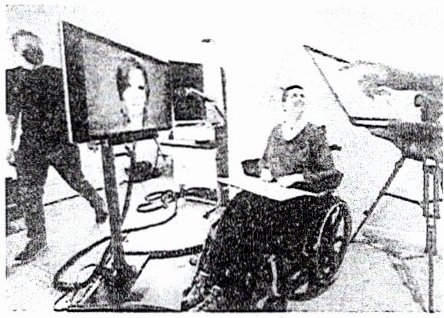
unspoken thoughts into written words. It's the first time it's been
done without having to put anything into the brain. They used AI
(artificial intelligence, 人工智能). It is the name given to a
computer system that is able to "think" for itself and carry out
tasks that usually require human intelligence.
Scientists used a special scanner (扫描器). The machine can see where blood runs, which
shows the parts of the brain that are most active. People taking part in the experiment (实验)
listened to the radio for 16 hours as their brains were scanned. The AI tool learned to connect
certain brain activity with words they heard. After that, each person was asked to think of a
story, and the AI tool managed to pick up these thoughts as they happened.
The results had about a 50% accuracy rate (准确率), although the AI found it hard to
work out the meaning of pronouns, such as "he" or "she", "her" or "him". For example, it
turned "I don't have my driver's license yet." into "She has not even started to learn to drive
yet." It could usually understand the meaning of what someone was thinking rather than the
exact words. The AI was personalized, so when it had learnt from one person but was tested on
another, it couldn't understand their thoughts.
The scientists, who have been working on the technology for 15 years, say they
understand the risks of it being used badly. Scientist Jerry Tang told a newspaper, "We want to
make sure people only use these types of technologies when they want to, and that it helps
them." The scientists hope it will help people with certain medical conditions, who are still
awake but have lost the ability to speak, to communicate once again.
(
A. A way. B. Anything. C. The brain. D. AI.
(
A. To explain the results of the experiment.
B. To list the difficulties of the experiment.
C. To offer some opinions about the experiment.
D. To describe how the experiment was carried out.
(
A. The AI is much cleverer than people.
B. The AI didn't start the work as it was ordered.
C. The AI couldn't understand the exact words of what people thought.
D. The AI will be well developed according to people's special needs.
(
A. It is not difficult to take AI under control.
B. AI will not be used in a proper way in the future.
C. AI is so wise that it can treat people with medical problems.
D. It's expected that AI will help those speechless exchange ideas.
(
A. High Risks of Using AI B. Mind-Reading Development
C. Importance of Human Brain D. Ways of Improving Technology
Scientists have developed a way to read minds, translating
unspoken thoughts into written words. It's the first time it's been
done without having to put anything into the brain. They used AI
(artificial intelligence, 人工智能). It is the name given to a
computer system that is able to "think" for itself and carry out
tasks that usually require human intelligence.
Scientists used a special scanner (扫描器). The machine can see where blood runs, which
shows the parts of the brain that are most active. People taking part in the experiment (实验)
listened to the radio for 16 hours as their brains were scanned. The AI tool learned to connect
certain brain activity with words they heard. After that, each person was asked to think of a
story, and the AI tool managed to pick up these thoughts as they happened.
The results had about a 50% accuracy rate (准确率), although the AI found it hard to
work out the meaning of pronouns, such as "he" or "she", "her" or "him". For example, it
turned "I don't have my driver's license yet." into "She has not even started to learn to drive
yet." It could usually understand the meaning of what someone was thinking rather than the
exact words. The AI was personalized, so when it had learnt from one person but was tested on
another, it couldn't understand their thoughts.
The scientists, who have been working on the technology for 15 years, say they
understand the risks of it being used badly. Scientist Jerry Tang told a newspaper, "We want to
make sure people only use these types of technologies when they want to, and that it helps
them." The scientists hope it will help people with certain medical conditions, who are still
awake but have lost the ability to speak, to communicate once again.
(
D
) 1. What does the underlined word "It" in Paragraph 1 refer to (指代)?A. A way. B. Anything. C. The brain. D. AI.
(
D
) 2. What is the main purpose of Paragraph 2?A. To explain the results of the experiment.
B. To list the difficulties of the experiment.
C. To offer some opinions about the experiment.
D. To describe how the experiment was carried out.
(
C
) 3. What does the example in Paragraph 3 show?A. The AI is much cleverer than people.
B. The AI didn't start the work as it was ordered.
C. The AI couldn't understand the exact words of what people thought.
D. The AI will be well developed according to people's special needs.
(
D
) 4. What can we learn from the text?A. It is not difficult to take AI under control.
B. AI will not be used in a proper way in the future.
C. AI is so wise that it can treat people with medical problems.
D. It's expected that AI will help those speechless exchange ideas.
(
B
) 5. What can be the best title for the text?A. High Risks of Using AI B. Mind-Reading Development
C. Importance of Human Brain D. Ways of Improving Technology
答案
四、1.D 2.D 3.C 4.D 5.B
解析
【分析】
1. 第1题:要确定代词指代内容,需结合前文语境。第一段先提及“They used AI”,紧接着用“It”介绍AI的定义,因此It指代AI。
2. 第2题:分析第二段内容,该段详细说明了实验使用的设备、实验对象的操作流程、AI的学习过程以及后续测试环节,整体是在描述实验的实施步骤。
3. 第3题:第三段的例子呈现了原句与AI转换后句子的差异,结合原文“It could usually understand the meaning of what someone was thinking rather than the exact words”,可知该例子是为了说明AI无法准确识别人们想法里的精确词汇。
4. 第4题:从文章最后一段科学家的期望可知,这项技术有望帮助失去说话能力的人重新交流,对应选项表述。
5. 第5题:文章围绕“用AI将未说出的想法转化为文字的读心技术”展开,因此最佳标题需贴合这一核心内容。
【解析】
1. 第1题:根据第一段“They used AI (artificial intelligence, 人工智能). It is the name given to a computer system that is able to "think" for itself...”,可知It指代前文提到的AI,故选D。
2. 第2题:第二段依次介绍了实验使用的特殊扫描器、实验对象听广播16小时同时被扫描的操作、AI学习关联脑活动与词汇的过程,以及后续让实验者想故事并捕捉想法的测试,整体是在描述实验的开展步骤,故选D。
3. 第3题:第三段例子中,原句“I don't have my driver's license yet.”被AI转换为“She has not even started to learn to drive yet.”,结合原文“It could usually understand the meaning of what someone was thinking rather than the exact words”,可知该例子表明AI无法准确还原人们想法中的精确用词,故选C。
4. 第4题:根据最后一段“The scientists hope it will help people with certain medical conditions, who are still awake but have lost the ability to speak, to communicate once again.”,可知这项AI技术有望帮助失语人群交流,故选D。
5. 第5题:文章核心是介绍科学家开发的读心技术,“Mind-Reading Development”最能概括文章主旨,故选B。
【答案】
1.D 2.D 3.C 4.D 5.B
【知识点】
代词指代判断、段落主旨归纳、细节理解
【点评】
本文围绕AI读心技术展开,考查了代词指代、段落目的、细节理解、主旨大意等常见阅读理解题型,要求学生结合上下文精准提取信息,理解文章核心内容,对学生的信息整合和语境分析能力有一定要求。
【难度系数】
0.6
1. 第1题:要确定代词指代内容,需结合前文语境。第一段先提及“They used AI”,紧接着用“It”介绍AI的定义,因此It指代AI。
2. 第2题:分析第二段内容,该段详细说明了实验使用的设备、实验对象的操作流程、AI的学习过程以及后续测试环节,整体是在描述实验的实施步骤。
3. 第3题:第三段的例子呈现了原句与AI转换后句子的差异,结合原文“It could usually understand the meaning of what someone was thinking rather than the exact words”,可知该例子是为了说明AI无法准确识别人们想法里的精确词汇。
4. 第4题:从文章最后一段科学家的期望可知,这项技术有望帮助失去说话能力的人重新交流,对应选项表述。
5. 第5题:文章围绕“用AI将未说出的想法转化为文字的读心技术”展开,因此最佳标题需贴合这一核心内容。
【解析】
1. 第1题:根据第一段“They used AI (artificial intelligence, 人工智能). It is the name given to a computer system that is able to "think" for itself...”,可知It指代前文提到的AI,故选D。
2. 第2题:第二段依次介绍了实验使用的特殊扫描器、实验对象听广播16小时同时被扫描的操作、AI学习关联脑活动与词汇的过程,以及后续让实验者想故事并捕捉想法的测试,整体是在描述实验的开展步骤,故选D。
3. 第3题:第三段例子中,原句“I don't have my driver's license yet.”被AI转换为“She has not even started to learn to drive yet.”,结合原文“It could usually understand the meaning of what someone was thinking rather than the exact words”,可知该例子表明AI无法准确还原人们想法中的精确用词,故选C。
4. 第4题:根据最后一段“The scientists hope it will help people with certain medical conditions, who are still awake but have lost the ability to speak, to communicate once again.”,可知这项AI技术有望帮助失语人群交流,故选D。
5. 第5题:文章核心是介绍科学家开发的读心技术,“Mind-Reading Development”最能概括文章主旨,故选B。
【答案】
1.D 2.D 3.C 4.D 5.B
【知识点】
代词指代判断、段落主旨归纳、细节理解
【点评】
本文围绕AI读心技术展开,考查了代词指代、段落目的、细节理解、主旨大意等常见阅读理解题型,要求学生结合上下文精准提取信息,理解文章核心内容,对学生的信息整合和语境分析能力有一定要求。
【难度系数】
0.6
