

 登录
登录
六、阅读理解。

Middle school students learn many subjects every week. What's your favourite subject? Which subject is easy for you? To find out the answers, we did a survey of 1,200 students in No. 2 Middle School. Diagram Ⅰ shows their favourite subjects.
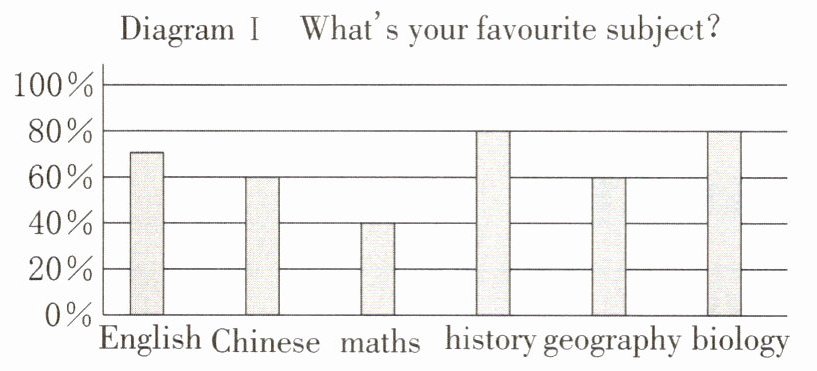
From Diagram Ⅰ, we can see maths is the subject fewest students like. Why? We asked those students and Diagram Ⅱ shows their answers.
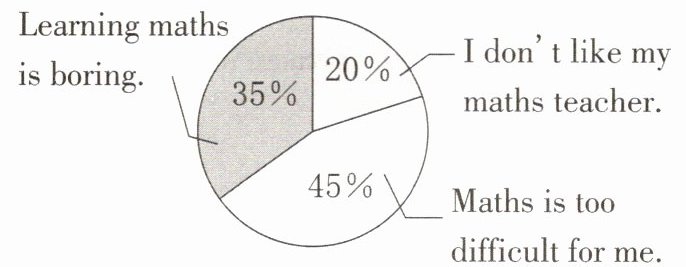
Diagram Ⅱ Why don't you like maths?
Maths is difficult, but we believe it's very useful. To make students more interested in maths, the headmaster of No. 2 Middle School offers many maths games, like Sudoku(数独).
“Do you like maths? If so, tell more students to join you and share the fun! Maths will help you in the future,” says the headmaster.
1. Which subjects do students like best?
A. English and Chinese.
B. History and biology.
C. Geography and Chinese.
D. Maths and biology.
2.(创新考法·跨学科融合)How many students think maths is difficult?
A. 540.
B. 261.
C. 216.
D. 324.
3. What can we infer about No. 2 Middle School from the last two paragraphs?
A. The students learn maths every day.
B. The students never learn maths.
C. The headmaster doesn't like maths games.
D. The headmaster wants students to like maths.
Middle school students learn many subjects every week. What's your favourite subject? Which subject is easy for you? To find out the answers, we did a survey of 1,200 students in No. 2 Middle School. Diagram Ⅰ shows their favourite subjects.
From Diagram Ⅰ, we can see maths is the subject fewest students like. Why? We asked those students and Diagram Ⅱ shows their answers.
Diagram Ⅱ Why don't you like maths?
Maths is difficult, but we believe it's very useful. To make students more interested in maths, the headmaster of No. 2 Middle School offers many maths games, like Sudoku(数独).
“Do you like maths? If so, tell more students to join you and share the fun! Maths will help you in the future,” says the headmaster.
1. Which subjects do students like best?
A. English and Chinese.
B. History and biology.
C. Geography and Chinese.
D. Maths and biology.
2.(创新考法·跨学科融合)How many students think maths is difficult?
A. 540.
B. 261.
C. 216.
D. 324.
3. What can we infer about No. 2 Middle School from the last two paragraphs?
A. The students learn maths every day.
B. The students never learn maths.
C. The headmaster doesn't like maths games.
D. The headmaster wants students to like maths.
答案
1. B
2. D 跨学科融合题。调查总人数共有1200名学生。Diagram Ⅰ显示,喜欢数学的学生占40%,故不喜欢数学的学生占60%,即(1 200×60%=)720人。Diagram Ⅱ显示,在不喜欢数学的学生中,觉得数学难的学生占45%,即(720×45%=)324人。
3. D 推理判断题。最后两段提到校长提供数学游戏并鼓励学生分享乐趣,由此可以推断出校长希望学生们能喜欢上数学。
2. D 跨学科融合题。调查总人数共有1200名学生。Diagram Ⅰ显示,喜欢数学的学生占40%,故不喜欢数学的学生占60%,即(1 200×60%=)720人。Diagram Ⅱ显示,在不喜欢数学的学生中,觉得数学难的学生占45%,即(720×45%=)324人。
3. D 推理判断题。最后两段提到校长提供数学游戏并鼓励学生分享乐趣,由此可以推断出校长希望学生们能喜欢上数学。
解析
【分析】
本题为英语阅读理解题,包含细节理解、跨学科计算及推理判断三类题型。解题思路:1. 针对细节理解题,需定位原文或图表中对应问题的信息,匹配选项;2. 针对跨学科计算题,需提取总人数、各部分占比,分步计算;3. 针对推理判断题,需结合文本中人物的行为、表述推断其意图,避免主观臆断。
【解析】
1. 细节理解题:根据原文“Diagram Ⅰ shows their favourite subjects”,结合图表信息可知,最受学生喜欢的科目是历史和生物,对应选项B。
2. 跨学科计算题:已知调查总人数为1200名学生,DiagramⅠ显示喜欢数学的学生占40%,则不喜欢数学的学生占比为1-40%=60%,不喜欢数学的学生数为1200×60%=720人;DiagramⅡ显示不喜欢数学的学生中,认为数学难的占45%,因此认为数学难的学生数为720×45%=324人,对应选项D。
3. 推理判断题:最后两段提到校长提供数独等数学游戏,还鼓励学生分享数学乐趣,由此可推断校长希望学生喜欢数学,对应选项D。
【答案】
1.B 2.D 3.D
【知识点】
英语阅读理解、细节理解、推理判断
【点评】
本题结合文本与图表信息,考查学生的信息提取、数据计算及逻辑推理能力,是初中英语常见的综合题型,需学生准确把握原文细节与图表数据。
【难度系数】
0.6
本题为英语阅读理解题,包含细节理解、跨学科计算及推理判断三类题型。解题思路:1. 针对细节理解题,需定位原文或图表中对应问题的信息,匹配选项;2. 针对跨学科计算题,需提取总人数、各部分占比,分步计算;3. 针对推理判断题,需结合文本中人物的行为、表述推断其意图,避免主观臆断。
【解析】
1. 细节理解题:根据原文“Diagram Ⅰ shows their favourite subjects”,结合图表信息可知,最受学生喜欢的科目是历史和生物,对应选项B。
2. 跨学科计算题:已知调查总人数为1200名学生,DiagramⅠ显示喜欢数学的学生占40%,则不喜欢数学的学生占比为1-40%=60%,不喜欢数学的学生数为1200×60%=720人;DiagramⅡ显示不喜欢数学的学生中,认为数学难的占45%,因此认为数学难的学生数为720×45%=324人,对应选项D。
3. 推理判断题:最后两段提到校长提供数独等数学游戏,还鼓励学生分享数学乐趣,由此可推断校长希望学生喜欢数学,对应选项D。
【答案】
1.B 2.D 3.D
【知识点】
英语阅读理解、细节理解、推理判断
【点评】
本题结合文本与图表信息,考查学生的信息提取、数据计算及逻辑推理能力,是初中英语常见的综合题型,需学生准确把握原文细节与图表数据。
【难度系数】
0.6
