

 登录
Ⅰ. Complete the passage with proper words and expressions according to the textbook. Then answer the questions.
With a little creativity, the past 1.
The 2021 hanfu show was a big hit on the internet. The beauty of Chinese culture was presented in a 2.
Technology 4.
The Palace Museum has created many creative products using its rich cultural 6.
History carries a country’s 9.
11. Which new way mentioned above do you like best? Why? (No more than 20 words)
With a little creativity, the past 1.
comes to life
for us to see and feel. Here are some perfect examples.The 2021 hanfu show was a big hit on the internet. The beauty of Chinese culture was presented in a 2.
lively
way. Men and women wearing 3. pretty
traditional clothes walked from the wall painting and danced to music. I can hardly believe my eyes.Technology 4.
plays a role
in bringing history alive. 900-year-old painting *Along the River During the Qingming Festival* has been made into a multimedia version. The painting becomes 5. a noisy city
. It’s such a wonder to feel as if you are walking among people in the past.The Palace Museum has created many creative products using its rich cultural 6.
background
. Traditional designs, such as dragons, clouds and bats, have come into people’s homes, on their scarves, bags, 7. fridge
magnets. They have started a traditional culture 8. fever
among people of all ages.History carries a country’s 9.
central values
. When we learn about our past, we know who we are. We take great 10. pride
in our rich history and the new ways to help us get confidence about where we’re going.11. Which new way mentioned above do you like best? Why? (No more than 20 words)
The hanfu show, because I am a big fan of traditional clothes.
答案
1. comes to life
2. lively
3. pretty
4. plays a role
5. a noisy city
6. background
7. fridge
8. fever
9. central values
10. pride
11. One possible version: The hanfu show, because I am a big fan of traditional clothes.
2. lively
3. pretty
4. plays a role
5. a noisy city
6. background
7. fridge
8. fever
9. central values
10. pride
11. One possible version: The hanfu show, because I am a big fan of traditional clothes.
解析
【分析】
先通读全文理解主旨,结合上下文语境、固定搭配及词汇含义补全短文;最后根据文章内容回答开放性问题,注意第11题的字数限制。
【解析】
1. 固定搭配come to life表示“鲜活起来”,主语the past为单数,故填comes to life;
2. 修饰名词way用形容词lively,意为“生动的”,符合语境;
3. 修饰traditional clothes用形容词pretty,符合语境;
4. 固定搭配play a role in表示“在…中起作用”,主语technology为单数,故填plays a role;
5. 结合《清明上河图》多媒体版的描述,填a noisy city;
6. 故宫利用丰富的文化背景,填background;
7. fridge magnets是固定表达“冰箱贴”,填fridge;
8. start a fever表示“掀起热潮”,填fever;
9. 历史承载国家核心价值观,填central values;
10. 固定搭配take pride in表示“以…为傲”,填pride;
11. 开放性问题,结合文章内容组织语言,符合字数要求即可,示例为The hanfu show, because I am a big fan of traditional clothes.
【答案】
1. comes to life
2. lively
3. pretty
4. plays a role
5. a noisy city
6. background
7. fridge
8. fever
9. central values
10. pride
11. One possible version: The hanfu show, because I am a big fan of traditional clothes.
【知识点】
英语词汇运用、固定搭配、阅读理解
【点评】
本题结合传统文化考查语言知识,既巩固词汇与固定搭配,又渗透文化意识,难度适中。
【难度系数】
0.6
Ⅱ. Read and answer the questions.
The Bianzhong of Marquis Yi of Zeng(曾侯乙) is a famous ancient Chinese musical instrument with great cultural value, with a history of about 2,400 years. It was unearthed in 1978 from the tomb of Marquis Yi of Zeng in Suizhou, Hubei Province. It’s such an important discovery that it has been listed in the UNESCO Memory of the World Register(世界记忆名录).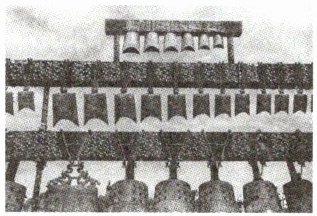
The bianzhong is made up of 64 different bronze bells, which are hung on a three-tiered(层) wooden structure. The largest bell is 153.4 cm in height and weighs 203.6 kg, while the smallest is 20.4 cm tall and weighs 2.4 kg. Each bell can make different clear sounds when hitting. It can play many beautiful musical pieces smoothly, showing the wisdom of ancient Chinese people.
Today, the valuable bianzhong is kept under certain conditions in the Hubei Provincial Museum. To protect it well, the bells have not been played since 1984 and they aren’t exhibited overseas. Instead, replicas(复制品) are made so that people around the world can enjoy its beautiful music. What’s more, the Hubei Provincial Museum has an orchestra(交响乐团) for bianzhong music. This orchestra has played in several countries, spreading the cultural importance of the instrument and the beauty of its sound.
The discovery of the bianzhong has improved our understanding of ancient Chinese musical culture, connecting people across cultures.
(
A. Its size. B. Its value. C. Its weight. D. Its inventor.
(
A. To explain how to play the bianzhong.
B. To show how valuable the bianzhong is.
C. To describe what the bianzhong looks like.
D. To tell when the bianzhong was discovered.
(
A. Play traditional music with it.
B. Enjoy the music made by its replica.
C. Join the orchestra to play the bianzhong.
D. Enjoy its beauty on an exhibition overseas.
4. Do you feel proud of the bianzhong? Why or why not? (No more than 20 words)
The Bianzhong of Marquis Yi of Zeng(曾侯乙) is a famous ancient Chinese musical instrument with great cultural value, with a history of about 2,400 years. It was unearthed in 1978 from the tomb of Marquis Yi of Zeng in Suizhou, Hubei Province. It’s such an important discovery that it has been listed in the UNESCO Memory of the World Register(世界记忆名录).
The bianzhong is made up of 64 different bronze bells, which are hung on a three-tiered(层) wooden structure. The largest bell is 153.4 cm in height and weighs 203.6 kg, while the smallest is 20.4 cm tall and weighs 2.4 kg. Each bell can make different clear sounds when hitting. It can play many beautiful musical pieces smoothly, showing the wisdom of ancient Chinese people.
Today, the valuable bianzhong is kept under certain conditions in the Hubei Provincial Museum. To protect it well, the bells have not been played since 1984 and they aren’t exhibited overseas. Instead, replicas(复制品) are made so that people around the world can enjoy its beautiful music. What’s more, the Hubei Provincial Museum has an orchestra(交响乐团) for bianzhong music. This orchestra has played in several countries, spreading the cultural importance of the instrument and the beauty of its sound.
The discovery of the bianzhong has improved our understanding of ancient Chinese musical culture, connecting people across cultures.
(
B
)1. What can we know about the bianzhong in Paragraph 1?A. Its size. B. Its value. C. Its weight. D. Its inventor.
(
C
)2. Why does the writer use the numbers about the bianzhong in Paragraph 2?A. To explain how to play the bianzhong.
B. To show how valuable the bianzhong is.
C. To describe what the bianzhong looks like.
D. To tell when the bianzhong was discovered.
(
B
)3. What can visitors do with the Bianzhong of Marquis Yi of Zeng now?A. Play traditional music with it.
B. Enjoy the music made by its replica.
C. Join the orchestra to play the bianzhong.
D. Enjoy its beauty on an exhibition overseas.
4. Do you feel proud of the bianzhong? Why or why not? (No more than 20 words)
Yes, because it helps connect people across cultures. / No, because I don’t know much about the musical instrument.
答案
1. B
2. C
3. B
4. Possible versions: Yes, because it helps connect people across cultures. / No, because I don’t know much about the musical instrument.
2. C
3. B
4. Possible versions: Yes, because it helps connect people across cultures. / No, because I don’t know much about the musical instrument.
解析
【分析】
本题为英语阅读理解题,需先通读全文把握各段主旨:第一段介绍曾侯乙编钟的历史、文化价值、出土情况及入选世界记忆名录;第二段说明编钟的构成、大小重量等外观特征;第三段介绍其现在的保存与使用(用复制品演出);第四段说明其文化意义。解题时,前3道选择题需回到原文定位对应段落,对比选项与原文信息;第4道主观题需结合最后一段的文化意义作答,控制字数。
【解析】
1. 定位第一段,原文明确提到编钟“with great cultural value”,选项A(size)、C(weight)是第二段内容,D(inventor)未提及,故答案为B。
2. 第二段的数字(64个钟、最大最小的尺寸重量)用于描述编钟的外观与构成,对应选项C;A(演奏方法)、B(价值)、D(发现时间)均与数字用途不符,故答案为C。
3. 第三段提到“replicas are made so that people around the world can enjoy its beautiful music”,说明人们现在可通过复制品欣赏音乐,对应选项B;A(演奏真品)、C(加入交响乐团)、D(海外展览)均与原文不符,故答案为B。
4. 结合最后一段“connecting people across cultures”,可回答符合要求的内容:Yes, because it connects people across cultures.
【答案】
1.B 2.C 3.B 4. Yes, because it connects people across cultures.
【知识点】
英语阅读理解、细节理解、主观表达
【点评】
本题以中国文化遗产曾侯乙编钟为素材,考查学生的英语阅读信息提取能力,兼具文化教育意义,最后一题引导学生树立文化自信。
【难度系数】
0.5
