

 登录
一、用括号中所给单词的适当形式填空。
1. 俗语谚语When in Rome, do as the
2. The bus is not
3. The
4. What an ugly painting! I can't believe it is that
5. Eric's great progress last week
变式训练Eric's progress gave his coaches great
1. 俗语谚语When in Rome, do as the
Romans
(Roman) do.2. The bus is not
crowded
(crowd) now. Each of us has a seat.3. The
swimmer
(swim) calms herself down by taking a deep breath.4. What an ugly painting! I can't believe it is that
master's
(master) work.5. Eric's great progress last week
satisfied
(satisfy) his coaches.变式训练Eric's progress gave his coaches great
satisfaction
(satisfy).答案
1. Romans 2. crowded 3. swimmer 4. master's 5. satisfied;satisfaction
解析
【分析】本题为英语词汇适当形式填空题,需结合句子成分、语境及语法规则确定单词的正确形式:1. 第一题是固定谚语,从句主语需用“罗马人”的复数形式,匹配谓语动词原形do;2. 第二题be动词后需接形容词作表语,对应所给词的形容词形式;3. 第三题句子缺主语,需用指人的名词,对应所给动词的名词形式;4. 第四题修饰名词work,需用名词所有格;5. 第五题第一个空为谓语动词,由时间状语确定时态,变式中需用名词作动词give的宾语。
【解析】1. 谚语中“罗马人”是复数概念,Roman的复数形式为Romans;2. be动词后接形容词作表语,crowd的形容词是crowded;3. 句子主语指“游泳者”,swim的指人名词为swimmer;4. 修饰名词work需用名词所有格,master的所有格是master's;5. 第一空由last week可知用一般过去时,故用satisfied;变式中give sb sth结构需用名词,satisfy的名词是satisfaction。
【答案】1. Romans 2. crowded 3. swimmer 4. master's 5. satisfied;satisfaction
【知识点】词形转换、动词时态、名词所有格
【点评】本题考查英语基础词汇的形式变化,涵盖名词单复数、词性转换、时态等核心基础知识点,需结合句子成分分析确定单词形式,是巩固英语基础的典型题目。
【难度系数】0.8
(
A.drown
B.to drown
C.drowning
D.drowned
C
)1. The brave man rescued the little child from yesterday.A.drown
B.to drown
C.drowning
D.drowned
答案
1. C
解析
【分析】首先定位题干中的介词from,根据英语语法,介词后面接动词时需用动名词(doing)形式作宾语。接着逐一分析选项:A是动词原形、B是动词不定式、D是过去式/过去分词,均不符合介词后接动词的形式要求;只有C是drown的动名词形式,符合语法规则,据此可确定答案。
【解析】本题考查介词后动词的形式。句中from为介词,介词后接动词需用动名词(doing)作宾语。选项A为动词原形,B为不定式,D为过去分词/过去式,均不符合要求;C选项drowning是动名词,符合语法规则,故选C。
【答案】C
【知识点】介词后接动名词
【点评】本题为英语基础语法题,考查介词搭配的基本规则,难度较低,学生掌握“介词后接动词用动名词”的知识点即可作答。
【难度系数】0.7
【解析】本题考查介词后动词的形式。句中from为介词,介词后接动词需用动名词(doing)作宾语。选项A为动词原形,B为不定式,D为过去分词/过去式,均不符合要求;C选项drowning是动名词,符合语法规则,故选C。
【答案】C
【知识点】介词后接动名词
【点评】本题为英语基础语法题,考查介词搭配的基本规则,难度较低,学生掌握“介词后接动词用动名词”的知识点即可作答。
【难度系数】0.7
(
—I can’t agree more. You need to go through the almost everywhere while travelling.
A.crowd
B.tunnel
C.forest
D.cheer
A
)2. —May Day this year is really “a sea of people”.—I can’t agree more. You need to go through the almost everywhere while travelling.
A.crowd
B.tunnel
C.forest
D.cheer
答案
2. A
解析
【分析】首先通读对话,明确语境:第一句提到今年五一“人山人海”,第二句表示赞同,询问旅行时几乎到处需要经历的事物。接着分析各选项词义:A. crowd(人群),B. tunnel(隧道),C. forest(森林),D. cheer(欢呼)。结合“人山人海”的语境,可判断此处应选表示“人群”的词汇。
【解析】先翻译对话:——今年的五一真是“人山人海”。——我完全同意。你旅行时几乎到处都要穿过人群。再分析选项:A选项crowd意为“人群”,契合“人山人海”的语境;B选项tunnel(隧道)、C选项forest(森林)、D选项cheer(欢呼)均不符合对话描述的出行场景,因此选A。
【答案】A
【知识点】名词词义辨析
【点评】本题结合假期出行的生活场景,考察名词词义的辨析与语境运用,贴近日常,难度适中。
【难度系数】0.5
【解析】先翻译对话:——今年的五一真是“人山人海”。——我完全同意。你旅行时几乎到处都要穿过人群。再分析选项:A选项crowd意为“人群”,契合“人山人海”的语境;B选项tunnel(隧道)、C选项forest(森林)、D选项cheer(欢呼)均不符合对话描述的出行场景,因此选A。
【答案】A
【知识点】名词词义辨析
【点评】本题结合假期出行的生活场景,考察名词词义的辨析与语境运用,贴近日常,难度适中。
【难度系数】0.5
(
A.satisfied;satisfied
B.satisfied;satisfying
C.satisfying;satisfied
D.satisfying;satisfying
B
)3. The look on his face suggested that the teacher was quite with the result.A.satisfied;satisfied
B.satisfied;satisfying
C.satisfying;satisfied
D.satisfying;satisfying
答案
3. B
解析
【分析】
这道题考查易混形容词的用法,核心是区分“-ed结尾形容词”和“-ing结尾形容词”的修饰对象,以及固定搭配。首先回忆:-ed形容词通常修饰人,表“(人)感到……的”;-ing形容词通常修饰物,表“(物)令人……的”,还有固定搭配be satisfied with(对……满意)。再分析句子:第一个空修饰“the teacher(人)”,第二个空修饰“result(物)”,据此判断选项。
【解析】
解:本题考查形容词辨析及固定搭配。
1. 明确两类形容词的用法:
satisfied:形容词,用于修饰人,意为“感到满意的”,常用搭配为be satisfied with...(对……满意);
satisfying:形容词,用于修饰物,意为“令人满意的”。
2. 分析句子成分:第一个空修饰主语the teacher(指人),需用satisfied;第二个空修饰result(指物),需用satisfying。
3. 综上,正确选项为B。
【答案】
B
【知识点】
形容词辨析;固定搭配
【点评】
本题是基础词汇考查题,重点区分-ed与-ing形容词的修饰对象,以及掌握be satisfied with这一固定搭配,属于英语学习中的基础考点,难度较低。
【难度系数】
0.7
(
—Really? She must have a gift for language.
A.masters
B.is mastering
C.will master
D.has mastered
D
)4. —Although Lisa is very little,she several foreign languages.—Really? She must have a gift for language.
A.masters
B.is mastering
C.will master
D.has mastered
答案
4. D
解析
【分析】解题时需先理解语境,明确句子要表达的动作状态:Lisa虽年纪小,但“掌握好几门外语”是从过去持续到现在的结果,需结合不同时态的含义判断选项。
【解析】首先分析语境:前句说明Lisa的年龄状态,后句强调她到目前为止已掌握多门外语,动作从过去发生并延续至现在,符合现在完成时的用法。逐一分析选项:A项masters为一般现在时,表经常性动作,不符合;B项is mastering为现在进行时,表正在进行的动作,不符合;C项will master为一般将来时,表将来动作,不符合;D项has mastered为现在完成时,结构正确且契合语境,因此选D。
【答案】D
【知识点】现在完成时;动词时态辨析
【点评】本题结合语境考查动词时态的运用,需准确区分不同时态的含义,根据动作的时间状态选择合适的时态,难度适中。
【难度系数】0.6
【解析】首先分析语境:前句说明Lisa的年龄状态,后句强调她到目前为止已掌握多门外语,动作从过去发生并延续至现在,符合现在完成时的用法。逐一分析选项:A项masters为一般现在时,表经常性动作,不符合;B项is mastering为现在进行时,表正在进行的动作,不符合;C项will master为一般将来时,表将来动作,不符合;D项has mastered为现在完成时,结构正确且契合语境,因此选D。
【答案】D
【知识点】现在完成时;动词时态辨析
【点评】本题结合语境考查动词时态的运用,需准确区分不同时态的含义,根据动作的时间状态选择合适的时态,难度适中。
【难度系数】0.6
三、根据汉语意思完成句子,每空一词。
1. 很多次我想放弃,但我坚持下来了。
Many times I thought about
2. 天上的那些云朵看起来像一群白色的绵羊。
Those clouds in the sky
3. 据说运动可以在你情绪低落的时候让你振作起来。
It's said that the sports can
1. 很多次我想放弃,但我坚持下来了。
Many times I thought about
giving
up
, but I kept going.2. 天上的那些云朵看起来像一群白色的绵羊。
Those clouds in the sky
look
like
a group of white sheep.3. 据说运动可以在你情绪低落的时候让你振作起来。
It's said that the sports can
cheer
you
up
when you are feeling down.答案
1. giving up 2. look like 3. cheer you up
解析
【分析】
需结合汉语意思、句子结构及英语固定搭配填空:第1题中“想放弃”对应短语give up,且think about后接动名词;第2题“看起来像”是固定短语look like,主语为复数,动词用原形;第3题“让你振作起来”是固定搭配cheer sb up,sb为you。
【解析】
1. “放弃”的短语是give up,think about后需接动名词,故填giving up;
2. “看起来像”的固定短语为look like,主语those clouds是复数,谓语用原形,故填look like;
3. “让某人振作起来”的固定搭配是cheer sb up,此处sb为you,故填cheer you up。
【答案】
1. giving up 2. look like 3. cheer you up
【知识点】
动词短语;固定搭配
【点评】
本题考查基础英语短语的运用,需掌握常见动词短语的搭配及形式变化,属于初中英语基础题型。
【难度系数】
0.3
四、(2025·兰州中考)阅读理解。
①Surfing is a kind of water sport. Surfers use a surfboard to catch and ride the breaking waves.
②Surfing originated in the Polynesian islands of the Pacific Ocean, as well as in West Africa and Peru.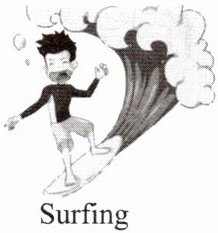 When Polynesians first went and lived in Hawaii about 1200 AD, they brought their love of surfing with them. Surfing was more than just a sport for the early Hawaiians. It was an important part of their culture.
③Hawaiians carved(雕刻) surfboards from the wood of special trees. The first boards were about 3 to 7 metres long and weighed more than 50 kilos. After World War Ⅱ, plastic foam(泡沫) boards appeared and the shape improved. Today's surfboards are about 1.5 to 2.7 metres long and 11 to 26 kilos. They're light and flat with a tail fin fixed on the bottom. Surfboards come in many different styles, including shortboards, longboards and funboards.
④Surfing was brought to the Western world in the early 20th century. In recent years, surfing has become popular among young Chinese sport lovers. China set up its national surfing team in 2018. In March 2024, a 15-year-old girl called Yang Siqi, from Sichuan, became China's first Olympic surfer.
⑤Surfing is not only about riding waves but also about connecting with the ocean and having fun. It's a sport that combines physical strength, balance and a love for the water. So, if you ever get the chance, give it a try!
(
①Peru.
②West Africa.
③The Polynesian islands of the Pacific Ocean.
A. ①② B. ①③ C. ②③ D. ①②③
(
A. Longer and thinner.
B. Wider and heavier.
C. Longer and heavier.
D. Thicker and longer.
(
A B C D
(
A. Art lovers. B. Sports lovers.
C. Cooking lovers. D. Book lovers.
①Surfing is a kind of water sport. Surfers use a surfboard to catch and ride the breaking waves.
②Surfing originated in the Polynesian islands of the Pacific Ocean, as well as in West Africa and Peru.
When Polynesians first went and lived in Hawaii about 1200 AD, they brought their love of surfing with them. Surfing was more than just a sport for the early Hawaiians. It was an important part of their culture.③Hawaiians carved(雕刻) surfboards from the wood of special trees. The first boards were about 3 to 7 metres long and weighed more than 50 kilos. After World War Ⅱ, plastic foam(泡沫) boards appeared and the shape improved. Today's surfboards are about 1.5 to 2.7 metres long and 11 to 26 kilos. They're light and flat with a tail fin fixed on the bottom. Surfboards come in many different styles, including shortboards, longboards and funboards.
④Surfing was brought to the Western world in the early 20th century. In recent years, surfing has become popular among young Chinese sport lovers. China set up its national surfing team in 2018. In March 2024, a 15-year-old girl called Yang Siqi, from Sichuan, became China's first Olympic surfer.
⑤Surfing is not only about riding waves but also about connecting with the ocean and having fun. It's a sport that combines physical strength, balance and a love for the water. So, if you ever get the chance, give it a try!
(
D
)1. Where did surfing start?①Peru.
②West Africa.
③The Polynesian islands of the Pacific Ocean.
A. ①② B. ①③ C. ②③ D. ①②③
(
C
)2. How were the first surfboards different from today's?A. Longer and thinner.
B. Wider and heavier.
C. Longer and heavier.
D. Thicker and longer.
(
C
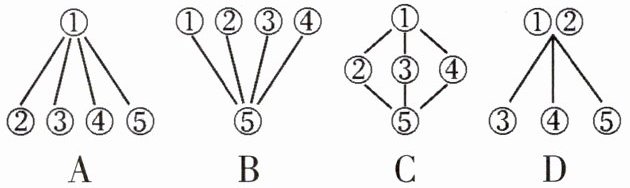
)3. 新考法 段落划分 Which of the following shows the structure of the text?A B C D
(
B
)4. Who is the text mainly written for?A. Art lovers. B. Sports lovers.
C. Cooking lovers. D. Book lovers.
答案
1. D 2. C 3. C 4. B
解析
【分析】
本题为兰州中考阅读理解题,包含细节理解、篇章结构、主旨大意三类题型。解题思路为:先通读全文把握核心内容,再针对各题关键词定位原文对应段落,细节题直接匹配原文信息,篇章结构题梳理段落逻辑,主旨题结合全文核心受众判断。
【解析】
1. 细节理解题:根据原文第二段第一句“Surfing originated in the Polynesian islands of the Pacific Ocean, as well as in West Africa and Peru.”可知,冲浪起源于太平洋波利尼西亚群岛、西非和秘鲁,对应①②③,故选D。
2. 细节理解题:根据原文第三段,早期冲浪板长3-7米、重超50公斤,现代冲浪板长1.5-2.7米、重11-26公斤,因此早期冲浪板更长、更重,故选C。
3. 篇章结构题:原文①段引入冲浪是水上运动;②段讲冲浪起源;③段讲冲浪板的发展;④段讲冲浪的传播及中国的情况;⑤段总结冲浪的意义并号召尝试,整体为“总-分-总”结构,对应选项C。
4. 主旨大意题:全文围绕冲浪运动展开,最后一段号召有机会尝试,核心受众是运动爱好者,故选B。
【答案】
1. D 2. C 3. C 4. B
【知识点】
阅读理解(细节理解题、篇章结构题、主旨大意题)
【点评】
本题为中考常规阅读理解题,题型覆盖细节、篇章结构、主旨,考查学生对文章信息的定位与整合能力,难度适中,适合巩固阅读理解解题方法。
【难度系数】
0.7
