

 登录
Have you ever wondered why we say maidongxi instead of mainanbei, shangcesuo instead of xiacesuo, and yijianxiangzuo instead of yijianxiangyou? Many Chinese words have directions in them, and there is lots of history and culture hidden behind them.
East or West
When going shopping, Chinese people say maidongxi instead of mainanbei. A theory says that in the Tang Dynasty, there were two popular markets in Chang'an, the national capital at the time. One was called the East Market, and the other was called the West Market. When shopping, people usually went to the East Market first, and then went to the West Market. As time went by, people started to describe shopping as maidongxi.
Up or Down
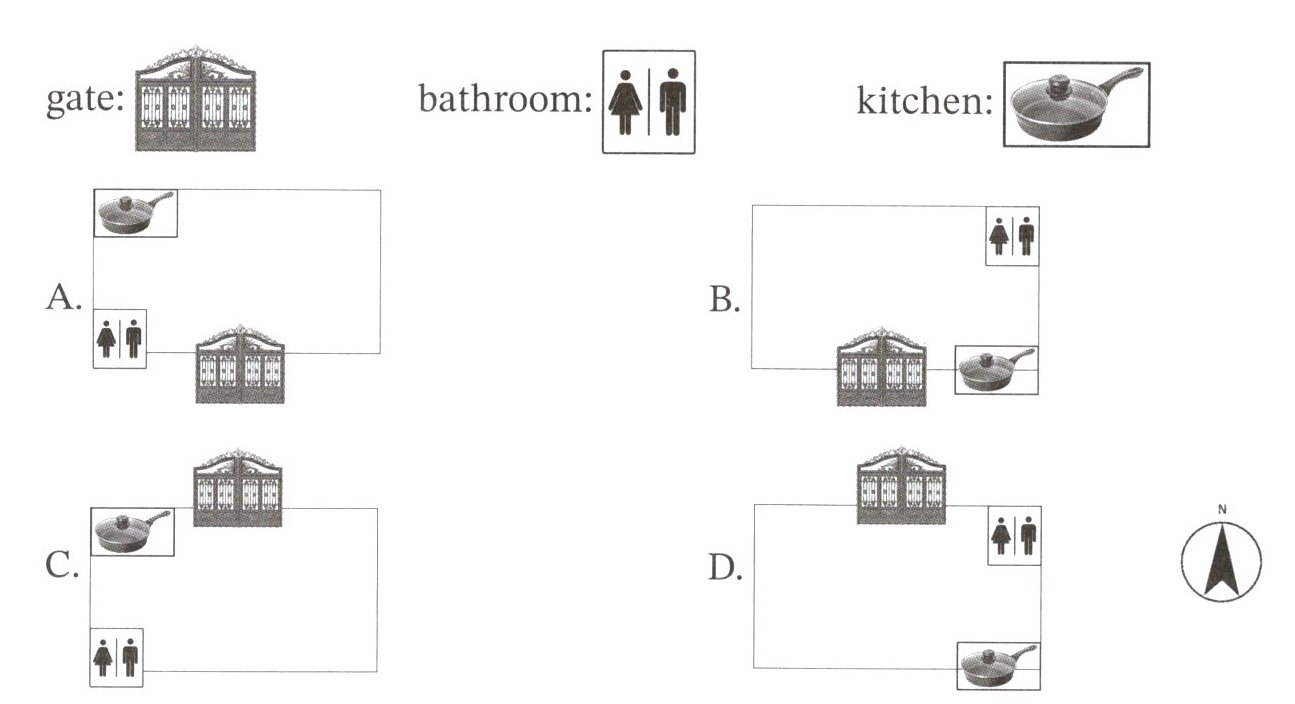
We use shangcesuo to mean “go to the bathroom” and xiachufang to mean “go to the kitchen to cook”. Why? In ancient times, houses were laid out (布局) in a certain way. The gate of the house would face south, with the bathroom in the northeastern part of the house and the kitchen in the southeastern part. On maps, north is usually at the top while south is at the bottom. In Chinese, we talk about the north as shang and the south as xia. So people would say they’re going up to the bathroom and down to the kitchen.
The ancient Chinese used shang and xia not only to refer to directions but also to social positions. For example, people used huangshang to refer to the emperor and chenxia to refer to officials, who had a lower position than the emperor.
Left or Right
Most people today are right-handed. They feel uncomfortable if they try to use their left hand to write or use chopsticks. This was true in old times as well. So in ancient China, “left” was related to being different, such as in yijianxiangzuo. If people don’t accept common beliefs, we still say they are following pangmenzuodao.
“Left” and “right” also have something to do with people’s social position. For a long time in ancient China, “right” stood for a higher position than “left”. For example, wuchuqiyou is used to describe someone who is the best in a certain field, meaning no one is good enough to stand to his right.
( ) 32. Why does the writer mention shangcesuo and yijianxiangzuo at the beginning?
A. To share a story. B. To solve a mystery.
C. To give an example. D. To start the topic.
(
(
A. 左顾右盼 B. 七上八下 C. 无出其右 D. 日落西山
(
A. Social position hidden behind Chinese words for directions.
B. History and culture behind Chinese words for directions.
C. Differences between Chinese and English words for directions.
D. Changes in the use of words for directions in Chinese.
East or West
When going shopping, Chinese people say maidongxi instead of mainanbei. A theory says that in the Tang Dynasty, there were two popular markets in Chang'an, the national capital at the time. One was called the East Market, and the other was called the West Market. When shopping, people usually went to the East Market first, and then went to the West Market. As time went by, people started to describe shopping as maidongxi.
Up or Down
We use shangcesuo to mean “go to the bathroom” and xiachufang to mean “go to the kitchen to cook”. Why? In ancient times, houses were laid out (布局) in a certain way. The gate of the house would face south, with the bathroom in the northeastern part of the house and the kitchen in the southeastern part. On maps, north is usually at the top while south is at the bottom. In Chinese, we talk about the north as shang and the south as xia. So people would say they’re going up to the bathroom and down to the kitchen.
The ancient Chinese used shang and xia not only to refer to directions but also to social positions. For example, people used huangshang to refer to the emperor and chenxia to refer to officials, who had a lower position than the emperor.
Left or Right
Most people today are right-handed. They feel uncomfortable if they try to use their left hand to write or use chopsticks. This was true in old times as well. So in ancient China, “left” was related to being different, such as in yijianxiangzuo. If people don’t accept common beliefs, we still say they are following pangmenzuodao.
“Left” and “right” also have something to do with people’s social position. For a long time in ancient China, “right” stood for a higher position than “left”. For example, wuchuqiyou is used to describe someone who is the best in a certain field, meaning no one is good enough to stand to his right.
( ) 32. Why does the writer mention shangcesuo and yijianxiangzuo at the beginning?
A. To share a story. B. To solve a mystery.
C. To give an example. D. To start the topic.
(
B
) 33. Which picture shows the layout of houses in ancient China according to the passage?(
C
) 34. Which Chinese phrase shows the cultural meaning of the Chinese words mentioned in the passage?A. 左顾右盼 B. 七上八下 C. 无出其右 D. 日落西山
(
B
) 35. What is the passage mainly about?A. Social position hidden behind Chinese words for directions.
B. History and culture behind Chinese words for directions.
C. Differences between Chinese and English words for directions.
D. Changes in the use of words for directions in Chinese.
答案
32. D
33. B
34. C
35. B
解析
【分析】
首先通读全文,明确文章围绕“中文含方向的词汇背后的历史文化”展开。对于32题,需理解开头举例的作用:文章通过“maidongxi”等短语引出核心话题;33题需定位古代房屋布局的描述,结合指南针(N为北)匹配对应图;34题需定位“左/右”的文化含义,匹配对应短语;35题需总结全文主旨,确定核心内容。
【解析】
32题:文章开头举例后直接提出“Many Chinese words have directions in them, and there is lots of history and culture hidden behind them”,目的是引出关于中文方向词汇背后文化的话题,故选D。
33题:根据文中“大门朝南,浴室在东北、厨房在东南”的描述,结合指南针(图上方为北),大门在下方(朝南),浴室在右上(东北),厨房在右中(东南),对应选项B的布局,故选B。
34题:文中提到“古代‘右’代表更高地位,‘wuchuqiyou’指无人能在其右侧,即‘无出其右’”,符合这一文化含义,故选C。
35题:文章分别从“东/西”“上/下”“左/右”方向词汇,介绍其背后的历史与文化,主旨是中文方向词汇背后的历史文化,故选B。
【答案】
32.D;33.B;34.C;35.B
【知识点】
阅读理解;细节理解;主旨大意
【点评】
本题为文化类阅读理解,考查学生对文章结构、细节信息及主旨的把握,需准确定位原文信息并理解词汇的文化内涵,难度适中。
【难度系数】
0.6
