

 登录
登录
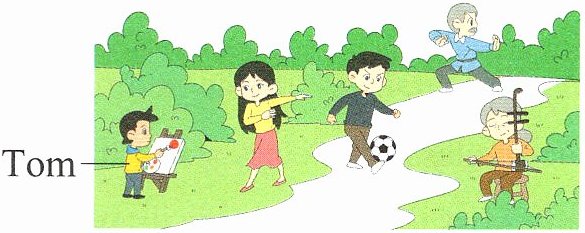
一、[新趋势·图片理解]Look and choose T or F.
(
(
(
(
(
(
T
)1. Tom is drawing a picture in the park.(
F
)2. Mum is singing happily.(
F
)3. Dad is playing basketball in the park.(
T
)4. Grandpa is doing Chinese kung fu.(
F
)5. Grandma is sleeping on the chair.答案
1.T 2.F 3.F 4.T 5.F
解析
【分析】本题是图片理解题,需结合图片中人物的行为,逐一核对每个句子的描述是否与图片内容一致,从而判断正误。先明确每个句子对应的人物动作,再对比图片细节得出结论。
【解析】1. 观察图片,标注为Tom的男孩正在画板前画画,符合“draw a picture”的描述,故判断为T;2. 图片中的女生在跳舞,并非唱歌,不符合“sing happily”的描述,判断为F;3. 图片中的男生在踢足球,不是打篮球,不符合“play basketball”的描述,判断为F;4. 图片中的老爷爷正在练中国功夫,符合“do Chinese kung fu”的描述,判断为T;5. 图片中的老奶奶在拉二胡,并非睡觉,不符合“sleep on the chair”的描述,判断为F。
【答案】1.T 2.F 3.F 4.T 5.F
【知识点】图片理解、日常活动动词辨析
【点评】本题通过生活化的图片考查学生对英语日常活动表达的理解,需仔细观察图片细节,难度适中,适合基础阶段学生练习。
【难度系数】0.7
【解析】1. 观察图片,标注为Tom的男孩正在画板前画画,符合“draw a picture”的描述,故判断为T;2. 图片中的女生在跳舞,并非唱歌,不符合“sing happily”的描述,判断为F;3. 图片中的男生在踢足球,不是打篮球,不符合“play basketball”的描述,判断为F;4. 图片中的老爷爷正在练中国功夫,符合“do Chinese kung fu”的描述,判断为T;5. 图片中的老奶奶在拉二胡,并非睡觉,不符合“sleep on the chair”的描述,判断为F。
【答案】1.T 2.F 3.F 4.T 5.F
【知识点】图片理解、日常活动动词辨析
【点评】本题通过生活化的图片考查学生对英语日常活动表达的理解,需仔细观察图片细节,难度适中,适合基础阶段学生练习。
【难度系数】0.7
二、[新趋势·图片理解]Look and answer the questions.
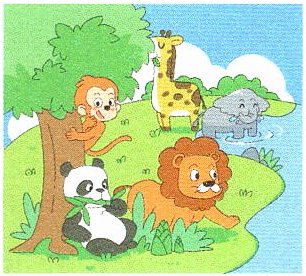
1. What is the panda doing?
2. What is the elephant doing?
3. Is the lion sleeping?
1. What is the panda doing?
It is eating.
2. What is the elephant doing?
It is drinking water.
3. Is the lion sleeping?
No, it isn't.
答案
1. It is eating.
2. It is drinking water.
3. No, it isn't.
2. It is drinking water.
3. No, it isn't.
解析
【分析】本题是图片理解类英语题,需先仔细观察图中每个动物的动作,结合现在进行时的句式结构(be + 动词ing形式)来逐一回答问题:先判断熊猫的动作,再明确大象的行为,最后确认狮子的状态,对应给出正确的英语回答。
【解析】1. 观察图片可知,熊猫嘴里叼着竹叶,正在吃东西,用现在进行时表达为It is eating.;2. 大象在水中,动作是喝水,对应表达为It is drinking water.;3. 狮子睁着眼睛,没有睡觉,所以用否定回答No, it isn't.
【答案】1. It is eating.
2. It is drinking water.
3. No, it isn't.
【知识点】现在进行时,图片理解
【点评】本题结合图片考查现在进行时的基础运用,需要准确观察图中动物的动作,匹配对应的英语表达,属于英语基础应用题目。
【难度系数】0.6
【解析】1. 观察图片可知,熊猫嘴里叼着竹叶,正在吃东西,用现在进行时表达为It is eating.;2. 大象在水中,动作是喝水,对应表达为It is drinking water.;3. 狮子睁着眼睛,没有睡觉,所以用否定回答No, it isn't.
【答案】1. It is eating.
2. It is drinking water.
3. No, it isn't.
【知识点】现在进行时,图片理解
【点评】本题结合图片考查现在进行时的基础运用,需要准确观察图中动物的动作,匹配对应的英语表达,属于英语基础应用题目。
【难度系数】0.6
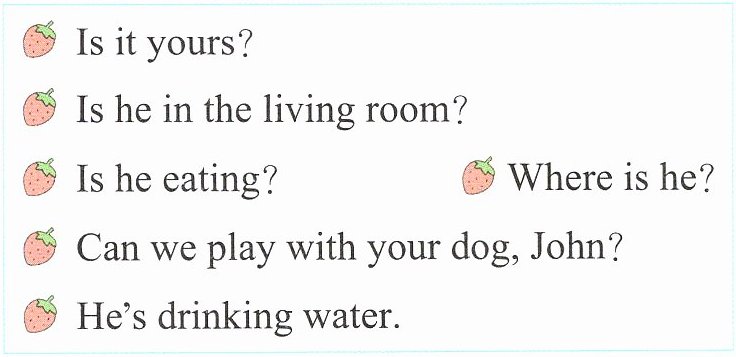
三、Read, choose and write.
Sarah: Where is John now? I can't find him.
Mike: Let me see.
Sarah: 1.
Mike: No, he isn't. I see him. He's in the kitchen.
Sarah: 2.
Mike: No, he isn't. 3.
Sarah: Look! There is a dog. It's drinking water, too. 4.
Mike: No, it isn't. It's John's.
Sarah: It's cute. Can I play with it?
Mike: Let's go and ask John.
Sarah: 5.
John: Of course.
Sarah: Where is John now? I can't find him.
Mike: Let me see.
Sarah: 1.
Is he in the living room?
Mike: No, he isn't. I see him. He's in the kitchen.
Sarah: 2.
Is he eating?
Mike: No, he isn't. 3.
He's drinking water.
Sarah: Look! There is a dog. It's drinking water, too. 4.
Is it yours?
Mike: No, it isn't. It's John's.
Sarah: It's cute. Can I play with it?
Mike: Let's go and ask John.
Sarah: 5.
Can we play with your dog, John?
John: Of course.
答案
1. Is he in the living room?
2. Is he eating?
3. He's drinking water.
4. Is it yours?
5. Can we play with your dog, John?
2. Is he eating?
3. He's drinking water.
4. Is it yours?
5. Can we play with your dog, John?
解析
【分析】
这是一道补全对话的题目,解题时需结合对话上下文语境、答语提示选择合适的句子。第1空根据答语“ No, he isn't. He's in the kitchen.”,可知问句是询问John是否在某个房间;第2空答语是否定回答,结合上下文是问John的动作;第3空需说明John的动作,结合后文提到的喝水内容;第4空答语是关于物品归属的否定回答,对应询问物品归属的问句;第5空答语是同意回应,对应前文玩狗的请求。
【解析】
1. 根据答语“No, he isn't. He's in the kitchen.”,此处询问John是否在某个房间,填Is he in the living room?;
2. 根据答语“No, he isn't.”及上下文语境,此处询问John是否在做某事,填Is he eating?;
3. 此处说明John正在做的动作,结合后文提到的喝水,填He's drinking water.;
4. 根据答语“No, it isn't. It's John's.”,此处询问物品归属,填Is it yours?;
5. 根据答语“Of course.”及前文玩狗的请求,此处提出请求,填Can we play with your dog, John?
【答案】
1. Is he in the living room?
2. Is he eating?
3. He's drinking water.
4. Is it yours?
5. Can we play with your dog, John?
【知识点】
补全对话、日常交际用语、一般疑问句
【点评】
本题考查英语日常交际用语的运用,通过补全对话的形式检验学生对上下文语境的理解和常用句型的掌握,是贴近生活的基础题型。
【难度系数】
0.5
这是一道补全对话的题目,解题时需结合对话上下文语境、答语提示选择合适的句子。第1空根据答语“ No, he isn't. He's in the kitchen.”,可知问句是询问John是否在某个房间;第2空答语是否定回答,结合上下文是问John的动作;第3空需说明John的动作,结合后文提到的喝水内容;第4空答语是关于物品归属的否定回答,对应询问物品归属的问句;第5空答语是同意回应,对应前文玩狗的请求。
【解析】
1. 根据答语“No, he isn't. He's in the kitchen.”,此处询问John是否在某个房间,填Is he in the living room?;
2. 根据答语“No, he isn't.”及上下文语境,此处询问John是否在做某事,填Is he eating?;
3. 此处说明John正在做的动作,结合后文提到的喝水,填He's drinking water.;
4. 根据答语“No, it isn't. It's John's.”,此处询问物品归属,填Is it yours?;
5. 根据答语“Of course.”及前文玩狗的请求,此处提出请求,填Can we play with your dog, John?
【答案】
1. Is he in the living room?
2. Is he eating?
3. He's drinking water.
4. Is it yours?
5. Can we play with your dog, John?
【知识点】
补全对话、日常交际用语、一般疑问句
【点评】
本题考查英语日常交际用语的运用,通过补全对话的形式检验学生对上下文语境的理解和常用句型的掌握,是贴近生活的基础题型。
【难度系数】
0.5
四、Read and choose T or F.
A farmer walks in the forest. He is very tired. So he sleeps under a big tree. One of his shoes is beside him. A monkey picks up his shoe and climbs up the tree. The farmer wakes up(醒来). He shouts(叫喊), "Give it back to me." The monkey shouts, too. It imitates(模仿) the farmer. The farmer thinks, and then he has a good idea. He takes off his other shoe and throws it away. What does the monkey do? Yes. It throws the shoe, too. The farmer picks up his two shoes quickly. He is laughing and singing, "What a naughty(淘气的) monkey! What a funny monkey!"
(
(
(
(
(
A farmer walks in the forest. He is very tired. So he sleeps under a big tree. One of his shoes is beside him. A monkey picks up his shoe and climbs up the tree. The farmer wakes up(醒来). He shouts(叫喊), "Give it back to me." The monkey shouts, too. It imitates(模仿) the farmer. The farmer thinks, and then he has a good idea. He takes off his other shoe and throws it away. What does the monkey do? Yes. It throws the shoe, too. The farmer picks up his two shoes quickly. He is laughing and singing, "What a naughty(淘气的) monkey! What a funny monkey!"
(
F
)1. The farmer sleeps. One of his shoes is in his hand.(
T
)2. When the farmer sleeps, the monkey takes away(拿走) the shoe.(
T
)3. When the farmer shouts, the monkey shouts, too.(
F
)4. The farmer doesn't get back(拿回) his shoe.(
T
)5. The farmer is very clever.答案
1.F 2.T 3.T 4.F 5.T
解析
【分析】本题为英语阅读理解判断正误题,需逐题将题目描述与原文细节逐一对比:第1题确认鞋子的位置;第2题确认猴子是否拿走鞋子;第3题确认猴子是否跟着叫喊;第4题确认农夫是否拿回鞋子;第5题判断农夫是否聪明。
【解析】1. 原文提到“One of his shoes is beside him”,并非在农夫手里,故判断为F;2. 原文明确写“A monkey picks up his shoe and climbs up the tree”,说明猴子拿走了鞋,判断为T;3. 原文表述“The monkey shouts, too”,与题目一致,判断为T;4. 原文提到农夫最后“picks up his two shoes quickly”,说明成功拿回鞋,判断为F;5. 农夫通过扔另一只鞋让猴子也扔掉,成功拿回,体现其聪明,判断为T。
【答案】1.F 2.T 3.T 4.F 5.T
【知识点】阅读理解判断正误,细节理解
【点评】本题考查英语阅读理解的细节匹配能力,需准确提取原文关键信息,对比题目描述即可得出答案,是基础英语阅读题型,适合巩固阅读基础。
【难度系数】0.6
【解析】1. 原文提到“One of his shoes is beside him”,并非在农夫手里,故判断为F;2. 原文明确写“A monkey picks up his shoe and climbs up the tree”,说明猴子拿走了鞋,判断为T;3. 原文表述“The monkey shouts, too”,与题目一致,判断为T;4. 原文提到农夫最后“picks up his two shoes quickly”,说明成功拿回鞋,判断为F;5. 农夫通过扔另一只鞋让猴子也扔掉,成功拿回,体现其聪明,判断为T。
【答案】1.F 2.T 3.T 4.F 5.T
【知识点】阅读理解判断正误,细节理解
【点评】本题考查英语阅读理解的细节匹配能力,需准确提取原文关键信息,对比题目描述即可得出答案,是基础英语阅读题型,适合巩固阅读基础。
【难度系数】0.6
