

 登录
登录
D
Since the Zhou Dynasty (1046 BC—256 BC), a complete etiquette system has been set. Today, many of these rules are not as strict as before. However, some are still followed on important occasions and are regarded as good examples of good manners.
Walking Etiquette
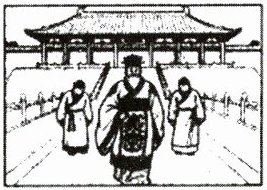
① In ancient China, while walking with someone with higher status or an old person, one should lower the head, bend down, and walk a little bit behind them. If three people walk together, the elder or a teacher should be in the middle. One should bow down and walk fast using smaller steps when passing by an elder or a teacher.
Sitting Etiquette and Seating Rules
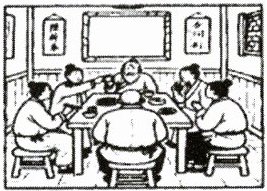
② Everyone should be sitting in a proper position at dining tables. It is based on their titles, ranks, or age. If someone doesn't know the exact position, they should wait and follow the host's lead. The best seat is the one that faces the east or the door. Hosts usually sit facing the west.
Bow, and Fist-and-Palm Salute
③ Bow, in Chinese Yi Li or Zuo Yi, means having their hands folded in front in different ways. Today,however, the simplest Zuo Yi gesture is good enough, as well as nodding, smiling, and handshaking.

④ The Fist-and-Palm Salute, is another type of Yi Li,with the fist's right hand covered by the left hand. It first appeared in the army when people held weapons while showing respect to others. So, people always use the left hand to cover the right hand that holds weapons.
(
A. In the middle. B. On the left.
C. On the right. D. At the back.
(
A. ① B. ② C. ③ D. ④
(

A. B. C. D.
(
A. To give an example. B. To set the order.
C. To add more information. D. To show a result.
(
A. Another kind of Chinese etiquette.
B. Another kind of Western etiquette.
C. Differences among the three kinds of etiquette.
D. Differences between Chinese and Western etiquette.
非选择题(共50分)
Since the Zhou Dynasty (1046 BC—256 BC), a complete etiquette system has been set. Today, many of these rules are not as strict as before. However, some are still followed on important occasions and are regarded as good examples of good manners.
Walking Etiquette
① In ancient China, while walking with someone with higher status or an old person, one should lower the head, bend down, and walk a little bit behind them. If three people walk together, the elder or a teacher should be in the middle. One should bow down and walk fast using smaller steps when passing by an elder or a teacher.
Sitting Etiquette and Seating Rules
② Everyone should be sitting in a proper position at dining tables. It is based on their titles, ranks, or age. If someone doesn't know the exact position, they should wait and follow the host's lead. The best seat is the one that faces the east or the door. Hosts usually sit facing the west.
Bow, and Fist-and-Palm Salute
③ Bow, in Chinese Yi Li or Zuo Yi, means having their hands folded in front in different ways. Today,however, the simplest Zuo Yi gesture is good enough, as well as nodding, smiling, and handshaking.
④ The Fist-and-Palm Salute, is another type of Yi Li,with the fist's right hand covered by the left hand. It first appeared in the army when people held weapons while showing respect to others. So, people always use the left hand to cover the right hand that holds weapons.
(
A
)46. In ancient China, which place should your teacher be when walking with you and your classmate?A. In the middle. B. On the left.
C. On the right. D. At the back.
(
B
)47. Where can we put the sentence "The seating order is still widely used in family and business dinners." in the passage?A. ① B. ② C. ③ D. ④
(
B
)48. Which of the following pictures correctly describes "the Fist-and-Palm Salute"?A. B. C. D.
(
C
)49. Why is the underlined sentence included in the last paragraph?A. To give an example. B. To set the order.
C. To add more information. D. To show a result.
(
A
)50. What may the writer talk about in the following paragraph?A. Another kind of Chinese etiquette.
B. Another kind of Western etiquette.
C. Differences among the three kinds of etiquette.
D. Differences between Chinese and Western etiquette.
非选择题(共50分)
答案
D 【文章大意】本文是一篇说明文。文章主要介绍了中国古代
礼仪体系的核心内容,包括行走礼仪(如与长辈同行时的位置
规则)、座席规则(如宴席座次依据身份和年龄)、作揖礼及
抱拳礼的细节,并强调部分礼仪至今仍在重要场合沿用。
46.A [解析]细节理解题。根据Walking Etiquette部分中
的“If three people walk together, the elder or a teacher
should be in the middle.”可知,当三人(你、同学和老师)
同行时,老师应位于中间位置。故选A。
47.B [解析]句子还原题。该句强调座席规则在现代的应
用,Sitting Etiquette and Seating Rules部分专门讨论了座
席位置规则,如“Everyone should be sitting in a proper
position(位置) at dining tables.”,并提及其依据身份和年
龄的排序逻辑,因此该句放入②处能自然衔接座席规则的
古今延续性。故选B。
48.B [解析]图片理解题。根据文章中的描述“The Fist-
and-Palm Salute, is another type of Yi Li, with the fist's
right hand covered by the left hand.”可知,正确的抱拳礼
姿势是右手握拳,左手覆盖在右拳上。故选B。
49.C [解析]推理判断题。画线句子“So, people always use
the left hand to cover the right hand that holds weapons."
位于抱拳礼解释段末尾,旨在补充说明该礼仪的起源(军
队持武器时示敬),属于添加背景信息以深化理解。故
选C。
50.A [解析]推理判断题。全文围绕中国古代礼仪(行走、
座席、作揖、抱拳)展开,且首段提到“a complete etiquette
etiquette礼仪,礼节,规矩↙
东方礼仪:强调谦逊、长幼有序(如中国的"拱手礼")。
西方礼仪:侧重平等、直接(如握手、微笑、眼神接触)。
system”,暗示该体系包含更多内容。因此,下文可能延续
主题,介绍其他中国礼仪类型(如祭祀礼或饮食礼)。故
选A。
礼仪体系的核心内容,包括行走礼仪(如与长辈同行时的位置
规则)、座席规则(如宴席座次依据身份和年龄)、作揖礼及
抱拳礼的细节,并强调部分礼仪至今仍在重要场合沿用。
46.A [解析]细节理解题。根据Walking Etiquette部分中
的“If three people walk together, the elder or a teacher
should be in the middle.”可知,当三人(你、同学和老师)
同行时,老师应位于中间位置。故选A。
47.B [解析]句子还原题。该句强调座席规则在现代的应
用,Sitting Etiquette and Seating Rules部分专门讨论了座
席位置规则,如“Everyone should be sitting in a proper
position(位置) at dining tables.”,并提及其依据身份和年
龄的排序逻辑,因此该句放入②处能自然衔接座席规则的
古今延续性。故选B。
48.B [解析]图片理解题。根据文章中的描述“The Fist-
and-Palm Salute, is another type of Yi Li, with the fist's
right hand covered by the left hand.”可知,正确的抱拳礼
姿势是右手握拳,左手覆盖在右拳上。故选B。
49.C [解析]推理判断题。画线句子“So, people always use
the left hand to cover the right hand that holds weapons."
位于抱拳礼解释段末尾,旨在补充说明该礼仪的起源(军
队持武器时示敬),属于添加背景信息以深化理解。故
选C。
50.A [解析]推理判断题。全文围绕中国古代礼仪(行走、
座席、作揖、抱拳)展开,且首段提到“a complete etiquette
etiquette礼仪,礼节,规矩↙
东方礼仪:强调谦逊、长幼有序(如中国的"拱手礼")。
西方礼仪:侧重平等、直接(如握手、微笑、眼神接触)。
system”,暗示该体系包含更多内容。因此,下文可能延续
主题,介绍其他中国礼仪类型(如祭祀礼或饮食礼)。故
选A。
解析
【分析】本题是一篇关于中国古代礼仪的英语说明文,包含5道阅读理解题,分别考查细节理解、句子还原、图片理解、推理判断能力。解题思路为:先通读全文把握主旨,再针对每个问题的关键词,回原文定位相关段落或语句,结合上下文语境、文章结构及文化常识逐一分析选项,得出答案。
【解析】46. 细节理解题:根据Walking Etiquette部分中“If three people walk together, the elder or a teacher should be in the middle.”可知,三人同行时老师应在中间,故选A。
47. 句子还原题:待还原句强调座席规则在现代的应用,对应Sitting Etiquette部分讨论的座席位置规则及古今延续性,应放入②处,故选B。
48. 图片理解题:根据文中“The Fist-and-Palm Salute... with the fist's right hand covered by the left hand.”可知,抱拳礼是右手握拳、左手覆盖右拳,对应选项B的图片,故选B。
49. 推理判断题:画线句补充说明抱拳礼的起源背景,属于添加相关信息以深化对该礼仪的理解,故选C。
50. 推理判断题:全文围绕中国古代礼仪展开,首段提到完整礼仪体系包含更多内容,故下文可能介绍另一种中国礼仪,故选A。
【答案】46.A 47.B 48.B 49.C 50.A
【知识点】英语阅读理解、细节理解题、推理判断题
【点评】本文结合中国传统礼仪文化,既考查英语阅读的信息定位与逻辑分析能力,又渗透文化知识,题目类型全面,难度适中,能有效考查学生的综合阅读素养。
【难度系数】0.6
【解析】46. 细节理解题:根据Walking Etiquette部分中“If three people walk together, the elder or a teacher should be in the middle.”可知,三人同行时老师应在中间,故选A。
47. 句子还原题:待还原句强调座席规则在现代的应用,对应Sitting Etiquette部分讨论的座席位置规则及古今延续性,应放入②处,故选B。
48. 图片理解题:根据文中“The Fist-and-Palm Salute... with the fist's right hand covered by the left hand.”可知,抱拳礼是右手握拳、左手覆盖右拳,对应选项B的图片,故选B。
49. 推理判断题:画线句补充说明抱拳礼的起源背景,属于添加相关信息以深化对该礼仪的理解,故选C。
50. 推理判断题:全文围绕中国古代礼仪展开,首段提到完整礼仪体系包含更多内容,故下文可能介绍另一种中国礼仪,故选A。
【答案】46.A 47.B 48.B 49.C 50.A
【知识点】英语阅读理解、细节理解题、推理判断题
【点评】本文结合中国传统礼仪文化,既考查英语阅读的信息定位与逻辑分析能力,又渗透文化知识,题目类型全面,难度适中,能有效考查学生的综合阅读素养。
【难度系数】0.6
