

 登录
登录
第一部分 听对话回答问题
本部分共10小题,每小题你将听到一段对话,每段对话听两遍。
1. What did the woman buy for her parents?
B.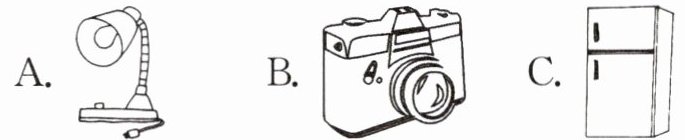
2. What did the man eat for dinner?
B.
3. What did the man cook for dinner?
B.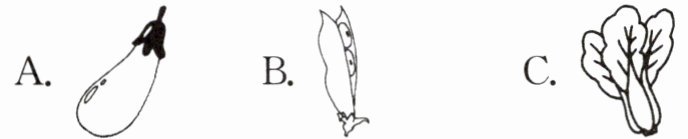
4. What fruit did the woman bring to the picnic?
B.
5. How many books has the man read this month?
A. Two.
B. Three.
C. Four.
6. What does the woman think of reading?
A. It's boring.
B. It's relaxing.
C. It's a waste of time.
7. Where are they talking?
A. In a classroom.
B. In a library.
C. In a bookshop.
8. When will the book be returned?
A. Next Monday.
B. Next Wednesday.
C. Next Friday.
9. Why does the boy like reading novels?
A. Because they are short and easy.
B. Because he can learn a lot from them.
C. Because his parents ask him to do so.
10. What is the book mainly about?
A. A young wizard.
B. An adventure on a river.
C. A family story.
本部分共10小题,每小题你将听到一段对话,每段对话听两遍。
1. What did the woman buy for her parents?
B.
2. What did the man eat for dinner?
B.
3. What did the man cook for dinner?
B.
4. What fruit did the woman bring to the picnic?
B.
5. How many books has the man read this month?
A. Two.
B. Three.
C. Four.
6. What does the woman think of reading?
A. It's boring.
B. It's relaxing.
C. It's a waste of time.
7. Where are they talking?
A. In a classroom.
B. In a library.
C. In a bookshop.
8. When will the book be returned?
A. Next Monday.
B. Next Wednesday.
C. Next Friday.
9. Why does the boy like reading novels?
A. Because they are short and easy.
B. Because he can learn a lot from them.
C. Because his parents ask him to do so.
10. What is the book mainly about?
A. A young wizard.
B. An adventure on a river.
C. A family story.
答案
1.C 2.C 3.A 4.A 5.B 6.B 7.B 8.C 9.B 10.A
听下面一段对话,回答第11~12小题。
11. What are they talking about?
A. A book they both have read.
B. A film they watched.
C. A writer they like.
12. What does the boy think of the ending?
A. It's surprising.
B. It's sad.
C. It's perfect.
11. What are they talking about?
A. A book they both have read.
B. A film they watched.
C. A writer they like.
12. What does the boy think of the ending?
A. It's surprising.
B. It's sad.
C. It's perfect.
答案
11.A 12.C
听第一篇短文,回答第13~15小题。
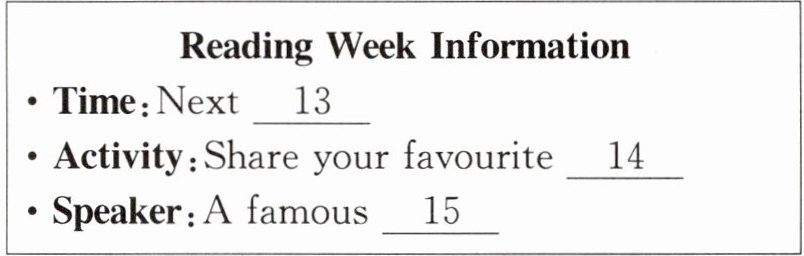
13. A. Monday B. Wednesday C. Friday
14. A. book B. poem C. story
15. A. writer B. teacher C. reporter
13. A. Monday B. Wednesday C. Friday
14. A. book B. poem C. story
15. A. writer B. teacher C. reporter
答案
13.C 14.A 15.A
听第二篇短文,回答第16~20小题。
16. What is the speaker talking about?
A. How to write a book
B. The importance of reading
C. Different kinds of books
17. Why does the speaker think reading is like travelling?
A. Because we can visit many places.
B. Because we can meet different people in books.
C. Because we need money to do both.
18. What kind of book can help us learn about history?
A. Science fiction.
B. Historical novels.
C. Love stories.
19. What does the speaker say about poems?
A. They are difficult to understand.
B. They are beautiful and short.
C. They are only for old people.
20. What does the speaker suggest at the end?
A. Read at least one book every week.
B. Keep a diary of what you read.
C. Share books with friends.
16. What is the speaker talking about?
A. How to write a book
B. The importance of reading
C. Different kinds of books
17. Why does the speaker think reading is like travelling?
A. Because we can visit many places.
B. Because we can meet different people in books.
C. Because we need money to do both.
18. What kind of book can help us learn about history?
A. Science fiction.
B. Historical novels.
C. Love stories.
19. What does the speaker say about poems?
A. They are difficult to understand.
B. They are beautiful and short.
C. They are only for old people.
20. What does the speaker suggest at the end?
A. Read at least one book every week.
B. Keep a diary of what you read.
C. Share books with friends.
答案
16.B 17.B 18.B 19.B 20.C
