

 登录
登录
二、阅读理解
[2025 厦门期末改编]
Wetlands are land areas covered by water most of the time. They form naturally, or humans can make them when water gathers and cannot flow away.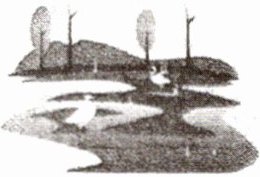
Wetlands are really important. They are home to about 100, 000 kinds of animals. Wetlands also help fight climate change. They take in lots of carbon, which helps cut down CO₂ in the air. In dry seasons, they slowly let stored water go to help fight droughts. Over 1 billion people live on wetlands and make a living by fishing, growing rice or working in tourism.
However, wetlands are disappearing at a fast speed. Since 1970, more than 33% of wetlands have been lost. Waste from daily life and factory production harms these areas. Dams(水坝) stop rivers and this shrinks wetlands. Invasive species(入侵物种) also cause trouble. Some of these plants grow very fast. They push out local plants and take away oxygen from the water, which is bad for fish.
Protecting wetlands needs action from all over the world. In 1971, some countries signed the Convention on Wetlands. For example, in 2020, China's wetland protection rate was 52.7%. It plans to raise this rate by 2.4% every five years. The UK also has a plan: it will create and repair 1,000 km² of wetlands by 2050.
Protecting wetlands is not just the government's job. Everyone can do something to help. Simple things like planting local trees near rivers or joining in clean-up activities can make a big difference. If we value wetlands and work together, we can protect these important ecosystems for our planet's future.
1. What does the underlined word "shrinks" in Paragraph 3 mean?
A. Puts down. B. Cuts down.
C. Cleans up. D. Builds up.
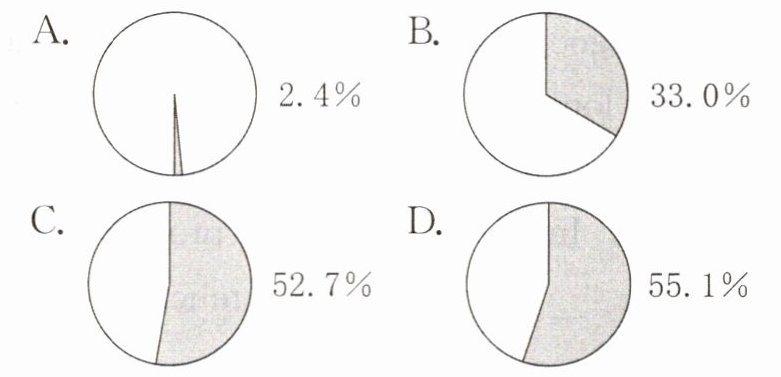
2.(创新考法·图片理解)Which picture shows China's planned wetland protection rate by 2025? Protection Rate
3. Which of the following questions is answered by Paragraphs 4 & 5?
A. What and where are wetlands?
B. What problems do wetlands face?
C. Why are wetlands important?
D. How can wetlands be protected?
深度阅读·回答问题
4. According to the passage, what are the three main reasons for the disappearance of wetlands?
情境三 个人与家庭通过日常环保行动,共同保护地球家园。
[2025 厦门期末改编]
Wetlands are land areas covered by water most of the time. They form naturally, or humans can make them when water gathers and cannot flow away.
Wetlands are really important. They are home to about 100, 000 kinds of animals. Wetlands also help fight climate change. They take in lots of carbon, which helps cut down CO₂ in the air. In dry seasons, they slowly let stored water go to help fight droughts. Over 1 billion people live on wetlands and make a living by fishing, growing rice or working in tourism.
However, wetlands are disappearing at a fast speed. Since 1970, more than 33% of wetlands have been lost. Waste from daily life and factory production harms these areas. Dams(水坝) stop rivers and this shrinks wetlands. Invasive species(入侵物种) also cause trouble. Some of these plants grow very fast. They push out local plants and take away oxygen from the water, which is bad for fish.
Protecting wetlands needs action from all over the world. In 1971, some countries signed the Convention on Wetlands. For example, in 2020, China's wetland protection rate was 52.7%. It plans to raise this rate by 2.4% every five years. The UK also has a plan: it will create and repair 1,000 km² of wetlands by 2050.
Protecting wetlands is not just the government's job. Everyone can do something to help. Simple things like planting local trees near rivers or joining in clean-up activities can make a big difference. If we value wetlands and work together, we can protect these important ecosystems for our planet's future.
1. What does the underlined word "shrinks" in Paragraph 3 mean?
A. Puts down. B. Cuts down.
C. Cleans up. D. Builds up.
2.(创新考法·图片理解)Which picture shows China's planned wetland protection rate by 2025? Protection Rate
3. Which of the following questions is answered by Paragraphs 4 & 5?
A. What and where are wetlands?
B. What problems do wetlands face?
C. Why are wetlands important?
D. How can wetlands be protected?
深度阅读·回答问题
4. According to the passage, what are the three main reasons for the disappearance of wetlands?
Waste from daily life and factory production harms these areas.
Dams stop rivers and this shrinks wetlands.
Invasive species also cause trouble.
情境三 个人与家庭通过日常环保行动,共同保护地球家园。
答案
二、1. B 词义猜测题。根据"Dams stop rivers and this shrinks wetlands."可知,水坝阻挡了河流,这会使湿地面积缩小,因此画线单词shrinks意为"缩小,减少",与cuts down意思相近。
2. D 图片理解题。根据"... in 2020, China's wetland protection rate was 52.7%. It plans to raise this rate by 2.4% every five years."可知,2020年,中国湿地保护率为52.7%,计划每5年提高2.4%;据此可以推断,到2025年,中国的湿地保护率应该是52.7%+2.4%=55.1%。
3. D 推理判断题。文章倒数第二段提到"Protecting wetlands needs action from all over the world."以及列举了中国和英国保护湿地的计划,最后一段提到"Protecting wetlands is not just the government's job. Everyone can do something to help."以及具体的保护措施,所以这两段主要讲述了如何保护湿地。
4. Waste from daily life and factory production harms these areas. Dams stop rivers and this shrinks wetlands. Invasive species also cause trouble.
2. D 图片理解题。根据"... in 2020, China's wetland protection rate was 52.7%. It plans to raise this rate by 2.4% every five years."可知,2020年,中国湿地保护率为52.7%,计划每5年提高2.4%;据此可以推断,到2025年,中国的湿地保护率应该是52.7%+2.4%=55.1%。
3. D 推理判断题。文章倒数第二段提到"Protecting wetlands needs action from all over the world."以及列举了中国和英国保护湿地的计划,最后一段提到"Protecting wetlands is not just the government's job. Everyone can do something to help."以及具体的保护措施,所以这两段主要讲述了如何保护湿地。
4. Waste from daily life and factory production harms these areas. Dams stop rivers and this shrinks wetlands. Invasive species also cause trouble.
解析
【分析】
1. 第1题是词义猜测题,需定位画线词所在句,结合语境推断词义,再匹配选项;
2. 第2题是图片理解+计算题,需提取中国湿地保护率的相关数据,计算2025年的保护率后对应图片;
3. 第3题是段落主旨题,需阅读第4、5段,提取核心内容判断段落围绕的主题;
4. 第4题是细节查找题,需定位第三段关于湿地消失的内容,提取三个原因。
【解析】
1. 第1题:定位到第三段“Dams stop rivers and this shrinks wetlands.”,水坝阻挡河流会导致湿地面积缩小,故shrinks意为“缩小、减少”,对应选项B(cuts down,意为“削减、减少”),A(放下)、C(清理)、D(建立)均不符合,选B;
2. 第2题:根据第四段“2020年中国湿地保护率为52.7%,计划每5年提高2.4%”,2020到2025年间隔5年,计算得2025年保护率为52.7%+2.4%=55.1%,对应符合该数值的图片(选D);
3. 第3题:第四段提到“保护湿地需要全球行动”及中、英保护计划,第五段提到“保护湿地不仅是政府的事,个人也可参与”及具体措施,两段围绕“如何保护湿地”展开,选D;
4. 第4题:定位第三段关于湿地消失的内容,提取三个原因:①日常生活和工厂生产的废弃物危害湿地;②水坝阻挡河流使湿地缩小;③入侵物种造成麻烦。
【答案】
1. B 2. D 3. D 4. Waste from daily life and factory production harms these areas. Dams stop rivers and this shrinks wetlands. Invasive species also cause trouble.
【知识点】
词义猜测题;阅读理解主旨归纳;细节查找题
【点评】
本题为英语阅读理解综合题,涵盖词义猜测、计算推理、主旨归纳、细节查找等题型,考察学生的信息定位、逻辑推理及文本理解能力,符合期末考命题特点,难度适中。
【难度系数】
0.6
1. 第1题是词义猜测题,需定位画线词所在句,结合语境推断词义,再匹配选项;
2. 第2题是图片理解+计算题,需提取中国湿地保护率的相关数据,计算2025年的保护率后对应图片;
3. 第3题是段落主旨题,需阅读第4、5段,提取核心内容判断段落围绕的主题;
4. 第4题是细节查找题,需定位第三段关于湿地消失的内容,提取三个原因。
【解析】
1. 第1题:定位到第三段“Dams stop rivers and this shrinks wetlands.”,水坝阻挡河流会导致湿地面积缩小,故shrinks意为“缩小、减少”,对应选项B(cuts down,意为“削减、减少”),A(放下)、C(清理)、D(建立)均不符合,选B;
2. 第2题:根据第四段“2020年中国湿地保护率为52.7%,计划每5年提高2.4%”,2020到2025年间隔5年,计算得2025年保护率为52.7%+2.4%=55.1%,对应符合该数值的图片(选D);
3. 第3题:第四段提到“保护湿地需要全球行动”及中、英保护计划,第五段提到“保护湿地不仅是政府的事,个人也可参与”及具体措施,两段围绕“如何保护湿地”展开,选D;
4. 第4题:定位第三段关于湿地消失的内容,提取三个原因:①日常生活和工厂生产的废弃物危害湿地;②水坝阻挡河流使湿地缩小;③入侵物种造成麻烦。
【答案】
1. B 2. D 3. D 4. Waste from daily life and factory production harms these areas. Dams stop rivers and this shrinks wetlands. Invasive species also cause trouble.
【知识点】
词义猜测题;阅读理解主旨归纳;细节查找题
【点评】
本题为英语阅读理解综合题,涵盖词义猜测、计算推理、主旨归纳、细节查找等题型,考察学生的信息定位、逻辑推理及文本理解能力,符合期末考命题特点,难度适中。
【难度系数】
0.6
三、选词填空
add when much brush one's teeth throw
The earth is our home. There are some ways that you and your family can use to help the planet and make a difference.
Take shorter showers. A 10-minute shower or a full bathtub can waste a lot of water. Also, turn off the tap as you 1.
Avoid wasting food. Don't take more than you can eat. About one-third of food in some areas 2.
Take good care of things you own and they will get a long life. If they break, try to repair them. If you can't repair them, call a repairman. In the last 20 years, producing new things 3.
Use plastic and paper bags more than once. 4.
Use reusable cups instead of throwaway paper cups if necessary. The 5.
深度阅读·判断句子正(T)、误(F)
6. There are seven ways here to help us protect our planet.
add when much brush one's teeth throw
The earth is our home. There are some ways that you and your family can use to help the planet and make a difference.
Take shorter showers. A 10-minute shower or a full bathtub can waste a lot of water. Also, turn off the tap as you 1.
brush your teeth
. Use less water in the garden and let the rain clean cars.Avoid wasting food. Don't take more than you can eat. About one-third of food in some areas 2.
is thrown
away or wasted by people.Take good care of things you own and they will get a long life. If they break, try to repair them. If you can't repair them, call a repairman. In the last 20 years, producing new things 3.
has added
much CO₂ to the air.Use plastic and paper bags more than once. 4.
When
you go shopping, use cloth bags instead of plastic bags.Use reusable cups instead of throwaway paper cups if necessary. The 5.
more
paper cups you use, the more rubbish you will produce.深度阅读·判断句子正(T)、误(F)
6. There are seven ways here to help us protect our planet.
答案
三、1. brush your teeth 2. is thrown 3. has added
4. When 5. more 6. F
4. When 5. more 6. F
解析
【分析】
本题为环保主题的选词填空与阅读理解判断题,解题思路如下:1. 选词填空:先分析每个空的语境、语法结构,结合给定词汇匹配答案:第1空需填符合“关水龙头”语境的刷牙短语;第2空需用被动语态表达“食物被扔掉”;第3空结合时间状语用现在完成时;第4空引导时间状语从句;第5空用“the + 比较级,the + 比较级”结构。2. 判断题:数文中提到的环保方法数量,判断是否为7种。
【解析】
1. 第1空:根据“turn off the tap as you...”的语境,结合环保常识,填动词短语brush your teeth;2. 第2空:主语one-third of food与throw away是被动关系,用一般现在时被动语态is thrown;3. 第3空:时间状语in the last 20 years对应现在完成时,主语为动名词短语,助动词用has,故填has added;4. 第4空:引导时间状语从句,句首大写,填When;5. 第5空:固定结构“the + 比较级,the + 比较级”,填more;6. 判断题:文中提到的环保方法共6种,不是7种,故判断为F。
【答案】
1. brush your teeth 2. is thrown 3. has added 4. When 5. more 6. F
【知识点】
动词短语、被动语态、阅读理解判断
【点评】
本题围绕环保主题,考查词汇运用、基础语法及阅读理解能力,需结合语境与语法规则解题,难度适中。
【难度系数】
0.6
本题为环保主题的选词填空与阅读理解判断题,解题思路如下:1. 选词填空:先分析每个空的语境、语法结构,结合给定词汇匹配答案:第1空需填符合“关水龙头”语境的刷牙短语;第2空需用被动语态表达“食物被扔掉”;第3空结合时间状语用现在完成时;第4空引导时间状语从句;第5空用“the + 比较级,the + 比较级”结构。2. 判断题:数文中提到的环保方法数量,判断是否为7种。
【解析】
1. 第1空:根据“turn off the tap as you...”的语境,结合环保常识,填动词短语brush your teeth;2. 第2空:主语one-third of food与throw away是被动关系,用一般现在时被动语态is thrown;3. 第3空:时间状语in the last 20 years对应现在完成时,主语为动名词短语,助动词用has,故填has added;4. 第4空:引导时间状语从句,句首大写,填When;5. 第5空:固定结构“the + 比较级,the + 比较级”,填more;6. 判断题:文中提到的环保方法共6种,不是7种,故判断为F。
【答案】
1. brush your teeth 2. is thrown 3. has added 4. When 5. more 6. F
【知识点】
动词短语、被动语态、阅读理解判断
【点评】
本题围绕环保主题,考查词汇运用、基础语法及阅读理解能力,需结合语境与语法规则解题,难度适中。
【难度系数】
0.6
