

 登录
登录
B
KEY→P15
范畴:人与自然 主题:宇宙探索 体裁:说明文 难度:★★★★ 建议用时:7分钟 评价:/4
For many years, scientists have argued whether the planet Venus(金星) could have supported life since its formation 4.6 billion years ago. A new study suggests it probably has never been habitable. Venus, which is our closest neighbor, is sometimes called “Earth’s evil twin”. The planets are similar in size and made of the same materials. But Venus is called “evil” because it is the hottest planet in our solar system, with the surface temperature of nearly 932 °F. It also has the most volcanoes of any planet in our solar system and is covered with thick clouds of acid.
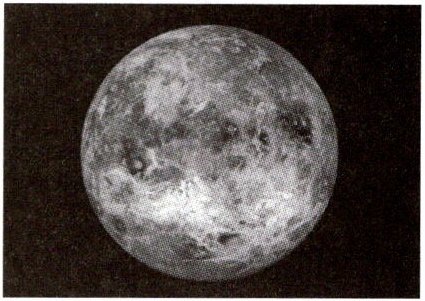
Some scientists believe Venus might have once had oceans on its surface. This would be an important indicator of the planet’s habitability because water is important for the development of life. To test this idea, a team of scientists from the University of Cambridge, in the UK, carefully studied the planet’s atmosphere.
Volcanoes give off gases that come from deep inside a planet. Those gases end up in a planet’s atmosphere, and studying them helps us know where they came from and what’s under the surface. On Earth, which has a lot of water in its interior(内部), volcanic outbreaks give off mostly steam.
The team studied the mixture of the atmosphere on Venus and decided that it had very little water—only 6% at most. These “dry” outbreaks show that the planet’s interior has very little water. That led the scientists to decide that oceans have never appeared on the planet and that it has never been habitable. “Given that it likely never had oceans, it is hard to imagine Venus ever having supported Earth-like life, which needs water,” said Tereza Constantinou, the study’s lead writer.
Several spacecraft have been sent to study Venus, but the planet remains a bit of a mystery. According to Constantinou, scientists will know more in the future, when the DAVINCI spacecraft studies Venus more carefully.
The results of the study and future research could help scientists learn more about the possibility of life on other planets beyond Venus and Earth. “If Venus was never habitable, it’s unlikely that Venus-like planets elsewhere would be habitable or life-friendly,” Constantinou said.
素材来源: The Week Junior
(
A. Because it has more water than Earth.
B. Because it turns around the Sun faster than Earth.
C. Because it has the same surface temperature as Earth.
D. Because it is similar to Earth in size and materials but it’s too hot.
(
A. By watching the color of clouds.
B. By recording the surface temperature.
C. By counting the number of volcanoes.
D. By studying gases from volcanic eruptions.
(
A. are likely to have oceans
B. can’t be homes for life
C. are easier to study than Venus
D. could support life
(
A. ①/②③④/⑤⑥
B. ①/②③/④⑤⑥
C. ①②/③④/⑤⑥
D. ①②③/④/⑤⑥
KEY→P15
范畴:人与自然 主题:宇宙探索 体裁:说明文 难度:★★★★ 建议用时:7分钟 评价:/4
For many years, scientists have argued whether the planet Venus(金星) could have supported life since its formation 4.6 billion years ago. A new study suggests it probably has never been habitable. Venus, which is our closest neighbor, is sometimes called “Earth’s evil twin”. The planets are similar in size and made of the same materials. But Venus is called “evil” because it is the hottest planet in our solar system, with the surface temperature of nearly 932 °F. It also has the most volcanoes of any planet in our solar system and is covered with thick clouds of acid.
Some scientists believe Venus might have once had oceans on its surface. This would be an important indicator of the planet’s habitability because water is important for the development of life. To test this idea, a team of scientists from the University of Cambridge, in the UK, carefully studied the planet’s atmosphere.
Volcanoes give off gases that come from deep inside a planet. Those gases end up in a planet’s atmosphere, and studying them helps us know where they came from and what’s under the surface. On Earth, which has a lot of water in its interior(内部), volcanic outbreaks give off mostly steam.
The team studied the mixture of the atmosphere on Venus and decided that it had very little water—only 6% at most. These “dry” outbreaks show that the planet’s interior has very little water. That led the scientists to decide that oceans have never appeared on the planet and that it has never been habitable. “Given that it likely never had oceans, it is hard to imagine Venus ever having supported Earth-like life, which needs water,” said Tereza Constantinou, the study’s lead writer.
Several spacecraft have been sent to study Venus, but the planet remains a bit of a mystery. According to Constantinou, scientists will know more in the future, when the DAVINCI spacecraft studies Venus more carefully.
The results of the study and future research could help scientists learn more about the possibility of life on other planets beyond Venus and Earth. “If Venus was never habitable, it’s unlikely that Venus-like planets elsewhere would be habitable or life-friendly,” Constantinou said.
素材来源: The Week Junior
(
D
)1. Why is Venus called “Earth’s evil twin”?A. Because it has more water than Earth.
B. Because it turns around the Sun faster than Earth.
C. Because it has the same surface temperature as Earth.
D. Because it is similar to Earth in size and materials but it’s too hot.
(
D
)2. How do scientists study the interior of planets like Venus?A. By watching the color of clouds.
B. By recording the surface temperature.
C. By counting the number of volcanoes.
D. By studying gases from volcanic eruptions.
(
B
)3. Constantinou might agree that Venus-like planets elsewhere .A. are likely to have oceans
B. can’t be homes for life
C. are easier to study than Venus
D. could support life
(
A
)4. Which is the structure of this passage?A. ①/②③④/⑤⑥
B. ①/②③/④⑤⑥
C. ①②/③④/⑤⑥
D. ①②③/④/⑤⑥
答案
B
新的研究表明金星因内部含水量极低,缺乏形成海洋的条件,导致其自诞生起从未具备宜居性,这对探索类似行星的生命可能性具有重要启示。
1. D 推理判断题。由第一段中“The planets are similar...But Venus is called ‘evil’ because it is the hottest planet...”可知,金星之所以被称为“地球的邪恶双胞胎”是因为其大小与构成物质与地球类似,但它很热。
2. D 推理判断题。由第三段中“Volcanoes give off gases...studying them helps us know where they came from and what's under the surface.”可知,通过研究火山爆发产生的气体来研究像金星这样的行星的内部。
3. B 推理判断题。由结尾处“If Venus was never habitable, it's unlikely that Venus-like planets elsewhere would be habitable or life-friendly”可知,此人认为其他类似金星的行星不可能成为生命家园。
4. A 篇章结构题。第一段提出金星或许从未适合生命生存的核心观点,第二、三、四段具体介绍科学家的研究过程、方法及金星不存在生命的研究结论,第五、六段说明金星目前的探测现状、未来研究计划以及该研究对探索其他行星生命存在可能性的意义。
新的研究表明金星因内部含水量极低,缺乏形成海洋的条件,导致其自诞生起从未具备宜居性,这对探索类似行星的生命可能性具有重要启示。
1. D 推理判断题。由第一段中“The planets are similar...But Venus is called ‘evil’ because it is the hottest planet...”可知,金星之所以被称为“地球的邪恶双胞胎”是因为其大小与构成物质与地球类似,但它很热。
2. D 推理判断题。由第三段中“Volcanoes give off gases...studying them helps us know where they came from and what's under the surface.”可知,通过研究火山爆发产生的气体来研究像金星这样的行星的内部。
3. B 推理判断题。由结尾处“If Venus was never habitable, it's unlikely that Venus-like planets elsewhere would be habitable or life-friendly”可知,此人认为其他类似金星的行星不可能成为生命家园。
4. A 篇章结构题。第一段提出金星或许从未适合生命生存的核心观点,第二、三、四段具体介绍科学家的研究过程、方法及金星不存在生命的研究结论,第五、六段说明金星目前的探测现状、未来研究计划以及该研究对探索其他行星生命存在可能性的意义。
