

 登录
登录
五、阅读理解。

[2026 泉州模拟改编]In small villages, people often say hello to their neighbours. But in cities, many people don't greet their neighbours, even when they are standing in line at a supermarket. A study shows that greeting neighbours, especially up to six people a day, is really good for you.
The study found that greeting others can make you happy. The magic number is six. When you greet up to six people, your happiness score(幸福指数) goes up. After that, the score shows no further rise(进一步增长). The study tested(测试) people's social happiness, physical happiness, community happiness and more. People who greeted six neighbours had a higher happiness score. But those who didn't greet anyone had a lower(更低的) happiness score.
Saying hello is not only about social happiness, but it also improves your physical and community happiness.
The leader of the study said, "You don't have to know the person well. Just stop and talk to him. The more people you greet, the more chances you have to start a conversation."
1.(创新考法·行文方式)How does the writer start the topic?
A. By telling a story.
B. By showing study results.
C. By asking a question.
D. By introducing different acts.
2.(创新考法·图片理解)Which of the following shows the change in the happiness score after people greet neighbours?
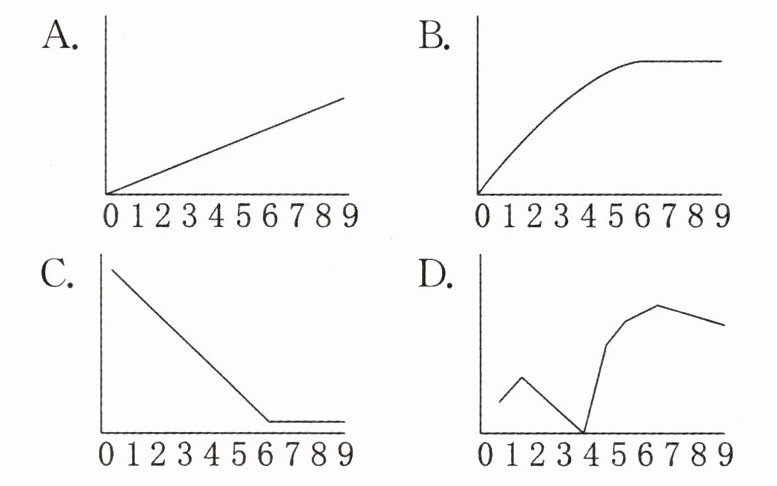
3.(创新考法·句子还原)Which sentence can we put in "▲" in Paragraph 3?
A. That's because all of these are connected(有关联的).
B. It's best to greet your neighbours in the morning.
C. Different neighbours can greet you in different ways.
D. The reason is that they have nothing to do with each other.
4. What is the main idea of the text?
A. The differences between village life and city life.
B. The importance of knowing neighbours well in cities.
C. The good points of greeting neighbours in our daily life.
D. The useful way to help people get to know neighbours.
[2026 泉州模拟改编]In small villages, people often say hello to their neighbours. But in cities, many people don't greet their neighbours, even when they are standing in line at a supermarket. A study shows that greeting neighbours, especially up to six people a day, is really good for you.
The study found that greeting others can make you happy. The magic number is six. When you greet up to six people, your happiness score(幸福指数) goes up. After that, the score shows no further rise(进一步增长). The study tested(测试) people's social happiness, physical happiness, community happiness and more. People who greeted six neighbours had a higher happiness score. But those who didn't greet anyone had a lower(更低的) happiness score.
Saying hello is not only about social happiness, but it also improves your physical and community happiness.
A
▲ If you feel your community is safe, it's more possible for you to talk to people. Walking around your community can make you feel better physically.The leader of the study said, "You don't have to know the person well. Just stop and talk to him. The more people you greet, the more chances you have to start a conversation."
1.(创新考法·行文方式)How does the writer start the topic?
A. By telling a story.
B. By showing study results.
C. By asking a question.
D. By introducing different acts.
2.(创新考法·图片理解)Which of the following shows the change in the happiness score after people greet neighbours?
3.(创新考法·句子还原)Which sentence can we put in "▲" in Paragraph 3?
A. That's because all of these are connected(有关联的).
B. It's best to greet your neighbours in the morning.
C. Different neighbours can greet you in different ways.
D. The reason is that they have nothing to do with each other.
4. What is the main idea of the text?
A. The differences between village life and city life.
B. The importance of knowing neighbours well in cities.
C. The good points of greeting neighbours in our daily life.
D. The useful way to help people get to know neighbours.
答案
五、1. D 行文方式题。根据第一段中"In small villages, people often say hello to their neighbours. But in cities, many people don't greet their neighbours ..."可知,作者通过对比乡村和城市中人们是否问候邻居的不同行为引入话题。
2. B 图片理解题。根据第二段中"When you greet up to six people, your happiness score goes up. After that, the score shows no further rise."可知,幸福指数在问候六人后达到峰值,而后没有进一步增长,图表应呈现先上升后平稳的趋势。
3. A 句子还原题。根据上文"Saying hello is not only ... also improves your physical and community happiness."及下文"If you feel your community is safe, it's more possible for you to talk to people. Walking around your community can make you feel better physically."可知,上文提到"日常问候能提升社交、身体、社区幸福感",下文解释社区安全感与交流、社区散步与身体状态的关系。选项 A"因为这些(幸福感)都是有关联的。"能衔接前后逻辑。
方法归纳
句子还原解题方法
1. 核心只有一句话:看前一句,看后一句,找"衔接点"。
2. 3个最强判断依据:代词衔接;逻辑词衔接;重复词/同义替换。
4. C 主旨大意题。全文围绕问候邻居对提升幸福感的益处展开,包括社会、身体和社区层面。
2. B 图片理解题。根据第二段中"When you greet up to six people, your happiness score goes up. After that, the score shows no further rise."可知,幸福指数在问候六人后达到峰值,而后没有进一步增长,图表应呈现先上升后平稳的趋势。
3. A 句子还原题。根据上文"Saying hello is not only ... also improves your physical and community happiness."及下文"If you feel your community is safe, it's more possible for you to talk to people. Walking around your community can make you feel better physically."可知,上文提到"日常问候能提升社交、身体、社区幸福感",下文解释社区安全感与交流、社区散步与身体状态的关系。选项 A"因为这些(幸福感)都是有关联的。"能衔接前后逻辑。
方法归纳
句子还原解题方法
1. 核心只有一句话:看前一句,看后一句,找"衔接点"。
2. 3个最强判断依据:代词衔接;逻辑词衔接;重复词/同义替换。
4. C 主旨大意题。全文围绕问候邻居对提升幸福感的益处展开,包括社会、身体和社区层面。
解析
【分析】
1. 第1题(行文方式题):需定位文章开头,分析作者引入话题的方式,对比乡村与城市人们问候邻居的不同行为,匹配对应选项。
2. 第2题(图片理解题):需依据文章中幸福指数的变化规律(问候6人时上升,之后不再增长),判断符合该趋势的图片。
3. 第3题(句子还原题):需结合空格前后内容的逻辑关联,前文提及问候能提升三类幸福感,后文解释社区安全、交流、身体状态的关系,寻找衔接句。
4. 第4题(主旨大意题):需梳理全文核心内容,围绕问候邻居对提升幸福感的益处展开,确定文章主旨。
【解析】
1. 第1题:根据第一段"In small villages, people often say hello to their neighbours. But in cities, many people don't greet their neighbours..."可知,作者通过对比乡村和城市中人们问候邻居的不同行为引入话题,故选D。
2. 第2题:根据第二段"When you greet up to six people, your happiness score goes up. After that, the score shows no further rise."可知,幸福指数在问候6人后上升至峰值,之后保持平稳,符合该趋势的图片为B。
3. 第3题:前文提到问候能提升社交、身体、社区幸福感,后文解释社区安全与交流、散步与身体的关联,说明三者相关,选项A"因为这些(幸福感)都是有关联的"能衔接前后逻辑,故选A。
4. 第4题:全文围绕问候邻居对提升幸福感的益处展开,涵盖社交、身体、社区层面,核心是问候邻居的好处,故选C。
【答案】
五、1.D 2.B 3.A 4.C
【知识点】
英语阅读理解解题方法、英语阅读理解主旨大意、英语阅读理解句子还原
【点评】
本题为英语阅读理解题,涵盖行文方式、图片理解、句子还原、主旨大意多种题型,考查学生对文章细节、逻辑衔接、主旨的理解能力,需学生掌握不同题型的解题技巧,如行文方式关注开头引入方式,句子还原找准前后逻辑衔接点,主旨梳理全文核心内容。
【难度系数】
0.7
1. 第1题(行文方式题):需定位文章开头,分析作者引入话题的方式,对比乡村与城市人们问候邻居的不同行为,匹配对应选项。
2. 第2题(图片理解题):需依据文章中幸福指数的变化规律(问候6人时上升,之后不再增长),判断符合该趋势的图片。
3. 第3题(句子还原题):需结合空格前后内容的逻辑关联,前文提及问候能提升三类幸福感,后文解释社区安全、交流、身体状态的关系,寻找衔接句。
4. 第4题(主旨大意题):需梳理全文核心内容,围绕问候邻居对提升幸福感的益处展开,确定文章主旨。
【解析】
1. 第1题:根据第一段"In small villages, people often say hello to their neighbours. But in cities, many people don't greet their neighbours..."可知,作者通过对比乡村和城市中人们问候邻居的不同行为引入话题,故选D。
2. 第2题:根据第二段"When you greet up to six people, your happiness score goes up. After that, the score shows no further rise."可知,幸福指数在问候6人后上升至峰值,之后保持平稳,符合该趋势的图片为B。
3. 第3题:前文提到问候能提升社交、身体、社区幸福感,后文解释社区安全与交流、散步与身体的关联,说明三者相关,选项A"因为这些(幸福感)都是有关联的"能衔接前后逻辑,故选A。
4. 第4题:全文围绕问候邻居对提升幸福感的益处展开,涵盖社交、身体、社区层面,核心是问候邻居的好处,故选C。
【答案】
五、1.D 2.B 3.A 4.C
【知识点】
英语阅读理解解题方法、英语阅读理解主旨大意、英语阅读理解句子还原
【点评】
本题为英语阅读理解题,涵盖行文方式、图片理解、句子还原、主旨大意多种题型,考查学生对文章细节、逻辑衔接、主旨的理解能力,需学生掌握不同题型的解题技巧,如行文方式关注开头引入方式,句子还原找准前后逻辑衔接点,主旨梳理全文核心内容。
【难度系数】
0.7
