

 登录
阅读理解 形状与含义
素养:思维品质 难度:中 用时:8分钟
[2025眉山中考改编]①Can you see circles, squares and triangles(三角形) in your daily lives? Have you thought about their meanings in films? Much like colours, different shapes stand for different things.
②Circles stand for things that are soft and natural. The round shape is connected with things in nature, like the sun, flowers, raindrops and so on. All these things make us feel happy and warm. This is why so many cartoon characters' bodies—heroes, kids, good people—are round in shape.
③Squares show things that aren't natural and things that are boring or old-fashioned. In Up(《飞屋环游记》), Carl, an elderly man, has a square face and wears square glasses, while Russell, a boy with a round face, always wears round medals because he's lovely and full of energy. These shapes show what the characters are like.
④The angriest shape is the triangle. Every kid who draws a monster with sharp teeth draws a row of triangles, don't they? That's because the shape stands for fear, distrust and doubt in some way. Bad guys in cartoons are always drawn with plenty of points and triangles. Triangles are stable and don't fall down easily. So do bad people.
⑤In other kinds of films, different shapes are also used for the same purpose. Next time you see a film, try to find the hidden shapes.
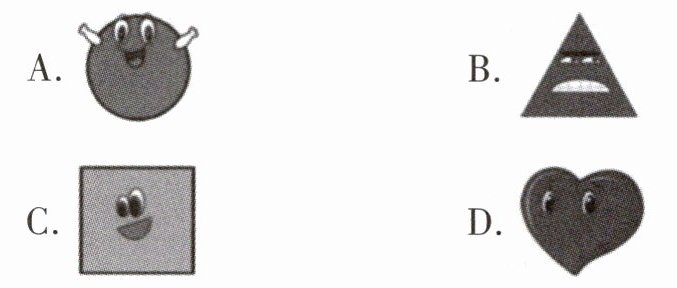
1. ▶新考法·图文转换题 Calabash(葫芦) brothers always help others. What can you choose to draw them according to the text?
2. What's Carl like?
A. Smart and lovely. B. Old and boring.
C. Strong and brave. D. Heavy and slow.
3. What does the underlined word "stable" in Paragraph 4 most probably mean?
A. Easy to move. B. Difficult to reach.
C. Unable to touch. D. Unlikely to move.
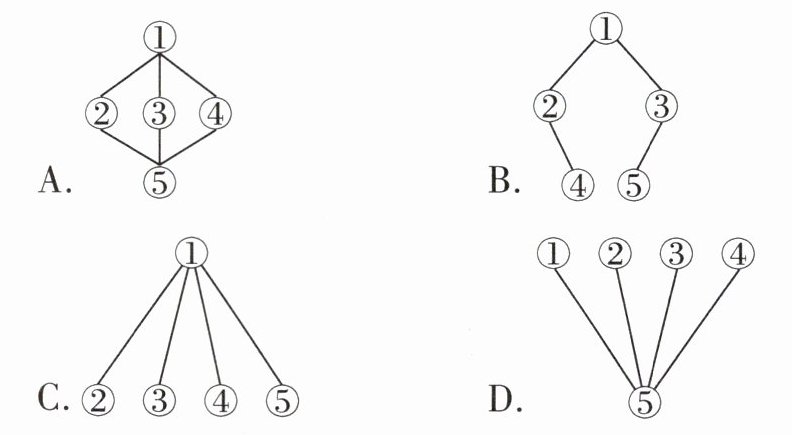
4. ▶新考法·篇章结构题 Which of the following shows the structure of the text?
5. What is the text mainly about?
A. Shapes in our daily lives.
B. Different characters in films.
C. Meanings of different shapes.
D. Ways of drawing cartoon characters.
素养:思维品质 难度:中 用时:8分钟
[2025眉山中考改编]①Can you see circles, squares and triangles(三角形) in your daily lives? Have you thought about their meanings in films? Much like colours, different shapes stand for different things.
②Circles stand for things that are soft and natural. The round shape is connected with things in nature, like the sun, flowers, raindrops and so on. All these things make us feel happy and warm. This is why so many cartoon characters' bodies—heroes, kids, good people—are round in shape.
③Squares show things that aren't natural and things that are boring or old-fashioned. In Up(《飞屋环游记》), Carl, an elderly man, has a square face and wears square glasses, while Russell, a boy with a round face, always wears round medals because he's lovely and full of energy. These shapes show what the characters are like.
④The angriest shape is the triangle. Every kid who draws a monster with sharp teeth draws a row of triangles, don't they? That's because the shape stands for fear, distrust and doubt in some way. Bad guys in cartoons are always drawn with plenty of points and triangles. Triangles are stable and don't fall down easily. So do bad people.
⑤In other kinds of films, different shapes are also used for the same purpose. Next time you see a film, try to find the hidden shapes.
1. ▶新考法·图文转换题 Calabash(葫芦) brothers always help others. What can you choose to draw them according to the text?
2. What's Carl like?
A. Smart and lovely. B. Old and boring.
C. Strong and brave. D. Heavy and slow.
3. What does the underlined word "stable" in Paragraph 4 most probably mean?
A. Easy to move. B. Difficult to reach.
C. Unable to touch. D. Unlikely to move.
4. ▶新考法·篇章结构题 Which of the following shows the structure of the text?
5. What is the text mainly about?
A. Shapes in our daily lives.
B. Different characters in films.
C. Meanings of different shapes.
D. Ways of drawing cartoon characters.
答案
【解题导语】 本文主要介绍了不同形状代表的含义。
[图1 第1题图]
1. A 图文转换题。根据第二段中的“This is why so many cartoon characters' bodies—heroes, kids, good people—are round in shape”可知,葫芦兄弟总是帮助他人,可以选择用圆形画他们。
2. B 细节理解题。根据第三段中的“Squares show things that aren't natural and things that are boring or old-fashioned”及“Carl, an elderly man, has a square face and wears square glasses”可知,B项符合题意。
3. D 词义猜测题。根据第四段中的“and don't fall down easily”可知,三角形不容易倒,故可推知画线词意为“稳固的”,故选 D。
4. A 篇章结构题。
[图2 第2题图]
结合段意梳理的内容可知,本文是“总—分—总”结构。故选 A。
5. C 主旨大意题。通读全文并根据第一段中的“Much like colours, different shapes stand for different things”可知,本文主要介绍了不同形状代表的含义。
解析
【分析】
本题是一篇关于电影中不同形状象征含义的英语阅读理解题,包含图文转换、细节理解、词义猜测、篇章结构、主旨大意五种题型。解题思路如下:1. 图文转换题:先明确题干中角色的特点,再回原文查找对应形状的象征意义,匹配绘制方式;2. 细节理解题:定位题干关键词(如人名、特征词),找到原文对应语句,对比选项得出答案;3. 词义猜测题:结合画线词前后的语境提示(如后文的解释)推断词义;4. 篇章结构题:梳理各段落核心内容,判断文章的结构类型(总-分-总、总-分等);5. 主旨大意题:通读全文,抓住中心句(通常在首段或尾段),概括文章核心主题。
【解析】
1. 第1题:葫芦兄弟是乐于助人的正面角色,根据原文第二段“so many cartoon characters' bodies—heroes, kids, good people—are round in shape”,圆形象征善良的正面角色,因此选择圆形绘制,答案为A。
2. 第2题:定位原文第三段,“Squares show things that aren't natural and things that are boring or old-fashioned”及“Carl, an elderly man, has a square face...”,可知Carl年老且老派/无聊,对应选项B。
3. 第3题:画线词“stable”后接“don't fall down easily”(不容易倒),可推断该词意为“稳固的”,对应选项D。
4. 第4题:文章第一段总起说明不同形状有不同含义;第二至四段分别介绍圆形、正方形、三角形的象征意义;第五段总结建议观影时留意隐藏的形状,属于“总-分-总”结构,对应选项A。
5. 第5题:通读全文,首段“different shapes stand for different things”点明主旨,全文围绕不同形状的含义展开,对应选项C。
【答案】1.A 2.B 3.D 4.A 5.C
【知识点】英语阅读理解、词义猜测、主旨大意
【点评】本题为中考改编题,融入新考法(图文转换、篇章结构),全面考查学生对英语阅读理解各类题型的解题能力,需要学生具备快速定位原文、结合语境推断词义、梳理文章结构、概括主旨的能力,是中等难度的典型中考题型。
【难度系数】0.5
