

 登录
四、阅读理解。
Most people who move to a foreign country may experience a period of time when they feel very homesick and have a lot of stress. This feeling is often called "culture shock". It is important to understand it and learn how to deal with it if you want to adapt successfully to your new home's culture.
Generally speaking, there are four stages that you will experience after you move to a foreign country. The first stage is usually referred to as the "excitement" stage. When you arrive in a new country, you'll be interested in the new culture; everything will seem exciting and everyone will seem friendly.
But it won't be long before you move from the "excitement" stage to the second stage. The excitement you felt before changes to stress. It seems that everything is difficult. The language is hard to learn, friends are difficult to make, and even simple things like shopping have become a challenge. It is at this "stress" stage that you are likely to feel worried and homesick. This is the stage which is referred to as "culture shock".
However, culture shock doesn't last for very long. If you are one of those who manage to overcome it, you'll move to the "recovery" stage. At this stage, you start to understand and accept the way things are done and the way people behave in your new environment.
The last stage is the "home" stage. This is the stage when you start to feel at home in the new culture. You start to learn from your new home and to like certain aspects of the new culture better than those of your own culture.
Culture shock is normal. Everyone in a new situation will go through some form of it. Continue to be brave! And overcoming culture shock will be a piece of cake.
1. Among the four stages, which stage can probably explain how "culture shock" happens?
A. The excitement stage.
B. The stress stage.
C. The recovery stage.
D. The home stage.
2. 新考法 事件排序 Jane went to study in Germany and was living abroad for the first time. Which is the correct order of what she might have gone through?
① Jane couldn't understand German very well in class.
② After half a year's hard work, Jane got rid of her language problems.
③ Jane found the landmarks of Germany and the university campus were both amazing.
④ Jane is now more independent in her learning and loves to spend time with her German friends.
A. ①②③④
B. ②④③①
C. ③①②④
D. ③①④②
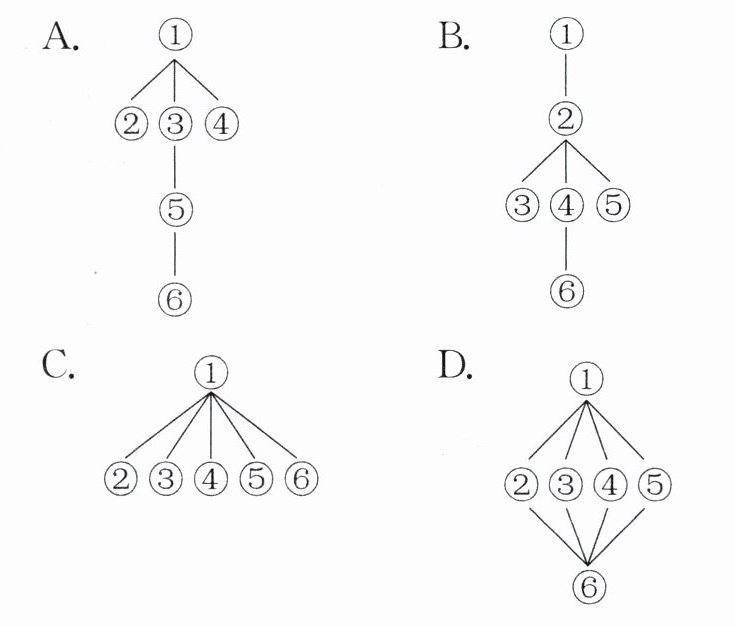
3. 新考法 篇章结构 Which of the following best shows the structure of the passage?
Most people who move to a foreign country may experience a period of time when they feel very homesick and have a lot of stress. This feeling is often called "culture shock". It is important to understand it and learn how to deal with it if you want to adapt successfully to your new home's culture.
Generally speaking, there are four stages that you will experience after you move to a foreign country. The first stage is usually referred to as the "excitement" stage. When you arrive in a new country, you'll be interested in the new culture; everything will seem exciting and everyone will seem friendly.
But it won't be long before you move from the "excitement" stage to the second stage. The excitement you felt before changes to stress. It seems that everything is difficult. The language is hard to learn, friends are difficult to make, and even simple things like shopping have become a challenge. It is at this "stress" stage that you are likely to feel worried and homesick. This is the stage which is referred to as "culture shock".
However, culture shock doesn't last for very long. If you are one of those who manage to overcome it, you'll move to the "recovery" stage. At this stage, you start to understand and accept the way things are done and the way people behave in your new environment.
The last stage is the "home" stage. This is the stage when you start to feel at home in the new culture. You start to learn from your new home and to like certain aspects of the new culture better than those of your own culture.
Culture shock is normal. Everyone in a new situation will go through some form of it. Continue to be brave! And overcoming culture shock will be a piece of cake.
1. Among the four stages, which stage can probably explain how "culture shock" happens?
A. The excitement stage.
B. The stress stage.
C. The recovery stage.
D. The home stage.
2. 新考法 事件排序 Jane went to study in Germany and was living abroad for the first time. Which is the correct order of what she might have gone through?
① Jane couldn't understand German very well in class.
② After half a year's hard work, Jane got rid of her language problems.
③ Jane found the landmarks of Germany and the university campus were both amazing.
④ Jane is now more independent in her learning and loves to spend time with her German friends.
A. ①②③④
B. ②④③①
C. ③①②④
D. ③①④②
3. 新考法 篇章结构 Which of the following best shows the structure of the passage?
答案
1. B 【解析】根据第三段中“It is at this ‘stress’ stage that you are likely to feel worried and homesick. This is the stage which is referred to as ‘culture shock’.”可知,在压力阶段,原来的兴奋转化为压力,人们产生焦虑和思乡情绪,这个阶段就是人们所说的“文化冲击”,即这个阶段解释了“文化冲击”的产生过程。
2. C
3. D 【解析】根据文章内容可知,第一段解释了“文化冲击”这一现象;第二段至第五段介绍“文化冲击”的四个阶段;第六段总结全文,因此 D 项符合本文结构。
2. C
3. D 【解析】根据文章内容可知,第一段解释了“文化冲击”这一现象;第二段至第五段介绍“文化冲击”的四个阶段;第六段总结全文,因此 D 项符合本文结构。
