

 登录
登录
(
A.older
B.the older
C.oldest
D.the oldest
D
)3.China is one of countries in the world. We are all proud of it.A.older
B.the older
C.oldest
D.the oldest
答案
3. D 【点拨】根据句中的“one of”可知,要用“one of the +形容词最高级+可数名词复数”的结构。故选 D。
(
A.Chinese opera
B.Chinese calligraphy
C.Chinese paper-cutting
D.Chinese kung fu
D
)4.In the 1980s, the film The Shaolin Temple (《少林寺》) made many more young people crazy about overnight.A.Chinese opera
B.Chinese calligraphy
C.Chinese paper-cutting
D.Chinese kung fu
答案
4. D 【点拨】根据常识可知是对中国功夫痴迷。故选 D。
(
—!
A.That's right
B.I'm fine
C.You're welcome
D.Great idea
C
)5.—Thanks for inviting me to the Garden Flower Expo.—!
A.That's right
B.I'm fine
C.You're welcome
D.Great idea
答案
5. C 【点拨】That's right 没错,就是这样;I'm fine 我很好;You're welcome 不客气,不用谢;Great idea 好主意。根据语境可知选 C。
四、阅读短文,在文中空白处填入1个适当的单词,或用括号内所给单词的正确形式填空。
Xi'an is the capital city of Shaanxi Province. It lies in 1 north of China. The city's early history is often connected with Liu Bang, who started the Han dynasty and made Xi'an his capital. He 2 (give) it the name Chang'an. During the Tang dynasty, Xi'an achieved its great importance. Japan followed Xi'an's example in 3 (build) its ancient capital.
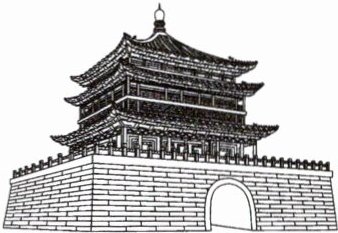
Many things from ancient times can still be found in Xi'an today. The city wall—one of the few city walls still left in China—is a good example. It 4 (go) around the city and is an important cultural site (遗址). In central Xi'an, there is the Bell Tower—the 5 (large) bell tower remaining in China. The bell was first designed as an emergency alarm (警钟) to warn of danger, 6 it was very often used to tell people the time.
While Xi'an is a city 7 a long history, it is also a part of the modern world. It is best 8 (know) as a centre for software (软件) research, development and services. Historically, Xi'an has always been a city of art, industry and business that have placed it far in front of many other 9 (city).
Xi'an is a city always remaking 10 (it) and looking forward, all the while keeping the best of the past.
1.
2.
3.
4.
5.
6.
7.
8.
9.
10.
Xi'an is the capital city of Shaanxi Province. It lies in 1 north of China. The city's early history is often connected with Liu Bang, who started the Han dynasty and made Xi'an his capital. He 2 (give) it the name Chang'an. During the Tang dynasty, Xi'an achieved its great importance. Japan followed Xi'an's example in 3 (build) its ancient capital.
Many things from ancient times can still be found in Xi'an today. The city wall—one of the few city walls still left in China—is a good example. It 4 (go) around the city and is an important cultural site (遗址). In central Xi'an, there is the Bell Tower—the 5 (large) bell tower remaining in China. The bell was first designed as an emergency alarm (警钟) to warn of danger, 6 it was very often used to tell people the time.
While Xi'an is a city 7 a long history, it is also a part of the modern world. It is best 8 (know) as a centre for software (软件) research, development and services. Historically, Xi'an has always been a city of art, industry and business that have placed it far in front of many other 9 (city).
Xi'an is a city always remaking 10 (it) and looking forward, all the while keeping the best of the past.
1.
the
2.
gave
3.
building
4.
goes
5.
largest
6.
but
7.
with
8.
known
9.
cities
10.
itself
答案
1. the 2. gave 3. building 4. goes 5. largest 6. but 7. with 8. known 9. cities 10. itself
五、完形填空。(2025·江苏扬州)
It was a summer. After a 33-kilometre cycling, my cousin Gabriel and I were 1. We planned to get lunch and then 2 back to Valence, where I was spending my holiday with Gabriel's family.
We bought a baguette. As we ate, I noticed a girl in a queue smiling at us.
I met her again when she sat on a bench, enjoying her bread in front of a riverboat named Voyageur. Soon she boarded the boat. Then I noticed a colourful handbag on the 3. The girl had left it!
She was on the upper deck (甲板)! I held up the bag and 4 it to get her attention. When she noticed the bag, she opened her mouth 5. But her face fell—the boat started to pull away from the dock (码头).
"We can 6 it! The boat's next stop is Valence!" Gabriel came up.
"Great! But do you think we can 7?" I asked.
Gabriel laughed. "We're going to find out!"
We set off. It was a race now: 8 against the boat. If the boat beat us to Valence, we might 9 have the chance to give back the bag.
Pedalling hard, we quickly caught up to Voyageur. When the boat disappeared 10 us, we felt confident enough to relax our pace.
Then it happened: Pfft! A flat tyre (轮胎漏气)! My heart sank.
We had to stop and took out tools when Voyageur was coming near. I saw the girl again. She noticed our 11 and shook her head sadly.
After a quick 12, we were back on our way. The boat pulled ahead. We watched 13 as the boat disappeared around a bend.
Finally we arrived, 14 Voyageur had docked. We failed!
Gabriel suddenly shouted, "I see her!"
The girl was strolling towards us! "You followed my boat!" she smiled.
"No. Your boat followed us," I 15. "Until I got a flat tyre, that is." I handed her the bag.
(
B. lazy
C. relaxed
D. bored
(
B. drive
C. ride
D. fly
(
B. boat
C. bike
D. bread
(
B. opened
C. dropped
D. waved
(
B. in surprise
C. in silence
D. in sadness
(
B. borrow
C. sell
D. use
(
B. catch up
C. go out
D. get away
(
B. him
C. them
D. us
(
B. sometimes
C. never
D. always
(
B. before
C. beside
D. opposite
(
B. trouble
C. risk
D. success
(
B. riding
C. fixing
D. swimming
(
B. angrily
C. helplessly
D. excitedly
(
B. so
C. or
D. but
(
B. joked
C. complained
D. nodded
It was a summer. After a 33-kilometre cycling, my cousin Gabriel and I were 1. We planned to get lunch and then 2 back to Valence, where I was spending my holiday with Gabriel's family.
We bought a baguette. As we ate, I noticed a girl in a queue smiling at us.
I met her again when she sat on a bench, enjoying her bread in front of a riverboat named Voyageur. Soon she boarded the boat. Then I noticed a colourful handbag on the 3. The girl had left it!
She was on the upper deck (甲板)! I held up the bag and 4 it to get her attention. When she noticed the bag, she opened her mouth 5. But her face fell—the boat started to pull away from the dock (码头).
"We can 6 it! The boat's next stop is Valence!" Gabriel came up.
"Great! But do you think we can 7?" I asked.
Gabriel laughed. "We're going to find out!"
We set off. It was a race now: 8 against the boat. If the boat beat us to Valence, we might 9 have the chance to give back the bag.
Pedalling hard, we quickly caught up to Voyageur. When the boat disappeared 10 us, we felt confident enough to relax our pace.
Then it happened: Pfft! A flat tyre (轮胎漏气)! My heart sank.
We had to stop and took out tools when Voyageur was coming near. I saw the girl again. She noticed our 11 and shook her head sadly.
After a quick 12, we were back on our way. The boat pulled ahead. We watched 13 as the boat disappeared around a bend.
Finally we arrived, 14 Voyageur had docked. We failed!
Gabriel suddenly shouted, "I see her!"
The girl was strolling towards us! "You followed my boat!" she smiled.
"No. Your boat followed us," I 15. "Until I got a flat tyre, that is." I handed her the bag.
(
A
)1. A. hungryB. lazy
C. relaxed
D. bored
(
C
)2. A. walkB. drive
C. ride
D. fly
(
A
)3. A. benchB. boat
C. bike
D. bread
(
D
)4. A. threwB. opened
C. dropped
D. waved
(
B
)5. A. in fearB. in surprise
C. in silence
D. in sadness
(
A
)6. A. returnB. borrow
C. sell
D. use
(
B
)7. A. break downB. catch up
C. go out
D. get away
(
D
)8. A. herB. him
C. them
D. us
(
C
)9. A. usuallyB. sometimes
C. never
D. always
(
A
)10. A. behindB. before
C. beside
D. opposite
(
B
)11. A. effortB. trouble
C. risk
D. success
(
C
)12. A. sleepingB. riding
C. fixing
D. swimming
(
C
)13. A. happilyB. angrily
C. helplessly
D. excitedly
(
D
)14. A. andB. so
C. or
D. but
(
B
)15. A. refusedB. joked
C. complained
D. nodded
答案
1. A 【点拨】hungry 饥饿的;lazy 懒惰的;relaxed 放松的;bored 无聊的。根据“We planned to get lunch”可知,“我们”饿了。故选 A。
2. C 【点拨】walk 步行;drive 开车;ride 骑车;fly 飞行。根据“33 - kilometre cycling”可知,此处指骑车返回。故选 C。
3. A 【点拨】bench 长椅;boat 船;bike 自行车;bread 面包。根据“she sat on a bench”可知,女孩坐在长椅上,离开后包落在长椅上了。故选 A。
4. D 【点拨】throw 扔;open 打开;drop 掉下;wave 挥动(手中之物)。根据语境可知,为了让甲板上的女孩发现包,应是挥舞包。故选 D。
5. B 【点拨】in fear 惊恐地;in surprise 惊讶地;in silence 默默地;in sadness 处于悲伤中。根据“When she noticed the bag, she opened her mouth”可知,发现自己落下的包时,应是感到惊讶。故选 B。
6. A 【点拨】return 归还;borrow 借;sell 卖;use 使用。根据“give back the bag”可知,此处表示可以归还包。故选 A。
7. B 【点拨】break down 出故障;catch up 追上;go out 出去;get away 离开。根据“caught up to Voyageur”可知,此处询问能否追上船。故选 B。
8. D 【点拨】her 她;him 他;them 他们;us 我们。此处指“我们”和船的比赛。故选 D。
9. C 【点拨】usually 通常;sometimes 有时;never 永不;always 总是。根据“If the boat beat us to Valence”可知,如果船比“我们”先到,“我们”应是再也没有机会归还包。故选 C。
10. A 【点拨】behind 在……后面;before 在……之前;beside 在……旁边;opposite 在……对面。根据“we felt confident enough to relax our pace”可知,船应是从“我们”身后消失,说明此时“我们”领先于船。故选 A。
11. B 【点拨】effort 努力;trouble 麻烦;risk 风险;success 成功。根据“Then it happened: Pffft! A flat tyre(轮胎漏气)!”和“shook her head sadly”可知,女孩看到“我们”遇到的麻烦后悲伤地摇头。故选 B。
12. C 【点拨】sleeping 睡觉;riding 骑行;fixing 修理;swimming 游泳。根据“Then it happened: Pffft! A flat tyre(轮胎漏气)!”和“we were back on our way”可知,轮胎漏气后需要修理才能重新上路。故选 C。
13. C 【点拨】happily 开心地;angrily 愤怒地;helplessly 无助地;excitedly 兴奋地。根据语境可知,“我们”未能追上船,应是感到无助。故选 C。
14. D 【点拨】and 并且;so 所以;or 或者;but 但是。前后句为转折关系。故选 D。
15. B 【点拨】refuse 拒绝;joke 开玩笑;complain 抱怨;nod 点头。根据“Until I got a flat tyre, that is.”可知,此处是在开玩笑。故选 B。
2. C 【点拨】walk 步行;drive 开车;ride 骑车;fly 飞行。根据“33 - kilometre cycling”可知,此处指骑车返回。故选 C。
3. A 【点拨】bench 长椅;boat 船;bike 自行车;bread 面包。根据“she sat on a bench”可知,女孩坐在长椅上,离开后包落在长椅上了。故选 A。
4. D 【点拨】throw 扔;open 打开;drop 掉下;wave 挥动(手中之物)。根据语境可知,为了让甲板上的女孩发现包,应是挥舞包。故选 D。
5. B 【点拨】in fear 惊恐地;in surprise 惊讶地;in silence 默默地;in sadness 处于悲伤中。根据“When she noticed the bag, she opened her mouth”可知,发现自己落下的包时,应是感到惊讶。故选 B。
6. A 【点拨】return 归还;borrow 借;sell 卖;use 使用。根据“give back the bag”可知,此处表示可以归还包。故选 A。
7. B 【点拨】break down 出故障;catch up 追上;go out 出去;get away 离开。根据“caught up to Voyageur”可知,此处询问能否追上船。故选 B。
8. D 【点拨】her 她;him 他;them 他们;us 我们。此处指“我们”和船的比赛。故选 D。
9. C 【点拨】usually 通常;sometimes 有时;never 永不;always 总是。根据“If the boat beat us to Valence”可知,如果船比“我们”先到,“我们”应是再也没有机会归还包。故选 C。
10. A 【点拨】behind 在……后面;before 在……之前;beside 在……旁边;opposite 在……对面。根据“we felt confident enough to relax our pace”可知,船应是从“我们”身后消失,说明此时“我们”领先于船。故选 A。
11. B 【点拨】effort 努力;trouble 麻烦;risk 风险;success 成功。根据“Then it happened: Pffft! A flat tyre(轮胎漏气)!”和“shook her head sadly”可知,女孩看到“我们”遇到的麻烦后悲伤地摇头。故选 B。
12. C 【点拨】sleeping 睡觉;riding 骑行;fixing 修理;swimming 游泳。根据“Then it happened: Pffft! A flat tyre(轮胎漏气)!”和“we were back on our way”可知,轮胎漏气后需要修理才能重新上路。故选 C。
13. C 【点拨】happily 开心地;angrily 愤怒地;helplessly 无助地;excitedly 兴奋地。根据语境可知,“我们”未能追上船,应是感到无助。故选 C。
14. D 【点拨】and 并且;so 所以;or 或者;but 但是。前后句为转折关系。故选 D。
15. B 【点拨】refuse 拒绝;joke 开玩笑;complain 抱怨;nod 点头。根据“Until I got a flat tyre, that is.”可知,此处是在开玩笑。故选 B。
