

 登录
登录
构成“May I...?”,意为“我可以……吗?”,语气比can更委婉。如:
It may rain today. 今天可能会下雨。 May I come in? 我可以进来吗?
(2)没有人称变化:I/you/he/she/we/they后面都用may,不加s。否定形式在其后加not。如:
You may not play here. 你不可以在这里玩。
练一练
从括号中选择合适的词填空。
① You may (fall/falling)down if you run on the stairs.
② He is ill today, so he (may/may not)come to school.
③ (May/Must)I sit here?
2 祈使句和感叹句的用法
(1)祈使句:用来表示命令、请求、提醒、劝告的句子,通常以动词原形开头。如:
Please be quiet. 请保持安静。 Don't push others. 不要推别人。
(2)感叹句:用来表达强烈感情(惊讶、赞叹、高兴、生气)的句子,句末用感叹号。如:
Look out! 小心! How beautiful! 真漂亮!
练一练
看图并根据提示,写句子。
①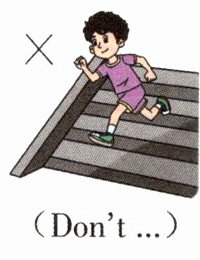
②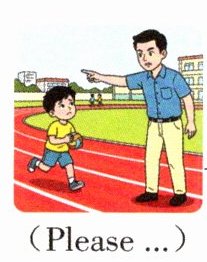
③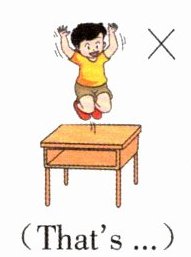
It may rain today. 今天可能会下雨。 May I come in? 我可以进来吗?
(2)没有人称变化:I/you/he/she/we/they后面都用may,不加s。否定形式在其后加not。如:
You may not play here. 你不可以在这里玩。
练一练
从括号中选择合适的词填空。
① You may (fall/falling)down if you run on the stairs.
② He is ill today, so he (may/may not)come to school.
③ (May/Must)I sit here?
2 祈使句和感叹句的用法
(1)祈使句:用来表示命令、请求、提醒、劝告的句子,通常以动词原形开头。如:
Please be quiet. 请保持安静。 Don't push others. 不要推别人。
(2)感叹句:用来表达强烈感情(惊讶、赞叹、高兴、生气)的句子,句末用感叹号。如:
Look out! 小心! How beautiful! 真漂亮!
练一练
看图并根据提示,写句子。
①
②
③
答案
从括号中选择合适的词填空
① fall
② may not
③ May
看图并根据提示写句子
① Don't run on the stairs!
② Please run on the playground!
③ That's dangerous!
① fall
② may not
③ May
看图并根据提示写句子
① Don't run on the stairs!
② Please run on the playground!
③ That's dangerous!
