

 登录
登录
D
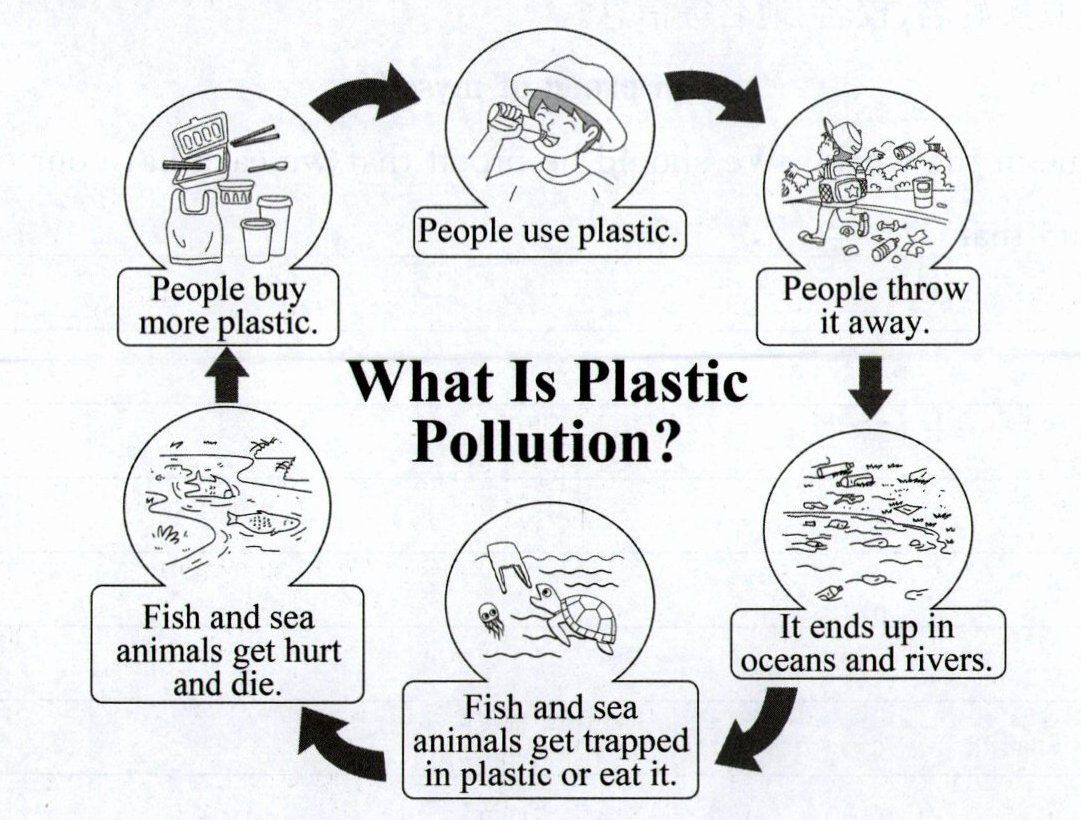
The theme of the 2025 World Environment Day is “Ending Plastic Pollution”. How does plastic pollution influence our Earth? Please look at the picture below.
Scientists have found that plastic has reached almost every part of our planet! Even in places like the Arctic and the Sahara Desert, there are microplastic(微塑料) bits. They come from bigger plastic which breaks apart and ends up in oceans, soil and air.
Microplastic bits can get into a human body in different ways. We breathe them in every day. According to a report by UN Environment Programme, about 60% of our clothes are made of unnatural materials. While washing these clothes, small plastic fibres(纤维) can be produced. Microplastic bits are also found in our food. Scientists estimate(估计) that there are about twenty-four trillion microplastic bits in the oceans around the world. The fish that we eat may have eaten them by accident. Many plastic packets we use in the daily life can release(释放) microplastic bits when they are heated. Even fruits and vegetables have microplastic bits, as plants can take them in from the soil through their roots. Studies show that apples and carrots have the most microplastic bits of all.
Once microplastic bits enter a human body, they can hurt cells(细胞) and the endocrine(内分泌的) system. They can also take in other harmful chemicals and help them enter our bodies, which might make us get sick more easily.
To stop plastic pollution, everyone needs to live a sustainable(可持续的) lifestyle. It's more than throwing plastic rubbish into bins and using less plastic. Individuals and governments should work together to make a difference.
Luckily, many businesses in China have taken action to build a free-plastic society in China. To turn plastic rubbish into treasures...
(to be continued)
(
A. The cycle of plastic pollution.
B. The cycle of water pollution.
C. The cycle of soil pollution.
D. The cycle of air pollution.
(
A. Clothes made of natural materials have microplastic bits.
B. Microplastic bits can hardly be found in the Arctic and the Sahara Desert.
C. The oceans around the world are said to have about 24 billion microplastic bits.
D. Among all the fruits and vegetables, apples and carrots have the most microplastic bits.
(
A. Doubtful.
B. Hopeful.
C. Uninterested.
D. Surprised.
(
A. How we students use less plastic.
B. Why it is necessary to say no to plastic.
C. What Chinese businesses have done to deal with plastic.
D. When plastic pollution can be under control completely around the world.
The theme of the 2025 World Environment Day is “Ending Plastic Pollution”. How does plastic pollution influence our Earth? Please look at the picture below.
Scientists have found that plastic has reached almost every part of our planet! Even in places like the Arctic and the Sahara Desert, there are microplastic(微塑料) bits. They come from bigger plastic which breaks apart and ends up in oceans, soil and air.
Microplastic bits can get into a human body in different ways. We breathe them in every day. According to a report by UN Environment Programme, about 60% of our clothes are made of unnatural materials. While washing these clothes, small plastic fibres(纤维) can be produced. Microplastic bits are also found in our food. Scientists estimate(估计) that there are about twenty-four trillion microplastic bits in the oceans around the world. The fish that we eat may have eaten them by accident. Many plastic packets we use in the daily life can release(释放) microplastic bits when they are heated. Even fruits and vegetables have microplastic bits, as plants can take them in from the soil through their roots. Studies show that apples and carrots have the most microplastic bits of all.
Once microplastic bits enter a human body, they can hurt cells(细胞) and the endocrine(内分泌的) system. They can also take in other harmful chemicals and help them enter our bodies, which might make us get sick more easily.
To stop plastic pollution, everyone needs to live a sustainable(可持续的) lifestyle. It's more than throwing plastic rubbish into bins and using less plastic. Individuals and governments should work together to make a difference.
Luckily, many businesses in China have taken action to build a free-plastic society in China. To turn plastic rubbish into treasures...
(to be continued)
(
A
)37. 新考法 图示理解 What does the picture in the passage show?A. The cycle of plastic pollution.
B. The cycle of water pollution.
C. The cycle of soil pollution.
D. The cycle of air pollution.
(
D
)38. Which of the following about microplastic bits is TRUE?A. Clothes made of natural materials have microplastic bits.
B. Microplastic bits can hardly be found in the Arctic and the Sahara Desert.
C. The oceans around the world are said to have about 24 billion microplastic bits.
D. Among all the fruits and vegetables, apples and carrots have the most microplastic bits.
(
B
)39. What is the writer's attitude(态度) to the future of building a free-plastic society in China?A. Doubtful.
B. Hopeful.
C. Uninterested.
D. Surprised.
(
C
)40. 新考法 走向预测 What might be talked about in the next part?A. How we students use less plastic.
B. Why it is necessary to say no to plastic.
C. What Chinese businesses have done to deal with plastic.
D. When plastic pollution can be under control completely around the world.
答案
37. A 【解析】根据第一段中“How does plastic pollution influence our Earth? Please look at the picture below.”并结合图片内容可知,图片主要展示的是塑料污染的循环。
38. D 【解析】根据第三段最后一句“Studies show that apples and carrots have the most microplastic bits of all.”可知,在水果和蔬菜中,苹果和胡萝卜的微塑料含量最多,D项表述正确。
39. B 【解析】根据最后一段中“Luckily, many businesses in China have taken action to build a free-plastic society in China.”可推知,作者对中国建设一个没有塑料的社会充满希望。
40. C
38. D 【解析】根据第三段最后一句“Studies show that apples and carrots have the most microplastic bits of all.”可知,在水果和蔬菜中,苹果和胡萝卜的微塑料含量最多,D项表述正确。
39. B 【解析】根据最后一段中“Luckily, many businesses in China have taken action to build a free-plastic society in China.”可推知,作者对中国建设一个没有塑料的社会充满希望。
40. C
解析
【分析】
本题为阅读理解题,包含图示理解、细节判断、态度推断、内容预测四类题型。解题思路如下:
1. 37题:先看图片标题及内容,明确图片展示的是塑料从产生到污染的循环过程,结合题干提示判断对应选项;
2. 38题:逐一核对每个选项与原文细节的匹配度,排除错误选项;
3. 39题:通过原文中体现作者态度的关键词(如Luckily)及相关描述,推断作者态度;
4. 40题:根据最后一段的结尾内容,结合逻辑连贯性,预测下文讨论的内容。
【解析】
37题:根据题干提示,图片标题为“What Is Plastic Pollution?”,内容展示了塑料从购买、使用、丢弃,进入河流海洋,伤害海洋生物,再回到购买的循环过程,对应塑料污染的循环,故选A。
38题:逐一分析选项:
A项:原文提到约60%的衣服是非天然材料制成,洗时产生微塑料,未提及天然材料衣服含微塑料,错误;
B项:原文指出塑料几乎遍布地球每个角落,包括北极和撒哈拉,错误;
C项:原文说明海洋中约有24万亿微塑料,而非240亿,错误;
D项:原文明确“Studies show that apples and carrots have the most microplastic bits of all.”,正确,故选D。
39题:根据最后一段“Luckily, many businesses in China have taken action to build a free-plastic society in China.”中的“Luckily”及企业的行动,可推断作者对中国建设无塑料社会持希望态度,故选B。
40题:最后一段结尾提到“many businesses in China have taken action to build a free-plastic society in China. To turn plastic rubbish into treasures...”,结合逻辑连贯性,下文应围绕中国企业应对塑料污染的具体做法展开,故选C。
【答案】
37.A 38.D 39.B 40.C
【知识点】
阅读理解,细节理解,推理判断
【点评】
本题围绕塑料污染主题,结合图片信息和文本细节设置题目,考查学生的信息提取、逻辑推理及内容预测能力,题型全面,难度适中,符合初中英语阅读理解的考查要求。
【难度系数】
0.6
本题为阅读理解题,包含图示理解、细节判断、态度推断、内容预测四类题型。解题思路如下:
1. 37题:先看图片标题及内容,明确图片展示的是塑料从产生到污染的循环过程,结合题干提示判断对应选项;
2. 38题:逐一核对每个选项与原文细节的匹配度,排除错误选项;
3. 39题:通过原文中体现作者态度的关键词(如Luckily)及相关描述,推断作者态度;
4. 40题:根据最后一段的结尾内容,结合逻辑连贯性,预测下文讨论的内容。
【解析】
37题:根据题干提示,图片标题为“What Is Plastic Pollution?”,内容展示了塑料从购买、使用、丢弃,进入河流海洋,伤害海洋生物,再回到购买的循环过程,对应塑料污染的循环,故选A。
38题:逐一分析选项:
A项:原文提到约60%的衣服是非天然材料制成,洗时产生微塑料,未提及天然材料衣服含微塑料,错误;
B项:原文指出塑料几乎遍布地球每个角落,包括北极和撒哈拉,错误;
C项:原文说明海洋中约有24万亿微塑料,而非240亿,错误;
D项:原文明确“Studies show that apples and carrots have the most microplastic bits of all.”,正确,故选D。
39题:根据最后一段“Luckily, many businesses in China have taken action to build a free-plastic society in China.”中的“Luckily”及企业的行动,可推断作者对中国建设无塑料社会持希望态度,故选B。
40题:最后一段结尾提到“many businesses in China have taken action to build a free-plastic society in China. To turn plastic rubbish into treasures...”,结合逻辑连贯性,下文应围绕中国企业应对塑料污染的具体做法展开,故选C。
【答案】
37.A 38.D 39.B 40.C
【知识点】
阅读理解,细节理解,推理判断
【点评】
本题围绕塑料污染主题,结合图片信息和文本细节设置题目,考查学生的信息提取、逻辑推理及内容预测能力,题型全面,难度适中,符合初中英语阅读理解的考查要求。
【难度系数】
0.6
