

 登录
Ⅰ. 完形填空
Natural disasters can happen suddenly and cause great damage. As middle school students, we need to know to protect ourselves.
When it comes to earthquakes, if we are indoors, we should hide under a strong table or desk and protect our heads and necks with our arms. We mustn't be afraid or .
During a flood, we need to going to low-lying areas and stay away from rivers and lakes. If we receive a , we should follow the instructions(指示) of the local government and move to a place in time.
As for wildfires, we should never play with fire in the forest. If we notice a fire, we must it to the government immediately. During a storm, we should stay away from windows and doors to keep safe from the flying objects(物体).
For typhoons, we should stay indoors and close all the windows and doors. Do not go out until the typhoon has . Lightning is also dangerous. When there is a thunderstorm, we should stay away from big and metal(金属) objects.
By learning and practising these preventive methods, we can better protect ourselves and our families from the of natural disasters. Have you got them?
(
(
(
(
(
(
(
(
(
(
Natural disasters can happen suddenly and cause great damage. As middle school students, we need to know to protect ourselves.
When it comes to earthquakes, if we are indoors, we should hide under a strong table or desk and protect our heads and necks with our arms. We mustn't be afraid or .
During a flood, we need to going to low-lying areas and stay away from rivers and lakes. If we receive a , we should follow the instructions(指示) of the local government and move to a place in time.
As for wildfires, we should never play with fire in the forest. If we notice a fire, we must it to the government immediately. During a storm, we should stay away from windows and doors to keep safe from the flying objects(物体).
For typhoons, we should stay indoors and close all the windows and doors. Do not go out until the typhoon has . Lightning is also dangerous. When there is a thunderstorm, we should stay away from big and metal(金属) objects.
By learning and practising these preventive methods, we can better protect ourselves and our families from the of natural disasters. Have you got them?
(
B
)1. A. what B. how C. when D. where(
D
)2. A. happily B. quietly C. luckily D. quickly(
B
)3. A. stay calm B. run around C. read loudly D. stand still(
C
)4. A. keep B. notice C. avoid D. remember(
B
)5. A. trouble B. call C. talk D. talent(
A
)6. A. safe B. busy C. clean D. empty(
C
)7. A. give B. send C. report D. present(
A
)8. A. passed B. moved C. turned D. changed(
D
)9. A. coaches B. hills C. fields D. trees(
B
)10. A. stress B. damage C. cause D. pollution答案
1.B 2.D 3.B 4.C 5.B 6.A 7.C 8.A 9.D 10.B
解析
【分析】
通读全文可知,本文主旨是介绍中学生应对各类自然灾害的自救方法,解题时需结合上下文语境、词义辨析及固定搭配逐一分析:第1空需表达“如何保护自己”,对应疑问词how;第2空地震时需快速躲避,选副词quickly;第3空地震时不能害怕或乱跑,选run around;第4空需用avoid doing结构表“避开低洼地”;第5空指接到通知,用receive a call;第6空需移到安全的地方,选safe;第7空发现火情要向政府报告,用report;第8空台风过后再外出,用passed;第9空雷暴时远离大树;第10空指自然灾害的危害,选damage。
【解析】
1. 句意:作为中学生,我们需要知道如何保护自己。“疑问词+不定式”结构中,how表方式,符合语境,故选B。
2. 句意:地震时,我们应快速躲在坚固的桌子下。quickly(快速地)符合地震时的避险动作,故选D。
3. 句意:我们不能害怕或乱跑。run around(乱跑)与afraid并列,符合地震时的禁忌行为,故选B。
4. 句意:洪水时,要避开低洼地区。avoid doing sth为固定搭配,表“避免做某事”,低洼地危险需避开,故选C。
5. 句意:如果接到通知,要按当地政府的指示行动。receive a call意为“接到通知”,符合语境,故选B。
6. 句意:及时移到安全的地方。safe(安全的)符合避险要求,故选A。
7. 句意:如果发现火情,必须立即向政府报告。report sth to sb为固定搭配,表“向某人报告某事”,故选C。
8. 句意:台风过去前不要外出。passed(过去)符合台风避险的时间要求,故选A。
9. 句意:雷暴时,我们应远离大树等物体。trees(树)是雷暴时需远离的危险物体,故选D。
10. 句意:通过学习这些预防方法,我们能更好地保护自己和家人免受自然灾害的危害。damage(危害)符合语境,故选B。
【答案】
1.B 2.D 3.B 4.C 5.B 6.A 7.C 8.A 9.D 10.B
【知识点】
完形填空、词义辨析、语境理解
【点评】
本文围绕自然灾害自救展开,贴近学生生活,考查词汇运用与语境逻辑,是初中英语常见题型,难度适中。
【难度系数】
0.5
Ⅱ. 阅读理解
Cities across the world are sinking. When the ground sinks in coastal cities, these places become more likely to face flooding. Flooding can come from heavy rain. But in cities like Jakarta, Indonesia, even daily high tides can cover large areas with water.
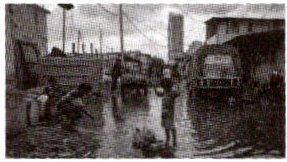
In Jakarta, streets often flood, but people still live their normal lives. Adults walk through water to go to work. Children play in the wet streets. Surprisingly, this flooding isn’t from storms or rain—it happens every day when high tides cover the city’s low areas.
Rising sea level is part of the problem, but Jakarta has another bigger problem: Its land is sinking. Scientists call this sinking “subsidence”. Over the past 20 years, this process has slowed down. At its worst, Jakarta sank over 280 millimetres a year. Now it’s about 30 millimetres per year. Still, sinking land and higher tides flood nearly a quarter of the city. If nothing changes, more than one-third of Jakarta may be under water in 25 years.
And Jakarta isn’t the only one. Many cities around the world are sinking. Some subsidence happens naturally, but most of it is caused by human activities. The good news is that people are finding ways to slow or even stop the sinking. As land rises again, flooding will end in many areas. New ways to fight subsidence are helping bring nature back to cities.

( )11. Why does the writer mention Jakarta at the beginning of the passage?
A. To introduce a famous coastal city in Indonesia.
B. To give an example of a city suffering from sinking.
C. To show the serious rainstorm problem in Indonesia.
D. To compare flooding in different countries.
()12. Why does daily flooding happen in Jakarta according to Paragraph 2?
A. Because heavy rain covers the city’s low areas every day.
B. Because people’s daily activities cause the flooding.
C. Because storms hit the city and cause water to rise every day.
D. Because high tides often flood the city’s low-lying places.
()13. What can we infer from the passage?
A. Jakarta’s land sinks faster now than before.
B. All subsidence in cities is from human activities.
C. Stopping subsidence can help reduce flooding.
D. Most coastal cities will be under water in 25 years.
()14. 新考向 作者观点 What’s the writer’s attitude towards solving the subsidence problem?
A. Hopeful. B. Worried. C. Unclear. D. Doubtful.
()15. What is the main idea of the passage?
A. How to protect Jakarta from flooding. B. Why coastal cities face flooding easily.
C. What city subsidence is and how to solve it. D. What causes floods around the world.
Cities across the world are sinking. When the ground sinks in coastal cities, these places become more likely to face flooding. Flooding can come from heavy rain. But in cities like Jakarta, Indonesia, even daily high tides can cover large areas with water.
In Jakarta, streets often flood, but people still live their normal lives. Adults walk through water to go to work. Children play in the wet streets. Surprisingly, this flooding isn’t from storms or rain—it happens every day when high tides cover the city’s low areas.
Rising sea level is part of the problem, but Jakarta has another bigger problem: Its land is sinking. Scientists call this sinking “subsidence”. Over the past 20 years, this process has slowed down. At its worst, Jakarta sank over 280 millimetres a year. Now it’s about 30 millimetres per year. Still, sinking land and higher tides flood nearly a quarter of the city. If nothing changes, more than one-third of Jakarta may be under water in 25 years.
And Jakarta isn’t the only one. Many cities around the world are sinking. Some subsidence happens naturally, but most of it is caused by human activities. The good news is that people are finding ways to slow or even stop the sinking. As land rises again, flooding will end in many areas. New ways to fight subsidence are helping bring nature back to cities.
( )11. Why does the writer mention Jakarta at the beginning of the passage?
A. To introduce a famous coastal city in Indonesia.
B. To give an example of a city suffering from sinking.
C. To show the serious rainstorm problem in Indonesia.
D. To compare flooding in different countries.
()12. Why does daily flooding happen in Jakarta according to Paragraph 2?
A. Because heavy rain covers the city’s low areas every day.
B. Because people’s daily activities cause the flooding.
C. Because storms hit the city and cause water to rise every day.
D. Because high tides often flood the city’s low-lying places.
()13. What can we infer from the passage?
A. Jakarta’s land sinks faster now than before.
B. All subsidence in cities is from human activities.
C. Stopping subsidence can help reduce flooding.
D. Most coastal cities will be under water in 25 years.
()14. 新考向 作者观点 What’s the writer’s attitude towards solving the subsidence problem?
A. Hopeful. B. Worried. C. Unclear. D. Doubtful.
()15. What is the main idea of the passage?
A. How to protect Jakarta from flooding. B. Why coastal cities face flooding easily.
C. What city subsidence is and how to solve it. D. What causes floods around the world.
答案
11.B 12.D 13.C 14.A 15.C
解析
【分析】
本题为英语阅读理解题,需先通读全文把握主旨,再针对各题目定位原文对应信息,结合细节理解、主旨大意、推理判断及作者态度等考点逐一分析选项:11题考查作者举例意图,需联系首段举雅加达的目的;12题考查细节,定位第二段找洪水原因;13题考查推断,需逐一核对选项与原文表述;14题考查作者态度,关注文中对解决沉降问题的描述;15题考查主旨,需概括全文核心内容。
【解析】
11题:根据首段“Cities across the world are sinking... in cities like Jakarta, Indonesia, even daily high tides can cover large areas with water.”可知,作者以雅加达为例,是为了说明下沉的城市面临的问题,对应选项B。
12题:根据第二段最后一句“this flooding isn’t from storms or rain—it happens every day when high tides cover the city’s low areas.”可知,雅加达日常洪水是高潮汐淹没低地导致,对应选项D。
13题:A项,原文第三段提到雅加达下沉速度已变慢,而非更快,错误;B项,第四段指出部分沉降是自然原因,大部分是人为,并非全部,错误;C项,第四段提到找到减缓/停止沉降的方法,陆地回升后洪水会减少,正确;D项,原文仅说雅加达25年后超三分之一可能被淹,并非所有沿海城市,错误,故选C。
14题:第四段提到“people are finding ways to slow or even stop the sinking”,作者对解决沉降问题持积极态度,即有希望,对应选项A。
15题:全文围绕城市地面沉降(subsidence)的问题及解决方法展开,对应选项C。
【答案】
11.B 12.D 13.C 14.A 15.C
【知识点】
英语阅读理解、细节理解、主旨大意与推理判断
【点评】
本文围绕城市地面沉降的现象、原因及解决方法展开,考查学生对英语阅读中细节、主旨、推理及作者态度的理解能力,需学生精准定位原文信息,整体难度适中。
【难度系数】
0.6
