

 登录
登录
五、阅读理解
It may sound strange, but many people play noise to help themselves sleep better.
Actually, this kind of noise is called coloured noise, such as white noise, pink noise, and
brown noise.
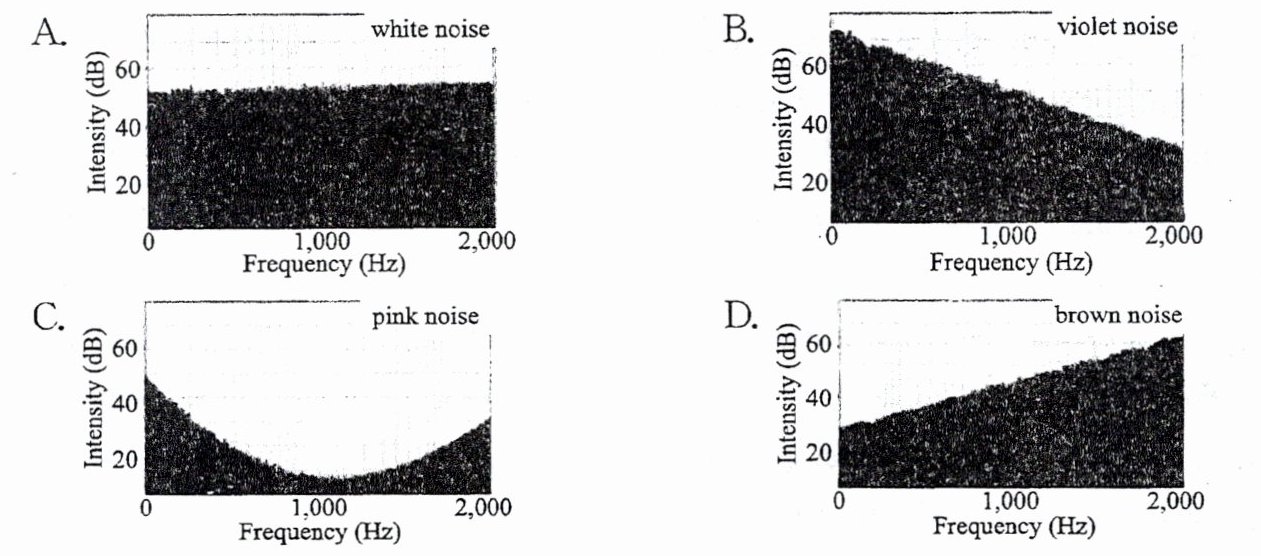
Coloured noise includes a wide range (范围) of frequencies (频率). However, it shows
stronger intensity (强度) at certain frequencies. For example, violet noise has stronger
intensity at higher frequencies. Brown noise produces deeper sounds such as heavy rainfall,
because it shows stronger intensity at lower frequencies. White noise has equal intensity across
all frequencies. Typical examples of white noise are the noise made by fans, and natural sounds
like gently running water. Pink noise is similar to white noise but has stronger intensity at
lower frequencies.
There have been several experiments on the effect (影响) that noise has on people. In a
study, 10 people in New York City showed improved sleep quality and sleep duration (时长)
when white noise was played. Another sleep study showed that 16 adults actually improved
their memory of vocabulary after listening to pink noise in their sleep, though the effect of pink
noise on sleep quality wasn't proven. Some people suggest that brown noise is the best noise for
their sleep. However, no studies have proven it.
So why do some people sleep better with certain coloured noise? There are some theories
(理论) that can explain it. One is about sound masking (掩蔽), and it shows that white noise
masks other noise, leading to a better sleep. Another theory is that this effect could be an
example of classical conditioning (条件反射). For example, people who sleep better with
brown noise may have developed the habit of falling asleep easily.
Every coloured noise has its advantages. It is your personal choice to decide which coloured
noise is the best for you to get a good sleep!
(
A. shows similar intensity B. is mainly created by people
C. has different frequencies D. is harmful to people's health
(
(
A. White noise is helpful for people to improve memory.
B. The effect of pink noise on sleep quality has been proven.
C. People may sleep better with brown noise if they get used to it.
D. People can't decide which coloured noise to play for their sleep.
(
A. Coloured Noise: A Good Helper for Your Sleep
B. Coloured Noise: A Creative Idea to Study Sounds
C. Coloured Noise: A New Way to Improve Memory
D. Coloured Noise: A Smart Choice for Your Health
It may sound strange, but many people play noise to help themselves sleep better.
Actually, this kind of noise is called coloured noise, such as white noise, pink noise, and
brown noise.
Coloured noise includes a wide range (范围) of frequencies (频率). However, it shows
stronger intensity (强度) at certain frequencies. For example, violet noise has stronger
intensity at higher frequencies. Brown noise produces deeper sounds such as heavy rainfall,
because it shows stronger intensity at lower frequencies. White noise has equal intensity across
all frequencies. Typical examples of white noise are the noise made by fans, and natural sounds
like gently running water. Pink noise is similar to white noise but has stronger intensity at
lower frequencies.
There have been several experiments on the effect (影响) that noise has on people. In a
study, 10 people in New York City showed improved sleep quality and sleep duration (时长)
when white noise was played. Another sleep study showed that 16 adults actually improved
their memory of vocabulary after listening to pink noise in their sleep, though the effect of pink
noise on sleep quality wasn't proven. Some people suggest that brown noise is the best noise for
their sleep. However, no studies have proven it.
So why do some people sleep better with certain coloured noise? There are some theories
(理论) that can explain it. One is about sound masking (掩蔽), and it shows that white noise
masks other noise, leading to a better sleep. Another theory is that this effect could be an
example of classical conditioning (条件反射). For example, people who sleep better with
brown noise may have developed the habit of falling asleep easily.
Every coloured noise has its advantages. It is your personal choice to decide which coloured
noise is the best for you to get a good sleep!
(
C
) 1. According to the passage, coloured noise .A. shows similar intensity B. is mainly created by people
C. has different frequencies D. is harmful to people's health
(
A
) 2. Which of the following is right for the frequencies of coloured noise?(
C
) 3. What can we learn from the passage?A. White noise is helpful for people to improve memory.
B. The effect of pink noise on sleep quality has been proven.
C. People may sleep better with brown noise if they get used to it.
D. People can't decide which coloured noise to play for their sleep.
(
A
) 4. What's the best title for the passage?A. Coloured Noise: A Good Helper for Your Sleep
B. Coloured Noise: A Creative Idea to Study Sounds
C. Coloured Noise: A New Way to Improve Memory
D. Coloured Noise: A Smart Choice for Your Health
答案
1.C 2.A 3.C 4.A
解析
【分析】
这是一篇关于彩色噪音助眠的阅读理解题,解题时需要结合原文内容逐一分析每个选项:
1. 第1题:需定位到原文对彩色噪音的定义描述,对比选项与原文信息是否匹配,排除错误选项。
2. 第2题:要结合原文对不同彩色噪音的频率-强度特征描述,对应图表内容,找到符合的选项。
3. 第3题:需仔细核对每个选项与原文实验结论、理论描述的一致性,排除与原文相悖的选项。
4. 第4题:要总结文章核心内容,选择能概括全文主旨的标题。
【解析】
1. 第1题:
根据原文第二段“Coloured noise includes a wide range of frequencies.”可知,彩色噪音包含多种不同频率。
A选项:原文提到彩色噪音在特定频率强度更高,并非强度相似,错误;
B选项:原文举例自然声音如流水属于白噪音,说明并非主要由人为制造,错误;
C选项:符合原文描述,正确;
D选项:文中未提及彩色噪音对健康有害,错误。
2. 第2题:
根据原文“White noise has equal intensity across all frequencies.”,白噪音在所有频率下强度一致,对应图A的特征(频率从0到2000Hz,强度保持平稳),因此选A。
3. 第3题:
A选项:原文提到是粉色噪音能帮助提升睡眠中的词汇记忆力,而非白噪音,错误;
B选项:原文明确“the effect of pink noise on sleep quality wasn't proven”,说明粉色噪音对睡眠质量的影响未被证实,错误;
C选项:根据原文“Another theory is that this effect could be an example of classical conditioning... people who sleep better with brown noise may have developed the habit of falling asleep easily.”可知,习惯棕色噪音的人可能睡得更好,正确;
D选项:原文最后提到“It is your personal choice to decide which coloured noise is the best for you”,说明人们可以自主选择,错误。
4. 第4题:
文章开篇介绍彩色噪音,随后讲述不同彩色噪音的特征、相关实验,最后说明彩色噪音助眠的理论,核心是围绕彩色噪音对睡眠的帮助展开,因此标题选A。
【答案】
1.C 2.A 3.C 4.A
【知识点】
1. 阅读理解细节定位
2. 阅读理解主旨归纳
3. 图表信息匹配
【点评】
本题围绕“彩色噪音助眠”这一主题,考查了细节理解、图表匹配和主旨归纳能力,需要学生精准定位原文信息,同时结合图表内容进行分析,对信息提取和整合能力有一定要求。
【难度系数】
0.6
这是一篇关于彩色噪音助眠的阅读理解题,解题时需要结合原文内容逐一分析每个选项:
1. 第1题:需定位到原文对彩色噪音的定义描述,对比选项与原文信息是否匹配,排除错误选项。
2. 第2题:要结合原文对不同彩色噪音的频率-强度特征描述,对应图表内容,找到符合的选项。
3. 第3题:需仔细核对每个选项与原文实验结论、理论描述的一致性,排除与原文相悖的选项。
4. 第4题:要总结文章核心内容,选择能概括全文主旨的标题。
【解析】
1. 第1题:
根据原文第二段“Coloured noise includes a wide range of frequencies.”可知,彩色噪音包含多种不同频率。
A选项:原文提到彩色噪音在特定频率强度更高,并非强度相似,错误;
B选项:原文举例自然声音如流水属于白噪音,说明并非主要由人为制造,错误;
C选项:符合原文描述,正确;
D选项:文中未提及彩色噪音对健康有害,错误。
2. 第2题:
根据原文“White noise has equal intensity across all frequencies.”,白噪音在所有频率下强度一致,对应图A的特征(频率从0到2000Hz,强度保持平稳),因此选A。
3. 第3题:
A选项:原文提到是粉色噪音能帮助提升睡眠中的词汇记忆力,而非白噪音,错误;
B选项:原文明确“the effect of pink noise on sleep quality wasn't proven”,说明粉色噪音对睡眠质量的影响未被证实,错误;
C选项:根据原文“Another theory is that this effect could be an example of classical conditioning... people who sleep better with brown noise may have developed the habit of falling asleep easily.”可知,习惯棕色噪音的人可能睡得更好,正确;
D选项:原文最后提到“It is your personal choice to decide which coloured noise is the best for you”,说明人们可以自主选择,错误。
4. 第4题:
文章开篇介绍彩色噪音,随后讲述不同彩色噪音的特征、相关实验,最后说明彩色噪音助眠的理论,核心是围绕彩色噪音对睡眠的帮助展开,因此标题选A。
【答案】
1.C 2.A 3.C 4.A
【知识点】
1. 阅读理解细节定位
2. 阅读理解主旨归纳
3. 图表信息匹配
【点评】
本题围绕“彩色噪音助眠”这一主题,考查了细节理解、图表匹配和主旨归纳能力,需要学生精准定位原文信息,同时结合图表内容进行分析,对信息提取和整合能力有一定要求。
【难度系数】
0.6
