

 登录
登录
情境 素材 黑鼠助力深空探索 「2026 江苏南京东山外国语学校期末」
In a milestone for China’s space biology research, four specially chosen mice will get on the Shenzhou-21 spacecraft. They will go to the Tiangong Space Station for a 5-to-7-day task. This is the country’s first experiment with small mammals in space. These tiny “astronauts” passed hard tests to earn their tickets to space.
The journey started with 300 mice. After 60 days of strict checks, the number got smaller. The mice faced some important challenges. They needed to stay on a turning stick for more than 110 seconds to show they were strong. They also went through spins in different directions to test a part of their body. This part helps them not feel sick in space. Besides, they walked through mazes to show they could find their way. Only 48 mice got on the backup list. At last, two male mice and two female mice were chosen for the task.
These black mice are from a special group. Their genes are almost the same. This makes their differences small, so the experiment’s data will be accurate and easy to compare. This is better than the more common white mice with different genes. Their home in space is a special box. It has systems to control temperature, give food and water automatically, and collect waste. There is even a spring-like thing for them to dig, just like they do on Earth.
Once they are in space, astronauts will move the mice to a long-term research platform for small animals. The platform was sent earlier by the Tianzhou-9 cargo craft. The ground teams will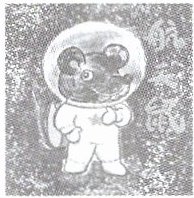
watch the mice’s behavior through real-time cameras. They want to study how microgravity(微重力)and small spaces affect the mice’s ability to get used to the environment and their stress. A special experiment will also look at how the space environment connects to the start of genetic codes.
This task is a “from 0 to 1” breakthrough. It tests technologies to safely send, keep, and bring back mammals from space. Mice share about 85% of their genes with humans, so they are good models to understand how space affects living things. The data collected will help protect astronauts during long space trips. It will also support China’s plan to send astronauts to the moon before 2030 and explore Mars later.
After their trip in space, the mice come back to Earth on the return capsule of the Shenzhou-21 spaceship. Scientists can study them more. Just like human astronauts, these small explorers are helping humans go deeper into space.
1. What is the main purpose of the “mouse astronauts” mission?
A.To study how genetic codes start in space.
B.To test technologies for safely sending mammals to space.
C.To see if mice can live in microgravity.
D.To directly get ready for China’s Mars exploration.
2. Why were the black mice with similar genes chosen for the mission?
A.Because they are stronger than white mice.
B.Because their similar genes make the experiment data reliable.
C.Because they can get used to small spaces better.
D.Because they are easier to be trained for space tasks.
3. What does the “from 0 to 1” breakthrough imply?
A.China has never sent small mammals to space before.
B.China will send 1 more mouse to space next time.
C.The mission is the first step to send humans to Mars.
D.The mice will stay in space for 0 to 1 day.
4. What can we learn about China’s space program from the mission?
A.It only focuses on sending humans to space.
B.It is developing step by step with clear goals.
C.It has already finished exploring the moon and Mars.
D.It doesn’t care about small animal experiments.
5. What is the main idea of the passage?
A.How mice are trained to become space “astronauts”.
B.The differences between black mice and white mice in space.
C.How ground teams monitor mice in the Tiangong Space Station.
D.China’s first space experiment with small mammals and its importance.
In a milestone for China’s space biology research, four specially chosen mice will get on the Shenzhou-21 spacecraft. They will go to the Tiangong Space Station for a 5-to-7-day task. This is the country’s first experiment with small mammals in space. These tiny “astronauts” passed hard tests to earn their tickets to space.
The journey started with 300 mice. After 60 days of strict checks, the number got smaller. The mice faced some important challenges. They needed to stay on a turning stick for more than 110 seconds to show they were strong. They also went through spins in different directions to test a part of their body. This part helps them not feel sick in space. Besides, they walked through mazes to show they could find their way. Only 48 mice got on the backup list. At last, two male mice and two female mice were chosen for the task.
These black mice are from a special group. Their genes are almost the same. This makes their differences small, so the experiment’s data will be accurate and easy to compare. This is better than the more common white mice with different genes. Their home in space is a special box. It has systems to control temperature, give food and water automatically, and collect waste. There is even a spring-like thing for them to dig, just like they do on Earth.
Once they are in space, astronauts will move the mice to a long-term research platform for small animals. The platform was sent earlier by the Tianzhou-9 cargo craft. The ground teams will
watch the mice’s behavior through real-time cameras. They want to study how microgravity(微重力)and small spaces affect the mice’s ability to get used to the environment and their stress. A special experiment will also look at how the space environment connects to the start of genetic codes.
This task is a “from 0 to 1” breakthrough. It tests technologies to safely send, keep, and bring back mammals from space. Mice share about 85% of their genes with humans, so they are good models to understand how space affects living things. The data collected will help protect astronauts during long space trips. It will also support China’s plan to send astronauts to the moon before 2030 and explore Mars later.
After their trip in space, the mice come back to Earth on the return capsule of the Shenzhou-21 spaceship. Scientists can study them more. Just like human astronauts, these small explorers are helping humans go deeper into space.
1. What is the main purpose of the “mouse astronauts” mission?
A.To study how genetic codes start in space.
B.To test technologies for safely sending mammals to space.
C.To see if mice can live in microgravity.
D.To directly get ready for China’s Mars exploration.
2. Why were the black mice with similar genes chosen for the mission?
A.Because they are stronger than white mice.
B.Because their similar genes make the experiment data reliable.
C.Because they can get used to small spaces better.
D.Because they are easier to be trained for space tasks.
3. What does the “from 0 to 1” breakthrough imply?
A.China has never sent small mammals to space before.
B.China will send 1 more mouse to space next time.
C.The mission is the first step to send humans to Mars.
D.The mice will stay in space for 0 to 1 day.
4. What can we learn about China’s space program from the mission?
A.It only focuses on sending humans to space.
B.It is developing step by step with clear goals.
C.It has already finished exploring the moon and Mars.
D.It doesn’t care about small animal experiments.
5. What is the main idea of the passage?
A.How mice are trained to become space “astronauts”.
B.The differences between black mice and white mice in space.
C.How ground teams monitor mice in the Tiangong Space Station.
D.China’s first space experiment with small mammals and its importance.
答案
1.B 细节理解题。根据“This task is a ‘from 0 to 1’...from space.”可知,“小鼠宇航员”任务的主要目的是测试向太空安全运送、饲养和带回哺乳动物的技术。故选B。
2.B 推理判断题。根据“Their genes are...be accurate and easy to compare.”可知,选择基因相似的黑鼠是因为它们的相似基因能让实验数据更准确可靠。故选B。
3.A 推理判断题。根据“This is the country’s first experiment with small mammals in space.”可知,“从0到1”的突破意味着中国此前从未向太空发送过小型哺乳动物。故选A。
4.B 推理判断题。根据“The data collected...before 2030 and explore Mars later.”可知,该任务为长远太空计划提供支持,体现中国太空计划有明确目标、逐步发展。故选B。
5.D 主旨大意题。文章围绕中国首次进行太空小型哺乳动物实验,介绍了实验准备、实验对象、执行过程及重要意义,核心是该实验及其价值。故选D。
2.B 推理判断题。根据“Their genes are...be accurate and easy to compare.”可知,选择基因相似的黑鼠是因为它们的相似基因能让实验数据更准确可靠。故选B。
3.A 推理判断题。根据“This is the country’s first experiment with small mammals in space.”可知,“从0到1”的突破意味着中国此前从未向太空发送过小型哺乳动物。故选A。
4.B 推理判断题。根据“The data collected...before 2030 and explore Mars later.”可知,该任务为长远太空计划提供支持,体现中国太空计划有明确目标、逐步发展。故选B。
5.D 主旨大意题。文章围绕中国首次进行太空小型哺乳动物实验,介绍了实验准备、实验对象、执行过程及重要意义,核心是该实验及其价值。故选D。
