

 登录
登录
Ⅲ. 阅读还原
The invention of barcodes (条码) is based on a very simple idea. We only need to give each product a specific number and print it. 20 It can simply print the number itself. But this can cause problems. For example, an unclearly printed "seven" could look like a "one" to a computer. It's also true for "three" and "eight". 21 We need a better way of printing numbers so that they can be read correctly at high speed. That's the problem barcodes solve.
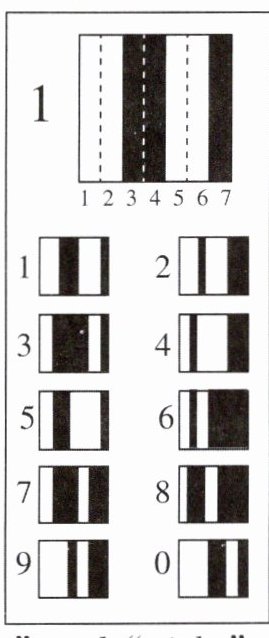
Each number in a barcode is shown by seven blocks of the same size. 22 For example, the number "one" is shown in turn by two white stripes (线条; 条纹), two black stripes, two white stripes, and one black stripe. 23
A barcode includes different parts and each one provides a specific meaning. The first part of a barcode tells you the country where the product was made. For example, 690—692 is the barcode for China. 24 The final part is about the product itself. This is how barcodes work.
The invention of barcodes (条码) is based on a very simple idea. We only need to give each product a specific number and print it. 20 It can simply print the number itself. But this can cause problems. For example, an unclearly printed "seven" could look like a "one" to a computer. It's also true for "three" and "eight". 21 We need a better way of printing numbers so that they can be read correctly at high speed. That's the problem barcodes solve.
Each number in a barcode is shown by seven blocks of the same size. 22 For example, the number "one" is shown in turn by two white stripes (线条; 条纹), two black stripes, two white stripes, and one black stripe. 23
A barcode includes different parts and each one provides a specific meaning. The first part of a barcode tells you the country where the product was made. For example, 690—692 is the barcode for China. 24 The final part is about the product itself. This is how barcodes work.
答案
20. A
21. D
22. E
23. F
24. C
21. D
22. E
23. F
24. C
解析
【分析】
本题为阅读还原题,解题思路是先通读全文把握文章主旨(介绍条码的发明原理、结构及各部分意义),再逐一分析每个空格前后的语境逻辑:20题需衔接“给产品分配数字并打印”与“打印数字本身”的内容;21题需承接数字打印的问题,引出“需要更好打印方式”的过渡;22题需衔接“数字由七个块表示”与举例说明的内容;23题需继续举例说明数字的条码表示;24题需衔接条码第一部分(国家)与最后部分(产品本身)的中间内容,结合选项匹配即可。
【解析】
20题:前文提到给产品分配特定数字并打印,后文说可直接打印数字本身,选项A符合打印数字的可行性衔接,故选A;21题:前文指出数字打印易混淆的问题,后文提出需要更好的打印方式,选项D承上启下,故选D;22题:前文说明数字由七个相同大小的块表示,后文举例“1”的条码样式,选项E引出举例内容,故选E;23题:前文已举“1”的例子,选项F继续说明其他数字的表示,故选F;24题:前文讲条码第一部分是国家,后文讲最后部分是产品本身,选项C说明中间部分的意义,故选C。
【答案】
20.A 21.D 22.E 23.F 24.C
【知识点】
阅读还原、语篇衔接
【点评】
本题考查学生对语篇逻辑和语境的理解能力,要求结合上下文匹配句子,需理清文章结构,难度中等,适合中等水平学生作答。
【难度系数】
0.5
本题为阅读还原题,解题思路是先通读全文把握文章主旨(介绍条码的发明原理、结构及各部分意义),再逐一分析每个空格前后的语境逻辑:20题需衔接“给产品分配数字并打印”与“打印数字本身”的内容;21题需承接数字打印的问题,引出“需要更好打印方式”的过渡;22题需衔接“数字由七个块表示”与举例说明的内容;23题需继续举例说明数字的条码表示;24题需衔接条码第一部分(国家)与最后部分(产品本身)的中间内容,结合选项匹配即可。
【解析】
20题:前文提到给产品分配特定数字并打印,后文说可直接打印数字本身,选项A符合打印数字的可行性衔接,故选A;21题:前文指出数字打印易混淆的问题,后文提出需要更好的打印方式,选项D承上启下,故选D;22题:前文说明数字由七个相同大小的块表示,后文举例“1”的条码样式,选项E引出举例内容,故选E;23题:前文已举“1”的例子,选项F继续说明其他数字的表示,故选F;24题:前文讲条码第一部分是国家,后文讲最后部分是产品本身,选项C说明中间部分的意义,故选C。
【答案】
20.A 21.D 22.E 23.F 24.C
【知识点】
阅读还原、语篇衔接
【点评】
本题考查学生对语篇逻辑和语境的理解能力,要求结合上下文匹配句子,需理清文章结构,难度中等,适合中等水平学生作答。
【难度系数】
0.5
