

 登录
登录
类型3 说明文语篇
Long ago, in ancient China, there was a story about the invention of silk. People believed that silk was first invented by Leizu, the wife of the Yellow Emperor. Leizu learned how to make cocoons(蚕茧) into soft and strong cloth. This magical cloth became known as "silk", and it was so valuable that it was called "China's Gold". Following kings' orders, the Chinese kept the secret of making silk for centuries.
But then, something amazing happened! During the Han Dynasty, the brave officer Zhang Qian travelled west as far as Central Asia and brought silk there. As years passed by, silk became so important that the trade road from Europe to China got its name — the Silk Road.
The Silk Road became a busy highway for traders who carried things across deserts and mountains. From China, people sold silk and tea. In return, they received treasures such as spices(香料), gold and silver from the West. At the very beginning, it was mainly about trade; then people began to share ideas, technologies and cultures. For example, Chinese inventions like paper - making were spread to the West, while new ideas about math and science came to China.
Most importantly, the Silk Road helped different cultures learn from each other. Art, music and even language were shared along this ancient road. In places like the Dunhuang Grottoes(敦煌石窟) in China, you can see how art pieces combined(融合) Eastern and Western styles into something distinctive. It cannot be seen anywhere else.
The story of the Silk Road tells us how people from faraway lands could become friends through trade and shared ideas. Today, we remember the Silk Road as one of the greatest examples of cooperation and exchange in history. It shows us how important it is to learn about and respect each other's traditions, and that different cultures can work together to create amazing things.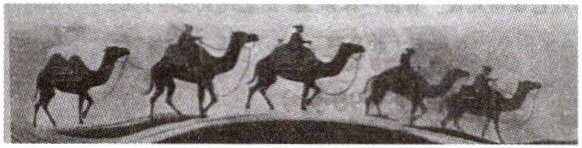
语篇分析
范畴:人与社会
主题群:历史、社会与文化
子主题:历史发展、社会变迁、跨文化沟通与交流
体裁:说明文
内容:丝绸之路的历史沿革及其在文化交流中的意义
考查方式:思维品质和文化沟通
语篇主旨:文化沟通与交流
思维点拨
26. Who invented silk in ancient China?
A. Leizu.
B. The kings.
C. Zhang Qian.
D. The Yellow Emperor.
27. What was spread from China to the West according to Paragraph 3?
A. Silk and gold.
B. Tea and paper - making.
C. Spices and silver.
D. New ideas of science.
28. What is the right order of the following facts from the passage?
①Zhang Qian travelled west with silk.
②Art and language were shared along the Silk Road.
③Traders from China and the West exchanged things.
④The Chinese were ordered to keep the secret of making silk.
A. ①→④→③→②
B. ①→③→④→②
C. ④→①→③→②
D. ④→③→②→①
29. What does the underlined word "distinctive" mean in paragraph 4?
A. Special.
B. Public.
C. Popular.
D. Strong.
30. What does the story of the Silk Road mainly tell us?
A. The change of world trade.
B. The introduction of silk cloth.
C. The influence of technology in history.
D. The importance of cross - cultural communication.
Long ago, in ancient China, there was a story about the invention of silk. People believed that silk was first invented by Leizu, the wife of the Yellow Emperor. Leizu learned how to make cocoons(蚕茧) into soft and strong cloth. This magical cloth became known as "silk", and it was so valuable that it was called "China's Gold". Following kings' orders, the Chinese kept the secret of making silk for centuries.
But then, something amazing happened! During the Han Dynasty, the brave officer Zhang Qian travelled west as far as Central Asia and brought silk there. As years passed by, silk became so important that the trade road from Europe to China got its name — the Silk Road.
The Silk Road became a busy highway for traders who carried things across deserts and mountains. From China, people sold silk and tea. In return, they received treasures such as spices(香料), gold and silver from the West. At the very beginning, it was mainly about trade; then people began to share ideas, technologies and cultures. For example, Chinese inventions like paper - making were spread to the West, while new ideas about math and science came to China.
Most importantly, the Silk Road helped different cultures learn from each other. Art, music and even language were shared along this ancient road. In places like the Dunhuang Grottoes(敦煌石窟) in China, you can see how art pieces combined(融合) Eastern and Western styles into something distinctive. It cannot be seen anywhere else.
The story of the Silk Road tells us how people from faraway lands could become friends through trade and shared ideas. Today, we remember the Silk Road as one of the greatest examples of cooperation and exchange in history. It shows us how important it is to learn about and respect each other's traditions, and that different cultures can work together to create amazing things.
语篇分析
范畴:人与社会
主题群:历史、社会与文化
子主题:历史发展、社会变迁、跨文化沟通与交流
体裁:说明文
内容:丝绸之路的历史沿革及其在文化交流中的意义
考查方式:思维品质和文化沟通
语篇主旨:文化沟通与交流
思维点拨
26. Who invented silk in ancient China?
A. Leizu.
B. The kings.
C. Zhang Qian.
D. The Yellow Emperor.
27. What was spread from China to the West according to Paragraph 3?
A. Silk and gold.
B. Tea and paper - making.
C. Spices and silver.
D. New ideas of science.
28. What is the right order of the following facts from the passage?
①Zhang Qian travelled west with silk.
②Art and language were shared along the Silk Road.
③Traders from China and the West exchanged things.
④The Chinese were ordered to keep the secret of making silk.
A. ①→④→③→②
B. ①→③→④→②
C. ④→①→③→②
D. ④→③→②→①
29. What does the underlined word "distinctive" mean in paragraph 4?
A. Special.
B. Public.
C. Popular.
D. Strong.
30. What does the story of the Silk Road mainly tell us?
A. The change of world trade.
B. The introduction of silk cloth.
C. The influence of technology in history.
D. The importance of cross - cultural communication.
答案
26. A 解析考查思维品质:细节理解。根据"... silk was first invented by Leizu..."可知。
27. B 解析考查思维品质和文化意识:细节理解和文化理解。根据"sold silk and tea"及"... paper - making were spread to the West"可知。
28. C 解析考查思维品质:理解事件发展顺序和逻辑关系。根据"... the Chinese kept the secret of making
silk...""Zhang Qian travelled west... brought silk there""The Silk Road became a busy highway for traders..."及"Art, music and even language..."可知。
29. A 解析考查思维品质:推理判断。根据"It cannot be seen anywhere else."可知。
30. D 解析考查思维品质:推理判断。根据"different cultures can work together"可知。
27. B 解析考查思维品质和文化意识:细节理解和文化理解。根据"sold silk and tea"及"... paper - making were spread to the West"可知。
28. C 解析考查思维品质:理解事件发展顺序和逻辑关系。根据"... the Chinese kept the secret of making
silk...""Zhang Qian travelled west... brought silk there""The Silk Road became a busy highway for traders..."及"Art, music and even language..."可知。
29. A 解析考查思维品质:推理判断。根据"It cannot be seen anywhere else."可知。
30. D 解析考查思维品质:推理判断。根据"different cultures can work together"可知。
