

 登录
登录
Ⅴ. 用恰当的单词完成对话。(每空一词)
Yuki: Hi! You’re Pierre, right? I’m Yuki.
Pierre: Oh, hi, Yuki! Where are you 1.
Yuki: I’m from Japan.
Pierre: Well, how do you greet others in Japan? Should we 2.
Yuki: We could, but with friends, we can just say “hello” or nod.
Pierre: Do you 3.
Yuki: Sometimes, but it’s not very common. We usually bow a little when meeting someone for the first time.
Pierre: Interesting! In France, we often kiss on the 4.
Yuki: Really? How many 5.
Pierre: Usually 6.
Yuki: Wow! I thought people in France were very formal, but that sounds quite friendly.
Yuki: Hi! You’re Pierre, right? I’m Yuki.
Pierre: Oh, hi, Yuki! Where are you 1.
from
?Yuki: I’m from Japan.
Pierre: Well, how do you greet others in Japan? Should we 2.
bow
?Yuki: We could, but with friends, we can just say “hello” or nod.
Pierre: Do you 3.
shake
hands?Yuki: Sometimes, but it’s not very common. We usually bow a little when meeting someone for the first time.
Pierre: Interesting! In France, we often kiss on the 4.
cheek
when greeting friends or families.Yuki: Really? How many 5.
kisses
do you give to one person?Pierre: Usually 6.
two
, one on each cheek.Yuki: Wow! I thought people in France were very formal, but that sounds quite friendly.
答案
Ⅴ.1.from 2.bow 3.shake 4.cheek 5.kisses 6.two
解析
【解析】
1. 根据答语“I’m from Japan.”可知问句询问来自哪里,“be from”为固定搭配,意为“来自”,故填from。
2. 根据下文Yuki提到的“We usually bow a little when meeting someone for the first time.”以及语境,Pierre询问是否应该鞠躬,故填bow。
3. “shake hands”为固定搭配,意为“握手”,结合语境Pierre询问是否握手,故填shake。
4. 根据后文“one on each cheek”可知,此处指亲吻脸颊,故填cheek。
5. “how many”后接可数名词复数,结合语境询问亲吻的次数,kiss的复数形式为kisses,故填kisses。
6. 根据“one on each cheek”可知,两边脸颊各一次,共两次,故填two。
【答案】
1.from 2.bow 3.shake 4.cheek 5.kisses 6.two
【知识点】
情景交际、固定搭配、名词复数
【点评】
本题围绕不同国家的问候礼仪展开情景对话,考查学生结合语境运用词汇和固定搭配的能力,同时能帮助学生了解跨文化交际知识,提升语言运用素养。
【难度系数】
0.8
1. 根据答语“I’m from Japan.”可知问句询问来自哪里,“be from”为固定搭配,意为“来自”,故填from。
2. 根据下文Yuki提到的“We usually bow a little when meeting someone for the first time.”以及语境,Pierre询问是否应该鞠躬,故填bow。
3. “shake hands”为固定搭配,意为“握手”,结合语境Pierre询问是否握手,故填shake。
4. 根据后文“one on each cheek”可知,此处指亲吻脸颊,故填cheek。
5. “how many”后接可数名词复数,结合语境询问亲吻的次数,kiss的复数形式为kisses,故填kisses。
6. 根据“one on each cheek”可知,两边脸颊各一次,共两次,故填two。
【答案】
1.from 2.bow 3.shake 4.cheek 5.kisses 6.two
【知识点】
情景交际、固定搭配、名词复数
【点评】
本题围绕不同国家的问候礼仪展开情景对话,考查学生结合语境运用词汇和固定搭配的能力,同时能帮助学生了解跨文化交际知识,提升语言运用素养。
【难度系数】
0.8
Ⅵ. 阅读短文,完成练习。
How do you greet people? You wouldn’t greet your mother the same way you greet a friend, right? It’s the same in English, too. You should greet different people in different ways. Let’s have a look at a few different situations and learn how to greet people in English in each situation.
If you’re at work and you’re meeting someone for the first time, it’s best to use formal greetings. Say “Good morning/afternoon.” and ask “How are you?” to find out if they are well. When you want to introduce someone at work, you can say “I’d like to introduce... ” If someone introduces you to another person, you can say “Nice to meet you!” and then tell him/her your name.
When greeting families and friends, we can use informal greetings like “hello”, “hi” or “hey” first. Then we can ask “How are you doing?” or “How’s life?” to find out how he/she is.
If someone is visiting you, you can just say “Welcome!” or “Welcome to my place.” Then you can also say “Make yourself at home.”
In most English-speaking countries, shaking hands is the most common greeting. Some people greet close friends with a hug or a kiss on the cheek. The best way to learn about local physical greetings is watching what other people do and then do the same.
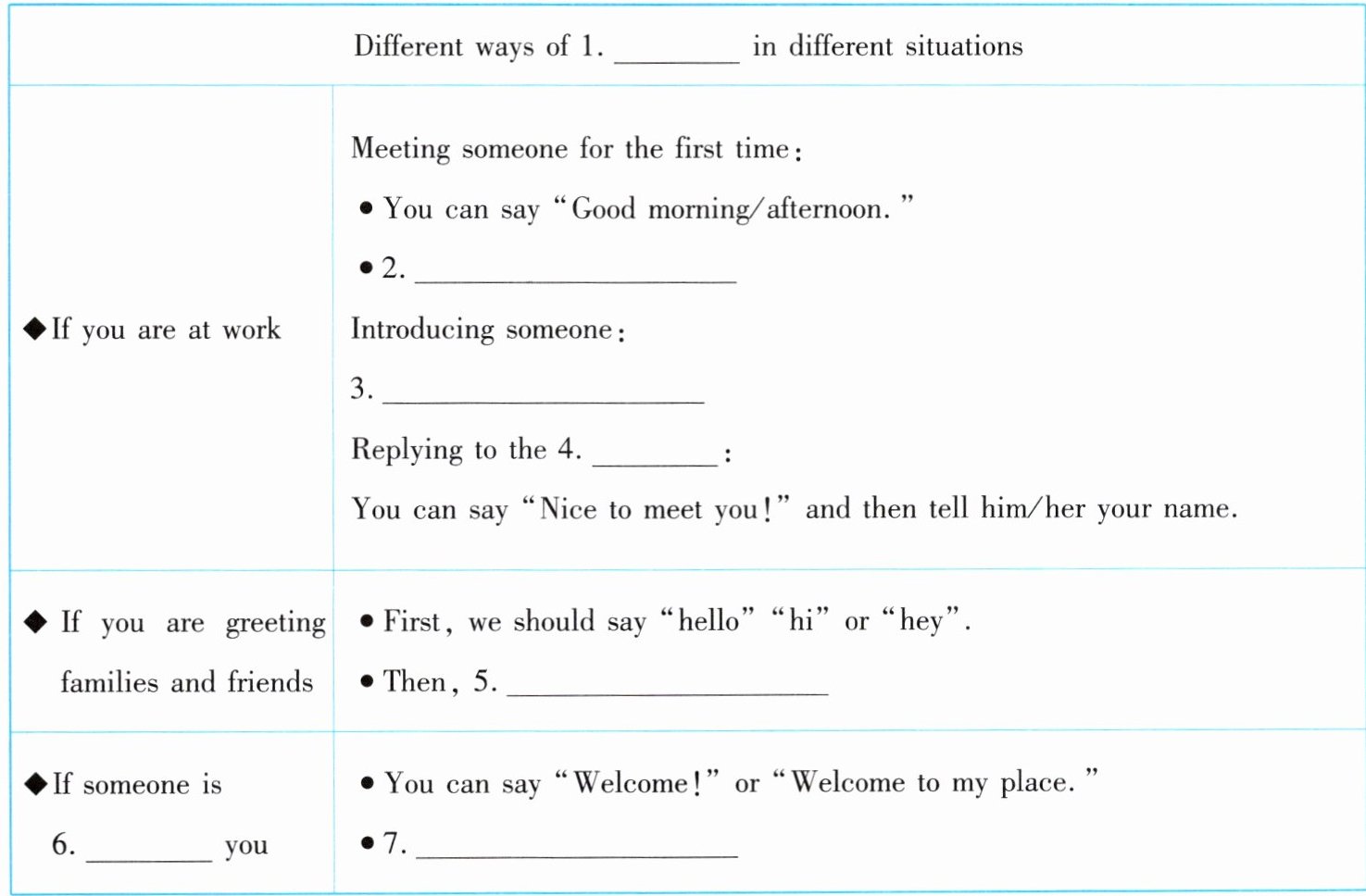
A. 根据短文内容完成表格。
B. 回答问题。
What is the best way to learn about local physical greetings according to the passage?
How do you greet people? You wouldn’t greet your mother the same way you greet a friend, right? It’s the same in English, too. You should greet different people in different ways. Let’s have a look at a few different situations and learn how to greet people in English in each situation.
If you’re at work and you’re meeting someone for the first time, it’s best to use formal greetings. Say “Good morning/afternoon.” and ask “How are you?” to find out if they are well. When you want to introduce someone at work, you can say “I’d like to introduce... ” If someone introduces you to another person, you can say “Nice to meet you!” and then tell him/her your name.
When greeting families and friends, we can use informal greetings like “hello”, “hi” or “hey” first. Then we can ask “How are you doing?” or “How’s life?” to find out how he/she is.
If someone is visiting you, you can just say “Welcome!” or “Welcome to my place.” Then you can also say “Make yourself at home.”
In most English-speaking countries, shaking hands is the most common greeting. Some people greet close friends with a hug or a kiss on the cheek. The best way to learn about local physical greetings is watching what other people do and then do the same.
A. 根据短文内容完成表格。
B. 回答问题。
What is the best way to learn about local physical greetings according to the passage?
The best way to learn about local physical greetings is watching what other people do and then do the same.
答案
Ⅵ.A.1.greeting 2.You can ask “How are you?” 3.You can say “I'd like to introduce...” 4.introduction 5.we can ask “How are you doing?” or “How's life?” 6.visiting 7.You can also say “Make yourself at home.”
B.The best way to learn about local physical greetings is watching what other people do and then do the same.
B.The best way to learn about local physical greetings is watching what other people do and then do the same.
解析
【解析】
A部分:
1. 全文围绕不同场景的问候方式展开,“ways of doing sth”表示“做某事的方式”,此处填greeting。
2. 定位原文第二段,工作中第一次见到他人,说完问候语后可询问“How are you?”,得出对应答案。
3. 定位原文第二段,工作场合介绍他人时的表达为“I'd like to introduce...”,得出对应答案。
4. 后文是回应他人介绍的用语,因此此处表示“介绍”,填名词introduction。
5. 定位原文第三段,问候家人朋友打完招呼后,可以询问“How are you doing?”或“How's life?”,得出对应答案。
6. 定位原文第四段,此处描述有人拜访你的场景,填visiting。
7. 定位原文第四段,欢迎拜访者后可以说“Make yourself at home.”,得出对应答案。
B部分:定位原文最后一段末尾句,直接提取信息作答即可。
【答案】
A.1.greeting 2.You can ask “How are you?” 3.You can say “I'd like to introduce...” 4.introduction 5.we can ask “How are you doing?” or “How's life?” 6.visiting 7.You can also say “Make yourself at home.”
B.The best way to learn about local physical greetings is watching what other people do and then do the same.
【知识点】
英语情景交际,阅读细节查找,交际用语运用
【点评】
本题围绕英语日常问候的实用场景设题,核心考查学生的原文信息定位、梳理能力,内容贴近生活实际,实用性较强。
【难度系数】
0.8
A部分:
1. 全文围绕不同场景的问候方式展开,“ways of doing sth”表示“做某事的方式”,此处填greeting。
2. 定位原文第二段,工作中第一次见到他人,说完问候语后可询问“How are you?”,得出对应答案。
3. 定位原文第二段,工作场合介绍他人时的表达为“I'd like to introduce...”,得出对应答案。
4. 后文是回应他人介绍的用语,因此此处表示“介绍”,填名词introduction。
5. 定位原文第三段,问候家人朋友打完招呼后,可以询问“How are you doing?”或“How's life?”,得出对应答案。
6. 定位原文第四段,此处描述有人拜访你的场景,填visiting。
7. 定位原文第四段,欢迎拜访者后可以说“Make yourself at home.”,得出对应答案。
B部分:定位原文最后一段末尾句,直接提取信息作答即可。
【答案】
A.1.greeting 2.You can ask “How are you?” 3.You can say “I'd like to introduce...” 4.introduction 5.we can ask “How are you doing?” or “How's life?” 6.visiting 7.You can also say “Make yourself at home.”
B.The best way to learn about local physical greetings is watching what other people do and then do the same.
【知识点】
英语情景交际,阅读细节查找,交际用语运用
【点评】
本题围绕英语日常问候的实用场景设题,核心考查学生的原文信息定位、梳理能力,内容贴近生活实际,实用性较强。
【难度系数】
0.8
